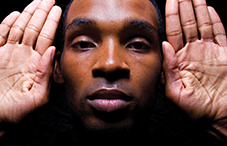

Most scientists would get excited to see topics related to their research on the evening news. For Keith Maddox, PhD, and his students, such news stories are all too frequent.
Maddox heads the Tufts University Social Cognition (TUSC) Lab, studying the social-cognitive underpinnings of stereotyping, prejudice and discrimination. Lately, many of his research topics have a ripped-from-the-headlines feel.
Last May, when two men were fatally stabbed on a train in Portland, Oregon, after intervening when a Muslim woman was being harassed, it called to mind Maddox's research on confronting bias. While such an extreme outcome isn't typical, the crime illustrated the importance of understanding how people perceive those who speak out against racism.
Similarly, in June, when basketball star LeBron James's home was vandalized with a racist slur, it inspired conversations about the intersection of stereotypes based on race, fame and wealth—another area of active research for Maddox.
"A lot of people would have said that for people who have money, race doesn't matter. The LeBron James anecdote suggests that's not true," Maddox says. Understanding how race interacts with other categories, such as socioeconomics or celebrity status, allows us to have more nuanced—and accurate—conversations about racism and prejudice, he adds.
Deconstructing stereotypes
Maddox launched the TUSC Lab in 1997 and has funded his research mostly through department support and a series of small grants and fees he earns from speaking engagements and consulting on issues of racial bias and prejudice. "It's a lot of rubber bands, but we hold it together," he says.
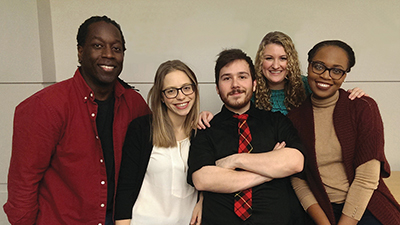 Those funds typically support two or three graduate students and anywhere from five to 15 undergrads, depending on the semester and the projects on his lineup. Maddox and his students use an experimental approach to study the mental structures and processes underlying how people perceive and think about other people—often in interracial contexts.
One long-running focus of research is a phenomenon known as racial phenotypicality bias. Maddox and others have shown that black Americans with more Afrocentric features, such as darker skin, coarser hair and fuller lips, tend to be perceived more negatively and more stereotypically than are those with less typically Afrocentric features—even by members of their own racial group (Personality and Social Psychology Reviewopens in new window, Vol. 8, No. 4, 2004).
Over the years, Maddox and his lab members have explored multiple variations on that theme. His graduate student Jennifer Perry, for instance, is studying how people allocate their attention toward others based on how typical they are of their race.
Other projects aim to understand the stereotypes we hold about people who don't look like us. But Maddox's team is interested in digging deeper than the broad black-white divide. He and student Lindsay Hinzman have been exploring how people conceptualize various subgroups of people from different racial groups (Journal of Experimental Social Psychology, Vol. 70, 2017). While most of us have preconceived notions about broad racial categories, the researchers have found we're actually more likely to rely on stereotypes about subgroups, such as "black athletes" or "white businessmen," when making judgments.
"The broader stereotypes we have about blacks are somewhat informative, but what actually gets used are your subgroup stereotypes about black women or black athletes," Maddox explains. "Understanding the intersections of those categories can give us a more nuanced perspective."
Real-world relevance
Maddox has always been interested in developing a theoretical account of the processes that underlie stereotyping and prejudice. That's still an important theme of his research, though these days he's often looking for links between theory and real-life situations. "It's been a shift from trying to understand how stereotyping operates theoretically to understanding how it plays out in contexts that might have real-world relevance," he says.
Some projects, for example, explore the factors that motivate people to confront racial bias and how those who do challenge bias are perceived by others.
In some circles, it can be touchy even to suggest that racial bias exists. "If you bring it up in an interracial context, it can challenge majority [white] people's idea that the world is a fair place. It upsets the status quo," he says. "As a result, black people who bring up the idea often experience backlash. There's this idea they are ‘playing the race card,'" he says.
In a study with former student Jennifer R. Shultz, PhD, he found that white observers were more likely to exhibit backlash against people who made extreme claims of racial bias when the communicator was black rather than white. However, other factors influenced how a communicator was perceived, including the quality of his or her argument and the listener's beliefs about meritocracy (Personality and Social Psychology Bulletinopens in new window, Vol. 39, No. 3, 2013). In other words, there is still a lot to unpack in figuring out how best to confront racial bias.
But Maddox and his team are trying, one piece at a time. Recently, they've been exploring how anxiety can get in the way of having productive interracial dialogue.
Even well-meaning people who are concerned about racial justice can feel apprehensive about such conversations. That anxiety can cause people to become flustered or distracted or display unintentional nonverbal behaviors that get in the way of productive conversation. And in some cases, it might prevent those important discussions from taking place at all.
In another study, Maddox, Schultz and collaborators recruited white participants to discuss race relations on campus. The participants were given the choice of talking to either a white or a black conversation partner. White participants were more likely to choose white conversation partners.
But in some cases, the researchers gave the participants instructions beforehand, letting them know that any anxiety they might be feeling was normal and that choosing to participate in interracial conversations might reduce future anxiety in similar situations. In those cases, white participants were more likely to choose to talk to black than to white partners (Translational Issues in Psychological Scienceopens in new window, Vol. 1, No. 4, 2015).
By coding their nonverbal behavior, Maddox and Schultz found white participants overall were more engaged when choosing to talk to a black versus white conversation partner about race relations. But the intervention inspired them to push past their anxiety and choose a black partner when they might not have done so otherwise. "Just calling out the elephant in the room encouraged them to make the decision to talk to someone they might not normally talk to," Maddox says. "It's not that the intervention made them less anxious, but it encouraged them to make a choice we'd like to see more often in society."
Good for a laugh
Maddox's students often start out researching offshoots of his existing projects, such as those on racial phenotypicality bias or confronting bias. But as they hone their experimental skills, he urges them to take their research in new directions. "The goal is that by the time they're done, they have something that belongs to them," he says.
That's how humor found its way into Maddox's lab, courtesy of Alex Borgella, PhD, a 2017 graduate who is now a visiting assistant professor of psychology at Bates College. Borgella was interested in understanding the role humor plays in interracial relations—an area that was new for Maddox, but one he encouraged Borgella to explore.
In his dissertation research, Borgella showed that when members of a stigmatized minority group use self-deprecating humor, it can help disarm people who might otherwise be uncomfortable with members of that group. Despite the possible interpersonal benefits, though, those jokes don't seem to do much to change minds. "Deprecating humor might make majority group members feel more comfortable with that person individually, but they can still feel prejudice toward the person's group," Borgella explains.
Comedians often use racial humor to draw attention to serious topics, Borgella says. But it's not clear whether jokes on late-night talk shows move the cause forward. "Race humor can bring these issues to the fore," Maddox says—but there's more to learn about how to harness the power of a laugh for social good.
Third-year graduate student Chelsea Crittle has continued with some of the humor research, in addition to a project on confronting bias and another looking at life experiences at the intersection of race and gender. Like Crittle, many of Maddox's students end up juggling multiple research projects. Those full research portfolios often lead to students collaborating with one another or with researchers in other labs.
"The culture of the Tufts social psychology program is extremely collaborative and supportive, and our lab also reflects that culture" says Perry. "We're given a lot of freedom, so if you want to be collaborative, you need to go out and make those connections and propose projects and do it for yourself."
Maddox agrees he takes a relaxed approach to guiding students. He tends to give them space to pursue their own ideas on their own timelines. When asked to describe his strengths, he replies, "I tend to be fairly laid back." What about his weaknesses? "I tend to be fairly laid back," he laughs.
True, sometimes students ask him to give them deadlines to help them stay on track. But Maddox manages to be supportive and accessible without micromanaging, says Perry. "He recognizes that we are capable and allows us to be our own independent researchers."
Making a difference
Looking at a timely social issue from a social cognition angle can be challenging for everyone in the lab. "I understand the relevance of my research to very real social problems. At the same time, I see things like Philando Castile and Alton Sterling [black men who were fatally shot by police officers in 2016] and wonder, ‘How can my work make a real difference?'" says Crittle. "Sometimes it's frustrating and sometimes it's motivating. It depends on the day and the media coverage."
Maddox also feels that tension. "I want to understand stereotyping and prejudice, but it's not just that I want to know. I want to know in order to do something about it," he says. Yet as a social scientist, he received little training in developing practical applications from his work. And his science training can make him hesitant to claim he has solutions. "The perspective of the scientist is that you have to leave room for doubt. You have to open your mind to the possibility that what you know now isn't always true. That plays into the reticence of scientists to communicate what they know."
Despite that hesitation, he forced himself out of his comfort zone by founding the Applied Diversity Science Initiative (ADSI) at Tufts. The program draws from research to develop and test programs and policies to promote diversity and inclusion. ADSI works with the School of Arts and Sciences and the School of Engineering, each of which has developed programs to bring more students from underrepresented groups to Tufts and to understand the challenges they face once they get there.
"It's hard to move from what I've been trained to do to translate this to the real world. But I'm willing to make some mistakes as we learn and improve," he says.
Despite the personal challenges and the steady stream of disheartening news coverage, Maddox is cautiously optimistic that society is taking steps toward racial justice. "There's contention for sure, but there also seems to be more support for change. Like anything, it's a conversation with ups and downs," he says. "But if we're not talking about it, we're not making progress. I think it's better that we're talking."