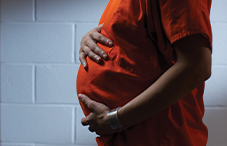

Giving birth while serving a prison sentence can be difficult for numerous reasons, including laboring without the support of a loved one and being separated from one’s baby after delivery. But for some women, the conditions are even worse: In more than half of U.S. states, prison staff are legally allowed to shackle a pregnant woman to the bed, even during delivery. Psychologists are using their research to advocate for outlawing such conditions for this increasing population.
To explore the feasibility of providing incarcerated pregnant women with more support, University of Minnesota professor Rebecca Shlafer, PhD, MPH, and colleagues conducted a study in which incarcerated women met with doulas—providers who offer prenatal education, birth planning and emotional support. Qualitative analyses revealed that doulas had the ability to empower clients, establish trusting relationships with them, normalize their deliveries and support them as they were separated from their newborns. The researchers concluded that doula support was a feasible intervention for women in prison (Public Health Nursingopens in new window, Vol. 32, No. 4, 2015).
Research into practice. Shlafer’s team then worked with legislators in Minnesota to advocate for a policy that would require the state to offer doula services to pregnant inmates as well as ban the use of restraints in most circumstances. The law went into effect in 2014.
Psychologists are also working to improve the health of incarcerated pregnant women, who research shows are at higher risk than the general population of perinatal complications and delivering preterm infants. A study by psychologist Danielle Dallaire, PhD, for example, explored the effect of providing these women a 45-minute session in which they learned about healthy food choices, the importance of prenatal vitamins, and habits to avoid during pregnancy. The study found that incarcerated pregnant women who participated in such nutritional counseling reported higher birth weights and longer gestational periods for their babies (Journal of Offender Rehabilitationopens in new window, Vol. 56, No. 4, 2017).
In another study, Dallaire, a professor at the College of William and Mary in Virginia, discovered that pregnant women in jail who had the highest number of environmental risks before incarceration—including no health insurance, homelessness, a history of physical or sexual abuse and drug use—were the least successful in obtaining services to address these problems prior to incarceration. They were also the most likely to request services to help with these issues after they were released (Psychological Services, in press).
The college received funding to hire a psychologist to support pregnant women at a local jail, and the women are learning how to find community support for housing, food and health care after they are released.
“There are pregnant and postpartum women in jail who come in with multiple risk factors for poor outcomes once they are discharged. The window of time during incarceration is a critical opportunity to intervene and help these mothers and children change their trajectories,” Dallaire says.
—Heather Stringer