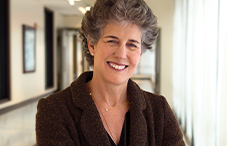

Elena Gorokhovsky, MD, had barely started her pediatric residency at NewYork–Presbyterian Brooklyn Methodist Hospital (NYP Brooklyn Methodist) when she received the devastating news from Israel that her mother had died. Her demanding work schedule left little time to grieve, and since Gorokhovsky and her husband had just recently immigrated from Israel to the United States, she had few local confidants.
Amid the bustle of the pediatric unit, a psychologist pulled Gorokhovsky aside to ask how she was coping. That interaction was life-changing for her. “From the first moment we started talking, I knew that I had someone who could understand me,” says Gorokhovsky,pausing to hold back tears. “She was warm and supportive, and made it clear that she was available anytime.”
The psychologist was Leona Jaglom, PhD, who had joined the pediatric medical team in 2009 specifically to help residents navigate the psychological complexities that arise both personally and in their patient populations during the rigorous three-year program. Gorokhovsky now works as an attending pediatrician at the hospital and still confides in Jaglom.
Although Jaglom is primarily an independent practitioner, she spends several hours each week at the hospital. She meets individually with pediatric residents as soon as they start the program to offer herself as a confidential resource and invites them to alert her if a colleague is struggling. In addition to providing personal support, Jaglom joins trainees and attending physicians during weekly interdisciplinary team meetings so they can discuss the psychosocial issues patients and their families may be facing. These can include poverty, stress from living with a chronic illness, family issues and gender-identity dilemmas.
“Dr. Jaglom taught me that there is a lot more to medical care than treating the physical illnesses,” says Jennifer Favre, MD, MPH, who graduated from the program in 2018. “If I fail to address the psychosocial issues in a patient’s life, then I may be missing an important aspect of why someone is ill or unable to manage the illness.”
For Jaglom, joining a medical team was an ideal opportunity to get out of her office.
“Being in private practice can be an isolating experience, and I had always wanted to work as part of a community,” she says. “It’s been rewarding and challenging to share ideas and perspectives with physician colleagues because it forces me to consider different points of view and priorities.”
Joining the medical team
Jaglom first began working in a hospital setting nearly 30 years ago when the chair of pediatrics at Long Island College Hospital in New York invited her to join a pediatric hematology-oncology medical team. She was a child and adolescent psychologist, and the chair recognized that the chronically ill children and their family members needed support as they grappled with the effects of cancer, sickle cell anemia or ongoing blood transfusions. Although Jaglom wasn’t consulting with patients directly, she listened as physicians discussed difficult psychosocial cases during team meetings and she shared her perspective. She also began to lead workshops for residents on how to handle difficult patients, conflicts with parents, delivering bad news and more. As she became a familiar face on the unit, residents and attending physicians started seeking her out when they needed support. In one instance, Jaglom helped a resident whose toddler son had unexpectedly died during surgery.
Jaglom left the hospital in 2008 because the facility was closing, but within months, a former physician colleague transferred to NYP Brooklyn Methodist and pitched the idea of hiring her to work in a similar role with the pediatric residents there. The department chair welcomed the idea, and Jaglom started organizing weekly psychosocial rounds to give physicians an opportunity to discuss the social, emotional, behavioral and familial issues patients were facing. Initially, the meetings included Jaglom, two hematology-oncology attending physicians, a couple of residents and sometimes a medical student.
Over time, the team recognized that the information shared during the sessions was so valuable that they needed to expand the group beyond the hematology-oncology department. Now, physicians present cases from the pediatric and neonatal intensive care units, the neurology department, adolescent medicine and the diabetes clinic, and all of the 30 pediatric residents are encouraged to attend.
“A lot of these important social issues are not covered during regular medical rounds,” says Kavitha Vemuri, MD, a second-year resident. The psychosocial meetings have given her an opportunity to learn how to navigate situations like treating teenagers who put themselves at risk of complications by not adhering to their medical regimens and transgender patients who may be sensitive to the names and pronouns clinicians use to address them.
Other discussions have covered cases in which children with sickle cell anemia were admitted due to complications from the disease but their parents were disengaged from their care. “Dr. Jaglom taught me how the family situation affects a child’s ability to manage his or her disease, and how to modify the treatment plan based on this bigger picture,” says Favre, who now works in primary care at East End Pediatrics in East Hampton, New York. Children who lack supportive parents, for example, may need additional time in the hospital to finish their full course of treatment rather than being sent home with medication, she says.
Expanding the psychologist's footprint
As more physicians started hearing Jaglom’s insights, she was invited to join other groups. The endocrinologist in charge of the hospital’s diabetes clinic asked her to start meeting with the clinical team to help them with patients who were struggling with the psychological aspects of the disease. She began talking to patients who were having difficulty adjusting to the required dietary changes or grappling with resentment about their newly diagnosed illness or identity as a chronically ill person.
Jaglom also collaborated with a physician on a new curriculum that allows residents to discuss topics that are not regularly covered during residency, such as dealing with medical errors, stress, burnout, difficult colleagues and complicated ethical dilemmas. Under the yearlong curriculum, known as Pediatric Opportunities for Development, attending physicians facilitate small group discussions among the pediatric trainees. The program is forging important connections among the residents, says Susan Gottlieb, MD, who started the program in 2010 along with Jaglom’s help.
“I knew that residents were expected to undergo a tremendous transformation in a short period of time, which can be a scary experience,” she says. “Yet they are socialized not to admit they are scared, and they can spend three years in a silo. The working groups allow the trainees to provide lateral support for one another.”
In one discussion about racial and gender biases, Vemuri shared her own experiences with patients who requested a male doctor after she introduced herself. “I’ve learned to validate their medical concerns, explain the medicine involved in their situation and express that I am the doctor who is available,” she says. “This usually facilitates more acceptance.”
Taking care of physicians
While Jaglom enjoys helping physicians learn to be psychologically minded when caring for patients, she’s also passionate about influencing the medical culture to value the clinical caregiver’s well-being. To spread this message, Jaglom leads an introductory lecture each year for 120 incoming residents from all the medical departments in the hospital about emotional intelligence, stress and sleep deprivation. They learn, for example, how to identify negative thoughts, use simple cognitive-behavioral therapy techniques and prioritize sleep.
As a member of the team who is not evaluating performances, Jaglom has also become a safe source of emotional support for both residents and attending physicians. “Interns often panic when they are struggling because they’re afraid it will be impossible to finish the program if they need time off,” she says. “There is a strong culture of stoicism, but I reassure them that they will get more support than expected if they talk to mentors or the department chair.”
She is also a confidante for trainees and attending physicians who may be dealing with stress from an unexpected pregnancy, a divorce or children who are experiencing problems at home. “I don’t provide therapy but instead listen and encourage them to speak to the right people,” she says.
Sometimes the channel to support starts with physicians who are concerned about a colleague. Doctors have sought her out when they noticed peers were in tears, not focused on work or incredibly tired. This kind of information is invaluable in light of the high risk of suicide among residents, Jaglom says. In certain cases, these tips have alerted her to situations involving trainees who were suffering from serious mental illnesses. She might suggest a leave of absence and safe supervision by family members and friends at home until the resident is stable again.
During her initial one-on-one meetings with residents, some reveal issues at the outset and ask for help. Several trainees have shared that they have previously been diagnosed with attention-deficit hyperactivity disorder (ADHD) and asked Jaglom for ways to help manage the condition. She refers them to an ADHD coach and a psychiatrist to determine if medication is warranted. She also encourages them to be open with physician mentors about the situation.
Attending physicians have also appreciated her expertise during debriefing discussions when residents have questions that are difficult to answer. One trainee was distraught after an attending surgeon couldn’t save a young boy who was struck by a car while chasing a ball. The resident was desperate to understand what more he could have done—and how he could become a physician if this was part of the job.
“The resident was beside himself,” says Revathy Sundaram, MD, chief of the pediatric hematology-oncology department. “Dr. Jaglom validated the seemingly small things he did like bringing the parents coffee and inviting them to sit with the child. She explained that being there in the moment and taking time to listen to them were tremendous acts of caregiving.”
Although it’s difficult to measure the impact Jaglom is making on the hundreds of residents and attending physicians she has interacted with in the hospital, there are signs that they are translating her teaching into practice.
As a primary-care pediatrician with a high percentage of Medicaid patients, Favre says that addressing psychosocial issues has become a natural component of her care.
“I see patients who are dealing with family problems, immigration issues, chronic anxiety, depression and substance use, and I know how to address these concerns,” she says. “Having a psychologist available specifically to teach residents about the psychosocial aspects of health is somewhat unusual, and I think I’m a better doctor as a result.”