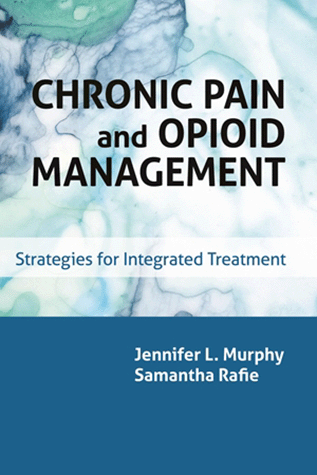
Chronic Pain and Opioid Management
Available formats
Also available from
This book presents an integrated approach for concurrently treating chronic pain and opioid use.
Many patients who suffer from chronic pain are also managing opioid medications. Because this population often requires a higher level of care, it is critical for providers to address pain and opioid management together.
This book presents an integrated healthcare team approach that helps patients manage opioid use in a structured, safe, and supportive environment while also exploring all of the factors that impact the patients’ pain experience.
This whole-person approach to care allows for cross-cutting strategies to be applied and maximizes the reduction of suffering.
The behavioral treatment strategies in this book can help providers assist patients who are struggling with chronic pain and have relied on opioids at one point. This includes individuals that are considering de-prescribing, are in the process of opioid tapering, have recently discontinued from opioids, or are currently using opioids effectively for pain.
Combining expert clinical guidance with the latest research and practical case examples, the book helps practitioners across healthcare disciplines understand their patients, improve rapport and engagement, and implement treatment strategies to help patients live their best lives.
Foreword, by David Tauben
Preface
Introduction
I. Foundations
Chapter 1: Chronic Pain and Opioids
Chapter 2: Treatment Approaches: The Evidence
Chapter 3: The Patient-Provider Relationship
II. Phase 1: Preparing for Change
Chapter 4: Evaluate the Patient’s Functioning and Well-Being
Chapter 5: Exchange Expectations and Address Resistance
III. Phase 2: Engaging in Strategies
Chapter 6: Develop Goals and a Treatment Plan
Chapter 7: Practice Helpful Strategies
Chapter 8: Address Common Barriers
Chapter 9: Monitor and Manage Symptoms
IV. Phase 3: Maintaining Gains
Chapter 10: Develop a Maintenance
Chapter 11: Address Setbacks
Chapter 12: Reinforce Resources Afterword: Conclusions
Jennifer L. Murphy, PhD, is a recognized authority and international speaker on optimizing behavioral treatments for chronic pain. She is the lead manual author, master trainer, and subject matter expert for the Department of Veterans Affairs Cognitive Behavioral Therapy for Chronic Pain and associate professor in the University of South Florida’s Morsani College of Medicine.
In her long-term role as clinical director of Tampa VA’s inpatient chronic pain rehabilitation program, Dr. Murphy provided clinical oversight for participants during opioid tapering.
She is co-investigator on numerous funded research trials and serves on the editorial board of Pain Medicine. Visit Jennifer.MurphyPhD.com.
Samantha Rafie, PhD, served as a leader in behavioral pain management in tertiary-level programs through primary care within several Functional Restoration Programs across California to VA hospitals and clinics.
Samantha is a graduate of the clinical psychology postdoctoral fellowship at the Tampa VA, where she specialized in pain management.
She has authored numerous peer-reviewed publications, and has taught future healthcare professionals as voluntary faculty at University of California, San Diego Health. Visit samantharafiephd.com and follow @chronicpain_doc.