Psychology’s evolution from a field of straight, white, middle-class people concerned mainly about other straight, white, middle-class people did not happen effortlessly. The field was needled, prodded and outright shoved by pioneers who would ultimately create a more inclusive—and more comprehensive—profession.
What follows are profiles of some of these pioneers, women of color who were among the first to break into psychology’s ranks. All of them made history simply by pursuing their passions in the face of indifference and hostility toward them based on their race and gender.
Thanks to their contributions, memory is less of a mystery, more military pilots survive risky maneuvers, fewer people contract HIV and women of color launching their careers today may feel a little less alone.
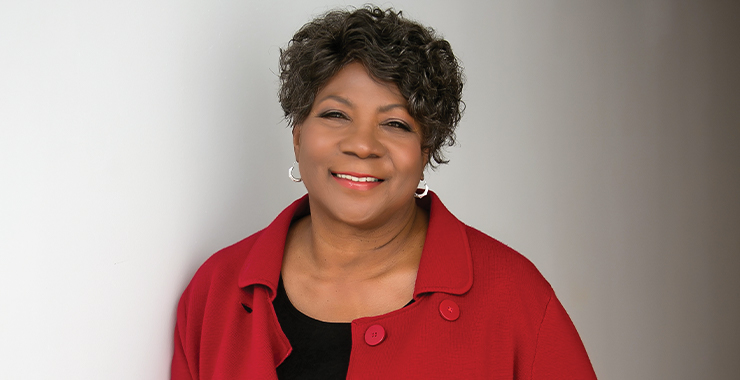
Margaret Beale Spencer
A game-changing pioneer who puts research into action
Margaret Beale Spencer, PhD, was a pharmacist planning to become a physician when she took a couple of psychology classes, was offered a doctoral fellowship at the University of Kansas and became one of the pre-eminent psychologists in human development instead.
Spencer earned her doctorate at the University of Chicago after getting her master’s in Kansas. She made an impression early, with a master’s thesis, later published in Developmental Psychology, that replicated the finding that both black and white preschoolers preferred white dolls, but then went further to find that children could be incentivized not to show this preference. The study suggested that the bias was learned and, along with Spencer’s follow-up research, revealed that these learned biases didn’t automatically translate to self-hatred and could be unlearned. Spencer also pioneered the Phenomenological Variant of Ecological Systems Theory, a framework for understanding development that centers on identity processes, culture and ecological considerations.
“At that time of my training, there was very little research on children of color, and most of it was very pathologically oriented,” Spencer says. “I knew that was not in fact representative of the population, so something was wrong with the questions being posed.”
A systems theorist, Spencer thinks of development in terms of vulnerability and resiliency. Everyone has vulnerabilities, she says. It’s the support they have around them that can boost their resiliency. In 2015, Spencer launched the Urban Resiliency Initiative, a program designed to put developmental research into action by cultivating support around family, education, safety and wellness, particularly in urban centers.
Combating the notion of children of color as the “other” has been a defining battle in Spencer’s career, one she still fights today. “It’s even more challenging now because there is a motivated ignorance,” she says. “It’s not that people do not know better, but social scientists choose not to include particular groups of people in the human family, as represented in their programs of research.”

Hortensia Amaro
An empathetic leader committed to helping others
Hortensia Amaro, PhD, arrived in the United States as a refugee in 1960, fleeing Cuba with her family at age 9. The family spent several disorienting months in Miami before moving to California under the Cuban Refugee Program. Years later, as a student at El Camino Community College, Amaro did a field placement in child development, tutoring a 9-year-old boy who was also from Cuba. “I could see the struggles he was going through in not understanding the language, not understanding the way people behaved and feeling marginal and uncomfortable and anxious,” Amaro says. “I connected with that because I had felt that way.”
For the first time, Amaro says, she realized that she could use her experiences to help others.
“She’s an academic who helped me to see you could be in academia and still have community impact,” says Alisa Lincoln, MPH, PhD, a professor of sociology and the director of the Institute for Health Equity and Social Justice Research at Northeastern University, which Amaro founded in 2002.
Amaro was elected to the National Academy of Medicine in 2011 and is now a distinguished professor and senior scholar for community health at Florida International University, but her work has always been situated well outside of the ivory tower. While working on a study of drug use during pregnancy early in her career, she met a woman whose heroin addiction had led to sex work, and ultimately being infected with HIV. When Amaro met her, the woman was waiting to find out if her baby had been infected. The experience spurred Amaro to focus on interventions research, a commitment that only grew when her younger brother was diagnosed with AIDS shortly thereafter. He died in 1989 at age 29.
A grieving Amaro became principal investigator on The Mom’s Project, a National Institute on Drug Abuse program studying HIV prevention in pregnant drug users, partners of drug users and sex workers in Boston. She also launched an inpatient substance use program called Entre Familia for pregnant and postpartum Latinas and went on to publish more than 160 articles on substance use in disenfranchised women. Her work has found, among other things, that treating trauma and teaching HIV prevention to women in substance use programs can keep them in treatment longer and reduce unprotected sex. In a testament to Amaro’s lasting impact, both programs she launched remain active, and the building housing the Entre Familia program now bears her name.
Gail Wyatt
A woman of firsts who paved the way for others
 Gail Wyatt, PhD, decided to become a psychologist in high school after reading the definition of clinical psychology in a book on careers. “I’m not sure it was really well-informed,” she laughs, “But I never wanted to be anything else since I was 14.” After attending historically black Fisk University and earning her doctorate at the University of California, Los Angeles (UCLA), Wyatt in 1973 became the first African-American woman licensed as a psychologist in California.
It was a “scary thing to do,” she says, because there was no one ahead of her to pave a way. Soon after she earned her PhD, UCLA began offering a training course in sex therapy. She took it. And then she went further, applying for a National Institutes of Health career development award to study African American and white women’s sexual experiences. She got it, becoming the first African-American to receive one of these prestigious awards.
At UCLA, she would also become the first black female psychologist ever to be promoted to full professor in a school of medicine.
Wyatt was also one of the first people to spotlight black women’s issues in research, says Hector Myers, PhD, a professor of medicine, health and society and psychology at Vanderbilt University, who met Wyatt in graduate school. “She was always one of those people who was willing to bring issues to the forefront and fight for them to be properly recognized,” Myers says.
Among other findings, Wyatt’s work has shown that community-based, peer-led programs can help prevent HIV-positive women from becoming victims of gender-based violence. She has also taken her work abroad, studying abortion, rape and intimate partner violence in South Africa.
Throughout her career, Wyatt fought not only for her research participants but also for her fellow scientists of color. As part of that effort, she started a section for ethnic minorities in APA’s Div. 12 (Society of Clinical Psychology) and helped to launch APA’s Div. 45 (Society for the Psychological Study of Culture, Ethnicity and Race). Unfortunately, Wyatt says, racism and discrimination still discourage many men and women from aspiring to psychology careers, but she is proud to push back as a mentor, encouraging young psychologists of color to reach for the big grants.
“You really have to believe in yourself and know that you deserve this honor,” she says.
Marigold Linton
A guiding light for American Indian researchers
 Growing up without electricity on the Morongo Indian Reservation in Southern California, Marigold Linton wasn’t sure what college was. When she got into one, she was certain she would flunk out—so much so that when she got straight A’s in her first semester at the University of California, Riverside, she went to the registrar to report a mistake.
It would be easy to look at Linton’s story as the first of her tribe to attend college as a meteoric rise: She was smart and driven, so she succeeded. But that narrative would elide the real struggle Linton went through adjusting to life outside the reservation. “I started my classes and I looked neither to the right nor to the left,” she recalls. “I did not talk to anybody. I didn’t make any friends. I studied and studied and studied and studied.”
Even after learning that those straight A’s were really hers, the certainty of failure never left her. Until age 35, years after she’d clinched a professorship and bought her own house, Linton still had nightmares about running back to the reservation with killers on her trail. “It was not a trivial transition,” she says.
As a researcher in long-term memory, Linton made a point of easing that transition for the next generation. “Marigold has been like a guardian angel watching over me,” says Monica Tsethlikai, PhD, a professor of psychology at Arizona State University and a member of the Zuni tribe. Throughout her career, Linton has worked to bring American Indian students into the academic fold, including by setting up a consortium to bring students from the University of Kansas (KU) and the nearby Haskell Indian Nations University together to do research.
Today, Linton is the director of American Indian outreach at KU and is working on a manuscript to summarize her ongoing 45-year self-study of memory and knowledge. Her original study, launched in 1972, found that she forgot events in her own life at a rate of about 5 percent per year after the year they occurred; continued analysis of her burgeoning data set suggests that the more times a person experiences an event, the less episodic and more semantic that memory will become. There is a lot of data to process, but Tsethlikai and Linton hope to use a dynamic systems approach to quantify how some memories fade and others strengthen over time.
“She told me she plans to live until she is 105 years old,” Tsethlikai says, “so we have 23 years to get it done.”
Vonnie McLoyd
A leader in the study of how poverty affects children
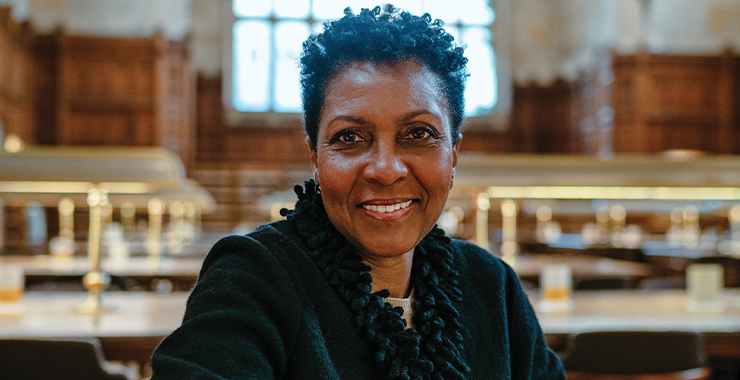
Vonnie McLoyd, PhD, describes herself as a “low-profile kind of person.” Bring up the MacArthur Foundation fellowship she got in 1996—colloquially known as a “genius grant”—and it will quickly become clear that she’d rather not dwell on the honor. But in the field of child development, McLoyd’s work is anything but low profile. “It is hard to think of many psychologists who have contributed as much as Vonnie McLoyd to our understanding of the ways in which poverty impacts the developing child,” says Laurence Steinberg, PhD, a Temple University psychologist who co-authored a book on studying minority adolescents with McLoyd in 1998.
McLoyd earned her PhD in 1975 at the University of Michigan, where she found community in the Black Student Psychological Association. She was among the second significant cohort of black students in the psychology department, she recalls. “It was, I think, intimidating for many of us, but we had enormous support from each other and from some key faculty,” she says.
McLoyd remembers being conscious of class and race from an early age, in part due to the influence of her father, an African Methodist Episcopal minister. Her work has delved into the impacts of discrimination, financial strain and parenting on the development of black children. One of her key papers reviewing the negative effects of economic hardship on black children, published in Child Development in 1990, has been cited more than 3,000 times.
McLoyd sees a lot to be optimistic about in psychology today. “One thing that makes me so optimistic about the future of people of color in the academy is just seeing the number of women of color and people of color who are guest editors of special issues or special sections of the major journals,” she says. “All of those things are markers of how increasingly well-integrated people of color are in the field.”
Diana Slaughter Kotzin
A leader in the fight for early education
 Retirement hasn’t removed any of Diana Slaughter Kotzin’s enthusiasm for her field of choice. When discussing the American education system today, Kotzin becomes animated. “We have a huge challenge to get people sufficiently educated so that they can participate as citizens in an information age,” she says.
Kotzin grew up as fifth in a living maternal line. She knew her great-great-grandmother on her mother’s side. As such, she says, she implicitly understood the importance of extended familial ties and intergenerational transfer of culture in the lives of youth. This understanding informed her research investigating the relationship between African-American families and the educational system. First at the University of Chicago and then at Northwestern University, Kotzin (then Slaughter-Defoe) focused on how parents could help children thrive in the schools available to them. She conducted influential research on Head Start and educational expectations in African-American families. Later at Northwestern and at the University of Pennsylvania (Penn), Kotzin shifted to studying what schools do to foster the resilience of children. She’s researched whether private and charter schools benefit African-American children more than public schools (no strong evidence that they do, she says) and highlighted, in film, the history of Freedom Schools, volunteer-led efforts to educate and organize black citizens of the South during the civil rights era. At Penn, Kotzin held an endowed chair named for Constance E. Clayton, the first African-American to have a professorship named after her in the Ivy League.
Today, Kotzin is heartened to see the near universal acknowledgement that early education is a boon to children, especially poor children—even if some states still cannot fund programs. But she sees a lot to do in updating education for youths ages 5 to 18 in the modern economy. “This is a different ballgame, and it requires support of young people longer than we conceptualized,” she says. “We need new leadership in the psychology and education fields who understand the kind of people that we must produce in order to have an active, involved citizenry in the next 50 years.”
Lisa Rey Thomas
A catalyst for change through community work
 Lisa Rey Thomas, PhD, went into psychology with a goal firmly in mind: to help serve her community of American Indian/Alaska Native people. A member of the Tlingit tribe of the Pacific Northwest, Thomas launched her education as an older undergraduate at the University of Washington, juggling three jobs to pay her way. While there, she took a class with well-known addictive behaviors scholar Alan Marlatt, PhD. Realizing that the addiction literature overlooked American Indians and Alaska Natives, Thomas approached Marlatt, and the two started working together with local tribes to rectify the exclusion.
Thomas then thought she’d make her mark in policy and started law school. But legal work seemed too removed. “Community-focused and community-based work was really my passion,” Thomas says. She went back to the University of Washington for her PhD in clinical psychology instead. It wasn’t easy. Thomas already had one child when she started graduate school and had another during the program, and her professors weren’t accustomed to working with students with that sort of family responsibility. But she drew strength from the support of friends and family and from the knowledge that she could pioneer a way for future minority women. “I needed to shake the bars a little bit so that people coming behind me didn’t have the same difficulties that I did,” she says.
Among Thomas’s proudest accomplishments is the Healing of the Canoe project, a youth substance use prevention program developed with the Suquamish and Port Gamble S’Klallam tribes. Tribal members took the driver’s seat in developing the project, and by 2016, Thomas and her team had trained more than 300 people in the program curriculum. Their research on the intervention has found that it increases optimism, self-efficacy and cultural identity in youth while decreasing substance use. Too often, Thomas says, outsiders look at American Indians and Alaska Natives from a deficit perspective. But the Healing of the Canoe project focuses on the strengths of tribal culture and traditions.
“Tribes and Urban Indians,” Thomas says, “are leading the way in providing whole-person, integrated care.”
Glorisa Canino
A persistent trailblazer known for her tenacity
 Glorisa Canino, PhD, credits her success to grabbing opportunities when she sees them. The Puerto Rico native comes from “a family of shrinks,” she says, and a pragmatic streak led her to a career in empirical research. After earning her doctorate at Temple University, Canino returned to Puerto Rico as a consultant for the U.S. territory’s Mental Health Commissioner. Despite never having written a grant before, she obtained funding in 1985 for a study on the epidemiology of mental health on the island. Her interests sprawled from there, touching seemingly every underappreciated aspect of mental health for Puerto Ricans: disaster psychology, poverty and pediatric asthma (the island has one of the highest rates in the world).
Now at the University of Puerto Rico, Canino is a conduit for collaboration between researchers on the island and researchers on the U.S. mainland. With colleagues on the mainland, she’s done major projects comparing the mental health and asthma outcomes of Puerto Rican youth in San Juan with Puerto Rican children who immigrated to the Bronx. The work has investigated the impact on asthma outcomes from a variety of factors, including genetics, diet and parental mental health. The researchers are now studying the children of the original study participants, enabling them to detect intergenerational effects.
Canino makes these projects—some now closing in on their third decade—sound like faits accompli, but her collaborators praise her tenacity in making them happen. Canino “has the persistence to make big ideas come to reality,” says Cristiane Duarte, PhD, MPH, a medical psychologist at Columbia University.
“We have so much to thank her for,” says Margarita Alegria, PhD, a professor of psychiatry at Harvard Medical School. “Opening doors, offering personal and career support, and finding ways to make sure you benefited. I cannot name the millions of ways in which she really has dedicated herself to conducting high-quality scientific research while bringing so many of us along the way.”
As a researcher at the University of Puerto Rico, Dr. Glorisa Canino is a conduit for collaboration between researchers on the island and on the U.S. mainland.
Cynthia García Coll
A heroine for culture, ethnicity and race
While doing graduate work in the 1970s and ’80s, Cynthia García Coll, PhD, was part of the burgeoning, energetic field of developmental psychology. It was a privilege, she says, to meet greats like Mary Ainsworth and John Bowlby, pioneers in attachment theory, and Urie Bronfenbrenner, the developer of the ecological systems theory of child development. She apprenticed to other eminent developmental psychologists, including Jerome Kagan, Dante Cicchetti and T. Berry Brazelton. But as García Coll traveled between the mainland United States and her native Puerto Rico, she realized that developmental psychology was missing something: the importance of culture, race and ethnicity in defining normative child development. García Coll’s career became an effort to fill in those gaps—and to open her colleagues’ eyes to what they were overlooking. “It was a battle,” she says. “We were screaming at each other in academic meetings.”
In the beginning, García Coll says, there was a small group of researchers, maybe five or 10, beating the drum. García Coll’s research laid out the stakes. She worked with teen mothers in Puerto Rico, studied the effects of prematurity and infant temperament on development, and researched the “immigrant paradox” in which the assimilated children of immigrants do less well than just-arrived immigrants to the United States. She has found, for example, that the immigrant paradox varies by ethnicity and age, such that children of Mexican immigrants show it most strongly as teenagers rather than as young children.
Today, home in Puerto Rico after 36 years living on the mainland, García Coll is working on a National Academy of Sciences consensus study on the importance of pregnancy and the first years of life for development, writing a book on the principles of development across the life span and working on a project studying the development of babies exposed to the Zika virus in utero.
Among young psychologists today, García Coll says, the once-outsider view that culture, ethnicity and discrimination matter for children’s development is no longer up for debate.
“It’s still a battle, but I see that the numbers have shifted,” García Coll says. “We are not five anymore, and that is very, very exciting to me.”
Gloria Chisum
A high-flying innovator with a strong vision
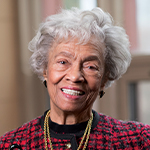 As a kid in Muskogee, Oklahoma, Gloria Chisum, PhD, loved figuring out how things worked—much to the chagrin of her parents and grandmother, who didn’t appreciate her disassembling her belongings. It was a trait that would serve her well as a scientist. Chisum earned her PhD at the University of Pennsylvania in 1960, studying sensory psychology. She then took a job at the nearby Naval Air Development Center, where she devoted her career to ensuring that pilots of high-performance aircraft could fly safely.
It was high-stakes stuff. Early on, for example, Chisum studied how long pilots could fly blind after having their night vision wiped out by a bright flash of light. When pulling complex maneuvers, Chisum and her team found, the pilots could fly for only three seconds without vision before their ability to control the craft got dicey. The researchers developed goggles to protect pilots’ vision and ways to give them flight data while their sight was readjusting. One goal, Chisum says, was designing specially lit displays that could be read by someone who’d been temporarily blinded by light.
Chisum’s early career was the era of NASA’s “hidden figures” in which black women worked on high-level space projects in segregated conditions. But the Naval Air Development Center wasn’t like that, Chisum says. “We weren’t hidden,” she says, and the status quo of discrimination and prejudice was changing. At 88, Chisum takes a long view: “You take three steps forward and two steps back, so now I think there are probably some problems people are having that I didn’t have to face. It all depends on the political situation.”
This article is the idea of APA’s 2018 President Jessica Henderson Daniel, PhD, who has worked throughout her career to highlight the accomplishments of women of color and to support the next generation.