An American psychology degree is highly regarded around the world—and some adventure-seeking U.S. psychologists are capitalizing on this fact by uprooting their lives to work abroad.
Operating in a variety of settings, including research, practice, government and applied, psychologists find overseas work both rewarding and challenging. Living far from extended family can be tough, yet many have found new and refreshing perspectives on culture, identity and even their own psychological training.
To learn more about this experience, the Monitor interviewed expatriate psychologists about why they left the United States, how they found jobs abroad and what it’s like managing life in a foreign country. Here are their stories.
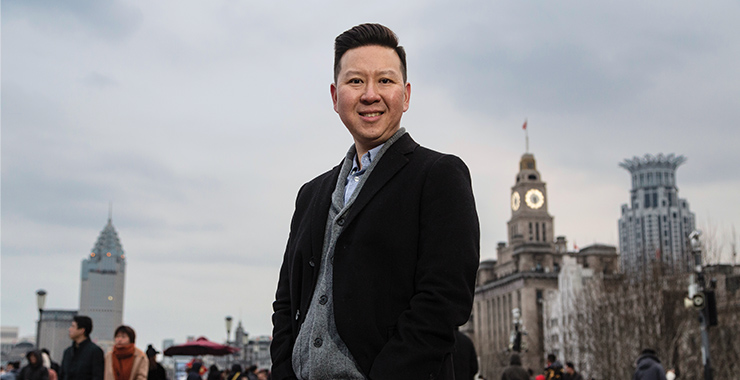
Shanghai
A clinician specializing in cognitive therapy
George Hu, PsyD, and his wife are second-generation Chinese-Americans, but they always felt disconnected from their Chinese heritage. So, when Hu had the opportunity to travel to China for a training rotation during graduate school, he seized it.
"In those nine months, I learned so much about the Chinese psyche, about what I used to conceive as immutable but was actually cultural, about myself and my own cultural identity as an Asian-American," he says.
Back in the United States, Hu, who earned his degree from Alliant International University in San Francisco, did clinical and administrative work as the program coordinator for outpatient services at a clinic in Fremont, California. Five years into the job, he decided to look for work in China and used LinkedIn and his professional network to find a full-time job in Beijing as director of the Center for Cognitive Behavioral Therapy at a large hospital system. In 2016, he moved to Shanghai to become chief of mental health at Shanghai United Family Pudong Hospital. He also sits on the board of the Shanghai International Mental Health Association and several other community organizations that work to increase access to mental health care and provide ongoing support to adults with developmental disabilities in Uzbekistan.
In the clinic, Hu mostly delivers cognitive-behavioral therapy and treats problems such as anxiety and family difficulties. He says that while many Chinese consider mental illness shameful, the demand for psychological services is growing because the country is still reeling from globalization and the radical legal and cultural shifts that followed the Communist revolution, reshaping Chinese society.
Acclimating to life in China was tough, partly because Hu looks and sounds like a local but isn’t familiar with many customs. He also found himself questioning some of his basic psychological training when he began to apply certain concepts to the population.
"Almost everything psychologists know was developed and tested on Western populations from start to finish," he says, suggesting that even basic concepts such as attachment theory may not hold in China. "We need to back way up and start re-asking some of these questions that our field has thought to be fundamental. This is a fascinating place to be as these questions are being asked and answered."
In fact, working in a country where the discipline of psychology is at a younger developmental stage has been incredibly rewarding for him.
"You get to influence the field more than you might typically be able to. The growth opportunities here are endless," Hu says.
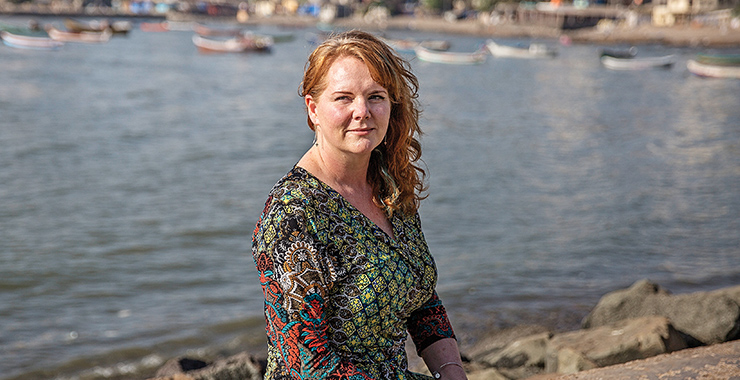
Mumbai
A school psychologist who moved for her kids
Priscilla Bade-White, PhD, a school psychologist based in Mumbai, India, was inspired to move abroad when she started a family.
"When my husband and I had our first child, we realized that the world is changing and people are becoming more interconnected and globally oriented," says Bade-White, who earned her degree from the University of Arizona and left the United States in 2011. "We felt that it would be best for our children to experience living overseas."
For several years, Bade-White worked at U.S. Department of Defense Dependents Schools in Germany, Japan and Bahrain. Now, she works at the American School of Bombay, a private, international elementary, middle and high school.
"On a typical day, I might assess students’ social skills, attention and emotional regulation, lead counseling and skill-building sessions and work on schoolwide learning initiatives," Bade-White says. "The warmth and gratitude that are part of Indian culture make my day-to-day life deeply rewarding." While mental health care is stigmatized in India, psychological services are starting to be embraced in metropolitan areas, she says, but rural populations often mistrust behavioral health practitioners.
Bade-White says living abroad has benefited her children, now ages 9 and 11: They have made friends quickly, have a great appreciation for cultural differences and have developed a sense of social justice. In India, for instance, they’ve noticed extreme wealth disparities and questioned why all citizens don’t have access to clean drinking water.
Raising children abroad has also made it easier to connect with other expatriate families, she says. "We’ve found a group of people from different cultures who have a similar sense of adventure and curiosity," she says. "It’s this web of people from all over the place that makes the world seem very small and intimate."
Her expat support systems helped her family transition to new countries by providing insight about language, housing and safety.
Psychologists who are looking for such communities should seek out connections through work, neighbors or even realtors who focus their business on expats, she suggests.

United Kingdom
A supervisor for the next generation
Gerald Burgess, PsyD, had planned to move to England, where his wife was born and raised, even before he started his doctoral studies at James Madison University in Harrisonburg, Virginia. To ease the transition, he completed his internship year in London.
Owing to the United Kingdom’s strict laws for psychologists trained in other countries, after completing his 17-month internship, Burgess had to log two additional years of clinical training before he was qualified to practice independently.
"Getting my degree recognized here was challenging," says Burgess, who then practiced clinical neuropsychology in England’s National Health Service and is now a clinical psychologist trainer at the University of Leicester. "But it’s an absolutely fantastic thing to pick up your career and go somewhere else."
In a typical workweek, Burgess teaches neuropsychology and psychometrics to doctoral students and undergraduates, supervises research for multiple doctoral dissertations and performs administrative duties such as creating admission criteria for the psychology department.
He says the different regulations, therapies and priorities in England have exposed him to many new areas of psychology, including neuropsychology, older adult therapies and treatments for people with intellectual disabilities.
"Exploring these new domains opened up new possibilities that I had never considered during my time in the United States," says Burgess, who previously worked in a community mental health clinic in Virginia.
Later this year, Burgess will transition to a new job at the Salomons Institute for Applied Psychology, a specialized center for postgraduate psychology training within Canterbury Christ Church University. In addition to training and supervising clinical psychologists, he will launch and direct the institute’s new postdoctoral program in clinical neuropsychology.
Costa Rica
A practitioner in english and spanish
For 20 years, Juanita Dimas, PhD, had a thriving career in academia, clinical practice and public health management while living in California. But she craved an international experience. As a child, she had spent six years in Venezuela and Brazil and wanted to provide a similar international experience for her daughter.
"I had a list of criteria and a world map," says Dimas, who was trained at the University of California, Berkeley. "Costa Rica came up as a place that fit," primarily because of its language, climate, safety and economic and political stability.
So, in 2013, she moved to San José, Costa Rica, where her focus shifted to purely clinical work. She helped open the country’s first community mental health clinic, Centro Comunitario de Salud Mental, located in an impoverished area of San José and mostly serving immigrants from Nicaragua who lack health insurance as well as adequate food and housing. Dimas advised social workers on how to consider the psychological needs of clients, many of whom reported experiencing depression, trauma and domestic violence.
She later launched an online practice, which now serves about half of her clients, obtaining training online and separately researching technological, legal and ethical considerations.
Practicing in both English and Spanish, Dimas treats Costa Ricans, who are generally open to psychological services but often struggle to find high-quality, culturally relevant care, she says. In addition, she works online with patients from countries all over the world, such as Australia, Colombia and Spain, that recognize her California license to practice. Most U.S. state laws allow psychologists licensed in the United States to offer services internationally, as long as a client’s country of residence does not require additional licensing or training.
Dimas also treats other expatriates, who can face challenges around identity and belonging, drawing on her own experiences of such stressors.
After five years in Costa Rica, Dimas recently accepted a new job in Northern California to be closer to her extended family. She sees the move as just another stop on her journey.
"We’re not going back to what we had, what we were," she says. "Now, we have a completely different mindset, which makes it more of a step forward."
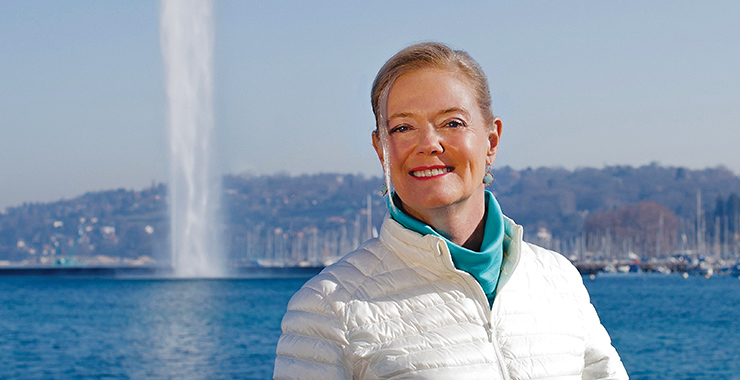
Geneva
A practitioner with diverse clientele
Before Allyn Enderlyn, PhD, MBA, ever practiced psychology, she had already moved from Bethesda, Maryland, to Switzerland to serve as the head of resource mobilization for a sister agency of the United Nations, where she managed infrastructure projects for developing nations. Ten years later, she was ready for a career change.
"Working at the United Nations gave me incredible and vast insight on human nature and the ability to have contact with diverse peoples. The journey reminded me that I have always been a psychologist at heart," she says. "I decided to go back to my passion, which is psychology."
After obtaining her doctorate in clinical psychology with an emphasis in depth psychology from the Pacifica Graduate Institute in Santa Barbara, California, Enderlyn returned to Switzerland, where she started a clinical practice in Geneva focused on analytical psychology, narrative therapy and cognitive-behavioral therapy. She also teaches psychopathological assessment in the graduate program at the Geneva campus of Webster University.
Enderlyn loves the diversity of her clinical practice. Her clients include multinational families who need help with cultural acclimation, expatriate professionals and diplomats from around the world.
"People come in and out of Geneva all the time and need services that they may not be able to access in their home countries because there are few licensed psychologists or psychotherapists," she says.
For clinical psychologists interested in practicing in Europe, she recommends carefully tracking licensure requirements. In some countries, getting licensed can feel almost as challenging as completing a doctoral degree, she says.
Though Enderlyn still maintains an office, home and license in Maryland and travels there often, she feels that Switzerland is where she truly belongs. "I’ve evolved so much in terms of my global citizenship," she says.

Kuwait
A pioneer who overseas mental health in a clinic
As a child who often traveled abroad with his parents, Nicholas Scull, PhD, LCSW, grew up dreaming of doing international work. After he finished studying counseling psychology at the University of Wisconsin–Madison, that dream became a reality: He moved to Salmiya, Kuwait, and secured a job through familial contacts as the first psychologist at Fawzia Sultan Healthcare Network, a nonprofit clinic that serves children, adolescents and adults.
His success there led the clinic to launch a department of mental health and wellness, which he now directs, overseeing a clinical staff of 15. Though mental health care carries a strong stigma in Kuwait, Scull has seen an uptick in patients seeking help for depression, anxiety and relationship concerns since he arrived in the country. He is also an adjunct professor at Lehigh University, based in Bethlehem, Pennsylvania, which hosts part of its international school counseling program in Kuwait.
Thanks to his familiarity with international travel, Scull quickly acclimated to daily life in Kuwait.
Adapting professionally, however, was not as easy. When he arrived in 2010, Scull was one of four U.S.-licensed psychologists in the country of three and a half million people. Adding to the challenge is that Kuwait does not have a formal licensure process or ethics code for mental health professionals. Scull’s isolation from other psychologists was compounded by the lack of social services in Kuwait. There are no social workers, no foster-care system and only limited availability of inpatient care, so Scull often felt helpless to aid his patients.
"When it comes to situations like domestic violence and child abuse, there was no infrastructure in place to refer to. That was a really challenging adjustment for me," he says.
But over the years, as support for psychological services grew at the clinic, Scull has found his work incredibly rewarding, especially his efforts to adapt Western theories to a culture that is highly collectivistic.
For others interested in working abroad, he advises first reflecting on one’s motivations and then determining one’s level of commitment. "Sometimes, short-term placements can do more harm than good to local communities, so it’s important to look past the novelty of moving and appreciate the difficulties inherent to this work," he says.
Saudi Arabia
An international psychology researcher
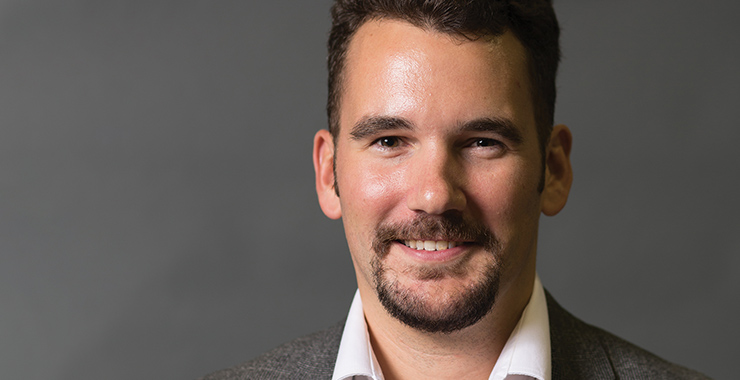
After setting his sights on working abroad in academia, Kyle Msall, PhD, entered the doctoral program at the Chicago School of Professional Psychology in Washington, D.C., aiming to gain research experience and teaching skills that would prepare him for an international appointment. He had already taught an English-language course to Middle Eastern students at Missouri State University in Springfield and chose to focus his doctoral dissertation on humanitarian organizations in Iraq.
Then, he saw a recruitment ad in the international section of HigherEdJobs.com for a position at the American University of Kuwait, where he evaluated mental health services in the Kuwaiti prison system. Msall got the position and spent two years there, then secured a job as assistant professor of international psychology at King Fahd Security College in Riyadh, Saudi Arabia. His ongoing research includes a study of posttraumatic stress disorder in survivors of terrorism and an evaluation of efforts to reintegrate former Islamic State child soldiers into society.
"The Middle East is an especially good place for international psychologists because of the need for psychological research on the region and population," he says. "I’m interested in helping to close that gap."
While his resettlement package made his transition smooth—many international universities cover the costs of moving, housing and even school tuition for children—in Saudi Arabia, Msall has encountered some obstacles in obtaining visas and residency permits for his wife and even his dog.
"You learn how to be patient," he says. "It’s a different culture when it comes to getting things done."
While apartment living is standard throughout much of the Middle East, many Westerners in Saudi Arabia live in expatriate "compounds," gated residential communities with schools, restaurants and convenience stores. Such areas preserve some Western customs.
Outside these compounds, women’s rights in the country remain highly restricted: Even expat women cannot enter Saudi Arabia without a male sponsor and must wear an abaya, a full-length black robe, in public.
Msall recommends pursuing any international experience with an open mind and a willingness to be surprised.
It’s also important to study up on the culture as much as you can before you move, he says. "The more research you do about the country you’re living in, the better."
Tokyo
A psychologist who counsels families
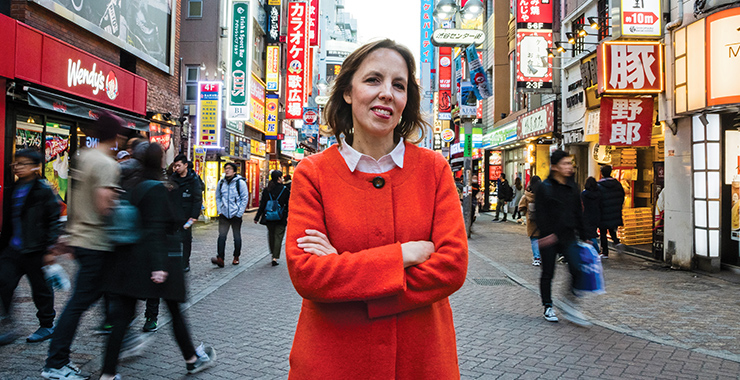
Lorinda Kiyama, EdD, was already living abroad when she decided to pursue a psychology career. She grew up in Darien, Connecticut, and in 1999 moved to Japan to join her husband, a Japanese native she met while studying abroad. At first, she taught Japanese literature at Tokyo Institute of Technology. Then, sparked by an interest in adoption mediation, she decided to pursue a degree in counseling psychology online through Argosy University. It was an adventurous decision for Kiyama since in Japan, many people are ashamed to seek psychological help—especially to address relationship problems—although that stigma is starting to lessen, she says.
Kiyama earned that degree in 2016 and now uses her psychological knowledge in a variety of professional roles: She teaches conflict resolution at the Academy for Leadership at Tokyo Tech, researches adoption mediation and sees patients at the student counseling center. In addition, Kiyama counsels international families with children in Japanese public schools and international couples seeking to adopt Japanese children.
"There are almost 40,000 children in Japanese orphanages," she says. "It’s very gratifying for me to help some of those kids find a home."
Kiyama, who has two children of her own, says two major advantages of living in Japan are the country’s national health-care system and its benefits for working parents. "The social support system is absolutely fantastic for people with kids," she says, citing nearly one year of paid leave for new parents and inexpensive public day care.
Despite these benefits, some Japanese employers require long hours that can be challenging for those with young children or other family-care responsibilities, but Kiyama says her colleagues have been supportive.
For those moving overseas with children, Kiyama recommends searching online for parent support groups. Her work with international families, she says, has shown her that children may struggle to acclimate to a foreign school and that some may even experience bullying.
Kiyama suggests that psychologists who are interested in working abroad reach out to international counseling agencies and English-speaking universities to find out about possible job opportunities.
"If you decide to leave the United States, stay connected with academic or professional groups, maintain those relationships and don’t lose track of that network. At the same time, get to know the local psychologists," she says. "Being connected to both is really valuable."
From Albania to Zimbabwe
A world traveler for the U.S. Government
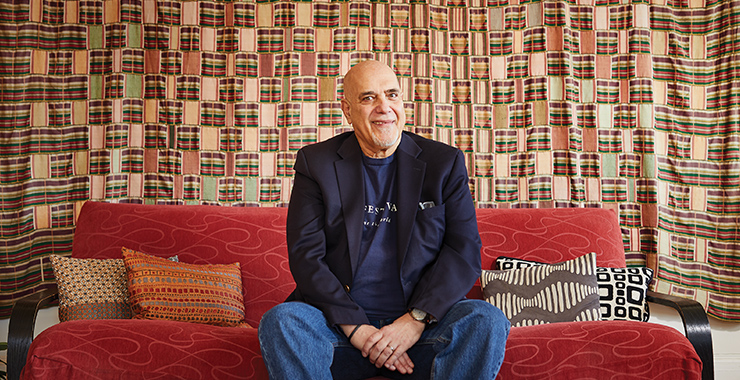
As a program developer and evaluator for organizations funded by the U.S. Agency for International Development (USAID), James Statman, PhD, has lived and worked in Albania, Azerbaijan, Egypt, Kosovo, Liberia, Nigeria, South Africa, Swaziland, Tunisia and Zimbabwe. Now, he’s back at his U.S. home in Brookline, Massachusetts, where he does independent consulting, writing proposals and providing short-term advisement for similar international projects funded by USAID, the international development arm of the U.S. government.
He began his career as an academic social psychologist at The Catholic University of America in Washington, D.C., evaluating and designing community education programs for youth. His international work began in 1978 when a D.C.-based organization he partnered with asked him to help design and implement rural development programs in West Africa.
Over the next few decades, Statman worked for a series of organizations that had grants from USAID to create programs for children and adolescents abroad. For example, he spent the past two years in northern Nigeria analyzing why the country has more children out of school than anywhere else in the world and setting up centers to teach children to read.
During longer stints, Statman’s family joined him abroad. His children attended school in Zimbabwe in the late 2000s, when the country experienced billion-percent hyperinflation and violent youth militia roamed the streets. The family had an evacuation plan and came very close to using it.
"You must have a high tolerance for ambiguity and confusion in these situations," he says. "You also need to know locals and rely on their good judgment, because it’s very hard for an expat to assess certain risks."
Despite safety concerns, Statman says living and working abroad has enabled him and his family to put their lives in context, helping them better understand the world and their place in it.
"Virtually every place I’ve been, I feel like a kid in a candy shop. I’ve learned so much," he says. "I’m a psychologist because I’m interested in people’s lives—both how their political, social and economic context affects their lives and how they go about changing that."
Grenada
A director of psychological services
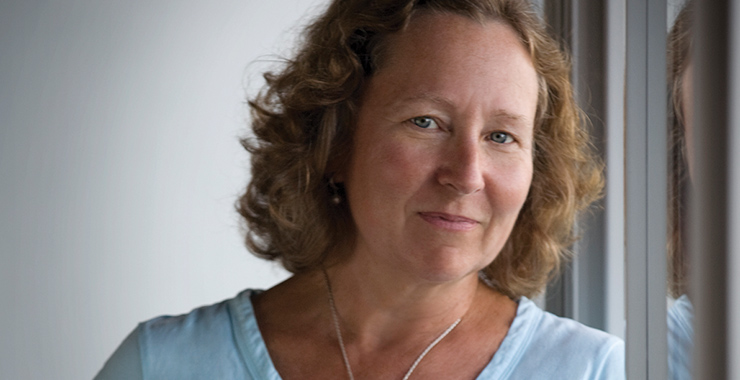
In 2008, Barbara Landon, PsyD, and her husband found themselves with an empty nest and a desire to leave Maine, where they had raised their family. Landon connected with a former classmate working in Grenada, the island nation in the West Indies, who helped her secure a position at St. George’s University, where she now works as director of the psychological services center and professor of clinical community psychology and bioethics.
In Grenada, Landon, who earned her degree from Antioch University in New Hampshire and practiced pediatric neuropsychology while living in Maine, helped launch the local Saving Brainsopens in new window initiative, in an effort to rescue the neurodevelopment of Zika-infected babies. As part of that continuing effort, she and her colleagues are testing the effectiveness of a program aimed at improving cognitive, social-emotional and language outcomes in affected children. "It’s been an incredible gift to live in Grenada," Landon says. "I’ve undertaken research and stretched in ways that I never would have been able to do in rural Maine."
She cautions that while island life may seem like a tropical paradise, there’s a history of poverty and even slavery in many island nations. But this history presents opportunities for American psychologists to do meaningful work in places where the discipline is less established. For Landon, this involves recruiting Caribbean students to study indigenous psychological practices through her university’s master’s program in clinical community psychology.
For those who decide to make such a jump, she advises flexibility and humility.
"Realize that all the things you learned in school about cultural competence and multiculturalism are only words in a book," she says. "To truly grasp what these words mean, you have to live it."