"My kid could have done that." It’s a common criticism of abstract art, including the paint splatters of Jackson Pollock or the playful shapes and childlike figures of Joan Miró. But psychologist Ellen Winner, PhD, wasn’t so sure.
She wondered if it was true that an abstract painting by a great artist was indistinguishable from art made by children or even animals. In other words, can we somehow judge skill in seemingly random splatters and lines?
That question is one of the many Winner has explored at her Arts and Mind Lab at Boston College, which studies the cognitive factors at play in creating and experiencing art.
To better understand people’s reactions to abstract painting, Winner led a series of experiments in which she and her colleagues presented adult participants who had little familiarity with abstract art with pairs of paintings that were superficially similar—but one had been painted by a great abstract expressionist, while a child, monkey, ape or elephant had created the other. Without revealing the artists, she asked participants which they preferred, and which they thought was a better work of art. For both questions, participants chose the fine art more often than chance. Winner then repeated the study but asked participants to choose which they thought was by a real artist, and which was by a child or animal. Again, the untrained observers correctly identified work by great artists more often than not. In another variation, she mislabeled the paintings. Asked which they preferred and which was a better work of art, participants were still more likely to choose artwork by fine artists, even though they believed it had been created by a child (Cognitionopens in new window, Vol. 137, No. 1, 2015).
When Winner asked participants why they picked the paintings they did, they described the images they chose as less random and more planned. And when asked to rate the unlabeled images on a variety of dimensions, the ones by professional artists received higher ratings of intentionality. "We believe people are able to tell the difference based on the level of perceived intentionality," Winner explains. "When you look at the art, you can somehow tell if it’s somewhat ordered or somewhat random." Precisely how we see the mind behind the art, she adds, is still a mystery. "There’s something in the structure, but we don’t know what it is."
Winner is naturally drawn to such philosophical questions about the arts since "psychology grew out of philosophy," she says. She has, for instance, explored why we disparage forgery and whether we believe our aesthetic preferences have any objective basis. Yet many of her projects are much more applied. In one line of work, she and her students identified the cognitive skills taught in arts classes, with the goal of more systematically judging whether arts education influences academic outcomes. She has also studied giftedness in the arts, a topic that can have implications for better supporting artistically gifted children in schools. She and her students have also explored emotion regulation through art, and the link between creativity and executive functioning.
All of her projects stem from a deep appreciation for the arts. "The arts began before the sciences," she says. "Art is a fundamental part of being human."
A rage to master
After graduating from Radcliffe College with an undergraduate degree in English, Winner enrolled at the School of the Museum of Fine Arts in Boston to study painting. But she developed doubts about whether she was cut out for a career as an artist. She began researching programs in clinical psychology and saw an announcement for a research assistant job at Project Zero, a program to study learning in and through the arts, founded by the philosopher Nelson Goodman at the Harvard Graduate School of Education in 1967.
That ad changed everything. "I discovered I could actually do research about the subject I knew and loved best," she says. Winner got the job and went on to earn a PhD at Harvard, studying how children develop the ability to use metaphor—a kind of linguistic art, and one well suited to a former English major. After graduating in 1978, she joined the faculty at Boston College and continued to work with Project Zero, where she remains a research associate.
After her foray into metaphor and then irony, Winner turned her attention to studying visual arts. Her lab has always been small, with two or three doctoral students and a team of undergraduate volunteers. As an under-the-radar subfield, the psychology of the arts has never attracted strong support from large funding sources, but Winner has secured grants from the National Endowment for the Arts and the National Science Foundation, as well as private foundations. "With undergraduate volunteers we get a lot of research done," she says. "You don’t need an enormous lab and huge funding to do good work."
Among that work is research to better understand giftedness. With her former student Jennifer Drake, PhD, now an assistant professor of psychology at Brooklyn College of the City University of New York, Winner studied "precocious realists"—children able to create extremely realistic drawings from a very young age. Gifted children often share certain traits, whether they excel in drawing, music, athletics or some other domain: They tend to learn rapidly and make discoveries in that domain without much guidance from grown-ups. They also have an intrinsic drive to practice—what Winner calls a "rage to master." You’ll find a precocious artist drawing at the breakfast table, doodling on her schoolbooks all day and escaping to draw even when she has friends over to play. "They are passionately motivated and unable to pull themselves away from what they love to do," Winner says.
Does that talent for drawing translate to other areas of their lives? To find out, Winner and Drake compared 12 precocious realists with matched controls and found that giftedness in drawing wasn’t related to either verbal or nonverbal IQ. Precocious realists did score better than their peers on visual-spatial tasks that required the ability to focus on parts of a visual display. But the drawing prodigies scored no higher than their peers on tests of visual memory, visual imagery or mental rotation (Roeper Reviewopens in new window, Vol. 40, No. 4, 2018). Drake and Winner conclude that these talented young artists could benefit from advanced arts education. Yet while gifted education programs are relatively common for academic giftedness, targeted art education programs for precocious artists are hard to come by.
The benefits of arts education
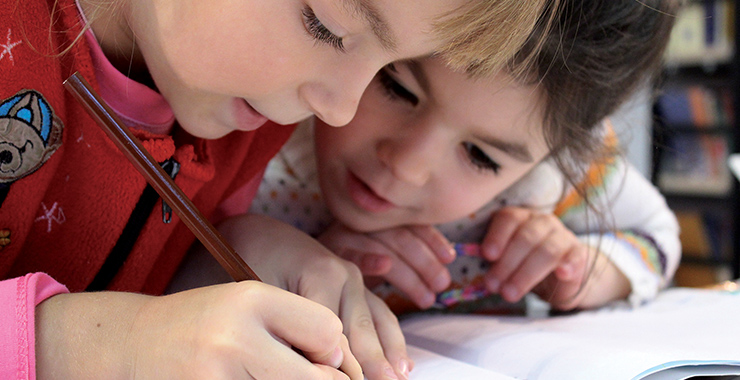
Winner has also explored how typical children might benefit from arts education. It’s a loaded question. Funding for arts education is often precarious, and arts advocates are eager to show that studying art or music will lead to better grades or higher SAT scores.
Winner was cautious about making that claim. "I didn’t see what the mechanism might be for a transfer effect," she says. So, she and her colleagues undertook a series of meta-analyses to explore the link between arts education and academic outcomes (Journal of Aesthetic Educationopens in new window, Vol. 34, No. 3/4, 2000). They surveyed hundreds of articles and published a series of papers, each focused on different art forms and type of outcomes.
The results didn’t bode well for transfer effects, as Winner and her collaborator Lois Hetland, EdD, summarized in a report on the project (Arts Education Policy Reviewopens in new window, Vol. 102, No. 5, 2001). "In general, correlational studies showed a strong connection: Kids who take arts classes do well in school," Winner explains. But that connection unraveled when they looked at experimental studies, she adds. "In the experimental studies, there was no causal effect—and of course, there are many explanations for a correlation besides a causal one."
Although arts advocates were not happy with those results, Winner says it’s the researcher’s job to accurately show what studying the arts can—and cannot—do. "If the only justification for art is raising academic performance, then as soon as superintendents find out that doesn’t hold up, they’ll have reason to cut the arts," she says. Winner asserts that the arts should be judged on their own merit, not because painting might make you better at geometry. "Nobody expects math skills to transfer to biology. The arts are held to a different standard," she says. "I fundamentally believe there is value to learning the arts, independent of transfer."
Artistic habits of mind
To change the conversation around arts education, Winner and her colleagues set out to characterize how visual arts classes teach student about ways of thinking. They filmed and interviewed visual arts teachers on the job and coded their films for the kinds of "habits of mind" they saw being taught, both implicitly and explicitly. These habits include observing closely, envisioning and manipulating mental images, exploring new ways of solving problems and learning from mistakes, reflecting on one’s process and learning to evaluate what’s working, what’s not and why.
"Those habits of mind have little or nothing to do with the skills measured by standardized tests," Winner says—but it’s not hard to imagine how they might be beneficial outside the art studio. She and her colleagues published a book on their findings, "Studio Thinking," in 2007 to give teachers and arts advocates a research-based framework for talking about the benefits of arts education. To her surprise, it was featured in The New York Times and went viral among art teachers. "Teachers have said it gives them a language to organize their teaching and also to advocate to their school about why what they do is important," Winner says.
She and her colleagues published a second edition in 2013, and in 2018, they released a related title, "Studio Thinking From the Start," a practical handbook for K–8 art teachers. Winner’s graduate student Jillian Hogan took the lead on writing the book.
That project was like coming full circle for Hogan, who was drawn to the lab because of Winner’s research on the studio habits of mind. She had worked as a K–8 music teacher and learned about those habits of mind from the visual arts teacher in the classroom next door. Hogan loved the concept but found visual arts habits didn’t exactly map onto the skills she was teaching in music. Eventually, she joined Winner’s lab as a PhD student to explore the habits of mind more deeply.
Among other projects, Hogan worked with Winner to create the music-specific framework she’d been missing, publishing a study on "ensemble habits of mind" in "The Oxford Handbook of Philosophical and Qualitative Assessment in Music Education" (in press). Winner’s former doctoral student, Thalia Goldstein, PhD, now an assistant professor at George Mason University, is taking a similar approach to uncover the habits of mind taught in theater classes.
Through these efforts, Hogan says, she and her colleagues can begin to answer the questions that she and other teachers have about how students learn best in the arts. "I feel lucky that I can spend my days asking these questions that matter to teachers, and it’s important to me to see research findings translated for them," she says.
Detailing habits of mind isn’t only for the benefit of educators, however. Hogan has begun to take the next step: developing valid measures of the habits of mind. That would enable researchers to accurately measure how each of those skills is learned—and whether they transfer to benefits in domains outside the arts.
Creativity and mood
Another line of research at the lab is being conducted by student Mahsa Ershadi, who previously taught in a Toronto program for adults who hadn’t finished high school. Most of Ershadi’s students came from marginalized populations and lower-socioeconomic-status backgrounds—and that experience has informed her research. Her dissertation research is exploring the connection between socioeconomic status, executive function and creative problem- solving in young children. Previous work has shown that kids from disadvantaged backgrounds are more likely to have reduced cognitive control. That’s typically viewed as a deficit, but Ershadi wonders if it might predispose the kids to greater insight problem-solving. "I think we should get away from the idea that these kids need to be fixed," she says. "Instead of focusing on their supposed deficits, maybe we should find what their talents are and try to foster them."
Winner’s students often pursue research that takes them in somewhat different directions from their adviser. Drake, for instance, studied how drawing can help people regulate their emotions. She put adults and children in a sad mood by asking them to recall a sad experience or imagine a disappointing event. Then she asked half of the participants to draw something to distract themselves from thoughts of the negative event. She instructed the other half to express their thoughts and feelings about that negative event through their drawing. The question she sought to answer was whether it is better to express negative feelings through art, or to turn away from those feelings. "We found that in children and adults, drawing to distract improves mood more than drawing to express," she says (Psychology of Aesthetics, Creativity, and the Artsopens in new window, Vol. 6, No. 3, 2012; Cognition and Emotionopens in new window, Vol. 27, No. 3, 2013).
Winner’s graduate students say the variety of research topics in the lab illustrates her willingness to dive into almost any subject. "You can come to her with an idea and an hour later you’re writing your institutional review board application," Hogan says. "She’s always eager to find answers to these questions."
And to Winner, the art world offers an abundance of fascinating questions. Exploring the psychology of the arts can tell us a lot about the human experience, she says. "My goal is to bring the psychology of the arts into the mainstream by probing how people think about and respond to art, by studying the effects of arts education on children’s development—and by showing the importance of the arts in people’s lives."
"Lab Work" illuminates the work of psychologists in research labs.