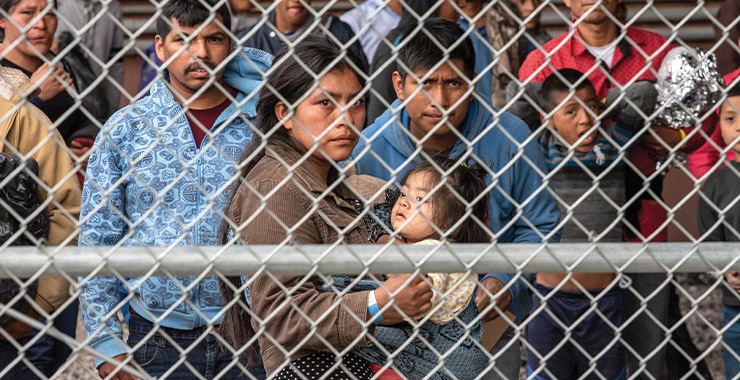
In 2017, University of Texas Rio Grande Valley psychology professor Alfonso Mercado, PhD, watched as U.S. authorities dropped off hundreds of Central American immigrants at bus stops in McAllen, Texas, every week. The numbers had swollen from 200 people per day in 2017 to 800 per day by spring of 2019. He knew these people considered themselves the lucky ones because they had been permitted to enter the United States while awaiting court dates. Thousands of others had been turned away.
To help this immigrant population, Mercado and his students started volunteering at the Rio Grande Valley Humanitarian Respite Center, handing out food, clothing and baby supplies. He also began asking immigrants if they’d be willing to share their stories for a research project about trauma.
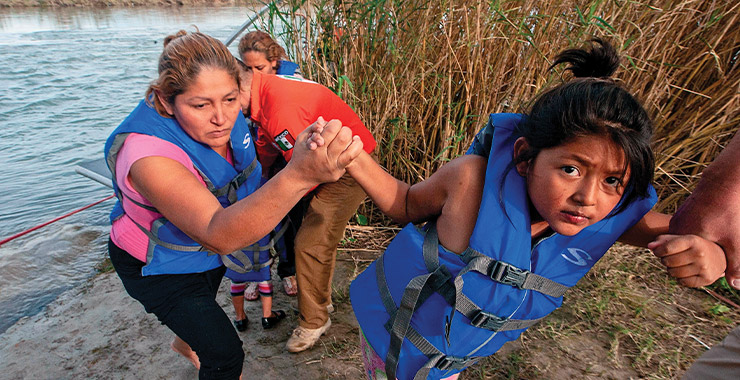
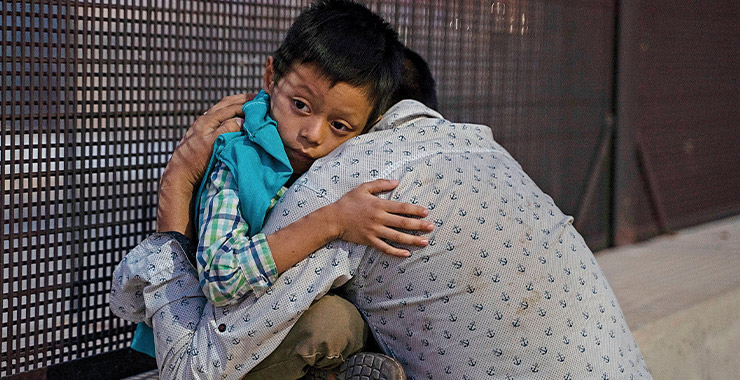
Many days, after those interviews, he drove home in tears because the stories were so deeply painful, such as the account of a mother from Honduras who had been sexually and physically assaulted multiple times in her village. Her husband had been killed by gangs, and she fled the country with her 2-year-old son. On the journey to the United States, a drug cartel kidnapped the pair and sexually assaulted the mother. Family members paid a ransom to secure their release, and the woman was clinging to the hope that she and her son would be granted asylum in the United States.
This mother and her child are among a surging number of immigrants who are desperate to escape violence, abuse and poverty in their home countries by seeking protection in the United States. The number reached a record level in May, with U.S. Customs and Border Protection reporting that more than 144,000 migrants were either apprehended or turned away at the border that month, compared with 60,000 in October 2018. The number then dipped to 104,000 in June, perhaps reflecting the Mexican government’s crackdown on immigrants coming through that country. But attention to the issue remains high, particularly with reports of dangerous and unsanitary conditions in detention centers unprepared to handle the influx.
With social service agencies also severely ill-prepared to support this rapidly expanding immigrant population, psychologists with skills in research, clinical care and advocacy are stepping in to help address this humanitarian crisis.
“These psychologists are tackling the same issues, yet from different angles, which will give us a fighting chance at developing policies and interventions that will lead to a sustainable solution,” says Manuel Paris Jr., PsyD, associate professor of psychiatry at the Yale School of Medicine and deputy director of Hispanic services for the Connecticut Mental Health Center.
Their work is multifaceted. Psychologist researchers are building on earlier findings on the traumas that immigrants may experience by conducting new studies with today’s populations. Clinical psychologists are applying psychology research to help these patients navigate the complexities of family reunifications, heal from trauma and cope with fear in the current political climate. Other psychologists are drawing on study findings and clinical experience with immigrants to advocate for this population in the courts and the political arena.
They are joined by social workers, teachers, physicians and lawyers, banding together through such partnerships as the Immigration Psychology Working Group. There, team members serve as advisers to APA, and recently several psychologists in the group published a report, Vulnerable But Not Brokenopens in new window, about psychosocial challenges and resilience among unaccompanied minors from Central America.
“Getting the word out about how these immigration experiences impact people is our responsibility,” says Claudette Antuña, PsyD, MHSA, LICSW, a psychologist in Washington state whose forensic evaluations have helped more than 700 immigrants obtain asylum or other forms of legal relief to stay in the United States. “Most mental health workers, teachers, lawyers, physicians and other professionals do not learn about [the impact of these experiences] in school, and without this knowledge they can endanger the lives of immigrants they are trying to serve.”
The different facets of trauma
Psychologists have a long-standing history of studying trauma, separation and resilience in immigrant populations, and their discoveries have shed light on the potential mental health impacts of recent family separation, deportation and other policies influencing undocumented people. Acculturation, repairing family attachments and the academic needs of unaccompanied minors are just a few of the areas in which psychological research has provided critical insights into how to support immigrant populations, and now psychologists are building on those findings.
Gaining a better understanding of the mental health status of Central Americans and Mexicans when they arrive in the United States has become a top priority for psychologists. Mercado was interested in seeing how youths scored on a commonly used trauma screening tool known as the Child PTSD Symptom Scale (CPSS), so he and a colleague, psychologist Amanda Venta, PhD, of Sam Houston State University in Huntsville, Texas, launched a study to assess trauma in two groups: adolescents from Central America who had arrived within the previous two years and younger children from Central America who had crossed the border within the previous 24 hours (Journal of Child and Family Studiesopens in new window, Vol. 28, No. 1, 2019).
The older children completed the assessment themselves and rated levels of symptoms such as intrusive thoughts, nightmares, hypervigilance and poor concentration, while parents answered the questions for the younger children. Mercado and Venta discovered that the mean scores for the older students—many of whom had traveled as unaccompanied minors—far exceeded the traditional cutoff levels for post-traumatic stress disorder (PTSD), while children who had arrived with their parents slightly exceeded these levels.
“The rate among the adolescents was so high that it resembled the trauma level in countries that are at war,” Mercado says.
While many immigrants have endured severe abuse or violence before they cross the border, most are propelled by the hope that their circumstances will improve in the United States. But researcher Luz Garcini, PhD, MPH, an assistant professor at the University of Texas Health Science Center at San Antonio, is exploring whether the prevalence of traumatic events experienced in the United States may be higher than the prevalence of trauma related to difficult conditions in their home countries for undocumented immigrants who have lived in this country for more than 10 years. She suspects that trauma repeatedly occurs in the United States when undocumented immigrants do not feel comfortable seeking medical care or reporting domestic violence and sexual abuse to police because they fear deportation.
“And perhaps the salience of their current struggles dampens memories of the trauma they experienced in their home countries,” says Garcini, who has not yet published the data.
In another study, Garcini’s results suggested that being treated differently for not having a visa by those with documented status was the strongest predictor of clinically significant distress, even more than long periods of separation from family, death of family members abroad or loss of work (Journal of Latinx Psychologyopens in new window, in press). Garcini hopes these studies will highlight the importance of providing access to mental health care for the immigrant population. Advocacy agencies and faith-based organizations may be more promising routes of access because undocumented immigrants often avoid seeking help because of the cost, stigma or risk of deportation, says Garcini.
Living with chronic uncertainty
Although today’s political climate has intensified many immigrants’ distrust of the systems that are equipped to provide help, psychologists are creating channels of access by building relationships in communities. Michelle Silva, PsyD, director of the Connecticut Latino Behavioral Health System, works in an outpatient mental health clinic that has a 40-year reputation in the community as a safe place for Spanish speakers to access care. She’s seen a surge in the number of Central American patients in the last year, with many needing treatment for trauma. Often, mothers will seek care for a child who has been affected by violence or abuse because “culturally the role of parenthood is highly valued, so parents are usually more willing to seek help for their children than themselves,” says Silva, who is also an assistant professor in the department of psychiatry at the Yale School of Medicine. Once these parents see the benefits of treatment for their children, she says, they frequently request services for themselves.
By validating feelings like anger, powerlessness, sadness and guilt, Silva builds trust with patients. “Sometimes they feel like they should not have negative emotions because they are in a better situation in this country, but it’s important for them to recognize that these feelings make sense,” she says.
Immigrant mothers who have left their children behind in their home countries, she has seen, often suffer feelings of guilt and sadness. They also experience excitement and anticipation as they look forward to reunifying with their children. “When the children finally come to the United States, they may be grieving the loss of the caregivers in their home country and the life they had there,” says Silva. She helps families navigate conflict, tolerate ambivalence and rebuild connections with one another.
Kalina Brabeck, PhD, is also seeing an increase in the number of immigrant patients who are struggling with anxiety and hopelessness under the changing rules of the Trump administration. When President Trump proposed a new policy that would deny green card status to people who use Medicaid and other social services, some clients were afraid to collect food stamps or enroll their children in health insurance plans. “This chronic sense of uncertainty can affect cognition, sleep, mood, work and the ability to manage household tasks,” says Brabeck, who specializes in discrimination, immigration and trauma at Lifespan Physician Group and Rhode Island Hospital. “It can also put a strain on marital relationships and fuel jealousies around who has more access to services and more privilege.”
Some clients are also ashamed of their mental health struggles. Brabeck helps them understand that these issues are rooted in systemic inequalities and social injustice, rather than their own fault. She teaches clients to understand and name their reactions and regulate emotions. She also connects them with support systems like churches or English-language programs that provide a sense of community and empowerment.
For some unaccompanied minors, establishing independence from certain people is another coping strategy, says Suzana Adams, PsyD, a clinical psychologist in Phoenix who regularly treats immigrants. “The unaccompanied minors who concentrate more on themselves tend to do better than the ones who are still attached to families in home countries that ask for money and involve these minors in family problems,” says Adams. She has helped patients disconnect from social media to avoid entanglements with relatives or threatening gangs in home countries. Once their lives in the United States are well established, they can consider reconnecting with relatives and social media, Adams says.
Expansion through education
Psychologists like Adams work long hours and take on pro bono cases to meet the steep demand for immigrant mental health services, but recently she started recruiting physicians, activists and nursing students in the community to help. She plans to train these volunteers to become promotores de salud (community health workers) who can provide mental health education in Latinx communities about trauma, acculturation, PTSD, depression and other topics.
“Many of the volunteers I’m seeking out have suffered themselves as a result of immigration experiences, so they can quickly build trust with other immigrants,” she says. Adams hopes the promotores will give immigrants a safe setting to share their own mental health struggles.
Teaching primary-care providers about the link between physical health and mental health in the immigrant population is another strategy for reaching more of these patients, says Silva. As faculty adviser of the HAVEN Free Clinic, a free, student-run primary-care clinic in New Haven, Connecticut, she trains students in the health professions about how stress from migration, living in a new environment and loss of traditional forms of support can manifest in physical symptoms. These symptoms can include headaches, insomnia, neck tension and other diffuse pains, says Silva.
Proposing new policies
Psychologists are not only on the front lines of research, practice and education that support immigrants, they’re also advocating for new immigration policies. Among those advocates is Florida-based forensic psychologist Giselle Hass, PsyD, ABAP, who has contributed to amicus briefs and court testimonies about the psychological damage of prolonged detention, child separation policies and the risks of discounting domestic violence as grounds for asylum.
She also partnered with legal, medical and policy experts to file a brief that addresses the one-year deadline to apply for asylum. The brief argues that this deadline should be extended for unaccompanied minors because many have experienced trauma, and neuropsychological research indicates that trauma can delay brain development. In 2017, the federal Board of Immigration Appeals, which is part of the Department of Justice, cited the brief in its decision to extend the deadline for asylum for children under 18—as long as the case is filed within a “reasonable” time period after they turn 21.
Hass has seen firsthand how difficult it can be for young victims of trauma to seek out legal services. She worked with a 20-year-old immigrant from Honduras who had been sexually and physically abused by his stepfather and by another relative who was a police officer. The abuse started when the young man was 7, but he struggled to remember details. He fled to the United States when he was 14 and started working as an undocumented dishwasher. Though he had long missed the one-year deadline when he applied for asylum, his attorney was requesting an extension.
“It took months and months of interviews before he was ready to start talking about the abuse,” says Hass, who performed a psychological evaluation for his asylum case.
The man earned a GED, enrolled in a technical culinary school and is now working as a sous chef at a Mexican restaurant. He has also been seeing a community therapist to heal from the trauma. Although legal processes can be daunting for immigrants, psychologists hope to see more immigrants like this young man find their place in the United States in the coming years as research, clinical care and policies evolve.
“No matter how sad the stories are, I see an incredible resilience and an amazing ability to rebuild a life,” says Hass. “We can learn from these immigrants, and they can become powerful contributors to the community.”