Listening to our patients
Regarding the excellent article “Better Ways to Prevent Suicide,” I would add a concern. With the increasing demand for absurd levels of documentation, demands for scripted questions on the intake from such organizations as JCAHO and the reverence for empirically based practices, with overly strict adherence to “proven” steps and homework assignments, I fear we are losing something critical. As society becomes increasingly disconnected, due in part to advances in technology, psychologists also risk increasing the danger of suicide in their patients, through being overly dependent on scripts and checklists and failing to listen and carefully attend to the patient’s story. It would seem that one contributing factor in suicidal ideation is the feeling of not being heard or joined by others. This can only be exacerbated when the therapist appears to be staring at their computer screen or asking rote, required questions. While the progress in research and empirically based treatments is valuable, we must remember, and remind our colleagues and students, that human contact and listening is itself a critical variable. The research also supports that premise.
Donald Ferguson, PhD
Auburn, Calif.
Opiates and pain
Your June 2019 story “Prevention as the First Line of Defense” discusses how opioids become less effective over time due to tolerance. However, there is abundant research suggesting that “opiate induced hyperalgesia” (OIH) is also at work. In OIH, chronic use of opioids triggers pain sensitization, as the body seeks homeostasis and heightens attention to pain signals. Over time, with chronic opioids, patients become sensitized and their baseline levels of pain frequently increase, even if the original injury has healed. This explains otherwise puzzling effects such as those found in a recent JAMA article by Krebs et al. (2018), that found that chronic back, hip and knee pain patients on opioids had worse pain over time than those on nonopioid medications.
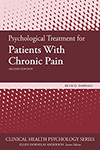
Psychologists are well placed to educate individuals with chronic pain about OIH, and even more importantly, to educate our colleagues in medicine and the allied health professions. Dr. Beth Darnall’s work at Stanford is one example of how to do this. In my own clinical experience, medical patients who learn about OIH and gradually wean off their chronic opioids are often astonished that their baseline pain levels decrease, and they ask why none of their health-care providers ever told them about OIH before. That’s something we can help remedy.
Esther Strahan, PhD
Lima, Ohio
Our favorite tweets
Re: “Better Ways to Prevent Suicide” (July/August)
@david_modders Really enjoyed the article “Better Ways to Prevent Suicide” in the July/Aug edition of @APA_Monitor. This truly is a national issue & I’m thankful psychologists are working hard to prevent the 10th leading cause of death in the U.S.
Re: “A Deep Dive Into Adolescent Development” (June)
@SynchronicTYI_ I loved this read!