Before last summer, University of Houston sophomore David Ortiz Jr. had never worked in a research lab. Now, he’s aiming to be an author on a peer-reviewed publication in a psychology journal.
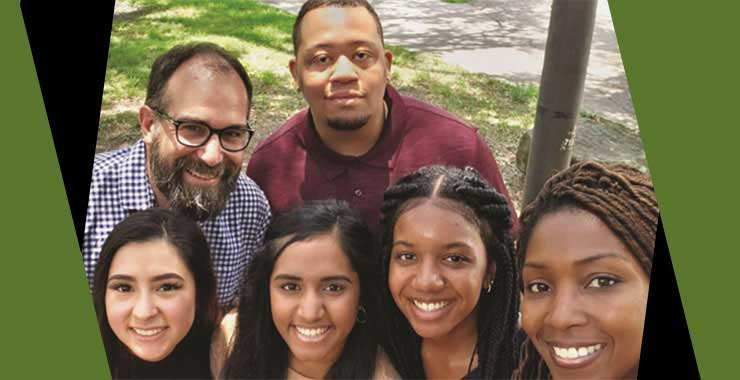
Ortiz was one of dozens of participants in APA’s Summer Undergraduate Psychology Research Experience (SUPRE) grants program. For each of the last four summers, host psychology departments, led by a faculty organizer, have received APA funding to create a summer program designed to introduce students to all aspects of research and provide mentorship and professional development opportunities.
Departments are required to recruit students with little or no research experience and are encouraged to include students from groups traditionally underrepresented in science, such as racial and ethnic minorities and first-generation college students.
In 2019, nine institutions received SUPRE grants: Boston College; California State University, Northridge; Norfolk State University; Northern Arizona University; Southern Illinois University; University of Houston; University of Michigan; University of North Georgia; and West Virginia University.
For many of the talented participants, the experience allows them to seriously consider career options in science, perhaps for the first time, all while being paid as full-time research assistants.
“I knew I needed to have research experience when applying for graduate school,” says Ortiz, a first-generation college student at the University of Houston, “and the pay was good enough to allow me to stay in Houston over the summer.”
Time in the lab isn’t just good for résumé-building. When students go from the classroom to the lab for the first time, their relationship with science changes. “The most enjoyable part of the summer was watching the students evolve from being passive learners to active learners, who took ownership of their projects,” says Norfolk State researcher and 2019 SUPRE faculty organizer Leah Floyd, PhD.
As full-time lab members, students get a crash course in all aspects of the research process, including developing a research question, running participants, analyzing data and presenting their results. Northern Arizona University student Claudia Escobedo worked in a SUPRE-sponsored lab this past summer, after having just completed her freshman year. “As a student entering with no experience, I have left with a world of knowledge,” she says.
For Ortiz and his mentor Rheeda Walker, PhD, SUPRE was just the beginning of a productive mentor/mentee relationship. He’s remained involved in Walker’s community-based study of coping among black men, and Walker says he’s been an asset to the lab. “Our research team is really very pleased that David is continuing his work with us,” Walker says.