Concerns about climate change have grown into a full-fledged social movement, spurring climate activism worldwide and opening opportunities for virtually every discipline to address the crisis.
Psychologists are among those stepping up to heed the call—through their work with the United Nations, policymakers, corporations and community groups—relying on psychological science to inform educational campaigns and behavior change efforts. They are aiding in both mitigation efforts to curb the causes of climate change and adaptation strategies for adjusting to its impacts.
“We are all going to be affected by this problem,” says Susan Clayton, PhD, professor of psychology and environmental studies and chair of the psychology department at The College of Wooster in Ohio. “As psychologists, there are ways for us to apply our professional skills and make a difference—and doing so can be extremely gratifying.”
A critical report
In one of their most far-reaching efforts, psychologists are on the international team of experts developing the sixth U.N. Intergovernmental Panel on Climate Change (IPCC) assessment report, which will inform climate change policies worldwide. In the IPCC’s massive international network of authors—including climatologists, economists and environmental scientists—psychologists are more involved than ever before. While just one psychologist contributed to the IPCC’s fifth report, at least five are authors on the upcoming document.
For example, as one of several lead authors on a chapter covering how climate change affects health and well-being, Clayton is summarizing the extensive literature on how the climate problem may threaten people’s mental health.
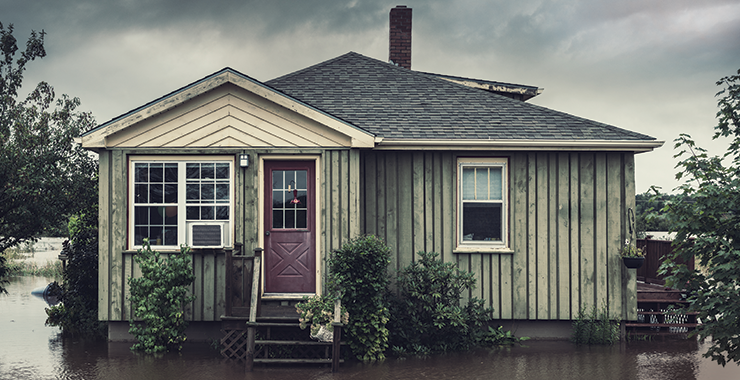
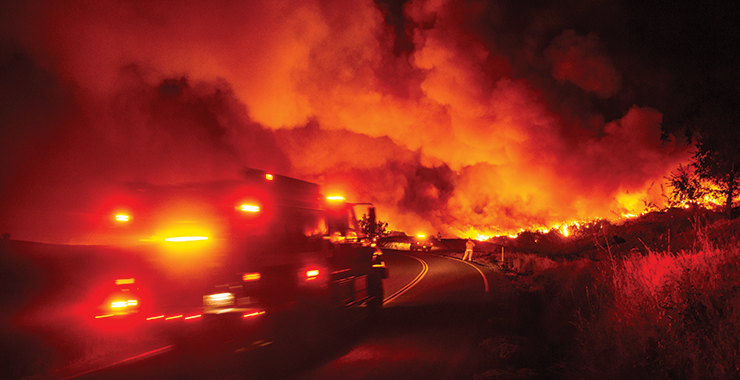
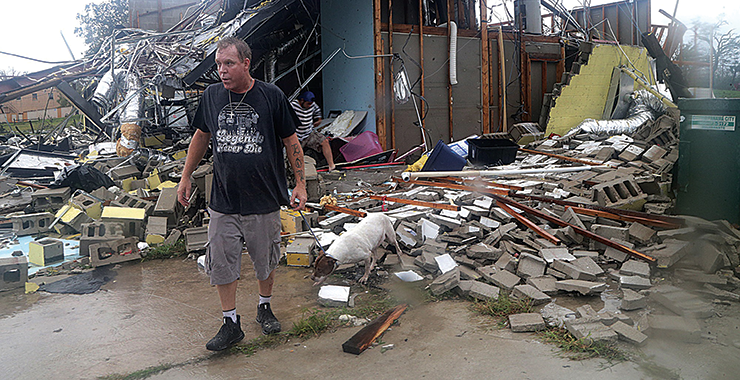
She has identified three potential causes of such harm. First, scientists now know that climate change increases the risk of major natural disasters such as hurricanes, floods and wildfires—and psychological research shows that such disasters lead to increases in post-traumatic stress disorder, depression, anxiety and domestic abuse (Mental Health in Emergenciesopens in new window, World Health Organization, 2019).
Second, more gradual changes associated with climate change can also worsen mental and behavioral health. Increasing temperatures, for instance, have been associated with poor cognitive performance (Laurent, J.G.C., PLOS Medicineopens in new window, Vol. 15, No. 7, 2018) and mental health problems (Obradovich, N., PNASopens in new window, Vol. 115, No. 43, 2018), while rising sea levels and changing precipitation patterns may force people to migrate, leading to additional stress and trauma.
Finally, psychologists are beginning to explore whether simply knowing about climate change can cause psychological distress such as anxiety or ecologically driven grief (Cunsolo, A., Nature Climate Changeopens in new window, Vol. 8, 2018)—and may even alter personal decisions such as whether to have children. Though concrete evidence is still limited, more than half of the 3,458 American adults who completed APA’s 2018 Stress in America surveyopens in new window said they feel stress about climate change.
“People have this idea that climate change will impact the poles, but they’re less aware of the effects it will have on our mental health and our stress levels,” says Janet Swim, PhD, professor of psychology at Pennsylvania State University and a contributing author on the upcoming IPCC report. “Talking about those outcomes seems to motivate people across the political spectrum and may lead to a better overall response.”
Change from within
In addition to their expanded efforts on the IPCC report, psychologists are increasingly working with government agencies to craft effective climate change mitigation policies. The Welsh government, for example, has partnered with Lorraine Whitmarsh, PhD, professor of environmental psychology at Cardiff University in Wales and director of the U.K. Centre for Climate Change & Social Transformationsopens in new window and applied insights from her research to better engage citizens on issues surrounding climate change.
Whitmarsh found that narratives emphasizing family values and the community benefits of reducing emissions, as well as messages that came from friends and family members, were most effective in stimulating behavior change. For conservatives, messages promoting frugality and national energy sufficiency were particularly effective—and the Welsh government used such insights to shape its climate change engagement strategy (Global Environmental Changeopens in new window, Vol. 42, 2017).
Psychologists are working with municipalities, as well. Amanda Carrico, PhD, a psychologist and assistant professor in the environmental studies program at the University of Colorado Boulder, for example, worked with the Metropolitan Planning Organization in Nashville, Tennessee, on a campaign aimed at minimizing air pollution and its health risks. Insights from her research on motor vehicle idling, an environmental behavior she found to be more malleable than such actions as carpooling or taking public transportation, have also informed behavior change campaigns in multiple cities.
Others are partnering with energy companies to apply research insights on a larger scale. Psychologists already know that providing feedback can aid behavior change, but P. Wesley Schultz, PhD, professor of psychology at California State University San Marcos, also found that including a normative frame—for instance, comparing a customer’s energy or water consumption to that of similar households in the neighborhood—triggers particularly durable behavior change (Environment and Behavioropens in new window, Vol. 48, No. 5, 2016). Now, utility companies around the world include such insights on monthly bills sent to tens of millions of customers.
To begin coordinating such efforts internationally, APA partnered with the Order of Portuguese Psychologists to co-convene the International Summit on Psychology and Global Health: Climate Change, held in Lisbon in November. Leaders from more than 40 psychological associations convened for presentations on the psychology of climate change and working sessions geared toward developing tools, advocacy statements and media messaging around psychologists’ growing role in climate change prevention, mitigation and adaptation.
Opportunities also exist in the private sector—for instance, through greening the supply chains of major corporations. Swim says consumers are increasingly concerned with the impacts of their consumption and are often willing to pay more for items produced responsibly, but they need to know whom to trust. Psychologists can help by studying how consumers establish trust in the context of climate change mitigation, the kinds of information they use to assess companies’ sustainability efforts and how they conceptualize their own impact.
Schultz, for instance, has partnered with Keurig to help the company develop and market a recyclable container for its single-use coffee pods. He’s studying customer behavior—for instance, whether people prefer to recycle pods through a mail-back, drop-off or curbside recycling program—to inform the new product’s development.
Future directions
One essential way psychology can contribute to addressing the climate crisis is by gaining a more nuanced understanding of behavior change and applying such insights to policies and messaging that drive significant and sustained change, says Ezra Markowitz, PhD, associate professor of environmental decision-making at the University of Massachusetts Amherst and president of APA’s Div. 34 (Society for Environmental, Population and Conservation Psychology).
For example, Carrico is exploring whether conservation behaviors are maintained over weeks, months and years following an intervention. Schultz, Whitmarsh and others are exploring the concept of behavioral spillover—does changing one behavior shift how people act in other domains—for instance, if people plan to recycle items, will they consume more? And how might the popular practice of nudging individual behaviors change how people view the larger problem of climate change?
“These are new areas that are becoming increasingly important to explore,” Markowitz says, “now that climate change is the background against which all sorts of decisions are going to be made for decades to come.”