COVID-19 has brought a raft of intense new stressors while removing many of the resources people have traditionally used to cope with stress. Millions of people have lost their jobs; some have lost their homes or businesses. Families cooped up together because of stay-at-home orders are chafing under the stress, which may increase the risk of intimate partner violence and child abuse. Disrupted routines and the potential for contracting a life-threatening disease may be exacerbating preexisting problems such as mental illness or substance use. At the same time, physical distancing is endangering mental health even as it protects physical health. People in crisis may avoid hospitals, whether for fear of adding to the burden of already overwhelmed facilities or of catching the virus. Gun sales are up.
The result could be a “perfect storm” when it comes to risk of suicide, says Mark Reger, PhD, chief of psychology services at the VA Puget Sound Health Care System in Seattle and an associate professor of psychiatry and behavioral sciences at the University of Washington School of Medicine. But despite those concerns, COVID-19’s impact on suicide is still unknown. And there’s much that practicing psychologists can do to make sure that people weather the storm without resorting to suicide, including screening all of their patients, coming up with safety plans appropriate for the pandemic and advocating for improved mental health services.
“Suicide is preventable,” says Reger. “We must use what we know can work to mitigate the risk in this time.”
Increased risk?
The media has reported on several heart-wrenching suicides believed to be linked to the toll COVID-19 is taking on individuals. High-profile suicides include a state finance minister in Germany who despaired over the virus’s economic impact in March and a Manhattan emergency room physician on the front line of treating coronavirus patients in April.
But it will be a while before COVID-19’s actual impact on the nation’s suicide rate is known, says psychologist Jill Harkavy-Friedman, PhD, vice president of research at the American Foundation for Suicide Prevention. “We’re two years away from having data,” she says. And it’s not a given that the pandemic will cause suicide rates to increase, emphasizes Harkavy-Friedman, who is also an associate professor of clinical psychology, in psychiatry, at Columbia University.
“One event can bring stress, but it’s not going to make someone suicidal out of the blue,” she says, explaining that it is typically a combination of biological, psychological, environmental and other factors that renders people vulnerable to suicide. Take the Great Recession of 2008, she points out. “About 4.8 million people lost their jobs, and the suicide rate didn’t skyrocket,” she says. “We’re much more resilient than we give people credit for.”
Plus, she says, the media and the mental health field have done a good job getting out the message that stress is a normal reaction to the current crisis and that routines, healthy habits, social connections and relaxation techniques can help ease that stress.

For some, the fight against the virus may even result in a sense of solidarity that protects them from thoughts of suicide. “Sometimes in periods of stress, people find strengths in themselves they didn’t know they had,” says Joan Asarnow, PhD, a professor of psychiatry and biobehavioral sciences at the David Geffen School of Medicine at the University of California, Los Angeles. “In World War II, for example, they were anticipating all kinds of problems during the Blitz, but it turned out people for the most part didn’t have any additional mental health symptoms.”
And for some populations, being stuck at home may even be a plus. Children, for example, are being more closely monitored by their parents, which can help prevent suicide. “We’ve actually seen quite a number of kids doing well without school and at home with their parents,” says Asarnow. “It’s not always a negative story.”
How clinicians can help
Practicing psychologists can help ensure that the suicide rate doesn’t exhibit a COVID-19-related bump. Harkavy-Friedman and other experts suggest several steps psychologists can take to achieve that goal:
Learn more about suicide and suicide prevention techniques. “Suicides are a pretty rare occurrence, thankfully,” says Lynn Bufka, PhD, associate executive director for practice research and policy at APA. But the result of that lack of familiarity, she says, can be anxiety among psychologists and other mental health practitioners about whether they are prepared to assess and address suicidal ideation, suicidal behaviors or suicide attempts. The shift to what may be the unfamiliar medium of telehealth can exacerbate those worries, adds Bufka. To boost their understanding of suicide, psychologists can review the suicide prevention literature and clinical resources. Practitioners should make sure they are up to date on newer approaches to preventing and treating suicide, says Harkavy-Friedman, citing as examples specific interventions such as the Safety Planning Intervention and the Collaborative Assessment and Management of Suicidality as well as more general approaches like crisis response planning and dialectical behavior therapy. Psychologists might also want to identify apps that can provide supplemental support to patients between therapy sessions. In addition to apps offering help with mindfulness, relaxation and coping, there are resources specifically focused on suicide, such as the MY3 and Safety Plan apps and NowMattersNow.orgopens in new window, an online repository of videos. “It is best if someone searches and tests them out to see which apps work for them,” says Harkavy-Friedman.
Screen every patient. “This is a time when we really need to be hypervigilant about suicidal thoughts and behaviors,” says Mitch Prinstein, PhD, ABPP, a professor of psychology and neuroscience at the University of North Carolina at Chapel Hill. “Of course, our most serious attention should be on those with prior emotional or behavioral difficulties,” he says. “But even people who may never have thought about suicide before could also be at greater risk because of the level of stress we’re all experiencing.” One way to normalize such screening is for psychologists to ask patients at the beginning of every session how they’re feeling physically, then segue into checking on their emotional states.
Providers also need to be on the lookout for another risk factor that has become more of an issue during the pandemic: discrimination against Asian Americans. “There has been an uptick in discriminatory events,” says Joyce Chu, PhD, a psychology professor at Palo Alto University in California. “Those can be culturally specific risk factors for suicide.”
Develop an action plan. If a psychologist suspects that a patient is experiencing suicidal ideation, he or she should work with the patient to create or update a safety plan (see "Suicide Safety Plan" below) that includes a list of warning signs, coping strategies like exercise or relaxation techniques, and contact information for the psychologist, other professionals and friends they can ask for help. “Help them write down and print out some sheets they can put in places in their house they are very likely to see with the phone number for their therapist and someone else they can call if they experience difficulties,” says Prinstein. “You want anything that creates a reminder, a barrier, a moment to stop and make a call before they engage in self-injury impulsively.” Be sure the plan is appropriate for use during the pandemic. Going to a gym or dining at a restaurant are no longer appropriate coping strategies, for example. Psychologists should also persuade patients to get guns, pills and other potentially lethal objects out of their homes if they can do so while practicing physical distancing and should get permission to contact someone else in a patient’s home if the patient doesn’t show up for a virtual session.
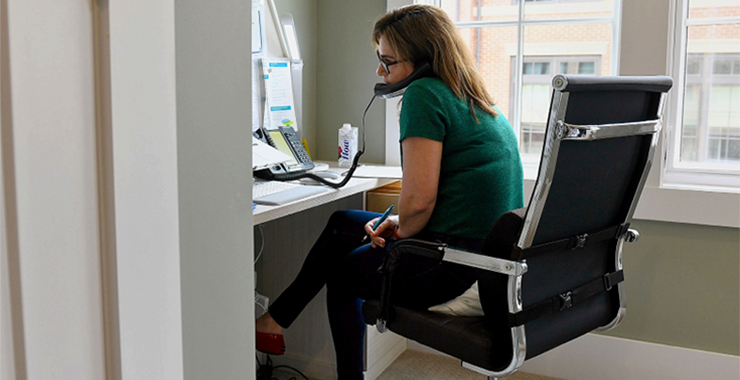
Follow telehealth guidelines. Some practitioners are leery of using telehealth with patients who may be suicidal. For one, they worry that they won’t be able to pick up on nonverbal cues as easily, says Bufka. “On the phone, I’m not going to see a person avert their eyes when I’m asking about thoughts of suicide. On video, I might. In the room, I will see it,” she says. Another concern is the physical distance from the patient. “If someone is in my office and tells me they are actively thinking about suicide, I don’t have to let them leave until we have a plan figured out for a more intensive level of care,” she says. “Over video or a cellphone, the person can just hang up.”
However, the evidence shows that mental health professionals can follow best practices for assessing and managing suicide risk, even if they’re doing so by way of a laptop or telephone (McGinn, M.M., et al., Psychiatric Clinics,opens in new window Vol. 42, No. 4, 2019). And psychologists can prevent problems by being sure to follow APA’s Guidelines for the Practice of Telepsychology. Psychologists should always know the patient’s location and how to call for emergency help, for example. Of particular concern at this time of stay-at-home orders is ensuring patient privacy so that family members or roommates can’t overhear therapy sessions, says Cheryl King, PhD, a professor of psychiatry and psychology at the University of Michigan. Patients may need a few minutes to get to someplace private—even a car—before a therapy session begins. Some may need reassurance about the technology itself and how privacy is ensured, King adds.
Educate patients, their families and the public. Psychologists should do their best to educate patients and everyone else on ways to recognize warning signs of suicide and how to keep those at heightened risk safe and make sure they get the care they need. “During a pandemic or other national crisis, one of the most important things is for folks in the community to be eyes and ears,” says Chu. “They need to reach out often, especially if they think someone is more isolated or if they see some of the warning signs of suicide.” Chu offers advice on how to do this in a webinaropens in new window, which she originally presented to more than 500 community members and health-care professionals in April.
Prioritize self-care. The COVID-19 pandemic is just as stressful for practitioners, who must also spend their days hearing about other people’s worries. “We have to do the same things we’re telling everyone else,” says Harkavy-Friedman, citing breathing exercises, time off and the basics of sufficient sleep, healthy food and regular exercise. “If we want to have the stamina and capacity to help other people, we have to take care of ourselves.”
Be an advocate. Psychologists can help push for increased mental health services, especially for the underserved populations disproportionately affected by the pandemic and for patients and families who have experienced illness, says Prinstein.
For example, psychologists successfully advocated for the Centers for Medicare and Medicaid Services to allow audio-only telehealth for Medicare beneficiaries—a priority during the pandemic since many older adults don’t have smartphones or broadband for telehealth (see Telepsychology expands to meet demand). To learn more about APA’s suicide-related advocacy priorities, sign up for legislative alerts and learn how to make your advocacy with Congress more effective.
Advocacy will have to continue even after the initial crisis passes, adds Prinstein. “Flattening the curve on physical health is only the first half of the story,” he says. “The second curve will be the national rise in mental health concerns that will follow very soon after.”