Some of the changes in education forced by the COVID-19 pandemic may lead to lasting improvements, according to educational psychologists and experts in the psychology training community.
In K–12 education, many teachers are necessarily encouraging more self-management and independence in young learners—efforts that will serve them well after in-person school resumes. And 2020 has brought an increasing awareness of the importance of social and emotional learning (SEL)—a realization that proponents say is overdue, as school-based SEL programs improve social and emotional skills, attitudes, behavior, and academic performance.
While schools moved online last spring with hastily planned lessons, many districts spent the summer working on innovating more comprehensive distance learning programs.
“There’s been a lot of energy put into thinking about kids’ social and emotional needs and ways to create a sense of community—to keep them engaged and support them through the stress and anxiety of this time,” says Sara Rimm-Kaufman, PhD, an educational psychologist at the Center for Advanced Study of Teaching and Learning at the University of Virginia.
But while some things are working well in distance learning, plenty of hurdles remain. Many of the same challenges that existed in the spring haven’t been resolved. “Access to internet and technology is still a big barrier,” she says. “And even with technology in place, many students just don’t show up.”
Distance learning laid bare the economic and educational disparities between students, and many still lack the technology to connect to online learning despite efforts by many school districts to provide all students with laptops and Wi-Fi.
Meanwhile, teachers are often overwhelmed by learning new technologies and creating lessons that work online—something few educators were trained to do. “There’s a lot of energy being put into online learning, but it’s still incredibly hard,” Rimm-Kaufman says.
Simulating the college experience
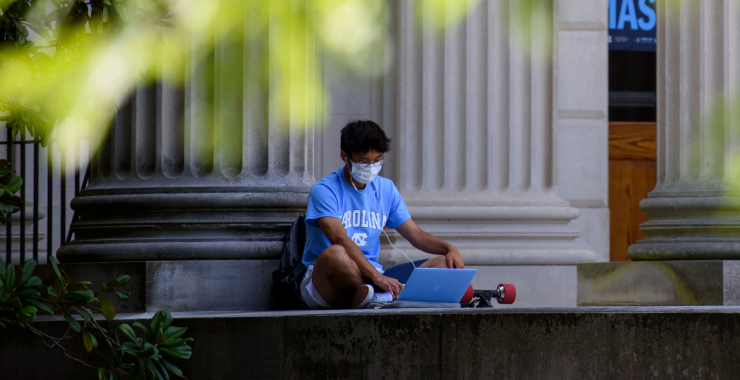
Though undergraduate and graduate students may be more adept at engaging with online learning tools, college students face many of the same challenges as K–12 students, says Viji Sathy, PhD, a professor of psychology at the University of North Carolina at Chapel Hill. They also face disparities in access to technology and struggle to find social connection amid restrictions on many campuses or in remote learning environments. “It’s a lot harder to create community in this format, when people feel so isolated,” Sathy says.
Yet there have been silver linings in the move to online learning, says Sathy. More professors are now engaging in pedagogical discussions instead of assuming they can simply translate in-person lessons to an online platform, she says. “There’s a new willingness to admit they need guidance and more efforts to access the resources that can help them.”
Many of the efforts to optimize instruction will outlast the pandemic, Sathy adds. “Once they develop those resources, they can take them back to the face-to-face environment.”
This experience may also have raised the profile of online learning, says Francine Conway, PhD, dean of the Graduate School of Applied and Professional Psychology at Rutgers University and past president of the National Council of Schools and Programs of Professional Psychology. “There’s a stigma regarding online learning, especially in doctoral training. It’s often perceived as lower quality, and there’s the perception that advisers can’t adequately train and supervise students using online platforms,” Conway says. “That perception hasn’t kept pace with the reality.”
Virtual education can often be just as effective as in-person learning, she says, thanks to new digital learning platforms, increasing student ease with technology, and a large and growing research literature around online learning. Yet there are challenges, especially in the area of hands-on research and disruptions to internships and practicum training. And some face-to-face interaction is necessary to achieve the competencies required to be a psychologist. Nevertheless, this year of online learning has underscored that there are benefits to going remote, at least in part.
“While there is a need to further support faculty around delivering online content, there are best practices out there. It does a disservice to faculty to assume they won’t adapt to this new environment,” Conway says. “Online learning is here whether we like it or not, and it’s time our profession embraces it.”