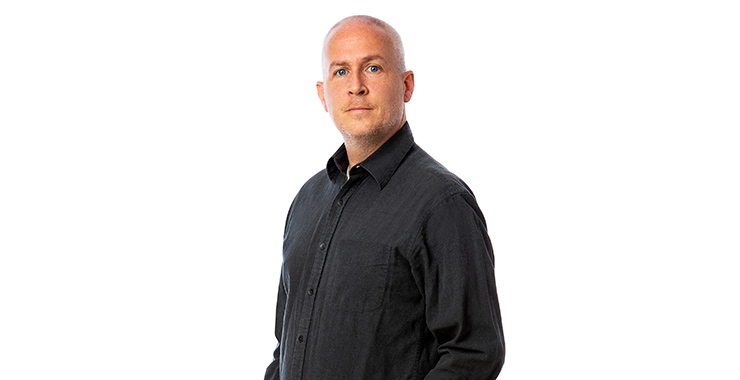
On April 16, 2020, San Francisco Giants baseball player Drew Robinson shot himself in the head with a handgun he had purchased soon after the United States shut down because of the pandemic. Robinson survived the incident but psychologist Michael Anestis, PhD, executive director of the New Jersey Gun Violence Research Center and an associate professor at Rutgers University in the School of Public Health, says the incident reflects an alarming trend: Firearm sales surged during the pandemic, especially among first-time gun owners. More than 2.5 million Americans became first-time gun owners during the first 4 months of 2020—a 67% increase compared with previous years, according to the National Shooting Sports Foundation.
Anestis, whose role at the center combines research and public health advocacy, talked with the Monitor about his success with interventions and how psychologists can help prevent gun suicides.
As executive director of the New Jersey Gun Violence Research Center, how are you working to reduce gun suicides?
I feel a responsibility to reduce gun suicide throughout the country, and this new role allows me to have a greater impact, to perform cutting-edge gun suicide research, and train people to deliver interventions in New Jersey as well as other states. Suicide is 3 times more likely in homes with firearms, and guns are by far the most lethal method of suicide. Nearly 90% of suicidal acts with a firearm resulted in death between 2007 and 2014, followed by drowning and hanging, which each resulted in death about 50% of the time. My hope is that our work directly benefits communities affected by gun violence and serves to increase public trust in science.
Why did people buy firearms during the pandemic?
In a recent study of 3,500 Americans who represented the country’s demographics for age, race/ethnicity, gender, and other factors, we discovered that 25% of people who purchased firearms during the pandemic reported suicidal ideation in the month prior to the study. This was more than double the percentage rate reported by firearm owners who did not buy a gun during this time or people who did not own a firearm. We also found that people intending to purchase guns during the pandemic felt stress related to COVID-19, general intolerance of uncertainty, and a tendency to view the world as threatening. They may be buying firearms to protect themselves from what they perceive as a dangerous world, but most do not realize that they are putting themselves and others in their homes at risk of death by suicide. Although firearm suicide rates did not increase in 2020 compared with previous years, guns are more commonly used for suicide years after purchase. As time passes, there are more opportunities for an individual to become suicidal, comfortable with using a firearm, and to envision suicide involving a firearm.
What role does gun storage play in suicide prevention?
Most people will not tell someone that they are suicidal, so we need to change firearm storage practices before people are at risk. In a recent study of 232 Mississippi National Guard firearm owners, most participants believed that firearm ownership and storage were not related to suicide. Rather than trying to convince service members to change their gun storage practices, we used motivational interviewing techniques such as open-ended questions and reflective listening to make sure the researchers understood the perspectives of the participants. During one brief one-on-one session, we asked service members how they stored firearms, why they used those methods, and what they would do if someone in the home was suicidal. We followed up with them 3 and 6 months later to see if they made any changes.
The results of this intervention were encouraging because the rate of safe storage practices, such as gun safes, increased significantly compared with the control group. People are often afraid these conversations will become antagonistic and political, but our work shows that if we approach the interactions with cultural humility, the interactions can be extremely productive. One participant refused to make changes after the initial session and the 3-month follow-up, but his stance changed dramatically prior to his 6-month appointment. He was so distraught after breaking up with his fiancée that he had given seven guns to his brother to reduce the risk of suicide. He told us that he had thought about the initial conversation, and this discussion had saved his life.
How can psychologists be part of these conversations?
Psychologists often do not know whether their patients or research participants are firearm owners, and for that reason, they generally have only limited knowledge about the environmental risk for suicide. I would like to shift social norms and increase the frequency of open conversations about this topic, but it’s important to take time to understand the perspective of the firearm owner before discussing safe gun storage options. In the research domain, we can make a difference by systematically assessing firearm access and storage the same way we collect other demographic variables. This will help us better understand the scope of the issue in various populations.
Who are the best messengers for firearm safety?
To pinpoint the ideal messengers for a national campaign, we surveyed 6,200 firearms owners and non-owners of different racial and gender groups. We were surprised to find that all the subgroups ranked law enforcement and current military personnel as their top choices, while celebrities and physicians were among the least preferable messengers. Although we didn’t study the reasons for their choices, the findings suggest that a public health campaign will be more successful if the message comes from people who are perceived as credible gun owners who do not have a hidden agenda.