In the past decade, researchers have found increasing evidence that climate change affects people’s psychological well-being, but most of the studies about climate anxiety—distress associated with the warming planet—have been qualitative and limited to individual countries. Eager to gather quantitative, global data on a larger scale, social psychologist Susan Clayton, PhD, helped launch a study in May 2021 involving 10,000 people ages 16 to 25 living in 10 countries. She was surprised by the gravity of the findings.
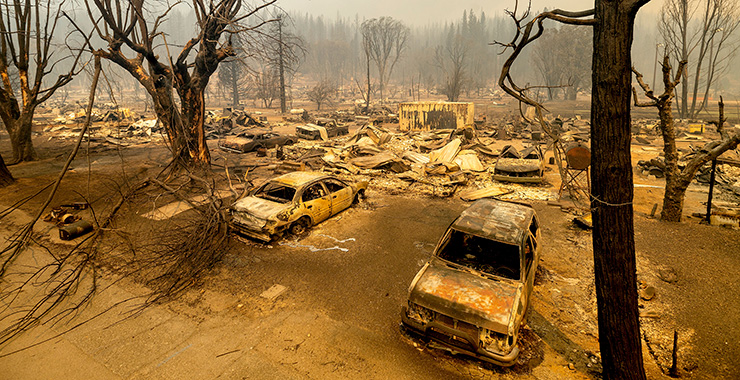
Nearly 60% of the participants were “extremely” or “very” worried about climate change, and more than half believed that humanity was doomed and that they would have fewer opportunities than their parents. Almost 40% said they were hesitant to have children. More than 60% said they felt their governments are failing future generations and lying about the effectiveness of their actions to reduce climate change. Although there was variability among different countries, in general, these sentiments were consistent across different parts of the world—including the United States, Nigeria, India, France, and Brazil—as young people are confronted with a variety of environmental changes, including more frequent and destructive wildfires and storms, droughts, and heat waves (The Lancet Planetary Healthopens in new window, in press).
“We are concerned about the findings,” said Clayton, a psychology professor at the College of Wooster in Ohio. “Negative emotions and pessimistic beliefs can be a source of stress that leads to mental health problems such as anxiety and depression.” Nearly half of the participants reported that their feelings about climate change negatively affected aspects of their daily lives, such as sleeping, socializing, school, and work.
Clayton is among a growing cadre of psychologists who are leveraging their expertise in human behavior to help people not only prepare for the consequences of climate change but also understand how to effectively influence communities to reduce their carbon footprints.
“Psychologists have a critical role in addressing this issue,” said Christie Manning, PhD, director of sustainability and an assistant professor in environmental studies at Macalester College in Minnesota. “People need to collectively change not only individual behavior but also the infrastructure, policies, and systems of everyday life. This will require all of us to fundamentally think differently about our place in the world and our connections to each other,” she said.
To increase awareness about the link between psychology and climate change, Clayton and Manning partnered with APA and the nonprofit organization ecoAmerica to release Mental Health and Our Changing Climate, 2021 edition.opens in new window The report, which builds on the 2017 edition, chronicles increasing evidence of the mental health impacts of climate change, particularly among groups already facing discrimination. It also details how individuals, communities, and psychologists can promote resilience.
New studies are showing that higher temperatures are associated with increased risk of suicide and mental health–related hospital admissions (Thompson, R., et al., Public Healthopens in new window, Vol. 161, 2018), and each degree of increased temperature elevates the risk of mental health–related mortality and morbidity, with substance-use disorders as the highest mortality risk (Liu, J., et al., Environment Internationalopens in new window, Vol. 153, 2021). Other researchers who studied the social media posts of 43 million users in China found that climatic factors influenced users’ expressed sentiments online, with females and people in poorer cities being more negatively affected by unpleasant temperatures than males and people living in more affluent cities (Wang, J., et al., One Earthopens in new window, Vol. 2, No. 6, 2020).
[Related: How heat affects the mind]
Slowing climate change
Studies also reveal the inequities of climate change, namely that the people with the highest carbon footprints are usually those who are least likely to experience the consequences of global warming. The top 10% of income earners globally are responsible for about 50% of total carbon emissions because they are more likely to use air travel, multiple cars, larger homes, and other carbon-emitting luxuries (Kartha, S., et al., The Carbon Inequality Eraopens in new window, Oxfam, Stockholm Environment Institute, 2020). Finding ways to change individual consumer behavior among high-income earners may be valuable, but there is another important way this segment of the population could accelerate decarbonization: through their access to financial and social resources, said psychologist Kristian Nielsen, PhD, of the University of Cambridge.
“These individuals can influence greenhouse gas emissions through their position in society,” said Nielsen, whose recent paper in Nature Energyopens in new window outlines this strategy. High socioeconomic status individuals, for example, often have a significant amount of money in investments, and they could transfer this money from fossil fuel company funds to low-emissions company investments. These influencers are also often in leadership roles within companies, and they could direct their organizations to create supply chain carbon emission requirements or reduce the amount of travel expected of employees for business events. High-income leaders may also have more access to policy experts who are making decisions that could reduce greenhouse gas emissions.
In addition to exploring who could accelerate decarbonization efforts, psychologists are also looking at how people make decisions that affect climate change. In the United States, for example, opinions about the causes of climate change and policies to address the problem can vary significantly between Democrats and Republicans, but psychologists are tapping into inherent similarities between historically divided groups. People share a sense of responsibility toward future generations, regardless of their political or religious affiliations, family income, or education level, according to one recent study (Syropoulos, S., & Markowitz, E. M., Journal of Environmental Psychologyopens in new window, Vol. 76, 2021). This sense of intergenerational responsibility engenders pro-environmental attitudes, such as support for policies that would fund renewable energy and increase taxes for fossil fuel companies.
“Across multiple studies, we have found that most people possess a strong desire to build a positive legacy,” said Ezra Markowitz, PhD, one of the study’s authors and a professor in the Department of Environmental Conservation at the University of Massachusetts Amherst. “The challenge is bringing these feelings to the surface when they are making decisions, because people often discount future benefits relative to present costs.” Helping people access their sense of gratitude for the sacrifices made by past generations is one way to increase willingness to take on personal costs that will benefit future generations, according to another study Markowitz and his colleagues conducted (Journal of Environmental Psychologyopens in new window, Vol. 72, 2020).
For some countries, this may be a particularly good time to accelerate sustainable behaviors, said environmental psychologist Taciano Milfont, PhD, of the University of Waikato in New Zealand—a nation that has had significant success in combating COVID-19. In a recent survey of 15,000 New Zealanders, Milfont found evidence that the pandemic increased political efficacy—that is, people’s belief that they can influence government decisions. Although the survey did not explore the reason for the shift, Milfont suspects that following public health advice to wear masks, socially distance, and comply with lockdowns increased the public’s confidence in its ability to affect countrywide decisions.
This heightened sense of political efficacy among New Zealanders in turn amplified respondents’ pro-environmental attitudes and actions, such as support for a government subsidy for public transportation. “People need to have intrinsic motivation to take actions that help the environment, and one of the predictors of intrinsic motivation is perceived efficacy,” Milfont said.
Adapting to weather extremes
Psychologists are also leveraging their understanding of human behavior to help people protect themselves as they encounter more severe weather conditions. While many studies have documented how social support increases resilience after a natural disaster, Gabrielle Wong-Parodi, PhD, an assistant professor of Earth system science at Stanford University, was eager to answer a different question: Does social support help people protect themselves before or during these events?
Through interviews with people who were affected by major wildfires in Northern California during the past 3 years, Wong-Parodi discovered that social factors influenced reported willingness to wear a face mask during wildfires to reduce the risk of smoke exposure. People who talked to neighbors, relatives, and others in their communities to help them navigate the uncertainty of the wildfire smoke risk were more likely to wear a mask.
Also, those who gave face masks to vulnerable people they knew—such as children or elderly parents—may have influenced behavior on a larger scale (Climate Risk Managementopens in new window, Vol. 34, 2021). “People may be undecided about wearing a mask, but if someone in their social network provides them with one, this kind of interpersonal support may relate to or influence the creation of new social norms,” Wong-Parodi said.
An individual’s mental health status is another important factor that relates to protective behavior decisions during weather extremes, Wong-Parodi said. She surveyed more than 500 people living in southern states who were impacted by Hurricane Matthew in 2016 and found that people with lower mental health and self-efficacy tended to prepare to protect themselves from the hurricane, such as by getting extra gasoline, food, or an AM/FM radio with spare batteries, regardless of whether they were in danger. These preparations that are not proportional to, or commensurate with, their risk could actually increase their worry and stress, according to Wong-Parodi (Weather, Climate, and Societyopens in new window, Vol. 10, No. 4, 2018).
“It’s important that we pay attention to mental health as climate hazards increase in the coming years because this could affect people’s ability to assess their level of risk and respond appropriately,” she said.
More help needed
Although interest is growing among psychologists to address the climate change crisis, those who are at the forefront of this work hope to see a broader array of psychologists tackle this issue. “For example, I/O [industrial and organizational] psychologists can help organizations incorporate sustainability into their core practices,” said Manning. “And clinical and counseling psychologists can inform our understanding of how to help people cope with climate anxiety.”
To strengthen the field’s role in addressing the crisis, APA recently gathered a team of 12 experts with backgrounds in psychology, epidemiology, law, medicine, and other fields. This Task Force on Climate Change reviewed APA’s work on the issue and in February plans to make recommendations to the Council of Representatives for goals and future initiatives, including the organization’s own sustainability practices and use of energy.
Even though there are more data now than ever about the psychological implications of climate change and the role of human behavior in forging solutions, experts agree that there are still many unanswered questions.
“What leads people to develop climate anxiety and what are the best ways of helping them?” said Clayton. “How can we educate our children about the reality of the problem without scaring them? These are just a few of the questions, and we need every subfield of psychology available to help us find answers.”