Two years after the first reported cases of COVID-19, civic leaders are already thinking about the next pandemic—and lessons learned during the frantic response to the coronavirus have led to a growing recognition that behavioral insights are a key piece of that puzzle.
Now, input from psychologists, who are studying and applying insights on health messaging and behavior, is more important than ever and being recognized for its worth.
“The COVID-19 pandemic has demonstrated once again that integration of behavioral and communication science into public health programming is vital to disease control and prevention,” said psychologist Neetu Abad, PhD, a behavioral scientist in the Global Immunization Division at the U.S. Centers for Disease Control and Prevention (CDC).
When the pandemic struck, psychologists were among the first to respond. In April 2020, Jay Van Bavel, PhD, an associate professor of psychology and neural science at New York University, and his colleagues published a summary of actionable social and behavioral findings related to health behavior, misinformation, and stress (Nature Human Behaviouropens in new window, Vol. 4, 2020). Those findings built on earlier work in public health, including a prescient book by psychologist Steven Taylor, PhD, The Psychology of Pandemicsopens in new window, released in October 2019.
Psychologists also launched large-scale multinational studies measuring compliance with COVID-related health measures. Van Bavel, psychologist Tian Lin, PhD, of the University of Florida, and their colleagues found that young males in well-developed countries were least likely to report complying with public health guidance, suggesting a need for campaigns that target this demographic (Social Science & Medicineopens in new window, Vol. 286, 2021).
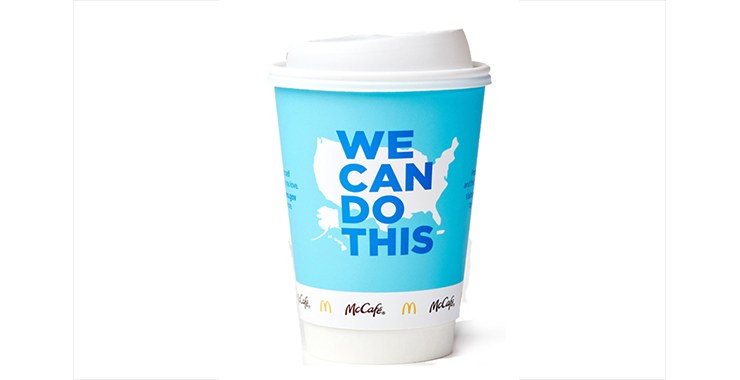
Others have conducted research on vaccination messaging, finding that campaigns that emphasize hope, altruism, and other positive emotions are more effective than messages that stoke fear and anxiety (Chou, W. S., & Budenz, A., Health Communication, Vol. 35, No. 14, 2020). Such prosocial messages appear to be particularly effective in rural areas, because people there feel that their behavior will have a clear impact on the community, according to a study by Dolores Albarracín, PhD, a professor of psychology, business, and medicine at the University of Illinois at Urbana-Champaign, and her colleagues (PNASopens in new window, Vol. 118, No. 1, 2021).
Psychological research has also been crucial in characterizing and combating the parallel “infodemicopens in new window” of misinformation that has accompanied the spread of COVID-19. Early on, psychologists helped determine who was exposed to false information and conspiracy theories about the virus—and why those messages were so persuasive. Now, they’re delving into the nuances of health misinformation, finding that people with more trust in science can also easily be misled by false claims when they appear to be grounded in science (O’Brien, T. C., et al., Journal of Experimental Social Psychologyopens in new window, Vol. 96, 2021).
“Of course, trust in science is necessary, but we’re learning that it can also become a vulnerability,” said Albarracín, a coauthor of the study.
But psychologists aren’t just conducting research—they’re also working with federal agencies and elected officials to translate those insights into action. At the CDC, Abad helps design and deploy interventions that address vaccine hesitancy on a global scale (for more on her work, see this month’s Conversation, on page 31). Van Bavel spoke to congressional staff and the White House about his findings, including how to tailor health messages for marginalized groups. And the National Academies of Sciences, Engineering, and Medicine (NASEM) has launched the Societal Experts Action Network, which unites behavioral experts to help inform decision-making around responses to COVID-19 and future pandemics.
“These committees are charged with analyzing data and models and providing a synthesis of scientific information,” said psychologist Baruch Fischhoff, PhD, a professor in the Department of Engineering and Public Policy at Carnegie Mellon University who has served on NASEM committees geared toward the equitable distribution of COVID-19 vaccines and rebuilding the interagency federal response to public health emergencies. “But the human behavior component—what people do with that information—is equally important. That’s where psychology can help.”