skip to main content
News

The facts about abortion and mental health

Scientific research from around the world shows having an abortion is not linked to mental health issues but restricting access is 

APA Style leaf logo Cite This Article in APA Style
Abrams, Z. (2023, April 21). The facts about abortion and mental health. Monitor on Psychology, 53(6). https://www.apa.org/monitor/2022/09/news-facts-abortion-mental-health

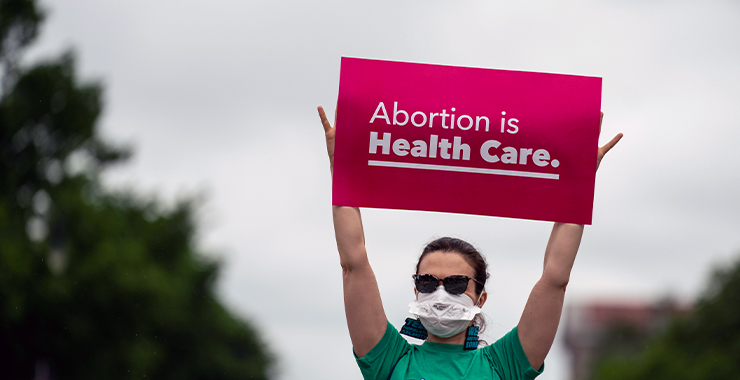
woman holding sign stating abortion is health care

More than 50 years of international psychological research shows that having an abortion is not linked to mental health problems, but restricting access to safe, legal abortions does cause harm. Research shows people who are denied abortions have worse physical and mental health, as well as worse economic outcomes than those who seek and receive them.

Meanwhile, the same research shows getting a wanted abortion does not cause significant psychological problems, despite beliefs to the contrary. In a landmark study of more than 1,000 women across 21 states, those who were allowed to obtain an abortion were no more likely to report negative emotions, mental health symptoms, or suicidal thoughts than women who were denied an abortion.

[Related: Frequently asked questions about abortion laws and psychology practice]

Large longitudinal and international studies have found that obtaining a wanted abortion does not increase risk for depression, anxiety, or suicidal thoughts (The mental health impact of receiving vs. being denied an abortionopens in new window, Advancing New Standards in Reproductive Health, 2018).

“It’s important for folks to know that abortion does not cause mental health problems,” said Debra Mollen, PhD, a professor of counseling psychology at Texas Woman’s University, who studies abortion and reproductive rights. “What’s harmful are the stigma surrounding abortion, the lack of knowledge about it, and the lack of access.”

Misconceptions about abortion are also linked to lower support for it—and people deserve to have accurate information so they can make informed decisions, Mollen said (Weibe, E. R., et al., Gynecology & Obstetrics, Vol. 5, No. 9, 2015opens in new window).


How abortion impacts mental health

The Turnaway Studyopens in new window, a landmark analysis of abortion from Advancing New Standards in Reproductive Healthopens in new window (ANSIRH) at the University of California, San Francisco, served to debunk the belief that people who get abortions experience deep regret, grief, or even posttraumatic stress disorder. Instead, the most commonly felt emotion is relief (Rocca, C. H., et al., Social Science & Medicine, Vol. 248, 2020opens in new window).

In the study, researchers followed nearly 1,000 women across 21 states for five years to examine the similarities and differences between those who wanted and received an abortion versus those who wanted but were denied an abortion. Five years after the procedure, women who had an abortion were no more likely to report negative emotions or suicidal thoughts than women who were denied an abortion, and more than 97% of those studied said that having the abortion was the right decision (Rocca, C. H., et al., Social Science & Medicine, Vol. 248, 2020opens in new window).

In a review of the scientific literature on abortion published 10 years earlier, an APA task force reached a similar conclusion, especially in the case of unplanned pregnancy. The task force reported that women who had an abortion in the first trimester did not face a higher risk of mental health problems than women who continued with an unplanned pregnancy (Report of the APA Task Force on Mental Health and Abortionopens in new window, 2008).

“In fact, the best predictor of a woman’s mental health after an abortion is her mental health before the abortion,” said Nancy Felipe Russo, PhD, an emeritus professor of psychology and women’s studies at Arizona State University who has spearheaded research on unwanted pregnancy, mental health, and abortion.

Another group of women—those who planned and wanted a pregnancy but terminated it during the second or third trimester because of a life-threatening birth defect—faced some psychological problems after the procedure. But those were comparable to mental health problems among women who miscarried or lost a newborn baby, and less severe than the distress among women who delivered babies with severe birth defects.

“The bottom line is that abortion in and of itself does not cause mental health issues,” said M. Antonia Biggs, PhD, a psychologist and researcher at ANSIRH and one of the leaders of the Turnaway Study.

When abortions are denied

The women in the Turnaway Study who were denied an abortion reported more anxiety symptoms and stress, lower self-esteem, and lower life satisfaction than those who received one (JAMA Psychiatry, Vol. 74, No. 2, 2017opens in new window). Women who proceeded with an unwanted pregnancy also subsequently had more physical health problems, including two who died from childbirth complications (Ralph, L. J., et al., Annals of Internal Medicine, Vol. 171, No. 4, 2019opens in new window).

They faced more economic hardships, including worse credit scores, more frequent bankruptcies and evictions, and a higher chance of living in poverty. After being denied an abortion, women were also more likely to stay linked to a violent partner or to raise children alone (The harms of denying a woman a wanted abortionopens in new window, ANSIRH, 2020).

And people seeking abortions aren’t the only ones harmed when the procedure is banned.

“The children born as a result of abortion denial were not only more likely to live in poverty, but they were also more likely to experience poor bonding with their mothers,” Biggs said.

Other studies show that children born in such circumstances face a range of social, emotional, and mental health problems that continue into adulthood, including more psychiatric hospitalizations than their siblings or other children of planned pregnancies (David, H. P., Reproductive Health Matters, Vol. 14, No. 27, 2006opens in new window; Dagg, P. K., American Journal of Psychiatry, Vol. 148, No. 5, 1991opens in new window).

“Negative outcomes are not limited to minor problems that occur over a short span of time,” Russo said. “They can be severe outcomes of real concern.”

More stigma, barriers, and inequities

Given that the mental health impacts of denying abortion extend far beyond the procedure itself, it’s important to consider the issue in the larger context of society.

“Most people assume that if we’re talking about psychological ramifications, that’s about their feelings around having an abortion,” said Julie Bindeman, PsyD, a reproductive psychologist who cofounded and directs Integrative Therapy of Greater Washington, a private practice outside Washington, D.C. “But we really need to think about the compounding costs involved with even getting to that point.”

If a state bans abortions, a resident seeking one faces a new and significant set of barriers. They might incur additional costs for out-of-state travel, lodging, and childcare during the trip—all while missing wages at work. They might feel compelled to disclose the pregnancy to friends, family members, or coworkers from whom they’ve solicited help. They might be forced to wait longer for an appointment. All these challenges add up to more psychological stress.

Those new barriers could hinder anyone seeking an abortion, not just people in states restricting the procedure.

“Many people will be traveling to states with greater access to care, and that surge in demand for a limited number of appointments has the potential to impact everyone,” Biggs said.

Research has shown that people who face logistical barriers to accessing abortion care, including increased travel time or difficulty scheduling appointments, have more symptoms of stress, anxiety, and depression. A loss of autonomy—such as being forced to wait for an appointment or disclose a pregnancy—has the same effect (Contraception, Vol. 101, No. 5, 2020opens in new window).

Banning the procedure also stigmatizes it, and stigma harms mental health, according to findings from the Turnaway Study. Women in the study who felt they would be looked down on by friends, family, and community members if they had an abortion were much more likely to report psychological distress years later (PLOS ONE, Vol. 15, No. 1, 2020opens in new window).

Experts say the growing costs of obtaining an abortion will weigh much more heavily on those people with fewer economic resources.

“What we’re likely to see is an increased stratification, where those who have means and can travel will be able to obtain their abortions, and those who do not will face barriers upon barriers,” Bindeman said.

People who already struggle to pay for and access abortions—those living in poverty, people of color, people in rural areas, sexual and gender minorities, and young people, who are often bound by state-level parental consent and notification laws—are likely to be hardest hit by abortion bans.

“For all those reasons, this is a perfect storm of perpetuating continued inequities for people who are already marginalized,” said Bindeman.

Resources and support

While abortion isn’t linked to mental health problems, the challenges around obtaining one can be distressing. The following programs and organizations aid people who are seeking an abortion or want to talk about their experience.

Finding a credible health care provider

Social and emotional support

Financial support

Speaking of Psychology

Subscribe to APA’s audio podcast series highlighting some of the most important and relevant psychological research being conducted today.

Subscribe to Speaking of Psychology and download via:

Appleopens in new window
Apple podcast logo

Spotifyopens in new window
Spotify logo

Psychology topic

You may also like