skip to main content
Continuing education

Anxiety among kids is on the rise. Wider access to CBT may provide needed solutions

Tailored in-person and app-based interventions for anxiety are allowing psychologists to expand their reach

APA Style leaf logo Cite This Article in APA Style
DeAngelis, T. (2022, October 1). CE corner: Anxiety among kids is on the rise. Wider access to CBT may provide needed solutions. Monitor on Psychology, 53(7). https://www.apa.org/monitor/2022/10/child-anxiety-treatment

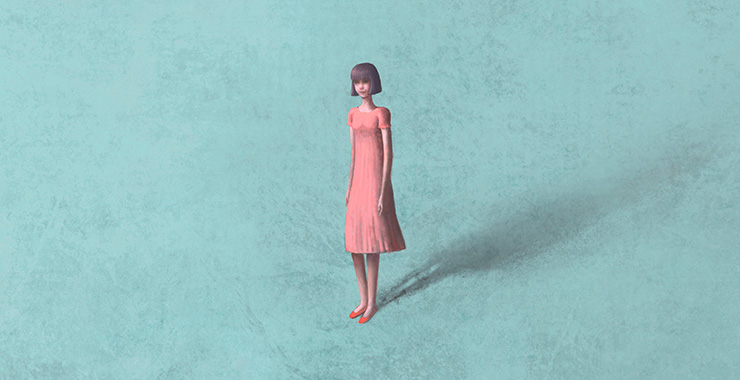
illustration of a young adult girl standing alone

Learning objectives: After reading this article, CE candidates will be able to:

  1. Identify the main anxiety disorders in children and teens, the best evidence-based treatment for them, and what that treatment looks like.
  2. Discuss differences and similarities in how children and teens present with anxiety disorders.
  3. Identify which youth are most at risk for these disorders, and how to help them.

For more information on earning CE credit for this article, go to CE Corner.

Even before the Covid-19 pandemic, growing numbers of young people were experiencing high rates of clinical-level anxiety. About 11.6% of kids had anxiety in 2012, up 20% from 2007. But during the pandemic, those numbers nearly doubled, such that 20.5% of youth worldwide now struggle with anxiety symptoms, according to a meta-analysis of 29 studies reported in JAMA Pediatrics (Vol. 175, No. 11, 2021) opens in new window. Besides Covid-related stressors like social isolation, missed milestones, and increased family tension, background stressors such as school shootings, political unrest, and the war in Ukraine have likely fueled these increases.

These soaring numbers are clashing with a major crisis in mental health provision, and most children and teens with anxiety disorders are not getting the help they need. Factors exacerbating this problem include long waiting lists to see a psychologist, a dearth of trained providers, and a disproportionate lack of access to quality care for low-income individuals and people of color, according to those who study and treat these disorders.

But for children and parents who find the right care, there is great news: “There are effective treatments for anxiety disorders, and those treatments are pretty darn good,” said Temple University’s Philip Kendall, PhD, who directs the Child and Adolescent Anxiety Disorders Clinic there. In a major randomized controlled study by John T. Walkup, MD, Kendall, and colleagues, 60% of young people who received a full dose of tailored cognitive behavioral therapy (CBT)—a program called “Coping Cat”opens in new window—improved significantly, and those numbers rose to 80% when they also took sertraline (Zoloft), an anti-anxiety medication ( New England Journal of Medicine , Vol. 359, No. 26, 2008 opens in new window).

Another positive development is that the medical community is seeing the value of homing in on anxiety disorders: In April, a group of experts making up the independent U.S. Preventive Services Task Forceopens in new window recommended that all young people ages 8 to 18 receive regular screening for anxiety. And thanks to increased public awareness about mental health issues, stigma surrounding anxiety is down, and psychologists say more parents are open to seeking anxiety treatment for their children.

When kids get appropriate treatment for anxiety, it can make an enormous difference in the trajectory of their lives, said Kathryn D. Boger, PhD, ABPP, co-founder of the McLean Anxiety Mastery Program at McLean Hospital and co-founder and chief clinical officer of InStride Health, a new virtual company that broadly disseminates evidence-based anxiety and OCD treatment to young people.

The right treatment provides struggling youth with “a powerful way to start to understand the world and to face new and hard challenges,” Boger said. “And they will take the skills they learn with them for the rest of their lives.”

ADVERTISEMENT

Main anxiety disorder types

The current iteration of the Diagnostic and Statistical Manual of Mental Disorders (Fifth Edition), the DSM-5-TR (text revision), lists 11 anxiety disorders in total. That is a change from the DSM-4, which included obsessive-compulsive disorders and trauma-based symptoms within the anxiety disorders category. Those conditions are now listed separately, though they often overlap with anxiety disorders.

The most common anxiety disorders in children and teens are:

  • Generalized anxiety disorder: This is pervasive worry or anxious feelings across all domains of life. These kids “are worried across the board—about their performance, their friend group, their health, their pet’s health, their parents’ health,” said Ellen Flannery-Schroeder, PhD, who heads the Child Anxiety Program at the University of Rhode Island and specializes in treating anxiety disorders. These youth may experience physiological anxiety reactions such as upset stomach, muscle tension, difficulty relaxing, difficulty falling asleep, difficulty concentrating, and feeling fatigued or on edge.
  • Separation anxiety disorder: Particularly common in younger children, this intense fear of being separated from a primary caregiver goes beyond the developmental norm. Children may be reluctant or refuse to go out or sleep away from home without the caregiver and may experience nightmares about separation. They fear that something bad might happen to that person and the person will never return, leaving them alone and unprotected, explained Rachel Merson, PsyD, clinical director of the Child and Adolescent Fear and Anxiety Treatment Program at Boston University’s Center for Anxiety and Related Disorders.
  • Social anxiety disorder: This condition is especially likely to affect teens, though it occurs in younger children as well. These young people are intensely afraid of social situations where they might feel embarrassed or judged and will avoid the situation or endure it only with great anxiety, according to the DSM-5. Other common symptoms include having difficulty making friends, avoiding social situations, worrying for days before a social event, and feeling shaky, sweaty, or nauseous in feared social settings.
  • Panic disorder: More common in teens than in younger children, this condition is marked by recurrent, unexpected panic attacks and persistent concern and worry about having another attack. According to the DSM-5, panic attacks are “abrupt surges of intense fear or extreme discomfort that reach a peak within minutes, accompanied by physical and cognitive symptoms such as palpitations, sweating, shortness of breath, fear of going crazy, or fear of dying.” These reactions can occur unexpectedly with no obvious trigger, or they may be expected, for example, in response to a feared object or situation.
  • Specific phobias: This condition involves strong fears of specific situations or objects. For children, these often include needles and injections, dogs and other animals, and vomiting. While most people have an immediate negative reaction to at least some of these triggers, children with these phobias can become fixated on their fears, which can cascade into other problems such as fear of leaving home and greater social anxiety.
  • Selective mutism: This anxiety disorder typically begins in early childhood but can persist into adulthood if untreated. Children with selective mutism have no trouble talking in situations where they are comfortable—at home or with others they feel close to—“but with new people and in new places, there is almost a freeze response, where their anxiety prevents them from being able to use their voices,” explained Merson, who specializes in treating the condition. Children with selective mutism who act normally at home often show behavioral inhibition at school and in community settings, communicating only through gestures, head nods, and pointing, she added.

All of these disorders can appear anywhere on a continuum, Merson added. “So, there can be very severe cases, but also more moderate ones that respond quickly to effective treatment,” she noted.

Commonalities and differences

Regardless of the type of disorder or the child’s age, however, the basic psychophysiology of anxiety disorders is the same, Flannery-Schroeder said.

“I think of anxiety as a false alarm of the sympathetic nervous system—it’s a fight or flight response to something that is perceived as alarming when it doesn’t need to be,” she said. That can show up as worried thinking, avoidant behavior, and physiological stress reactions. “If you think of it that way, it looks the same across all ages,” she said. While the causes of anxiety disorders are not entirely clear, both genetics and the environment, including parenting styles, traumatic events, and even one’s birth cohort, play roles, she and others noted.

While the underlying mechanisms are the same, however, anxiety disorders look somewhat different in children and adolescents depending on their developmental stage, Flannery-Schroeder added. One big difference is that young children think in concrete terms and hence lack insight into how unreasonable their anxiety may be. Teens and adults, though, can see that their level of anxiety does not necessarily make sense, but cannot stop feeling anxious anyway.

Teens’ ability to think abstractly can add an extra layer to their anxiety because they can observe their own anxiety and get down on themselves for it, Kendall noted. And because these youngsters tend to be shy and inhibited, they’re often afraid to share these thoughts and feelings with friends, who could potentially help to normalize their thoughts. Developmentally, teens also tend toward self-focus and egocentrism, and that, too, can make anxiety worse, he noted.

A winning treatment

The anxiety disorder treatment with the strongest evidence base for success is CBT tailored to the specific anxiety disorder, usually lasting for 12 to 20 sessions and sometimes more. While the application differs depending on the youth’s condition, the basic methodology is the same: addressing unrealistic or exaggerated anxious thoughts and exposing youth to the things they fear until they experience and learn that the anticipated catastrophe does not occur. As a result, they become less triggered when they enter similar situations.

Treatment begins with a holistic assessment of the child, said Clark Goldstein, PhD, who specializes in treating youth anxiety disorders and is founder of Growth Psychology, P.C., a private practice in Garden City, New York. He uses an evidence-based assessment tool, the Anxiety Disorders Interview Schedule, or ADIS, asking questions of the parents and child separately to gain an understanding of the child’s symptoms. He also asks questions of both to learn about mood issues, family dynamics, and family history. And he screens for other conditions such as attention-deficit/hyperactivity disorder, autism spectrum disorders, and eating disorders.

With children and teens, Goldstein begins treatment by showing them a diagram depicting thoughts, feelings, and behaviors connected via bidirectional arrows. He explains that positive thoughts can lead to positive behaviors, and negative behaviors can lead to negative feelings, for example.

“The aim is to help kids start to understand the difference between thoughts, feelings, and behaviors, and that can be challenging sometimes, even for teenagers,” he said.

The next few sessions focus on the cognitive aspects of treatment, working with youth to recognize common cognitive distortions such as probability overestimation (believing the chances that something bad will happen are higher than they actually are) and emotional reasoning (the propensity to think, “I feel like it’s true; therefore, it’s true.”). He also teaches young people to notice and label their thoughts, which helps them separate the negative thought from the distorted take on reality that often emerges from unrealistic anxiety. For example, “‘I notice that I’m having the thought that the dog is going to bite me’ is very different from, ‘The dog’s going to bite me,’” he said.

Such strategies help set the stage for what experts agree is the most powerful part of treatment: the behavioral work. It starts with developing a “fear and avoidance hierarchy”—a list of situations the child or teen is asked to rate based on how strong their fear is, sometimes with the help of parents. Then, in a gradated fashion, the therapist helps them enter the feared situations, known as exposures or behavioral experiments. For example, if a teen’s big fear is asking someone on a date, exposures might include practicing various scenarios with a therapist in which they are rejected, accepted, or treated neutrally. If a child has an intense fear of dogs, exposures might include helping them look at cute dogs on the internet, pet a stuffed dog, or feed a gentle, old dog.

Goldstein also has kids rate their progress along the way, including toward the end of treatment. Seeing their fear levels drop from 10 to 2, for example, “is a nice confidence boost, and it helps kids see the fruits of their labor,” he said.

Parents take part in treatment in different capacities depending on the situation, Merson added. With very young children, she may see parents and children together for all or most of the sessions, or just work with the parents alone. For older kids and teens, she often sees the child separately for most of a given session and then brings in the parents for the last 10 minutes to do a recap and go over homework. She may also see parents of older children alone for a few sessions to ensure that they can effectively coach their children in using new anxiety-management skills.

No matter the structure of treatment, however, parental involvement is key, Merson emphasized. Often, parents unwittingly foster a child’s anxiety by providing too much reassurance or protection. While that is a natural response, “it can actually perpetuate anxiety in the long term because the child isn’t learning how to handle difficult situations themself,” she said. Other parents may invalidate or ignore children’s anxious reactions, which can leave kids feeling unsettled and strain the parent-child relationship.

Merson helps parents develop the winning communication strategy of acknowledging and empathizing with their child’s feelings while at the same time promoting their autonomy and not giving too much credence to their anxiety. She also works with parents to facilitate behavioral experiments at home to help kids practice facing anxiety-provoking situations.


Who’s at greatest risk?

While anxiety disorders affect many young people, some are at greater risk than others. These include sexual- and gender-minority youth, who are much more likely than youth in general to meet criteria for anxiety disorders. In the 2022 National Survey on LGBTQ Youth Mental Healthopens in new window, conducted by the Trevor Project, for example, 73% of LGBTQ+ youth reported experiencing current symptoms of anxiety, and 45% said they had seriously considered attempting suicide in the past year.

To help these young people cope with anxiety and suicidal ideation that may emerge from that anxiety and then go on to develop fulfilling lives, Lily Brown, PhD, director of the University of Pennsylvania’s Center for the Treatment and Study of Anxiety, and José A. Bauermeister, PhD, MPH, a professor at Penn Nursing, launched an intervention this fall that will address known mental health risk factors for these teens, including social isolation, negative emotions like shame and guilt, and lack of safe spaces to connect with like-minded others.

Using peer chats via smartphone, the intervention will incorporate two aspects. One is CBT-based life skills training, which helps teens transition from relying on adults to gaining greater independence by providing supports that enhance their emotional knowledge and help them find safe spaces to connect with others. The other is safety planning, an evidence-based practice for reducing the risk of future suicide attempts.

The aim is to give these young people practical tools to anticipate and weather suicidal thoughts that may arise, “but for the rest of the time, to help them build lives worth living through opportunities to get connected,” Brown said.

Another at-risk group is children of color, due to social determinants such as poor access to quality mental health care, psychological factors related to racism, and greater stigma about seeking mental health care, said Kent State University professor Angela Neal-Barnett, PhD.

For more than 30 years, Neal-Barnett has been heading the Program for Research on Anxiety Disorders among African Americans, which develops research-based anxiety interventions for Black Americans. One project within that program is a weekly meeting called Sisters United Now (SUN), aimed at helping middle-school Black girls lower their anxiety, create connections, and build psychological resiliency. SUN uses psychoeducation along with an app to teach the girls about causes of stress and anxiety and employs culturally competent cognitive behavioral interventions to help build their confidence.

For example, girls create their own theme songs by taking parts of their favorite songs and rewriting them with self-empowering endings. Their songs are loaded into an app, “and they are there for them in times of stress and anxiety,” Neal-Barnett said. Neal-Barnett is also studying cultural factors that may make Black youth more vulnerable to anxiety than others.

Additionally, researchers are finding that certain temperamental styles are closely linked to the development of anxiety disorders. A recent study indicates that anxious children who exhibited a temperamental style called behavioral inhibition at a very early age had a much more difficult time managing their anxiety symptoms during the pandemic than did others. The study, conducted by Selin Zeytinoglu, PhD, of the University of Maryland, and colleagues, analyzed longitudinal data on 291 young adults tracked at ages 2, 3, 7, 15, and 18, looking at measures of behavioral inhibition characterized by fearful responses to novel stimuli.

Teens with high levels of behavioral inhibition starting as toddlers were much more likely to suffer increased anxiety during the pandemic than those who did not show this behavior early on. The findings suggest the importance of pinpointing and treating behavioral inhibition as early as possible, the authors noted ( Journal of the American Academy of Child and Adolescent Psychiatry , Vol. 60, No. 10, 2021 opens in new window).

Improving on good treatment

The effectiveness of CBT in treating anxiety disorders in young people has been well established, with recent studies showing that cognitive restructuring and exposure tasks both lead to major improvements in youth anxietyopens in new window, and that the quantity of exposures is linked to better outcomesopens in new window. Now, researchers are looking into what can make treatment even more successful.

One trait they are examining is called “intolerance of uncertainty,” or IU—the tendency to hold negative beliefs toward and reactions against uncertain situations and events. Studies suggest that kids with anxiety disorders who score higher in this tendency and whose parents are overly accommodating have poorer treatment outcomes. To this end, several researchers have created adaptations of CBT for anxiety that target one or both dimensions. In a summary of this area of research in Current Psychiatry Reports (Vol. 22, No. 49, 2020) opens in new window, Kendall and colleagues noted that the work shows promising results, adding that it could lead to an important next step in CBT treatment for anxiety: tailoring interventions to particular subsets of kids.

Researchers at Boston University’s Psychotherapy and Emotion Research Lab are examining additional ways to enhance treatment. One study is adding a mindfulness-based intervention called Positive Affect Training to CBT treatment, while another will compare the effectiveness of yoga, CBT, and stress education in treating generalized anxiety disorder. Members of the lab are also looking at structural and functional brain biomarkers that may differentiate teens with anxiety and depression from healthy teens (visit Psychotherapy and Emotion Research Laboratoryopens in new window for a list of these projects).

Others are looking into how to better disseminate proven treatments for pediatric and adolescent anxiety to broader populations. For example, Boger is eager to make evidence-based treatments available to many more kids via her new company.

“Too many kids and teens are struggling to find treatment, particularly evidence-based care,” she said. “So, our plan is to be a 50-state solution focused on providing access to evidence-based care for anxiety and obsessive-compulsive disorder.” Her startup works with insurance companies, operating in a value-based framework in which payments for care delivery are bundled and tied to the quality of that care, Boger noted. Treatment encompasses comprehensive, evidence-based care that includes intensive intervention, a step-down phase, and ongoing maintenance.

Providers who treat anxiety should make sure they are fully trained in CBT and up to date on new research, Goldstein added. “I’ve had people come to me who have seen providers who say they do CBT, but who didn’t really push the child to do exposures in a way that was productive,” he said. He recommends consulting with or gaining supervision from a known expert and reading key books by leaders in the field such as David H. Barlow, PhD, Michelle G. Craske, PhD, and Ronald M. Rapee, PhD (see Further reading).

It’s important to get it right, Boger added, because untreated anxiety can spiral into worse issues like depression, substance use disorders, and even suicidality. But when kids get quality treatment, she said, it can be life changing.

“I’ve seen kids who were completely stuck and avoiding pretty much every facet of their lives—from school to social interactions, to extracurriculars, to friends—who were able to reclaim their lives,” she said. “Now they’re off to college or grad school and living their full lives. It’s really inspiring and remarkable.”

Recommended Reading

You may also like