skip to main content
News

How does marijuana affect the brain? Psychological researchers examine impact on different age groups over time

New legislation is helping scientists and manufacturers study the effects of cannabis and develop guidelines for use

APA Style leaf logo Cite This Article in APA Style
Stringer, H. (2023, June 1). How does marijuana affect the brain? Psychological researchers examine impact on different age groups over time. Monitor on Psychology, 54(4). https://www.apa.org/monitor/2023/06/marijuana-effects-brain

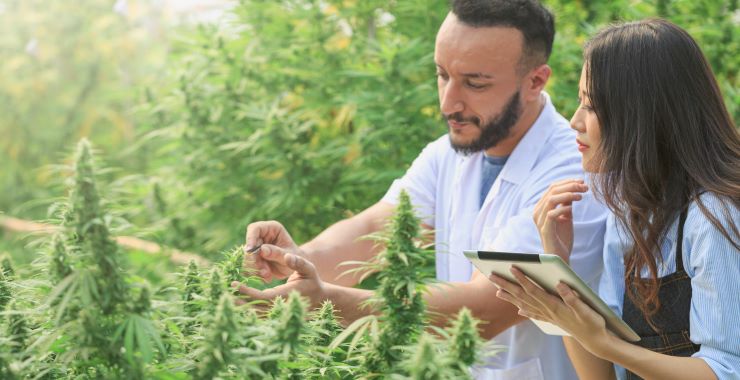
Two researchers study cannabis plan in greenhouse.

In 2021, more than 36 million people 12 and older reported using cannabis in the past month—double the number compared with a decade earlier, according to data from the Substance Abuse and Mental Health Services Administration’s National Survey of Drug Use and Healthopens in new window. Cannabis users have access to an unprecedented variety of purported antidotes for everything from anxiety to insomnia to posttraumatic stress disorder (PTSD)—claims that have yet to be validated by research. Among the popular offerings are cannabis concentrates with extremely high levels of tetrahydrocannabinol (THC), the main psychoactive compound in cannabis that produces the euphoric “high” sensation.

“Science is having a hard time keeping up with the enormous increase in products available, especially because researchers have been hamstrung by regulatory hurdles,” said Columbia University’s Margaret Haney, PhD, a professor of neurobiology and director of the school’s Cannabis Research Laboratory. Those hurdles include marijuana’s classification as a Schedule I substance, which requires researchers to earn approval from multiple federal agencies for studies.

APA has been advocating for reforms in cannabis research regulations to ensure that science is available to inform product policies, clinical decisions for therapeutic use, and public understanding about the health effects across the life span. In December 2022, President Joe Biden signed into law the Medical Marijuana and Cannabidiol Research Expansion Act—legislation that will make it easier for scientists and manufacturers to study the effects of marijuana and develop guidelines for use. For decades, the University of Mississippi was the only federally approved cultivator of cannabis for scientists, but the new law will allow other entities to manufacture and distribute the drug for research.

Although the legislation does not allow scientists to buy and study products available in dispensaries, psychologists hope that the new policy is a harbinger of increasing federal support for gathering more science-based data to educate the public and health care providers. The latest findings are shedding light on how biological brain differences may influence cognitive effects in adolescent users, how cannabis can interfere with pharmaceutical medications for depression and other mental health issues, and the potential mental benefits for older adults. “For many years, cannabis was demonized, but now we’ve swung to the other extreme because it’s advertised as the cure for everything,” said Haney. “We need data to inform honest discussions about the risk of drug abuse, the therapeutic potential, and the impact on different age groups over time.”

The adolescent user

One of the top priorities among cannabis researchers is clarifying how the drug—which has been legalized for recreational use in 21 states and for medical use in 37 states—affects the developing brain. “I’m concerned by the increase in the number of people who are using cannabis at higher doses on a daily basis,” said Nora Volkow, MD, director of the National Institute on Drug Abuse (NIDA). “Adolescents are more vulnerable to addiction, and once they are using compulsively, cannabis can interfere with memory and learning.” In one study, 15% of people of all ages who used cannabis in the past 30 days met the Diagnostic and Statistical Manual of Mental Disorders (Fifth Edition) criteria for cannabis use disorder, and rates specifically among youth ages 12 to 20 were significantly higher at 23% (Richter, L., et al., The American Journal of Drug and Alcohol Abuse, Vol. 43, No. 3, 2017opens in new window).

To investigate the effects of cannabis use on adolescents, Joanna Jacobus, PhD, an associate professor of psychiatry at the University of California San Diego (UCSD), launched longitudinal studies that followed teenagers who had started using and compared them with nonusing controls. Adolescents who continued using for 3 years at least 2 times per week had thicker cerebral cortices, particularly in the frontal and parietal regions than controls (Developmental Cognitive Neuroscience, Vol. 16, 2015opens in new window). The cannabis users performed more poorly on cognitive tests, especially in attention and memory tasks, and teenagers who started using earlier in life performed more poorly than those who started using later or nonusers (Neuropsychology, Vol. 29, No. 6, 2015opens in new window).

More recently, Jacobus began collecting data on youth before they started using cannabis to understand if the drug caused the poorer neural health outcomes, or if there were preexisting biological brain differences that were also influencing cognitive outcomes. A 6-year study showed preexisting differences in gray matter and functional brain activation that could be contributing to poorer cognitive performance in adolescent cannabis users. “We found that there are biological brain differences that can increase the chances that an adolescent will start using cannabis, and these differences may also increase their vulnerability to negative developmental outcomes,” said Jacobus.

Jacobus is optimistic that there will be more data soon about which youth are at higher risk of initiating cannabis use as researchers follow more than 11,000 youth enrolled in the NIH’s ABCD Study, the largest long-term study of brain development and child health in the United States. The study began in 2015 when children were 9 or 10, and Jacobus and her colleagues are collecting data on 700 participants from San Diego County with tools such as MRI imaging, cognitive and genetic marker testing, and questionnaires about family environment, school activities, and more.

Like Jacobus, Jonathan Schaefer, PhD, a researcher in the psychology department at the University of Minnesota, was eager to explore the cause of emotional and cognitive problems among adolescents who used cannabis. He tapped into data collected from more than 3,000 twins who had been followed from adolescence into their early 30s. By comparing identical twins who shared genetics and a home environment, he could better separate the effects of cannabis use on negative outcomes from the effects of these background factors.

He did not find evidence that cannabis caused more mental health problems or decreased cognitive ability, but the drug was linked to lower educational attainment, occupational status, and income (PNAS, Vol. 118, No. 14, 2021opens in new window). In a subsequent exploratory analysis, the data revealed that in identical twins, the twins who used more cannabis than their cotwins also had lower GPAs and academic motivation. “Our findings provide evidence against the idea that cannabis has dramatic, long-lasting effects on the brain,” Schaefer said. “Instead, they raise the possibility that we should be more concerned about acute, shorter-term drug effects that have lingering consequences.” For example, students who are using cannabis regularly may have trouble focusing and feeling motivated during school, which might ultimately affect their educational and career trajectory. Schaefer cautions that even if cannabis does not cause permanent, deleterious changes in the brain, it is still risky for adolescents to use because it may negatively impact other important longer-term life outcomes, such as educational attainment, risk of developing a cannabis use disorder, and lung health. These findings were also based on twins who were using in the 1990s and early 2000s, so the results do not account for the effects of newer, high-potency products, Schaefer said.

Data collected from more than 1,000 New Zealanders over 4 decades has also given researchers a glimpse into how frequent, long-term cannabis use—often starting in the teen years—affects the aging process. The study participants were followed from birth to age 45, and the long-term users were less financially prepared for aging, with lower credit scores and less money in savings and investments. They also reported more social problems, such as loneliness, lower life satisfaction, and less social support (The Lancet: Healthy Longevity, Vol. 3, No. 10, 2022opens in new window).

“Social support and financial preparedness in midlife are related to better aging and longer lives,” said Madeline Meier, PhD, an associate professor of psychology at Arizona State University and author of the study. “People may not realize that if they become dependent on cannabis, there could be consequences for healthy aging and well-being.” The researchers investigated whether factors in childhood—like IQ, low self-control, or socioeconomic status—could explain the outcomes, but they did not find evidence for this in the study. Long-term cannabis users frequently developed dependence on other substances, such as alcohol and tobacco, and the polysubstance use could also be contributing to at least some of the financial and social problems in midlife, Meier said.


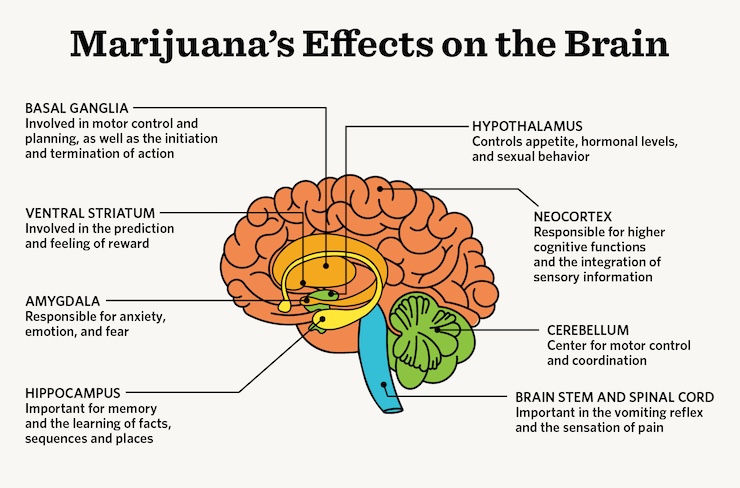
illustration detailing how marijuana effects various parts of the brain

Mixing marijuana with mental health issues

Psychologists also share a sense of urgency to clarify how cannabis affects people who suffer from preexisting mental health conditions. Many veterans who suffer from PTSD view cannabis as a safe alternative to other drugs to alleviate their symptoms (Wilkinson, S. T., et al., Psychiatric Quarterly, Vol. 87. No. 1, 2016opens in new window). To investigate whether marijuana does in fact provide relief for PTSD symptoms, Jane Metrik, PhD, a professor of behavioral and social sciences at the Brown University School of Public Health and a core faculty member at the university’s Center for Alcohol and Addiction Studies, and colleagues followed more than 350 veterans for a year. They found that more frequent cannabis use worsened trauma-related intrusion symptoms—such as upsetting memories and nightmares—over time (Psychological Medicine, Vol. 52, No. 3, 2022opens in new window). A PTSD diagnosis was also strongly linked with cannabis use disorder a year later. “Cannabis may give temporary relief from PTSD because there is a numbing feeling, but this fades and then people want to use again,” Metrik said. “Cannabis seems to worsen PTSD and lead to greater dependence on the drug.”

Metrik, who also works as a psychologist at the Providence VA Medical Center, has also been studying the effects of using cannabis and alcohol at the same time. “We need to understand whether cannabis can act as a substitute for alcohol or if it leads to heavier drinking,” she said. “What should we tell patients who are in treatment for problem drinking but are unwilling to stop using cannabis? Is some mild cannabis use OK? What types of cannabis formulations are helpful or harmful for people who have alcohol use disorder?”

Though there are still many unanswered questions, Metrik has seen cases that suggest adding cannabis to heavy drinking behavior is risky. Sometimes people can successfully quit drinking but are unable to stop using cannabis, which can also intensify depression and lead to cannabis hyperemesis syndrome—repeated and severe bouts of vomiting that can occur in heavy cannabis users, she said. Cannabis withdrawal symptoms such as irritability, anxiety, increased cravings, aggression, and restlessness usually subside after 1 to 2 weeks of abstinence, but insomnia tends to persist longer than the other symptoms, she said.

Cannabis may also interfere with pharmaceutical medications patients are taking to treat mental health issues. Cannabidiol (CBD) can inhibit the liver enzymes that metabolize medications such as antidepressants and antipsychotics, said Ryan Vandrey, PhD, a professor of psychiatry and behavioral sciences at Johns Hopkins University and president of APA’s Division 28 (Society for Psychopharmacology and Substance Use). “This could lead to side effects because the medication is in the body longer and at higher concentrations,” he said. In a recent study, he found that a high dose of oral CBD also inhibited the metabolism of THC, so the impairment and the subjective “high” was significantly stronger and lasted for a longer time (JAMA Network Open, Vol. 6, No. 2, 2023opens in new window). This contradicts the common conception that high levels of CBD reduce the effects of THC, he said. “This interaction could lead to more adverse events, such as people feeling sedated, dizzy, [or] nervous, or experiencing low blood pressure for longer periods of time,” Vandrey said.

The interactions between CBD, THC, and pharmaceutical medications also depend on the dosing and the route of administration (oral, topical, or inhalation). Vandrey is advocating for more accurate labeling to inform the public about the health risks and benefits of different products. “Cannabis is the only drug approved for therapeutic use through legislative measures rather than clinical trials,” he said. “It’s really challenging for patients and medical providers to know what dose and frequency will be effective for a specific condition.”

Keeping an open mind

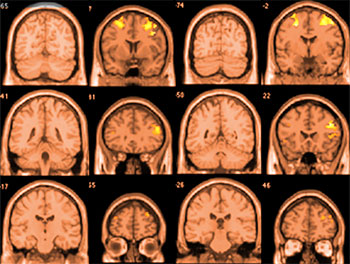
Images collected over time by Dr. Staci Gruber of Harvard Medical School from a study of medical cannabis patients completing a task. (Photo: Courtesy of Staci Gruber, PhD)
Although studies are shedding light on the effects of cannabis, Staci Gruber, PhD, an associate professor of psychiatry at Harvard Medical School, was concerned that most of the research focused on recreational rather than medicinal use. “There is a lot of concern about young recreational consumers as their brains are vulnerable and many may be using products high in THC that can lead to negative outcomes, but their outcomes may look very different from medical cannabis patients who also generally begin using cannabis as adults,” said Gruber, who launched the Marijuana Investigations for Neuroscientific Discovery (MIND) program in 2014 to explore the effects of medical cannabis.

In a recent study, Gruber’s team followed middle-age participants before they started using cannabis for medical purposes and for one year after initiating use. Executive function and clinical state (mood, sleep, anxiety) improved over the 12 months. Participants generally chose products with higher levels of CBD and lower levels of THC, and overall, medical cannabis patients did not demonstrate behaviors or symptoms associated with problematic cannabis use (Journal of the International Neuropsychological Society, Vol. 27, No. 6, 2021opens in new window; Cannabis, Vol. 4, No. 2, 2021opens in new window). “When sleep and mood improves, people often feel better,” said Gruber. “And they may be able to think more clearly when they feel better.” Gruber plans to further study the reasons for the improved executive function in this population.

Researchers at the University of Colorado also found evidence that cannabis may be beneficial for older adults who start using later in life. MRI data showed that users had stronger connectivity than nonusers between parts of the brain that are important for cognitive functions, such as working memory and coordination (Watson, K. K., et al., Frontiers in Aging Neuroscience, Vol. 14, 2022opens in new window). “Cannabis use could be offsetting normal age-related cognitive decline,” said Rachel Thayer, PhD, an assistant professor of neuropsychology at the University of Colorado, Colorado Springs.

Although scientists are working to answer important questions about consuming cannabis, one of the gaping holes in the field is a reliable method of quantifying how many milligrams of THC are in the multitude of products available, said Dartmouth College’s Alan Budney, PhD, a professor of psychiatry and biomedical science who specializes in cannabis research. Without this information, it is difficult for researchers to correlate therapeutic and harmful outcomes with specific use patterns.

To begin to quantify THC levels in different cannabis products available to consumers, Budney leveraged social media to survey more than 5,600 adults who smoked or vaped concentrates or flower (the dried flower bud). The participants provided highly detailed information, such as how many hits per day and which products they used. The researchers developed mathematical formulas to calculate milligrams of THC consumed per day (Cannabis and Cannabinoid Research, online first publication, 2022opens in new window). Budney is now preparing to launch a survey of 15,000 users who will report not only the detailed information about their cannabis consumption but also how the products are affecting them in terms of depression, anxiety, cannabis use disorder symptoms, and quality of life.

“With the large number of participants, we have lots of data that will help us get closer to understanding the potential therapeutic benefits and negative consequences of the products people are using,” said Budney. “My hope is that studies like this will inform the policymakers and clinicians who can influence the decisions millions of people are making about using cannabis.”

Recommended Reading

Speaking of Psychology

Subscribe to APA’s audio podcast series highlighting some of the most important and relevant psychological research being conducted today.

Subscribe to Speaking of Psychology and download via:

Appleopens in new window
Apple podcast logo

Spotifyopens in new window
Spotify logo

You may also like