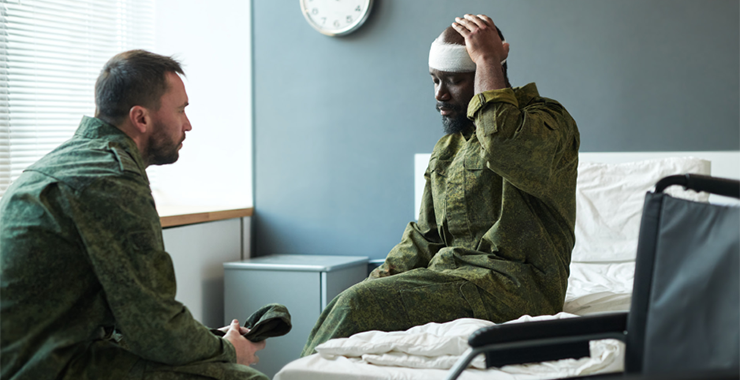
Service members who sustained a military-related traumatic brain injury (TBI) are much more likely than soldiers without a military history of TBI to develop a mental health or substance use problem. They are also at an increased risk of suicide.
100%
Percentage of increase in substance use disorders in active-duty soldiers following a TBI diagnosed while they were in the military, compared with a 14.5% increase in those without a military TBI diagnosis*. The sample included 860,892 soldiers who returned from a deployment in Afghanistan or Iraq between fiscal years 2008 and 2014.
67.7%
Percentage of increase in mood disorders in soldiers following a TBI, compared with a 37.5% increase in soldiers without a TBI. For example, 25.6% of soldiers with a TBI had new-onset anxiety disorders, compared with 9.8% of soldiers without a TBI.
31.9%
Percentage of increase in alcohol use disorders in soldiers following a TBI, compared with a 10.3% increase in soldiers without TBI history. Most diagnoses happened for the first time following a TBI—twice the rate of new-onset disorders experienced by soldiers without a TBI.
21.3%
Rate of increase in time to suicide for soldiers with a TBI, compared with those without a history of TBI.