skip to main content

Estrangement is never easy or straightforward. Psychologists can help

Therapists can assist patients to identify relationships worth salvaging or help heal the pain of detachment

APA Style leaf logo Cite This Article in APA Style
Fairbank, R. (2024, April 1). Estrangement is never easy or straightforward. Psychologists can help. Monitor on Psychology, 55(3). https://www.apa.org/monitor/2024/04/healing-pain-estrangement

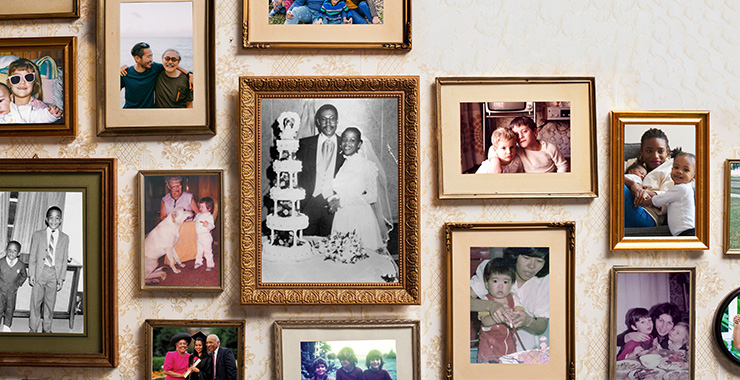
collage of picture frames hanging on a wallpapered wall

A number of recent high-profile estrangements have brought attention to a deeply complex, often painful topic. Whether it is Prince Harry’s high-profile exit from the royal family, Jennette McCurdy’s detachment from the suffocating mother/daughter bond detailed in her best-selling I’m Glad My Mom Died, or Britney Spears’s severing of the relationship with her overbearing father, familial estrangement is never an easy or straightforward situation to navigate.

Estrangement has always been a taboo topic, one that runs directly opposite to societal ideals about what family can and should be. As a result, many people who are estranged from one or more relatives report feeling deeply ashamed and even afraid to speak about their experiences because of the stigma and assumptions surrounding estrangement.

Research on estrangement is relatively new but shows that estrangement is far more common than people may think. One nationally representative study showed that 27% of Americans are actively estranged from at least one family member. While there is no conclusive data on whether estrangements are increasing or decreasing, it may be that, with celebrities sharing about their experiences, others may feel more comfortable divulging their own family struggles. “Families have always been complicated, and now we’re talking about it more,” said Lucy Blake, PhD, a senior lecturer in psychology at the University of the West of England in Bristol and author of the book No Family Is Perfect: A Guide to Embracing the Messy Reality.

Patients dealing with estrangement have been found to benefit from therapy in specific ways, including receiving warmth, validation, and safety, which may have been missing in their previous relationships; addressing the causes and resulting fallout from their estrangement; and also working on their relationship skills (Blake, L., et al., Counselling & Psychotherapy Research, Vol. 23, No. 1, 2023opens in new window).

“That therapeutic relationship is really important, especially feeling safe and feeling validated,” said Blake, one of the authors of the study. “If you are in a family where there are abusive dynamics—and many people who have been estranged know what that family feels like—it’s going to be hard to feel safe with a therapist.” Though it may take time to establish trust, it is through the therapeutic relationship—perhaps the first or currently the only safe and validating relationship—that patients can explore their own family estrangement and learn strategies for establishing stronger relationships with themselves and with others.

ADVERTISEMENT

Prevalence of parent and adult-child estrangement

In a 2023 study of parent and adult child estrangementopens in new window published in the Journal of Marriage and Family, researchers looked at a nationally representative sample of parents, which included 8,495 mothers and 8,119 fathers, to determine estrangement rates according to gender, race, and sexuality. The study found that 6% of respondents reported an estrangement from their mother, while 26% reported an estrangement from their father. The average age at estrangement was 26 for an estrangement with a mother and 23 for an estrangement with a father.

These rates of estrangement also varied according to race, gender, and sexuality. This included the finding that White adult sons were more likely to be estranged from their mothers than were daughters, and that Black sons and daughters were both more likely to be estranged from their fathers but less likely to be estranged from their mothers than White adult children. Members of the LGBTQ+ community were also more likely to be estranged from their fathers than their heterosexual peers, with 32% of gay or lesbian adult children and 36% of bisexual adult children reporting estrangement from their fathers compared with 22% of their heterosexual peers.

Of the adult children with a history of estrangement, 81% reported reconciling with their mother, while 69% reported reconciling with their father. “Estrangement isn’t necessarily lifelong,” said Rin Reczek, PhD, a professor of sociology at The Ohio State University, coauthor of the book Families We Keep: LGBTQ People and Their Enduring Bonds with Parents, and one of the authors of the paper.

Another study, published in the book Fault Lines: Fractured Families and How to Mend Them, surveyed a nationally representative sample of 1,340 Americans over age 18 and found that 27% were currently estranged from a relative, with 10% reporting an active estrangement from either a parent or a child. In terms of parent-child estrangements, 4% reported being actively estranged from their father, while 2.5% were actively estranged from their mother.

Researchers also found either no significant difference or only very minor differences in rates of estrangement when accounting for race, education level, and gender. “The only notable difference was a substantially higher rate of estrangement in middle age,” said Karl Pillemer, PhD, a professor of human development at Cornell University and author of Fault Lines, whose research focuses on estrangement. This increase in prevalence during middle age is thought to be due to the higher number of living relatives, as middle-aged people may have both adult children and parents.

The continuum

“Estrangement is pretty varied in terms of what it can look like,” said Kristina Scharp, PhD, a professor of communication at Rutgers University–New Brunswick who studies estrangement. As Scharp’s research suggests, there are different aspects to estrangement that set it apart from other factors that can create emotional or physical distance between people. These aspects include communication quantity and quality, physical and emotional distance, and something she calls role reciprocity, which refers to the different roles people take on within a family, such as that of a caregiver or that of a dependent child.

“The expectations we have for each other also vary quite a bit,” Scharp said. “Some people feel they don’t need to enact these roles anymore, and some people aren’t enacting those roles, which is part of the problem.” For example, tension can arise in a parent-child relationship when an adult child feels their parents did not care for them in the way they should have or when an aging parent feels uncomfortable with boundary violations by their adult child.

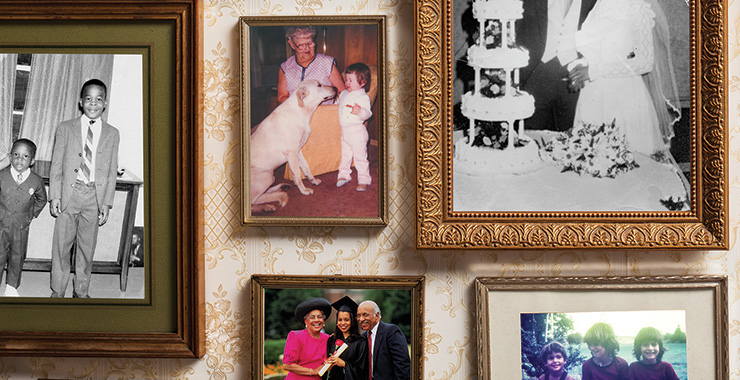
collage of family photos

The final straw

As Scharp notes, in the research she has done the most common reasons for estrangement tend to be cited as abuse, whether emotional, physical, or sexual; neglect; substance use; mental health; or major ideological differences, such as an LGBTQ+ child coming out to their very religious parents. Divorce also seems to play a big role, with an online survey of 1,360 parents experiencing estrangement from an adult child showing that one of the major risk factors was whether the parent was divorced from their estranged child’s biological parent (Coleman, J., et al., Journal of Social and Personal Relationships, Vol. 39, No. 3, 2022opens in new window).

As Scharp’s research has shown, when an estrangement happens, many people report a “final straw” moment, one that is often preceded by a very long, very difficult relationship. Other times, estrangement can be the result of a relationship that slowly erodes over time, with no one moment that marks its final dissolution. “You can have what they call fading away or sudden death,” Scharp said. “It can happen either way.”

As psychologists reported, these “final straw” moments are very common, and often exemplify the long-running tensions in the relationship. “It’s important to recognize that while family estrangements often have a discrete triggering event, they are rarely a short-term, overnight phenomenon,” said Dan Neuharth, PsyD, a licensed family and marriage therapist who specializes in working with high-conflict families. “It’s usually been something that’s been brewing for a long time.”

As Samantha Rodman Whiten, PhD, a psychologist who specializes in working with estranged families, described it, this final straw can be considered an “empathic rupture,” a moment in time that spells out all the ways in which the family member will never change or never be able to fulfill a person’s expectations. It could be an adult child giving birth to their first child, with the expectation that their parent will step in to help during those stressful first few weeks, only for their parent to leave for a cruise instead, or it could be something very small but meaningful, such as an adult child failing yet again to follow through on a promise. “It’s a representative sort of action that makes you think they’re never going to change,” Rodman Whiten said.

When patients are navigating a dissolution, it is crucial that practitioners guide their patients to fully own their decision about how to proceed, whether that is a short- or long-term estrangement, active counseling with their family member, or an attempted reconciliation. It is not uncommon for the cutoff family member to assign blame to a perceived source of influence. For example, parents whose children have cut off contact are more likely to cite a significant other or clinician playing a role in the estrangement, said Joshua Coleman, PhD, a psychologist and author of the book Rules of Estrangement: Why Adult Children Cut Ties and How to Heal the Conflict.

Coleman usually sees patients at critical points of estrangement (such as exploring reconciliation or whether to sever ties) over the course of two to five sessions, bringing in the estranged family members—if the patient agrees—to get a full sense of the family dynamics. “With families, whether you are seeing the parent or the adult children, you’re only getting part of the picture,” Coleman said.


Stigma and loneliness

The difference between societal ideals around what family should be and the reality of messy family behavior can often trigger shame and a hesitancy to speak about the estrangement, while even well-meaning clinicians may inadvertently contribute to the pain of the estranged patient by encouraging them to reconcile when it may not actually be safe to do so. “These societal messages can be very disempowering if the family is emotionally dangerous,” Neuharth said.

In these cases, the practitioner’s role is to help the patient recognize that although estrangement can be a deeply painful choice, it can also be necessary to protect their physical, emotional, and mental well-being. “One of the things that is helpful, and sometimes difficult, is to try and understand the reasons for why this is happening,” Neuharth said. As Neuharth noted, an estrangement over issues such as abuse or substance misuse is very different from an estrangement over differences in values or expectations, such as a parent wanting their child to follow in the family business.

Research shows that group therapy can help people dealing with estrangement feel less alone, Blake said. In a 2022 study coauthored by Blakeopens in new window and published in Evaluation and Program Planning (Vol. 95, 2022), people who were experiencing family estrangement reported feeling less alone and less ashamed after attending a six-session support group intervention where they met with others who were going through similar experiences. After they completed all six sessions, participants reported less psychological distress, with their average distress scores falling from moderate to mild.

Reconciliation

As research suggests, very few estrangements are permanent, with several studies showing that many people will report periods of estrangement that are often followed by a period of reconciliation. “It’s often not a permanent state, but something people move in and out of,” Blake said. In Pillemer’s book, of the 300 estranged sets interviewed, 100 had attempted reconciliation. Of these 100 sets, many underwent reconciliation with the help of professional counseling, which they generally credited as being integral to a successful and productive reconciliation.

“My methodology is all around helping the parent to take responsibility, to find the kernel, if not the bushel of truth,” Coleman said. Coleman, who often works with parents who have reached out to him in the hopes of attempting a reconciliation with their estranged child, will often start by having them write a letter of amends to that child. “I always have them start with, ‘I know you wouldn’t do this unless you felt like it was the healthiest thing for you to do,’” Coleman said.

For parents who do not know or understand the reason for the estrangement, Coleman will often recommend that they write something along the lines of, “It’s clear I have some significant blind spots as a person and a parent, and that I don’t have a better understanding of what caused this, but I would like to know.” Coleman finds that when adult children are willing to respond to the letter, and to attend counseling sessions mediated by him, there is generally a good chance of a parent and an estranged child finding common ground where they can start to repair things.

However, there will always be times when reconciliations just cannot or will not happen. “On one hand, people should not be made to feel guilty or ashamed because it is critical for their mental health to exclude a family member from their life,” Pillemer said. “On the other hand, there are a large number of people for whom reconciliation is possible and has very beneficial outcomes.”

Recommended Reading

Speaking of Psychology

Subscribe to APA’s audio podcast series highlighting some of the most important and relevant psychological research being conducted today.

Subscribe to Speaking of Psychology and download via:

Appleopens in new window
Apple podcast logo

Spotifyopens in new window
Spotify logo

You may also like