skip to main content
Conversation

Matthew Goodwin is designing systems to enhance the lives of people with autism

The scientist is adapting wearable sensors to help predict potentially problematic behaviors and alert caregivers

APA Style leaf logo Cite This Article in APA Style
Weir, K. (2024, April 1). Matthew Goodwin is designing systems to enhance the lives of people with autism. Monitor on Psychology, 55(3). https://www.apa.org/monitor/2024/04/scientist-helps-autistic-people-wearable-sensors

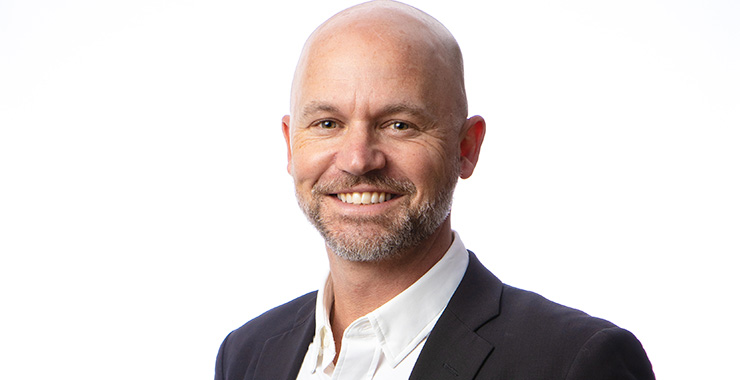
headshot of Matthew Goodwin

As a psychology undergrad at Wheaton College in Massachusetts, Matthew Goodwin, PhD, did a senior thesis project with profoundly autistic participants. “They couldn’t tell us what they were feeling or experiencing. I wondered if we could measure it instead,” said Goodwin, who now directs the Computational Behavioral Science Laboratory at Northeastern University in Boston.

He adapted a wearable heart-rate monitor designed for athletes—cutting-edge technology at the time—to collect physiological data from autistic participants. On a few occasions, some participants behaved aggressively toward others or attempted to self-injure. “In all three cases, I noticed there was much more variability than usual in their physiological signals just before the event,” he said. “It was an aha moment that the nervous system may be able to predict the onset of aggressive behaviors.”

Twenty-five years later, the technology has finally caught up with his idea. Goodwin spoke to the Monitor about the system he’s designing to predict challenging behaviors in autistic people, improving quality of life for them and their caregivers.

[Related: Autistic adults are struggling to get care for anxiety and depression. Here’s how practitioners can step uplogin required]

Why focus on challenging behaviors in autism?

The people I work with have profound autism, which the Centers for Disease Control and Prevention defines as being nonverbal or minimally verbal and having an IQ below 50. These individuals typically require 24/7 care, and they sometimes engage in challenging behaviors such as aggression toward others, self-injury, property destruction, meltdowns, and “elopement,” or wandering away from caregivers or safe locations. Families of profoundly autistic people often say that the unpredictability and consequences of such behaviors are even more concerning to them than the social communication impairment that is the hallmark of autism.

But these aren’t people who want to hurt others. Given the attributes of profound autism—lack of language, difficulties with executive functioning, sensory sensitivities, and so on—they have limited coping skills. They can’t tell us when they’re experiencing distress. I believe these challenging behaviors are essentially fight-or-flight responses to stressful environments. If we can predict the likelihood of these behaviors, we can preempt them.

[Related: How to navigate adulthood on the autism spectrum]

How has the technology developed?

In 2010, when I was a postdoc at the MIT Media Lab, we built a predicate device called iCALM that could record markers of nervous system activity such as skin conductance, skin temperature, and motor activity accelerometry. Since then, there’s been a proliferation of consumer wearables, like the Fitbit and the Apple Watch, that record those and many other physiological signals. Now, instead of designing a specific device, we’re developing algorithms that can translate sensor data from consumer wearables into predictions about behavior.

Our first trial involved 20 autistic people in a psychiatric inpatient setting, where clinical staff were able to collect detailed information about the onset and offset of aggressive behaviors. We merged their observations with data from wearable sensors, then used machine learning to make predictions. When we used a machine-learning model with data from all participants, we found that data from 3 minutes of wear enabled us to predict aggressive behaviors within 1 minute of their onset, with about 71% accuracy. When that machine-learning model was person-dependent—in other words, trained with data from a given individual—we saw 84% accuracy.

We expanded the study to 70 new participants across four clinical sites, aiming to predict self-injury and meltdowns as well as aggression. With 1 to 3 minutes of prior data, we could predict a challenging behavior 3 minutes before it started, with an average of 80% accuracy using the population model. And we can identify not just that a challenging behavior is going to occur, but which one. We presented our findings at APA’s convention in August 2023, and they will be published soon.

How can this tech be used outside the lab?

The system we have developed so far is a prototype. We collect the data, go offline, run the machine learning, and get the results. The next step is to develop a system that works in real time, like an app that can alert parents and caregivers when a behavior is likely to occur.

I envision a tool that can notify caregivers about the likelihood of a challenging behavior and suggest specific interventions to prevent it. Three minutes doesn’t sound like a long time, but it’s enough time to make changes that might deescalate the situation. If a parent gets an alert, they can stop what they’re doing and focus on the child: How will they keep other people in the room safe? Can they try stress-reduction techniques like putting noise-canceling headphones on the child or giving them a soothing object?

There are likely big individual differences in people’s responses to interventions. But what’s nice about a machine-learning system is that the predictive capabilities get better over time.

[Related: Helping people with autism reach their full potential]

What are your next steps?

There’s a lot of work to do before this can be used in homes. We’re taking it slow so we can be rigorous with our methodology. I’m collaborating with the Marcus Autism Center at the Emory University School of Medicine, where we’re putting this technology into the hands of functional behavior analysts who are doing careful assessments to better understand how aggressive behaviors are maintained or mediated. I hope those collaborations will teach us more about the triggers and precursors that make challenging behaviors likely. On the other side, I want to work with interventionists to develop more effective ways to prevent or manage those behaviors. Eventually, this type of data-driven system could apply to any situation where there are big physiological state changes, such as in bipolar disorder, domestic violence, or suicidal ideation.

For now, I’m focusing on autism. People with profound autism are underserved and underrepresented in research; there’s almost nothing in the literature to guide us on how to help them. Their families often become resigned to the fact that nothing will change. But there’s something very hopeful about being able to collect information to guide their choices. For them, it’s not about statistically significant results but about whether their lives are better. That’s the litmus test I want to be judged by.

Recommended Reading

Speaking of Psychology

Subscribe to APA’s audio podcast series highlighting some of the most important and relevant psychological research being conducted today.

Subscribe to Speaking of Psychology and download via:

Appleopens in new window
Apple podcast logo

Spotifyopens in new window
Spotify logo

You may also like