skip to main content
News

As patients develop cancer at younger ages, psycho-oncologists are studying the mental health impact

Conversation needs to go beyond an emphasis on early detection to include how to treat psychological side effects in younger adults

APA Style leaf logo Cite This Article in APA Style
American Psychological Association. (2024, October 1). As patients develop cancer at younger ages, psycho-oncologists are studying the mental health impact. Monitor on Psychology, 55(7). https://www.apa.org/monitor/2024/10/psychological-toll-early-onset-cancer

Princes Kate

Key points

  • Cancers once mostly seen in older adults are being increasingly diagnosed in people under 50, and researchers are working to tease apart the reasons why.
  • The psychological effects of cancer in young and middle adulthood are profound and unique, as patients are often building their careers and families—and lacking savings.
  • Psychologists are caring for this population by building out spaces for peer support in cancer centers and studying interventions like mindfulness and meaning-centered therapy.

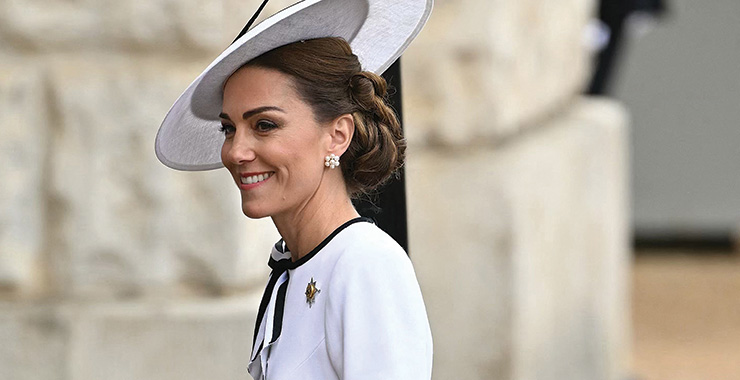
When Kate Middleton publicly announced she had been diagnosed with cancer in early 2024, the Princess of Wales described the news as “a huge shock.” After all, she is just 42 years old, and the vast majority of cancers (about 80%) are diagnosed in people over age 50, the American Cancer Society reports (PDF, 8.74MB)opens in new window.

Middleton is not the only household name to face cancer at a surprisingly young age. When Black Panther star Chadwick Boseman died from colorectal cancer at age 43 in 2020, fans and colleagues alike were caught by surprise. And in March, actress Olivia Munn, 43, revealed she had been diagnosed with an aggressive, fast-moving breast cancer and had undergone a double mastectomy and hysterectomy.

While increased awareness of the growing rates of cancer in younger populations is important, psychologists say the conversation needs to go beyond an emphasis on early detection. Understanding how the disease uniquely affects younger adults’ mental health and learning how to treat this population’s specific psychological side effects are critical, too.

“Reports often do not adequately address the profound psychosocial impact of cancer on younger adults,” said epidemiologist Ola Abdelhadi, PhDopens in new window, a postdoctoral researcher at the University of California, Berkeley, School of Public Health who studies how health policies affect disparities in care, quality of health care services, and associated costs for younger cancer patients.

“This age group faces unique emotional and psychological challenges, including disruptions to their education, career, social relationships, and future planning,” continued Abdelhadi, who was diagnosed with cancer at age 19 and had a recurrence at age 30. “The emotional toll and the need for specialized mental health support are frequently underreported.”

That’s where psychologists come in, said Julienne Bower, PhD,opens in new window a professor and chair of health psychology at the University of California, Los Angeles. “We are getting to a place where we’re really being more mindful of the unique needs of this population, and so it’s really an exciting time for psychologists to be working in this area because there are a lot of opportunities for growth,” she said.

[Related: Psychological interventions that work]

Explaining a trend

To be sure, advancing age remains the top risk factor for canceropens in new window, which is most often diagnosed in 75- to 84-year-olds. But there’s good reason doctors and scholars are concerned about younger generations: One 2023 study found that new cancer cases among people under 50 increased by about 79% worldwide between 2009 and 2019 (Zhao, J., et al., BMJ Oncology, Vol. 2, No. 1, 2023opens in new window).

And, while there have always been childhood cancers, tragically, cancers that were once only expected in older adulthood—like those of the colon and breast—are creeping into younger populations and causing rightful alarm, said Cristina Pozo-Kaderman, PhD, a senior psychologist at the Dana-Farber Cancer Institute, where she directs the Young Adult Program.

“I have a 20-year-old with colon cancer, which was just unheard of [20 or 30 years ago]. I have a 26-year-old with lung cancer who never smoked. I have breast cancer patients in their early 20s,” Pozo-Kaderman said. “It’s still very rare, but the fact that we’re seeing increased numbers is very shocking.”

And even if treatment is successful, perhaps unsurprisingly, younger cancer survivors are at higher risk of emotional distress, mood and anxiety disorders, and suicide than their peers without cancer, research shows (McGrady, M., et al., Journal of Clinical Oncology, Vol. 42, No. 6, 2024opens in new window).

Researchers are working to understand why cancer seems to be affecting people at younger ages, but one likely contributing factor is encouraging: Some people, including Munn, are getting screened for some cancers earlier because of advances in genetic testing and increased awareness. Being proactive can mean “you’re getting diagnosed at an earlier age but hopefully with a better prognosis,” Pozo-Kaderman said.

But since no more than 10% of cancers are caused by inherited genetic changesopens in new window, the increase in diagnosis rates isn’t all—or even mostly—good news. Other experts have suggested poorer lifestyle choicesopens in new window, including binge-drinking and unhealthier diets, are at play, as are the onslaught of cancer-causing chemicals in our environmentopens in new window.

The trend also seems to be driven in part by rising rates among women, another 2023 study found. After looking at 17 National Cancer Institute registries including more than 500,000 cases of early-onset cancer, researchers found rates among women increased 4.35% between 2010 and 2019—and fell 4.91% among men.

Race is also a factor. In general, early-onset cancers are rising fastest among people who identify as American Indian, Asian, or Hispanic (Koh, B., et al., JAMA Network Open, Vol. 6, No. 8, 2023opens in new window). But there are differences in risk when you break it down by type of cancer. Black men, for example, are at heightened risk for colon cancer at younger agesopens in new window, while breast cancer rates among Black women younger than 35 are 2 times higher than White women their age. Younger American Indian, Hispanic, and Asian/Pacific Islander women have the lowest rates of breast cancer mortality overall, the University of Texas MD Anderson Cancer Center reportsopens in new window.

A unique developmental period with unique challenges

While a cancer diagnosis can be devastating at any age, it may affect younger adults’ mental health—and lives—more significantly and with more persistence over their lifetimes. One study, for instance, found that survivors who had been diagnosed between 15 and 39 years old had greater emotional distress than those who had been diagnosed at age 40 or older (Boakye, E. A., et al., Annals of Epidemiology, Vol. 72, 2022opens in new window).

“This is when they’re finishing their education; they’re working to build their careers; they’re initiating romantic relationships, getting married, thinking about having children. They’re not necessarily as financially stable as an older individual might be,” said Caroline Dorfman, PhD, director of research and behavioral medicine for the Teen and Young Adult Oncology Program at Duke University. “And so when they are diagnosed with cancer, there are a lot of different things that they need to take into account.”

One of those things is getting an accurate and timely diagnosis to begin with. Because health care providers are not typically expecting to find cancer in their younger patients, the route to an answer is often prolonged and convoluted, the authors of a study in the British Journal of Cancer found (Forster, A., et al., British Journal of Cancer, Vol. 126, 2022opens in new window). And the research showed that the longer it takes to get a diagnosis, the higher the risk of depression, anxiety, and impaired health-related quality of life.

Adolescent and young adult patients may think, “Is my team really going to be able to help me since it took them so long to find this cancer?” or “What if they had found it earlier?” said Dorfman, also an assistant professor in Duke’s Department of Psychiatry and Behavioral Sciences. “So they may be coming into their diagnosis with an added layer of distress.”

Compounding that distress is the financial toll of cancer treatment on people who have not had much time to build up savings. Sadly, this puts fertility preservation out of reach for many. Egg freezing, for instance, is not always covered by insurance and costs around $10,000, according to Minnesota Oncologyopens in new window.

Because of such costs, 23% of adolescent and young adult cancer survivors said they lacked money for basic necessities, one study found. Nearly half took on credit card debt and put off major purchases. Even many years after treatment, younger cancer survivors have not caught up with their peers financially or in the workplace, Pozo-Kaderman said (Thom, B., et al., Journal of Cancer Survivorship: Research and Practice, Vol. 17, No. 6, 2023opens in new window).

Abdelhadi can relate. “There were times when I felt I was falling behind or missing out on life milestones,” she said. “However, this experience positively shifted my interest and passion toward cancer research.”

A cancer diagnosis can also affect the home lives of 20-, 30-, and 40-somethings in significant ways. A young parent with cancer might need new forms of childcare and struggle to find the best way to talk to their kids about treatments. A recent college grad may need to move back in with her parents, challenging her sense of independence and identity. Newlyweds planning to close on a house or try for kids may need to abandon those plans indefinitely.

Couples can also struggle with intimacy issues. Cancer treatments often induce early menopauseopens in new window in women, leading to hot flashes, vaginal dryness, and a lack of desire. If the person with cancer is single, they can face added stress in their sex life—or lack thereof, Pozo-Kaderman said. “If they’re really young, sometimes they have very limited experiences,” she said. “If they’re a little older and they’re single, it’s like, When do I tell [a new partner about how cancer has changed my body?] How do I tell? Will anybody want me?”

These patients “do want to have meaning in their life. They do want to form relationships. They do have goals that they want to set for their life in their future,” Dorfman said. “And that’s where psychologists can really come in—to help them live their life in a way that is meaningful and in line with their values, even in the midst of a potentially life-limiting illness.”

Recommended Reading

Speaking of Psychology

Subscribe to APA’s audio podcast series highlighting some of the most important and relevant psychological research being conducted today.

Subscribe to Speaking of Psychology and download via:

Appleopens in new window
Apple podcast logo

Spotifyopens in new window
Spotify logo

You may also like