
skip to main content
Continuing education

Continuing education programs on racial equity

Seven CE programs dedicated to the challenges faced by marginalized groups and how psychologists can help

APA Style leaf logo Cite This Article in APA Style
American Psychological Association. (2024, November 1). CE Corner: Continuing education programs on racial equity. Monitor on Psychology, 55(8). https://www.apa.org/monitor/2024/11/continuing-education-racial-equity

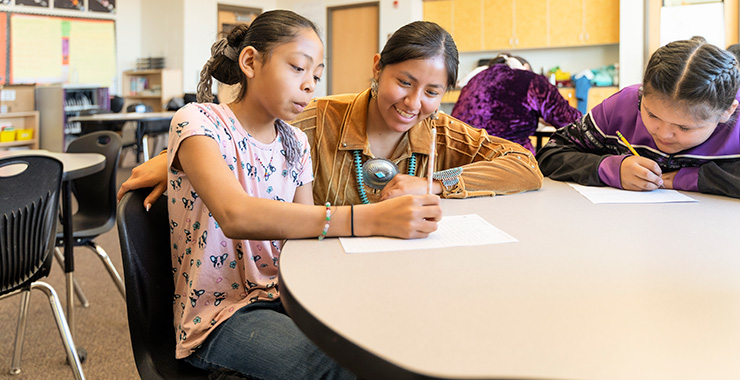
teacher with two students

Earn CE credit for reading this article

Buy the companion exam to be guided through a commitment-to-change exercise and earn credit with a passing score of 75% or higher.

1 CE credit $35.00 Member price: $25.00
Purchase Exam

In this special issue of the Monitor, we present a CE that diverges from our usual format. Instead of focusing on a single subject, we are highlighting seven pivotal CEs from the past several years, each dedicated to the challenges faced by different marginalized groups and how psychologists can help.

In each CE article, psychologists from the marginalized group provide overviews, insights, and context. They offer valuable skills and practical strategies for enhancing quality of care, from understanding cultural nuances to addressing systemic barriers.

Our goal with this compilation is to equip psychologists with the knowledge and skills necessary to foster inclusive and effective therapeutic environments. By highlighting these CEs, we aim to draw attention to this valuable information, encourage practitioners to complete the training and earn a continuing-education credit for each, and inspire ongoing learning and commitment to cultural competence in the field.

We hope this collection serves as a valuable resource for both seasoned practitioners and those new to the field, encouraging a deeper understanding and appreciation of the diverse experiences of the patients psychologists serve.

The healing power of Native American culture

Learning objectives

After reading this article, CE candidates will be able to:

  • Learn about psychological and physiological health disparities in Native American communities.
  • Discuss limitations of the Western models of treatment in addressing mental health issues in American Indian and Alaska Native populations.
  • Describe how to embrace Native American values, customs, and beliefs in research and clinical settings.

Key points

  • Researchers recommend the field work to develop treatment approaches based on Native American worldviews.
  • Therapists can start by giving Native American patients time to share whether and how they want to bring their Indigenous perspective into therapy and what their tribal identity means to them.
  • It is important to use culturally sensitive assessment tools to avoid misdiagnosing Native American patients.
  • Psychologists who spend time in tribal communities and participate in gatherings can build trusting relationships that facilitate discussions about mental health challenges.

“By understanding that what we have learned in school is quite limited in helping these communities, we can begin to see how much they can teach us.”
— Art Blume, PhD, clinical psychology professor, Washington State University

Further reading

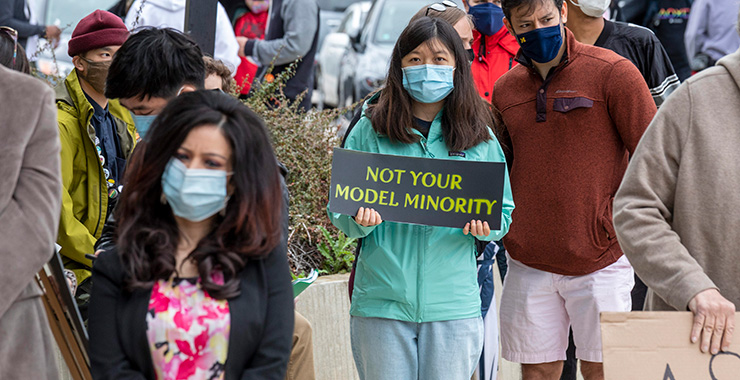
Woman in a crowd of people wearing a medical mask holding a sign

Promoting mental health in Asian American teens

Learning objectives

After reading this article, CE candidates will be able to:

  • Identify the components of racial-ethnic socialization and preparation for bias in Asian American and Pacific Islander families.
  • Learn about cultural stressors and mores across a heterogeneous population.
  • Learn strategies to help Asian American teens identify and address racial dilemmas.

“That [model minority] stereotype has been so pervasive that people don’t see the vulnerabilities, or the struggle, or really even the need, to focus on this population.”
—Tiffany Yip, PhD, professor of psychology, Fordham University

Key points

  • Psychological issues unique to Asian American teens can include feeling invisible, feeling pressured to fulfill the “model minority” stereotype, and navigating microaggressions and racist encounters.
  • Therapists can work with parents of these teens to help them understand the reality of discrimination and not minimize it, as well as help teens respond to microaggressions.
  • As a therapist working with Asian American teens and families, displaying cultural competence and building trust and rapport are more important than one’s ethnicity.
  • Successful therapy with Asian American families and teens involves setting practical goalposts so patients feel they are gaining something immediately useful and valuable from the treatment.

Further reading

Increasing supervisor savvy around culture, race, and identity

Learning objectives

After reading this article, CE candidates will be able to:

  • Identify emerging models, theories, and ideas on bringing racial, cultural, and identity factors into supervision and the supervisory relationship.
  • Discuss practical ways that supervisors can bring ideas like critical consciousness and cultural humility into their work with supervisees and their clients.
  • Describe the state of the field in adopting these approaches.

“I see supervision as a process that invites deep appreciation for the super complexity of culture by asking explicitly about how issues of cultural difference, power, and oppression play out in the lives of our clients and in the therapeutic work in which we’re engaging.”
—Jeffrey Ansloos, PhD, associate professor and Canada research chair in critical studies in Indigenous health, University of Toronto

Key points

  • Psychology is still in the early stages of understanding how to best bring racial, cultural, and identity factors into supervision.
  • Many supervisors practice supervision the same way they experienced it, so getting training on new approaches is vital.
  • Culturally responsive supervision includes learning about social justice perspectives such as critical consciousness and decolonization.
  • The work is important because society, students, and clients require it for self-awareness, mental and physical health, and psychological empowerment.

Further reading

closeup of a face

Effective therapy with Black women

Learning objectives

After reading this article, CE candidates will be able to:

  • Describe the intersectional challenges facing Black women and understand the impact of racism on Black women’s mental health.
  • Explain the Strong Black Woman schema and adultification bias.
  • Identify interventions that can reduce stress and improve coping among Black women.

“[The Strong Black Woman schema] helps us to be resilient. It helps us to keep going in the middle of difficult circumstances. But the consequence is that strength often means not paying attention to feelings of distress, not paying attention to the impact of familial, relationship, and race-based trauma and how it impacts our thoughts, feelings, and behavior.”
—Inger Burnett-Zeigler, PhD, clinical psychologist and associate professor, Northwestern University Feinberg School of Medicine

Key points

  • Black women face a unique type of gendered racism.
  • Therapists should understand how systems of oppression and racism operate in society and in their own training.
  • Community support and strategies for coping with stress can be healing for Black women.

Further reading

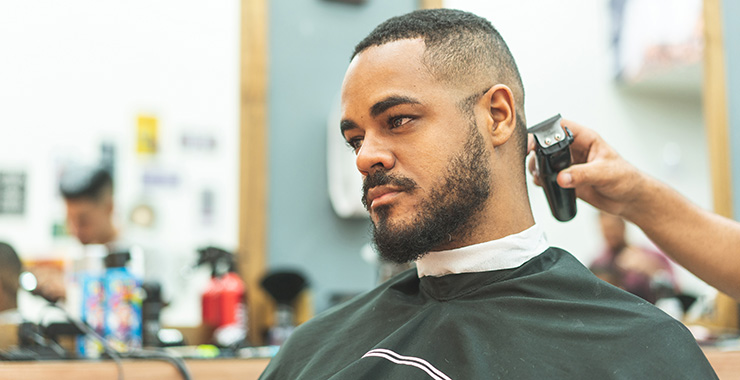
man in a barber's chair

Helping Black men and boys gain optimal mental health

Learning objectives

After reading this article, CE candidates will be able to:

  • Describe how Black men’s mental health is challenged by racism.
  • Discuss the most critical intervention points for Black men’s mental health.
  • Describe successful treatment types for Black men, both traditional and innovative.

“We should place less emphasis on whether Black men are resistant to therapy and more on understanding the contexts in which they already feel comfortable talking about their feelings and traumas. If a Black man is able to find a culturally responsive treatment that he understands, and that embraces the uniqueness of his difference, he is more likely to use that service.”
—Howard C. Stevenson, PhD, clinical psychologist and director, Racial Empowerment Collaborative, University of Pennsylvania

Key points

  • Black men have less access to and poorer quality of mental health care than White men despite significant needs.
  • For contextual reasons, including poverty and racism, Black men are more likely to endorse traditional masculinity norms such as toughness than White men.
  • Interventions that are culturally competent, understand and address diversity among Black men, and use trauma-informed principles hold the most promise.

Further reading

How to discuss race with Black teens and their families

Learning objectives

After reading this article, CE candidates will be able to:

  • Learn strategies to help Black teens process and problem-solve racial dilemmas.
  • Identify the components of ethnic-racial socialization and their protective benefits in raising Black children.
  • Better understand how to introduce the element of race when there is a dichotomy between psychologist and patient.

“[Ethnic-racial socialization] is a process by which race-related messages about the meaning or the value of race and racism are transmitted [to adolescents] by their parents, clinicians, and everybody around them. It’s been found to be one of the most critical development processes of Black youth.”
—Thomas Vance, PhD, postdoctoral psychology fellow, New School for Social Research

Key points

  • Ethnic-racial socialization is a critical developmental process for Black youth, helping them to prepare for and cope with racial stressors and discrimination.
  • To effectively support Black teens and their families, psychologists must become comfortable discussing ethnic-racial socialization and racial identity, incorporating those concepts into therapy.
  • Once psychologists have identified racial stressors affecting Black teens, they should validate their experiences and work with them to develop appropriate responses.

Further reading

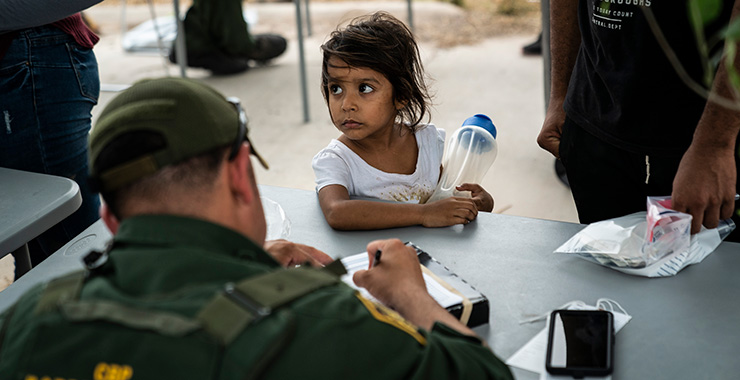
young girl refugee at processing center

How psychologists can help refugees

Learning objectives

After reading this article, CE candidates will be able to:

  • Discuss the diverse circumstances immigrants and refugees face and list some of the common mental health concerns affecting these populations.
  • Describe how psychologists can train and prepare to work with immigrant communities in clinical and forensic settings.
  • Understand what clinical skills and strategies are helpful for assessing and treating immigrants and refugees.

“The most important thing that any clinician who’s working with immigrants can do is listen to the stories of individuals.”
—Laura Minero, PhD, licensed psychologist, Yolotl Libre Therapy

Key points

  • Immigrants may face a range of challenging circumstances, including racism, acculturation, and trauma.
  • Training in culturally competent care and knowledge about immigration issues can help psychologists better support immigrants and refugees.
  • Trauma-informed care, narrative therapy, and cognitive behavioral therapy are effective treatment modalities for immigrant populations.

Further reading

Recommended Reading

Speaking of Psychology

Subscribe to APA’s audio podcast series highlighting some of the most important and relevant psychological research being conducted today.

Subscribe to Speaking of Psychology and download via:

Appleopens in new window
Apple podcast logo

Spotifyopens in new window
Spotify logo

You may also like