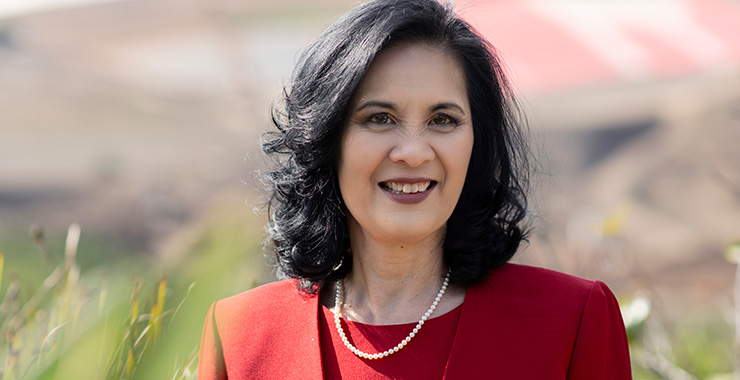
Debra Kawahara, PhD, brings a unique blend of professional expertise, personal passion, and warm charisma to her role as 2025 APA president. A former competitive gymnast inspired by the legendary Olga Korbut, Kawahara dedicated countless hours to the sport from primary school to high school. Her admiration for Olympic athletes stems from their relentless training and the intense pressure of performing in a brief moment that defines their careers. Psychologists also sometimes have a limited amount of time. Kawahara believes it’s important to focus on meaningful successes to offset inevitable setbacks and continuously recommit to the effort.
What did you learn from your time as a competitive gymnast?
Gymnastics taught me the value of dedication, discipline, focus, and having the right mental space. Watching Olympic athletes, I am amazed by how athletes train for years, and it all comes down to that one performance. You either hit it or you don’t. For those who remember the Wide World of Sport’s “agony of defeat,” it perfectly describes the devastation that goes with failure. But there’s also that high that you get when you do hit it—the incredible joy and elation.
How do you stay active now?
I exercise regularly. I walk my dog around our farm and use the elliptical machine for 45 minutes a day when I can. Exercise is a form of self-care for me.
What’s something many people don’t know about you?
My partner is a third-generation farmer who inherited the family farm [near San Diego]. They still (lovingly) call me “city girl.” He grows strawberries, blueberries, blackberries, and a rare fruit called cherimoya. Cherimoyas are a tropical fruit grown in Latin America. They are lime green on the outside and fleshy white on the inside with black seeds. They are prized by Asian cultures as a symbol of fertility and are sold in specialty stores.
How has living on a farm influenced you?
Living on a 160-acre family farm has taught me so much. It is a different lifestyle from the professional psychology world. Farming has taught me about the complexities of agriculture and business, from understanding laws and regulations to dealing with uncontrollable factors like weather. It is more than a career; the values of family, hard work, and pride in producing healthy food are strongly held.
Why did you choose psychology?
When I started college, I was unsure of my career path. I explored various majors, such as engineering and prepharmacy, but they didn’t resonate with me. A counseling course sparked my interest in making societal changes. As a first-generation college student, I wanted to uplift underrepresented communities, which led me to psychology. I was fortunate to take an undergraduate class with Dr. Stanley Sue, who integrated psychology and Asian American studies.
What’s one thing you aim to achieve this year?
My overall goal is to continue to make APA more equitable and just, building on the work of previous presidents. My theme is unity: bringing everyone together under the APA umbrella. A presidential initiative will be to hold local events to inspire high school and community college students to pursue psychology careers by showcasing our diverse specialties.
What are your favorite things to do for fun?
I love to read, and I have been part of a book group for 20 years, focusing on women authors or protagonists. Reading is a way to transport yourself into other places and other people’s lives. I also love to travel, particularly visiting historic sites, so that I learn about an area, including the culture and people. You just can’t get that experience by reading or watching a travel show.