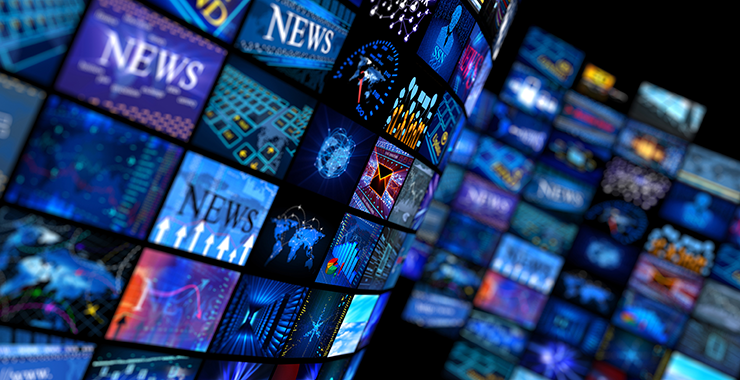
Legal cases have long been subject to tremendous amounts of media coverage. One of the first modern cases involving extensive pretrial publicity was O. J. Simpson’s “trial of the century,” but there is no shortage of heavily publicized cases today. And although the way people get their news has changed, pretrial publicity is arguably just as, if not more, prominent and potentially damaging to a defendant’s right to a fair trial.
One recent example is the 2022 murder of four University of Idaho students at an off-campus residence in Latah County, Idaho. The extensive pretrial publicity of the case led the defense to seek a change of venue. In support of the motion, the defense hired a trial consultant to conduct a change of venue survey that they argued illustrated a substantial amount of bias, ostensibly against the defendant within Latah County. The court granted this motion and moved the case to Ada County in southern Idaho.
This case is just the latest to reinitiate the consideration of important, long-standing issues regarding cases with extensive media coverage, namely: Is pretrial publicity just as biasing today as ever, and if so, what is the best remedy for an overly biased prospective jury pool?
In today’s digital and social media age, it is often difficult for prospective jurors to avoid pretrial publicity, especially in high-profile cases. But is this coverage just as biasing today? A recent meta-analysis by Lori Hoetger, PhD, at the University of Nebraska, and colleagues, which replicated and extended a 1999 meta-analysis led by Augsburg University’s Nancy Steblay, PhD, supported the notion that pretrial publicity exerts small but significant effects on jurors’ legal decisions by slanting their judgments toward (against) the side it favors (disfavors) (Law and Human Behavior, Vol. 46, No. 2, 2022). As most of the studies in this meta-analysis did not examine pretrial publicity in the form of social media, perhaps this is an underestimate regarding its biasing impact.
The remedies considered by courts to reduce the biasing effects of pretrial publicity include conducting a more extensive jury selection, delaying the trial until media coverage has lessened (a continuance), importing jurors from a less biased jurisdiction, and changing the trial venue. No remedy is perfect, though changing the venue is arguably the best option in cases where the trial venue is overly saturated with media coverage. In support of these change of venue motions, defendants frequently use social scientists to conduct change of venue surveys that involve polling prospective jurors in the trial jurisdiction and in a comparison venue to determine whether the present venue is significantly more prejudiced than the comparison venue. Whether the trial is moved is at the trial judge’s discretion, with no bright-line rule for how much pretrial publicity and bias are necessary to change venues. And judges rarely approve a change of venue, in part because of logistical and financial considerations, which makes the Idaho murders case a relative rarity.
All things considered, courts must still routinely address whether extensive, potentially biasing pretrial publicity substantially impairs a defendant’s right to a fair trial. In fact, the pervasive nature of social media has likely made finding an impartial jury even more challenging today. Yet judges’ general resistance to change venues—along with increased national pretrial publicity saturating all prospective trial venues—leaves judges with no ideal solution. Perhaps the justice system should strive for the routine use of change of venue surveys and continued exploration of ways to enhance judges’ willingness to move cases when necessary and feasible in an effort to obtain the least biased—rather than a completely unbiased—jury pool.