 Member nominations are in. Following are the president-elect candidates known at the time of publication. Read on for more information on each candidate’s experience and priorities. Find additional information on the candidates on the President-Elect Ballot by scanning the QR code at left or visiting MyAPA. The winning psychologist will serve as APA’s 2026 president-elect and 2027 president.
American Psychological Association. (2025, July 1). Meet the candidates running for APA’s 2027 president. Monitor on Psychology, 56(5). https://www.apa.org/monitor/2025/07-08/2027-apa-presidential-candidates

Kalyani Gopal, PhD, HSPP
Championing resilience and innovation
 Building Clinical Practice
Reimagining Governance and Policy
Investing in Training
Developing Global Outreach
Growing Resilience
Elevating Social Justice
At this pivotal moment—marked by technological upheaval, political polarization, climate change, and a sweeping mental health crisis—psychological science has never been more essential. I understand the urgent need to balance academic excellence with greater accountability, application, accessibility, and inclusion across settings and communities.
I have lived leadership roles in psychology at every level: globally as president of the Psychology Coalition at the United Nations, nationally as president of APA’s Division 12, and locally as president of the Illinois Psychological Association. As a leader, I have seen psychology shape policy, promote innovation, and foster global healing. This year, we proudly host the first Psychologists’ Youth Mental Health Global Summit at the UN.
If elected APA/APASI president-elect, I will champion resilience by bridging critical gaps across our field through four key priorities:
- Bringing psychological science to societal change—shaping mental health policy, addressing marginalized populations, advancing AI ethics, combating misinformation, and building climate resilience. I run a shelter for women survivors of sex trafficking, helping families rise from homelessness to restored dignity.
- Strengthening the future of psychology—advancing education, training, and research to keep our field competitive and impactful.
- Uniting diverse perspectives—fostering dialogue and connection in times of division.
- Expanding APA’s global reach—building international collaboration and global resilience.
This is a time for leadership that is bold yet steady, principled yet pragmatic.
I humbly ask for your support to bridge science, justice, and global progress.
Noelle Lefforge, PhD, MHA, CGP, ABPP
 Today, psychologists are facing extraordinary challenges. Now is the time to champion psychology, psychological science, and APA.
We must combat anti-intellectualism and steadfastly promote and expand psychological science. Now is the time to uphold our education and training standards for a diverse health care workforce who can deliver culturally responsive services to all communities, particularly the underserved. We must insist on our commitment to equity, diversity, and inclusion, building upon our progress. Now is the time to advocate for our scientists, their funding, and their opportunities to improve the world. We must increase health care access and equity, expanding the reach of evidence-based psychological services. Now is the time to embrace psychology as a multifaceted profession that values doctoral and master’s level clinicians. We must act as moral global citizens and join with world disciplines to protect and celebrate humanity.
Every psychologist improves the human condition. APA must prioritize supporting and empowering our work. To forge our future, we must uplift psychology students and ensure that a career in psychology is financially attainable and rooted in integrity.
I am the candidate who understands APA’s inner workings and has a consistent history of courageously standing up for social justice. I am the advocate who has and who will hold APA’s leadership accountable to our values and sustain APA as a membership-driven organization. We must demand expediency and precision from those in key positions responsible for carrying out APA’s mission.
This election matters. Fellows, Members, voting-Associates, and eligible-Graduate Students Members: vote to be heard.
I acknowledge these challenging times, and I commit to facing them head-on. Forge ahead with me, Noelle Lefforge, for APA President.
Visit Noelle4APA.comopens in new window to learn more about my campaign.
Joseph Pachman, MD, PhD, ABPP
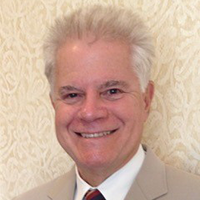 Rather than reinvent ourselves, psychologists need to build upon our scientist-practitioner model in order to effectively solve future challenges. To better address the current mental health crisis, including overcoming obstacles for underserved populations in obtaining comprehensive mental health service, a uniform training path for psychologists who wish to prescribe medication, within the scope of practice, needs to be adopted. Well trained psychologists would be able to safely provide less disjointed mental health care, including the authority to “unprescribe” when appropriate. Given our educational foundation, there will also be significant opportunities for more meaningful research in this space.
In order to address issues regarding consumer and large payer confusion regarding professional competence, ABPP certification needs to be recast to function as equivalent to fellow status in medicine, and a more achievable board-certification process be developed for psychologists. Presently, while almost 90% of physicians are board certified, less than 5% of practicing psychologists are board certified. This impacts issues related to fair and reasonable reimbursement.
There is a need for enhanced coordination regarding behavioral health training for pediatricians, occupational medicine physicians, and other primary care providers, as well as increased guidance for families regarding isolation and social media use, including barriers to school attendance. Psychologists need to continue to lead with research on emerging technologies, such as AI, telehealth, and mental health tracking via apps and wearable devices.
Above all, we need to recognize the importance of the impact of psychology on society, especially in these challenging times. This includes continuing to embrace EDI initiatives and cross-cultural research. The challenge for psychologists is to remain focused on working together to achieve our mission.
Linda M. Woolf, PhD
 As psychologists, we have the power to transform individuals’ lives, promote well-being, and build communities that thrive. Yet, psychology stands at a crossroads, facing many challenges—barriers to care, mental health AI chatbots, threats to research funding, replication concerns, antiscience biases, workplace insecurities, educational disparities, attacks on diversity, and broader societal/global challenges. In these turbulent times, our commitment to psychology’s transformative power is more vital than ever. It is this spirit that drives my campaign: Many Voices, One Psychology.
Across clinical settings, schools, organizations, and communities, psychologists represent diverse voices and experiences. Our strength is collaboration—listening to one another, bridging divides, and building a representative profession for all. Through dialogue and partnership with Divisions, SPTAs, Ethnic Psychological Associations, national organizations, and global alliances, we can create a stronger, more resilient voice for psychology. Our diversity becomes the foundation of our collective power.
This commitment spans practice, science, education, and advocacy, grounded in three core values: human rights, respect for persons and peoples, and psychological science. Human rights affirm everyone’s dignity, essential for well-being. When rights are denied, we must advocate boldly for justice. Respect demands honoring autonomy, cultural identity, and inclusion. Through genuine engagement, we foster trust, empower communities, and advance equity. Psychological science underpins all we do. Amid rising misinformation, APA must fiercely defend evidence-based, culturally relevant knowledge shaping education, health care, policy, and more.
Together, by centering diversity, defending rights, and championing science, we will build a stronger, more inclusive future for psychology.