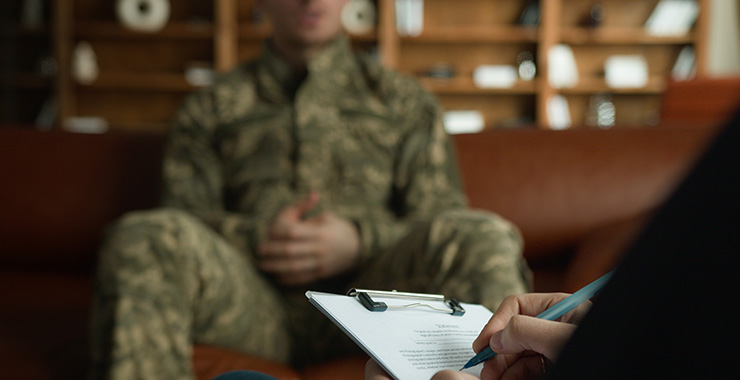
When psychologist Michael Anestis, PhD, and his research team first met John*, the longtime firearm owner did not hide his skepticism about their discussion of secure firearm storage. “This is very stupid,” John told his counselor.
Anestis and his colleagues did not try to change John’s mind. As part of Project Safe Guard, a 2-year study on firearm suicide prevention, the researchers were using motivational interviewing—a technique that relies on open-ended questions and reflective listening—to understand, rather than challenge, participants’ perspectives. They asked participants how they stored their firearms, why they chose those methods, and what they would do if someone in their home were suicidal. Then, the researchers followed up 3 and 6 months later to see if anything had changed. At John’s 3-month follow-up, his stance remained firm: “I told you I wouldn’t make any of these changes because it’s a bunch of garbage.”
But before his 6-month follow-up, John and his fiancée separated. Shortly after, he gathered his seven firearms and handed them to his brother for safekeeping. “If I hadn’t had that first or second conversation with you, I would have attempted suicide,” he later told Anestis’s team.
The intervention involved no pressure or orders, just a conversation about firearms and storage practices. And when the moment came, John felt empowered to make a choice that saved his own life.
John was one of 232 firearm-owning members of the Mississippi National Guard who participated in Anestis’s study, published in 2021 (American Journal of Public Health, Vol. 111, No. 2, 2021opens in new window). The researchers found that providing free cable locks and administering lethal means counseling, where clinicians assess suicide risk and encourage safer storage of objects like firearms and medications, led to significant changes in how participants stored their guns. The findings reinforced Anestis’s belief in an approach to suicide prevention that “meets firearm owners where they’re at.”
More than half of suicides in the United States involve a firearm, making guns both the most common and the deadliest means of suicide (Kaczkowski, W., et al., Morbidity and Mortality Weekly Report, Vol. 72, No. 48, 2023opens in new window). Over the past 2 decades, findings like these have inspired new prevention strategies aimed at creating more time and space between firearms and someone experiencing a life crisis. Yet building the trust needed to implement these life-saving strategies remains difficult, especially given the charged political debates surrounding national gun policies. “There was very much an ‘us against them’ mentality across both sides of the issue,” said Anestis, who is also the executive director of the New Jersey Gun Violence Research Center at Rutgers.
For providers trained in medicine and psychology, predicting who will attempt suicide is a challenging puzzle. About 30% of those who die by suicide have a health care visit in the week before their attempt, and about half have seen a provider within the past month (Ahmedani, B. K., et al., Preventive Medicine, Vol. 127, 2019opens in new window). This makes firearm safety discussions in clinical settings increasingly crucial yet fraught with political and personal sensitivities.
In recent years, however, an unexpected alliance has emerged. Government officials, scientists, professional organizations like APA, and pro-gun leaders have begun working together toward a shared goal of saving lives. Collaborative efforts range from health care provider-led lethal means counseling to national education campaigns promoting secure firearm storage (Lemle, R. B., American Psychologist, Vol. 79, No. 9, 2024opens in new window).
These partnerships also offer a model for clinicians to approach firearm conversations in their practice—conversations that, when handled with care, can ripple outward and help shift cultural norms. “Our job isn’t to label people as bad or uninformed, or to force everyone to change,” Anestis said. “It’s to position people within their own value system to make healthy choices and stay safe.”
For some, like John, that conversation is all it takes.
*Name changed to protect their privacy.