skip to main content

What happens in the brain when we experience art

How to unleash the power of neuroaesthetics for health, well-being, and social change 

APA Style leaf logo Cite This Article in APA Style
Weir, K. (2025, September 1). What happens in the brain when we experience art. Monitor on Psychology, 56(6). https://www.apa.org/monitor/2025/09/art-mind-brain

art

Key points

  • Research shows people engage with the arts in a variety of ways, sometimes reporting transformative experiences.
  • When interacting with art one finds meaningful, the default mode network—a brain region associated with introspection—is engaged.
  • Aesthetic experiences may promote positive outcomes such as empathy, social connection, and cross-cultural understanding.

The Rothko Chapel in Houston, Texas, is a spare, still space. Lining the walls of the octagonal room are 14 enormous canvas panels painted in solid purplish black by the abstract expressionist Mark Rothko. The artist envisioned the nondenominational chapel as a place where viewers could engage directly with his art. Rothko died in 1970, a year before the chapel was completed. But he succeeded in his vision.

Matthew Pelowski, PhD, an associate professor of psychology at the University of Vienna who studies transformative art experiences, has combed through volumes of the chapel’s visitor logs. Time and again, people wrote of being transformed by the experience, of confronting their innermost selves. “It’s just purple paint,” Pelowski said. “It doesn’t move or change or do anything to them outwardly, but amazing things are going on in their bodies and minds.”

Artistic expression dates back to our prehuman ancestors, and philosophers have long puzzled over the significance of art and beauty to the human experience. Now psychologists and other scientists in the field of neuroaesthetics are going deeper, learning what happens in the brain when we are moved or even transformed by art—and how to harness its power for personal growth and social change.

“Artists, philosophers, and children have always known the power of the arts. It’s innate and intuitive, yet we’ve marginalized the way we’ve thought about the arts as a form of entertainment,” said Susan Magsamen, founder and executive director of the International Arts + Mind Lab, an applied neuroaesthetics initiative at the Johns Hopkins University School of Medicine. “In fact, the science shows we’re neurobiologically wired for these kinds of experiences, and they contribute to our health and well-being.”

Art and change

Through music, theater, literature, visual arts, and more, our species has surrounded itself with the arts. Those aesthetic experiences can improve health and well-being in a dazzling variety of ways, as described in a recent World Health Organization report. Art therapy and engagement with the arts have been shown to reduce symptoms of depression and anxiety, ease pain, help people heal from trauma, protect against cognitive decline, and enhance social cohesion, among other benefits. Listening to music can promote language development in children and foster new neural pathways in adults after a stroke. In people with neurological disorders like Parkinson’s disease, dance has been found to improve balance and functional mobility (Fancourt, D., & Finn, S., What Is the Evidence on the Role of the Arts in Improving Health and Well-Being? A Scoping Review, World Health Organization, 2019opens in new window).

The arts also have the power to change the way we see the world, said Edward Vessel, PhD, a computational cognitive neuroscientist at the City College of New York who studies visual aesthetic valuation and liking. And in recent years, scientists have moved away from classic philosophical questions of beauty to explore the processes by which art can transform us. After all, art is more than just a pretty face. We can be moved by a painting of a brutal battle scene or inspired by an avant-garde melody made from discordant sounds. Like beauty, however, art is in the eye of the beholder. “Any of us looking at a particular artwork might take something different from it,” Vessel said. “You can really only understand why art has an impact if you get inside the person’s head.”

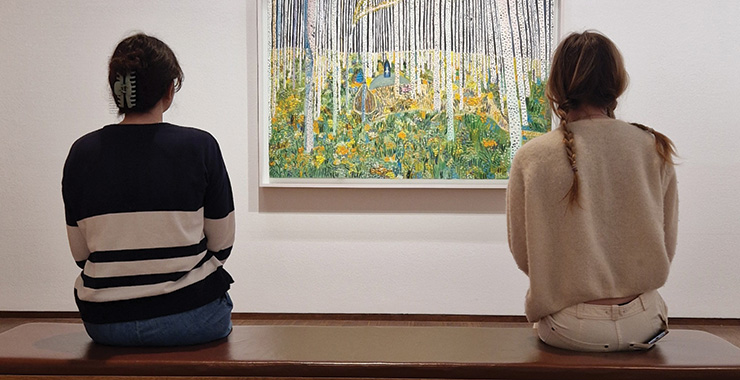
people looking at art

People who measure high on the trait of openness are more likely to engage with art and, in turn, are more likely to have meaningful experience with it, as Pelowski, Marta Pizzolante, PhD, a postdoctoral research fellow at the Catholic University of Milan, and colleagues described in a review of the transformative power of aesthetic experiences. People with greater empathy are also more likely to connect with the arts on an emotional level and to experience new insights and understanding (Frontiers in Psychology, Vol. 15, 2024opens in new window). Experience matters, too. Someone who grew up in a city exposed to graffiti might have a different understanding of its symbolism than someone from an area where spray-painted artistry is uncommon. And compared with nonbelievers, religious people experience greater feelings of personal communication and empathy when viewing religious art (Iosifyan, M., et al., Psychology of Religion and Spirituality, Vol. 17, No. 3, 2025).

As researchers begin to peel back the layers on these transformative encounters, they have had to create a system for measuring aesthetic experiences. Anjan Chatterjee, MD, a professor of neurology, psychology, and architecture and founding director of the Penn Center for Neuroaesthetics at the University of Pennsylvania, and colleagues created a taxonomy for describing the appearance and impact of visual aesthetic experiences. Using semantic network analysis, they identified 17 distinct dimensions related to the appearance of an artwork (including concepts such as colorful, controversial, balanced, and unimaginative) and 11 dimensions relating to the ways a piece of art made viewers think or feel (such as anger, calm, and pleasure). Those 11 impact dimensions could be distilled into four broad categories, Chatterjee said: positive affect, negative affect, a feeling of immersion, and transformative experiences (British Journal of Psychology, Vol. 114, No. 2, 2023opens in new window).

Pelowski and his colleagues have undertaken a similar effort to categorize interactions with the arts, interviewing hundreds of museumgoers in Europe and the United States. Their experiences clustered into five patterns, with results quite like those Chatterjee identified (Empirical Studies of the Arts, Vol. 43, No. 2, 2025opens in new window). Some visitors reported they were bored or unmoved by a particular work. Some reacted negatively, feeling uncomfortable or challenged by the art. Others reported a “harmonious” response, similar, perhaps, to Chatterjee’s feeling of immersion. “Something about the piece just resonated with them, and they felt really good afterwards,” Pelowski said.

The final two groups both reported transformational experiences, but they took different shapes: “small transformations” and “big transformations.” Those who experienced small transformations felt they had learned something or found meaning, though they did not feel like a profoundly changed person. They were more likely to report positive emotions, Pelowski said. Those who described big transformations felt changed by the experience—yet they were also more likely to report negative feelings as a result of having their worldview turned upside down. The results suggest art that elicits small transformations might be a sweet spot for boosting well-being and personal development, he said. On the other hand, the more conflicted responses of big transformations could lead to revelatory experiences that result in greater personal growth. “If you don’t put anything of yourself out there and feel a bit of a challenge, then nothing very exciting can happen,” Pelowski said. “If you want to actively change people’s worldview or change their actions, transformative engagement is a good vehicle for that.”

Making meaning

To find out what makes art experiences so powerful, scientists are peering under the hood. According to a framework developed by Chatterjee and Oshin Vartanian, PhD, a psychological scientist at the University of Toronto, aesthetic experiences arise from an interaction of three brain systems, collectively dubbed the aesthetic triad. The sensory-motor system perceives sensory features such as color or movement. The emotion-valuation system is concerned with feelings of reward and liking. And the knowledge-meaning system involves the prior knowledge and personal experiences that allow someone to find significance in the artwork (Trends in Cognitive Sciences, Vol. 18, No. 7, 2014opens in new window).

That last system is what makes artwork more than just an object or sensory experience. When people are moved by a powerful piece of art, they are deriving pleasure from their ability to make sense of the experience—what Vessel calls “pleasure from understanding.” That pleasure seems to come from within. His research has shown that when people interact with visual arts such as paintings, architecture, and sculpture, the brain’s default mode network comes alive (Frontiers in Human Neuroscience, Vol. 6, No. 66, 2012opens in new window; PNAS, Vol. 116, No. 38, 2019opens in new window). “This was actually somewhat surprising,” he said.

Typically, when people are looking at or listening to the world around them, the default mode network goes quiet. It becomes engaged when people are focused instead on inward-facing tasks like daydreaming, future planning, and introspection. “But in rare moments, we can have a change in brain network dynamics where both systems can be engaged,” Vessel said. “Our work shows that this can happen with aesthetic experiences, and there’s increasing evidence that it may also be important in creativity.” In fact, he has found that interacting with aesthetically moving artwork can prime people for a state of creative inspiration (Psychology of Aesthetics, Creativity, and the Arts, Vol. 17, No. 3, 2023).

The involvement of this introspective brain system may be why our responses to art are so personal. A song that moves one person to tears can spur another to change the radio station. Vessel has shown that the more personally relevant the art, the greater its appeal. He and his colleagues surveyed participants about their cultural backgrounds, lifestyles, and autobiographical experiences. Then the researchers prompted an artificial intelligence (AI) program to create synthetic artwork tailored to each participant’s life and interests. The participants later rated the AI-generated art that was designed specifically for them more aesthetically appealing than AI art that had been created for the other study participants (Psychological Science, Vol. 34, No. 9, 2023opens in new window). “When something relates to our own self construct, it acts like a road map to go deeper,” Vessel said.

But art does not just act as a mirror for people who experience it. It can also act as a window into an artist’s inner world. Pelowski asked professional artists about their own emotions and intentions as they created installation art, then assessed the emotions and understanding of observers as they viewed the finished pieces (Psychology of Aesthetics, Creativity, and the Arts, Vol. 14, No. 3, 2020). In many cases, observers could guess what the artist intended to convey, though that ability did not predict the observer’s enjoyment or sense of understanding of the work. Often, though, viewers described emotions similar to what the artist reported they had actually been feeling when making the work, even if it was not an emotion they consciously aimed to convey. Those shared emotions between artist and observer led to deeper engagement, Pelowski found. “If people actually feel the way the artist was feeling—regardless of whether that was the artist’s intent—they say they like the artwork more and think it’s more meaningful,” he said. “It has to be felt.”

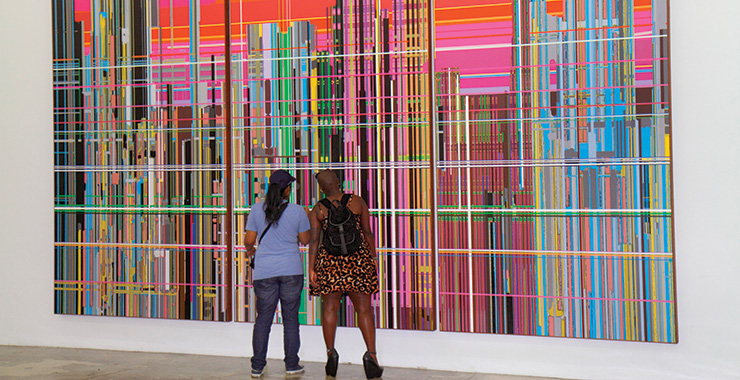
people looking at art

Using art for good

Visits to museums and performing arts centers are often social activities, and in a society where loneliness is an increasing concern, the arts could bring people together. But creating beneficial arts experiences might require intentional efforts to facilitate social interactions around art. Researchers have found, for example, that when museumgoers viewed art together and discussed the works, they reported greater well-being and more social connectedness than participants who viewed the paintings side by side without talking (Igdalova, A., et al., Psychology of Aesthetics, Creativity, and the Arts, advance online publication, 2025).

Aesthetic experiences might also be tools for encouraging prosocial attitudes. The arts have long been a medium for commentary and activism, and researchers are exploring how the arts might lead to lasting changes in beliefs and behaviors. In one study, Pelowski and his colleagues assessed the attitudes and opinions of participants who viewed an exhibit focused on the acceptance of refugees. The results were mixed, though participants’ reports did suggest increased empathy and prosocial thoughts shortly after viewing the installation. But those changes lasted only a day (Psychology of Aesthetics, Creativity, and the Arts, advance online publication, 2024).

Under the right circumstances, however, art might lead to more enduring changes. Ellen Winner, PhD, a professor emerita at Boston College who studies the psychology of art, asked study participants to read either a literary memoir written by an undocumented immigrant or a news-style expository account on the same topic. Those who read the literary work had significantly greater empathy for immigrants, particularly if they had initially been unsympathetic toward the group. In some cases, the effect was still measurable a month later (Scientific Study of Literature, Vol. 12, No. 1–2, 2022opens in new window).

To harness art for public good, it may be important to provide the right framework for understanding. People typically prefer artworks from their own cultures, but the right information can help people see unfamiliar art in a new light, Chatterjee found. He and his colleagues showed participants from North America and India images of representational art from each of those regions, then asked participants to rate the works for beauty, complexity, and how much they liked them. Providing viewers with information about the content, artist, and technique reduced participants’ bias for art from their own culture, especially among North American participants with low art experience (Journal of Comparative Literature and Aesthetics, Vol. 47, No. 3, 2024opens in new window). “Art, with a little context, could potentially be a vehicle to bridge cultural divides,” Chatterjee said.

To realize such benefits, we need to slow down, Chatterjee said. One oft-cited study found that visitors to New York’s Metropolitan Museum of Art spent an average of 27.2 seconds looking at each artwork (Smith, J. K., & Smith, L. F., Empirical Studies of the Arts, Vol. 19, No. 2, 2001opens in new window). An advocate of a movement known as slow looking, Chatterjee asks his students to examine one work of art for 15 minutes, devoting 5 minutes to each of the three components of the aesthetic triad: What are its sensory features? What emotions does it evoke? What associations and knowledge does it stir up? When doing this exercise, students are more engaged and more likely to have a meaningful experience. “We live in such a manic, transactional world, and we don’t know how to be present. Art can get people to slow down and can be a tool for self-discovery,” he said.

Others are catching on to the idea of using art for good. Since the 1980s, health care providers in the United Kingdom have used “social prescribing” to refer patients to a range of beneficial services, including arts experiences like museum visits for depression or dance programs for people with movement disorders. Health care providers in the United States are now experimenting with the model. Through an arts prescription program launched in Massachusetts in 2020 by the Mass Cultural Council, medical providers prescribed activities like dance classes or community theater performances that were offered to participants at no cost. A pilot study of the effort found participants enjoyed their arts experiences and believed they had a positive effect on their well-being (Golden, T. L., et al., Frontiers in Public Health, Vol. 10, 2022opens in new window). “It’s a drumbeat that has gotten louder and louder, and the momentum is increasing,” Magsamen said.

Unfortunately, traditional arts venues like museums and opera houses have not historically felt welcoming to people from all backgrounds, and the arts can seem intimidating to people with little experience of them. “People sometimes feel that the arts are intrinsically good for them, and if they don’t understand something or find it pleasurable, they feel they failed in some way,” Pelowski said. He urges educators and health care providers to help people understand that there is a range of normal experiences and ways to engage with the arts. “There’s a lot that can be done by validating people’s experience and letting them know that there’s no right way to respond to art,” he said.

Meanwhile, researchers continue to study the conditions that foster positive arts experiences. “One of the most exciting things about the psychology of aesthetics is how many unanswered questions there still are and how much room there is for more research in this space,” Pelowski said. To aid that effort, the International Arts + Mind Lab recently launched the interdisciplinary Neuroarts Resource Center, an online platform that connects researchers, artists, practitioners, funders, and others interested in the arts.

As researchers seek to learn more about the arts, they are also helping to answer broad questions about cognition. Aesthetic judgments are informed by a person’s background, emotions, and experiences, Vessel said, and the tools researchers have developed to study those judgments will be helpful for unraveling other aspects of subjective experience. “When we find something aesthetically appealing, it’s not just some mistake of evolution,” he added. “These experiences are critical.”


Further reading

Can art promote understanding? A review of the psychology and neuroscience of aesthetic cognitivism
Christensen, A. P., et al., Psychology of Aesthetics, Creativity, and the Arts, 2025

Your brain on art: How the arts transform usopens in new window
Magsamen, S., & Ross, I., Random House, 2023

How art works: A psychological explorationopens in new window
Winner, E., Oxford University Press, 2018

The Routledge international handbook of neuroaestheticsopens in new window
Scov, M., & Nadal, M., (Eds.) Routledge, 2023

The need for robust critique of research on social and health impacts of the arts
Clift, S., et al., Cultural Trends, 2021

The science behind creativity
Weir, K., Monitor on Psychology, April/May 2022

Recommended Reading

Speaking of Psychology

Subscribe to APA’s audio podcast series highlighting some of the most important and relevant psychological research being conducted today.

Subscribe to Speaking of Psychology and download via:

Appleopens in new window
Apple podcast logo

Spotifyopens in new window
Spotify logo

Related and recent