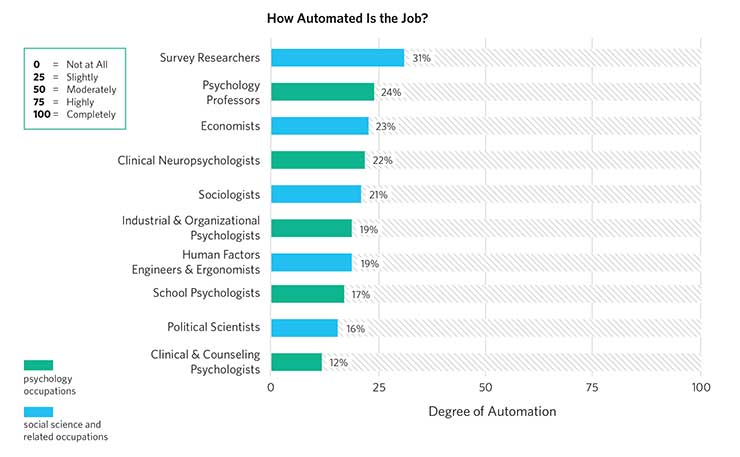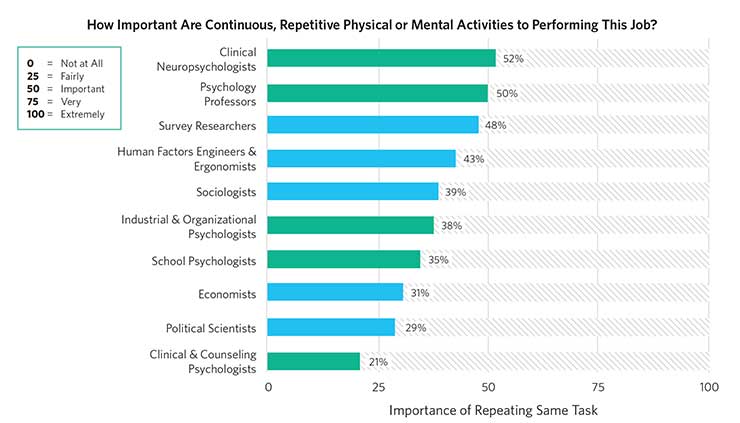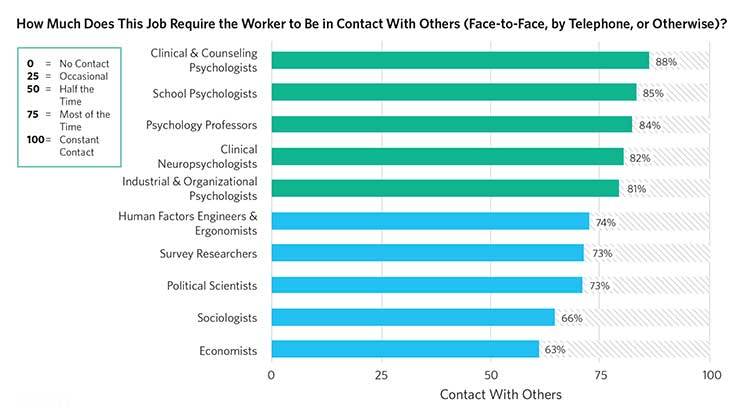
Psychology jobs typically require low levels of automation, fairly low to moderate levels of repetitive tasks, and a high degree of contact with others, as rated by current professionals and individuals with knowledge about each occupation. For example, the occupations of clinical and counseling psychologists, school psychologists, and industrial and organizational psychologists involve low levels of automation, few repetitive tasks, and constant contact with others. Occupations in social science and related areas, such as political scientists, human factors engineers and ergonomists, and sociologists, are also characterized by low levels of automation and moderate levels of repetitiveness.
These findings suggest there is potential to increase automation of any repetitive aspects of psychology jobs. However, some tasks, especially complex and nonroutine tasks and those requiring frequent face-to-face interaction, are not suitable for automation. Similar occupations require high but slightly lower levels of contact with others. These findings indicate that the human skills that are critical aspects of psychology jobs—such as interacting with people, building interpersonal relationships, and active listening—make psychology jobs less likely to be replaced by automation.