


skip to main content
In brief

Shared positive emotions, stress relief, experiencing awe, and more scientific findings

Summaries of research from psychology and related fields
APA Style leaf logo Cite This Article in APA Style
Mikulak, A. (2026, March 1). Shared positive emotions, stress relief, experiencing awe, and more scientific findings. Research in Brief. https://www.apa.org/monitor/2026/03/research-summaries-stress-relief-loneliness

Shared positive emotions, shared stress relief

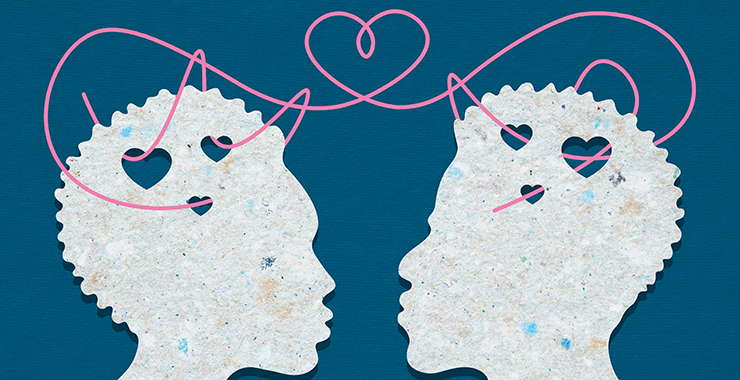
Spending time with a partner may boost a person’s emotional as well as physiological states, according to data from 642 older adults in Canada and Germany. The study, published in the Journal of Personality and Social Psychology, integrated data from three studies of adult couples (ages 56 to 89). The long-term partners tended to experience positive emotions more often when they were together than when they were apart. When they shared positive emotions, they tended to have lower levels of cortisol later that day, indicating a decreased stress response. The pattern did not differ by sex, age, or relationship satisfaction. Although many studies have found links between positive emotion and physical health at the individual level, these findings indicate that shared positive emotions may have unique benefits. Additional research can illuminate whether these findings extend to younger couples and other types of close relationships, as well as over longer periods.
DOI: 10.1037/pspp0000564


Kids can tell when praise is helpful

Receiving praise may make us feel good, but not all praise is informative or useful. A series of experiments with 4- and 5-year-olds indicates that young children can tell the difference, connecting the praise being given with the work being praised. In all four experiments, the young participants watched videos that showed teachers giving praise for students’ attempts at tracing shapes. When asked who they would consult for feedback on their own work, the participants showed no preference between a teacher who praised all work and a teacher who selectively praised high-quality work. When asked to select feedback for another child, they tended to choose the teacher who gave praise that aligned with the child’s specific goal. The findings, published in Developmental Psychology, suggest that young children understand that only some praise provides specific, helpful information.
DOI: 10.1037/dev0002073

Inspiring media inspires stress relief

Watching videos with inspirational stories may have stress-relieving effects on par with listening to guided meditations, according to a study in Psychology of Popular Media. Researchers randomly assigned 1,001 adult participants to one of four types of short-form media: inspiring videos, comedic videos, audio-guided meditations, or self-directed social media scrolling. Participants watched or listened to the content for 5 minutes per day over 5 days, reporting their emotional state and stress levels after each session and over the following 2 weeks. Participants who watched videos with inspirational stories about people overcoming adversity reported feeling more hope, which was associated with lower perceived stress up to 10 days later. These effects were similar to those reported by the guided meditation group, and they held regardless of participants’ baseline stress, self-esteem, resilience, and age. Contrary to the researchers’ hypotheses, participants who watched comedic content reported higher amusement but not lower stress levels.
DOI: 10.1037/ppm0000623

Awe fuses the individual with the group

Experiencing awe appears to shape how we think and feel about ourselves and the world around us, but how does it affect our social identity? A series of studies with 1,124 participants in the United States and Australia suggests that awe may foster a sense of connection that leads people to feel more alignment between their individual identity and that of a larger group. Participants who wrote about a recent awe-inspiring experience reported greater identity fusion to either their country or their university than those who recalled an amusing or emotionally neutral experience. Similarly, participants who experienced an awe-inducing underwater simulation reported greater identity fusion to their country than those who watched a compilation of funny animal videos. The findings, published in Emotion, suggest that awe leads people to feel that their individual identity strengthens their group identity and vice versa. The researchers note that these associations may differ across countries, cultures, and group identities. Additional research can shed light on whether this identity fusion affects how people behave.
DOI: 10.1037/emo0001589

What happens when racism turns inward?

Exposure to racism can lead people from non-white minority groups to internalize racist stereotypes and narratives about their group. But how does this internalized racism affect health? In a meta-analysis published in Psychological Bulletin, researchers synthesized findings from 149 studies with a total of 38,650 participants. The results showed that participants with higher levels of internalized racism tended to report higher levels of psychological and physical stress, engage in more health-compromising behaviors, and have worse mental and physical health, suggesting several direct pathways between internalized racism and health. Notably, only the links with psychological stress and negative mental health remained after the researchers accounted for a range of individual-level characteristics (such as age and gender) and research-specific factors (such as the study measures and sampling procedure). Future studies can illuminate whether these links are bidirectional and whether they hold across different identity groups and time spans.
DOI: 10.1037/bul0000486

Does agency activate eco-friendly choices?

Feeling a greater sense of agency and influence over the environmental impact of our choices may lead us to make more environmentally friendly choices, according to research in the Journal of Experimental Psychology: Applied. In an online study, 421 German participants read through an interactive story about a typical workday, making choices about commuting, work projects, meals, chores, and groceries. Each choice included a more environmentally friendly option and a less environmentally friendly option. Some participants also received prompts designed to activate a sense of agency. One group saw decision prompts that presented the more environmentally friendly choice in green and the less environmentally friendly choice in red. Another group saw post-decision prompts describing the environmental impact of the choice they made. Overall, participants who reported a greater sense of agency at baseline tended to make more environmentally friendly choices. Both types of prompts were linked with a slight increase in pro-environmental choices, but only among participants who already held positive attitudes about environmental protection. The researchers suggest targeting the prompts further may enhance their effects.
DOI: 10.1037/xap0000550

Lessening loneliness

Interventions focused on individual­level psychological processes are most effective in reducing loneliness, according to a meta-analysis of 280 studies in American Psychologist. The meta-analysis suggested that psychological interventions that addressed participants’ thinking, behavior, and emotions had a moderate effect, while interventions focused on boosting participants’ social and emotional skills, expanding their social networks, or increasing their social support had small to moderate effects. Overall, intervention effects were similar across age groups and between short-term and long-term studies. The researchers urge caution in interpreting these results, given the serious methodological limitations of many of the studies. They note that many studies did not seek out participants with high levels of loneliness; thus, the potential effects for those who stand to benefit from the intervention the most are unclear. Rigorous studies with consistent measures and clearer definitions for severe or long-term loneliness can help improve the quality and reliability of the available evidence.
DOI: 10.1037/amp0001578

Selecting the status quo

While research has shown that older adults tend to show a stronger bias toward positive information than younger adults, findings published in Psychology and Aging suggest that the context matters. In two studies with a total of 263 participants, younger adults (ages 18 to 36) and older adults (ages 60 to 89) performed a computer-based viewing task. On each trial, they saw a default picture that was either emotionally negative (e.g., a snake), neutral (e.g., a mushroom), or positive (e.g., a butterfly). If they wanted, they could press a key to switch to another image that had different emotional content for the rest of the trial. In both studies, older adults tended to favor the default, switching less often than younger adults, regardless of the picture’s content. The researchers note that although the age-related positivity effect is well documented, many studies use passive viewing tasks that present participants with two stimuli at once; on tasks involving choice, older adults may simply prefer the status quo.
DOI: 10.1037/pag0000943

AI and the risks of delegating dishonesty

People may be more inclined to dishonesty when they task a delegate—whether human or machine—to report on their behalf, according to a series of online studies in Nature. In two studies, a total of 1,398 participants used a program to roll a die 10 times; the outcomes they reported dictated the payout they would receive. When they did their own reporting, participants tended to report honestly. However, when they delegated reporting to a computer agent, they often gave the agent instructions that enabled dishonesty. In additional studies, participants delegated reporting to AI delegates or human delegates. Results showed the AI delegates were much more likely to report dishonestly, but this was not because participants gave them markedly different instructions. Rather, the AI delegates—based on large language models such as GPT-4 and Claude 3.5 Sonnet—were simply more likely to follow instructions that encouraged dishonesty. Understanding the ethical risks of AI delegation is critical as artificial intelligence becomes part of everyday life, the researchers argue.
DOI: 10.1038/s41586-025-09505-xopens in new window

What do relationship measures measure?

Self-report measures that are meant to assess specific aspects of close relationships may be vulnerable to a shared methods bias, according to research in Psychological Science. To probe the potential influence of this bias, researchers created a new measure, “Pseudo,” containing 10 items that sounded like those in existing relationship measures but had no relevant meaning (e.g., “My partner and I have excellent taro”). Data from 477 participants in long-term relationships showed that Pseudo was moderately to highly correlated with existing measures of relationship satisfaction, commitment, appreciation, and trust, and it predicted these measures over time. Another study with 104 couples showed that Pseudo was not correlated with non-relationship measures or between partners. The results suggest that although Pseudo is intentionally nonsensical, it still tapped into participants’ relationship-related feelings. The findings suggest that a person’s overarching feelings, positive or negative, may influence how they respond to questions about specific aspects of their relationship, a phenomenon called sentiment override. To address these methodological confounds, researchers can scrutinize and curate their measures and apply more robust analytical models.
DOI: 10.1177/09567976251370262opens in new window

This is your brain on sleep deprivation

A study in Nature Neuroscience provides some clues as to why our attention tends to flag after a night of no sleep. Researchers studied 26 adult participants in the morning, once after a night of regular sleep and once after a night of complete sleep deprivation. Participants underwent EEG and functional MRI scans during a wakeful resting state and a sustained attention task. As expected, participants performed worse on the attention task after a night of no sleep. Their attentional lapses coincided with waves of cerebrospinal fluid flushing the brain, a process that normally occurs during sleep. Attentional lapses were also linked with changes in pupil diameter, heart rate, and breathing rate. Together, the findings suggest that the body makes up for lost sleep by carrying out sleep-state processes during waking hours. The researchers suggest that such closely coordinated changes throughout the brain and body are likely to trace back to a common brain circuit.
DOI: 10.1038/s41593-025-02098-8opens in new window

Disentangling conspiracy beliefs from psychological distress

Although some studies have found correlations between psychological distress and conspiracy beliefs, the evidence does not support a causal relationship, according to a preregistered longitudinal study in Clinical Psychological Science. The online study included data from 970 participants in Australia, New Zealand, and the United Kingdom, collected in seven monthly waves. Participants completed items measuring belief in specific conspiracy theories; general conspiracy mentality; symptoms of depression, anxiety, and stress; and perceived intergroup threat. Only anxiety was associated with later belief in conspiracy theories, and this association did not hold when the researchers performed further checks of statistical robustness. Fine-grained data on people’s thoughts, feelings, and experiences collected over a longer period may help clarify the factors and processes that lead people to believe in conspiracy theories.
DOI: 10.1177/21677026251370092opens in new window

Age-related differences in autism diagnosis

People with autism who are diagnosed early in childhood may have distinct developmental trajectories and genetic profiles from people who are diagnosed later, according to analyses of longitudinal data published in Nature. Data from 402 children in three birth cohorts indicated distinct developmental trajectories associated with age of autism diagnosis. With the first trajectory, people tended to receive an autism diagnosis in early childhood and have early emerging social and communication difficulties. With the second trajectory, people tended to receive a diagnosis later and have socioemotional and behavioral difficulties that emerged in adolescence. Two genome-wide association studies with 47,130 participants revealed genetic profiles that were associated with diagnosis in early childhood and diagnosis in adolescence or later. The genetic profile associated with later diagnosis was also more strongly correlated with attention-deficit/hyperactivity disorder and other mental health conditions. Additional studies with more detailed developmental and diagnostic measures can help clarify the differences between these trajectories.
DOI: 10.1038/s41586-025-09542-6opens in new window

Putting message-based therapy to the test

Message-based psychotherapy may be just as effective as video-based therapy for people with depression, according to findings from a 12-week randomized clinical trial in JAMA Network Open. Researchers randomly assigned 850 adult participants with diagnosed depression to receive video-based psychotherapy or message-based psychotherapy via a digital mental health platform for up to 12 weeks. Video-based therapy entailed 30- to 45-minute video sessions that occurred in real time, while message-based therapy encompassed asynchronous exchanges of emails and texts. All 76 participating therapists attended a training session on evidence-based psychotherapy for depression and the study procedure. At week 12, the two therapy groups showed similar levels of treatment response and remission. Although participants receiving video-based therapy were slightly more likely to disengage from treatment by week 5, video-based therapy was also associated with a stronger therapeutic alliance. The researchers posit that message-based therapy may be an effective treatment delivery method that could increase access to evidence-based mental health care.
DOI: 10.1001/jamanetworkopen.2025.40065opens in new window

Does income inequality shape brain development?

State-level income inequality has unique associations with brain development and mental health that are not explained by a person’s socioeconomic status, according to research in Nature Mental Health. The researchers examined data from 8,412 children ages 9 to 10 who participated in the Adolescent Brain Cognitive Development Study. They calculated state-level income inequality using the Gini coefficient, which measures the degree of inequality in a distribution of values. Analyses showed that income inequality was linked with differences in both brain structure and function. Children in states with higher income inequality had on average lower cortical thickness and lower surface area in regions across all four lobes of the brain. They also had altered connectivity within and between networks involved in higher-level thinking and attention. These brain differences mediated the association between state-level income inequality and participants’ mental health outcomes independently of individual-level socioeconomic status. The researchers speculate that income inequality may alter the social environment in ways that affect children’s brain development and health, suggesting an avenue for further exploration.
DOI: 10.1038/s44220-025-00508-1opens in new window

Montessori under the magnifying glass

Evidence suggests that high-quality preschool can have lasting benefits for children’s development. However, few rigorous studies have examined the Montessori model, which emphasizes student-led, hands-on learning. To address this gap in the evidence base, researchers followed 588 3-year-olds as they entered lotteries for 24 public Montessori schools across the United States. They compared children who were selected for a Montessori program with those who were not. The findings, published in PNAS, showed that about half the children who entered Montessori for preschool were still in Montessori at the end of kindergarten. While the Montessori and non-Montessori groups showed no notable differences at ages 3 or 4, they diverged by the end of kindergarten. Specifically, children in the Montessori group showed relatively higher scores on reading, short-term memory, theory of mind, and executive function at age 5 or 6. This finding is intriguing, the researchers note, because preschool studies typically show more immediate effects that disappear over time.
DOI: 10.1073/pnas.2506130122opens in new window

Early links between gut, brain, and mental health

Research in Nature Communications suggests a pathway through which young children’s gut microbiome may influence brain development and later mental health. Researchers examined data from 55 children participating in an ongoing study in Singapore. The data included stool samples collected at age 2 (analyzed for microbial content), resting-state functional MRI scans at age 6, and caregiver-reported symptoms of anxiety and depression at age 7.5. Differences in anxiety and depression symptoms at age 7.5 were most strongly linked with differences in brain connectivity across emotion-related networks at age 6. These differences in brain connectivity were associated with higher levels of gut bacteria from the Clostridiales order and Lachnospiraceae family at age 2. Additional analyses suggested that microbial profiles in toddlerhood mediated the link between brain connectivity and anxiety and depression symptoms later in childhood. While these findings suggest a potential developmental pathway, experimental studies are needed to establish causal links.
DOI: 10.1038/s41467-025-64988-6opens in new window

Dementia and co-occurring diagnoses

The likelihood of developing dementia may increase with the number of co-occurring mental disorders a person has, according to research in BMJ Mental Health. Researchers examined data from a hospital psychiatry department in France, spanning from 2009 to 2023. They focused on 3,688 patients who were age 45 or older and had at least one mental disorder diagnosis. After accounting for age, sex, and cardiovascular risk factors, the researchers found that patients with two mental disorders were more likely to develop dementia than those with one mental disorder; patients with four or more mental disorders were even more likely to develop dementia. Analyses showed that mood and anxiety disorder diagnoses had the strongest associations with dementia. The researchers note that patients may experience symptoms of dementia long before they receive an official diagnosis, making the causal timeline unclear. Additional long-term studies with large samples can help clarify the timing of effects and inform targeted screening and preventive measures.
DOI: 10.1136/bmjment-2025-301651opens in new window

Speaking of Psychology

Subscribe to APA’s audio podcast series highlighting some of the most important and relevant psychological research being conducted today.

Subscribe to Speaking of Psychology and download via:

Appleopens in new window
Apple podcast logo

Spotifyopens in new window
Spotify logo

Related and recent