Our annual Midwinter Meeting took place this year in San Diego from Feb. 28-March 1. The approximately 75 attendees were treated to presentations, discussions, and working groups addressing a wide range of topics and issues, centered on the presidential theme of "Theoretical and Philosophical Psychology in the Service of Practice."
There were many highlights. Among them were dedicated sessions organized and conducted by each of the division’s special interest groups (Women and Diversity, Critical Pedagogy, Clinical/Counseling) around their areas of concern. Unconventionally, the Critical Pedagogy special interest group conducted a hacking session for methods instruction designed to generate an end product that can be shared and used by members of the division and beyond.
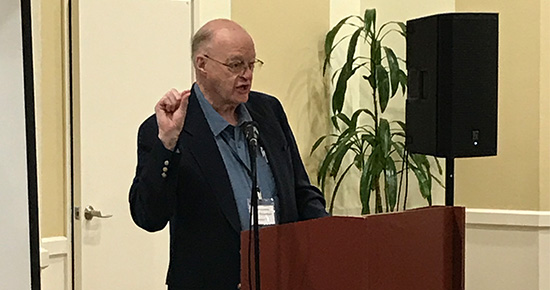
Louis Sass, this year’s recipient of the Distinguished Theoretical and Philosophical Contributions, presented a talk exploring the extent to which we are able to understand conscious awareness, how it might be done, and how our individual and cultural conceptualizations of this “flaw in the great diamond of the world” influence human existence, including how the approach of hermeneutic phenomenology many enrich our psychological practices.
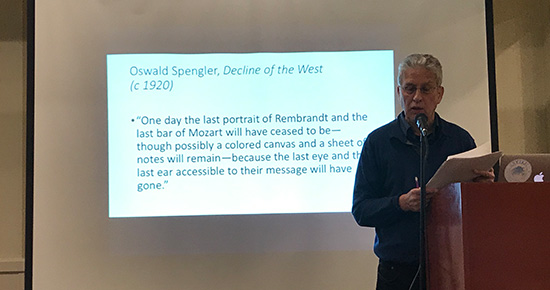
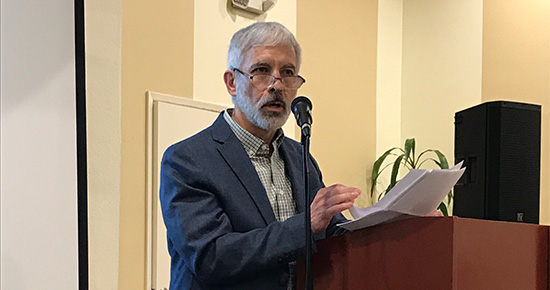
The Presidential Citation was awarded to Brent Slife, who spoke about the assumption of secularism as a conceptual grounding of modernism that receives insufficient scrutiny from our community of theoretical and philosophical psychologists. He described the negative effects of “exclusive secularism,” which banishes religion from public affairs, on both researchers and persons studied, and distinguished it from the preferable approach of “inclusive secularism,” which rejects the dominating authority of religion but welcomes religious voices in public forums and thus supports a more pluralistic psychology.
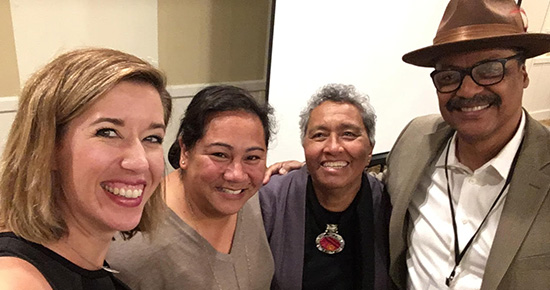
In a moving and partly interactive plenary address, our special invited guest Margo Okazawa-Rey, PhD, the Barbara Lee distinguished chair in women’s leadership at Mills College, urged us to confront the worldwide scourge of violence against women, especially against poor and working-class women of color. She outlined the state and structural violence against women that takes place throughout women’s’ life cycle. Along with changing structures and institutions, ending violence against women requires the type of restorative justice that comes when we live by the Mayan concept of “In Lak’ech,” which means “you are my other me.” If I do harm to you, I do harm to myself.