For the 15 American passengers released in late February from the Diamond Princess cruise ship during the COVID-19 outbreak, it’s a harsh new reality: weeks apart from friends and family, cut off from work and daily activities, and confined to a single room. Their only visitors are health-care workers wearing head-to-toe protective gear.
Daily guidance and support for dealing with those stressors is coming from psychologists, who are essential members of the health-care team at Nebraska Medicine and the University of Nebraska Medical Center (UNMC), where the group is being treated and quarantined.
“The fundamental issue for people is a loss of control,” says David Cates, PhD, a clinical psychologist and behavioral health consultant to UNMC’s Nebraska Biocontainment Unit and National Quarantine Center, where the passengers are being housed.
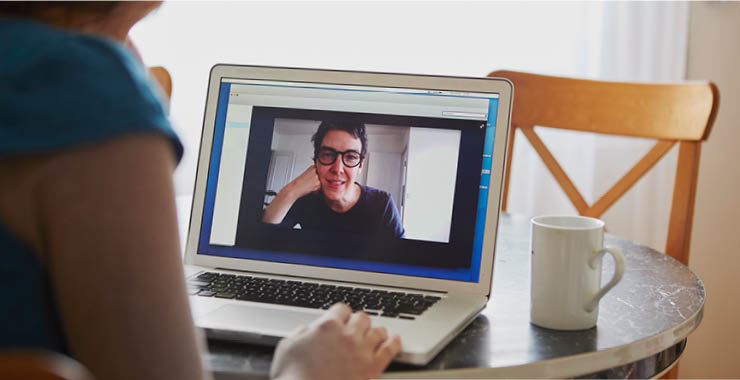
Care for these patients includes standard behavioral health protocols for patients in medical isolation — one-on-one sessions for those who request help or are flagged by a health-care worker. But in addition, Nebraska Medicine has developed a new virtual “town hall” model that leverages the community aspect of the current crisis to enhance social support.
“When we worked with patients during the Ebola outbreak, each person was here alone,” says Cates, who is also the director of behavioral health at Nebraska Medicine and vice chair of clinical services for UNMC’s department of psychiatry. “For the first time, we have enough people to build a community. We launched these daily meetings to capitalize on that.”
The need for social support
Passengers from the Diamond Princess who tested positive for the virus, as well as those who were exposed but tested negative, entered medical isolation at UNMC’s new National Quarantine Center. Those with concerning symptoms were then moved to the Biocontainment Unit and discharged back to quarantine once stabilized.
Though studies on the psychological effects of quarantine are limited, research shows that patients in medical isolation can experience increased symptoms of anxiety and depression, as well as feelings of fear, abandonment, loneliness and stigmatization (Kin-Wing Cheng, S., et al., The British Journal of Psychiatryopens in new window, Vol. 184, No. 4, 2004; Catalano, G., et al., Southern Medical Journal, Vol. 96, No. 2, 2003).
Sources of stress for these individuals include decreased sensory stimulation, limited social support, and lack of access to standard coping strategies, such as spiritual or religious practices or exercising outdoors. These circumstances, along with missing work and other obligations, can trigger a powerful sense of losing control.
Cates designed the daily town hall meetings — which occur virtually and include all patients and guests, as well as representatives from the medical, nursing, behavioral health and case management teams — to empower the group and reduce the risks associated with isolation and quarantine.
“Our goals are to prevent psychological deterioration using evidence-based strategies for stress management and to foster a safe community to increase social support,” he says.
Each meeting begins with updates from the medical, nursing and case management teams, along with an opportunity for patients and guests to ask questions. Cates then leads a discussion focused on wellness or resilience, covering topics such as keeping busy, mindfulness and relaxation exercises, the importance of social support, dealing with social media and the news media, and what to expect upon returning home.
For example, one lesson covered resilience and characteristics of resilient people, such as building social support, focusing on positive emotions and finding meaning in the experience. Another discussed the risks associated with speaking to the press, privacy settings on social media and how to deal with trolls.
Cates ends each meeting with a community-building “question of the day,” for instance, “How have you been staying active?” or “How have you grown or made a positive change as a result of this experience?”
“It’s absolutely incredible to listen to our patients and guests respond to him,” says Kate Boulter, RN, nurse manager of the Nebraska Biocontainment Unit. “The topics he covers are shaping their conversations and behaviors and have been hugely impactful.”
Though no controlled studies have tested interventions to address psychological distress in medical isolation, Cates’ practices are evidence-based. Research supports his lessons on social support (Holt-Lunstad, J., et al., American Psychologistopens in new window, Vol. 72, No. 6, 2017), mindfulness (Goyal, M., et al., JAMA Internal Medicineopens in new window, Vol. 174, No. 3, 2014) resilience (Meichenbaum, D., Roadmap to Resilienceopens in new window, 2012) and transparent communication with medical teams as effective ways to reduce psychological distress.
Addressing health-care workers’ needs
Patients and guests aren’t the only people at risk for psychological distress. Cates also cares for UNMC’s health-care workers, who may experience fear of contracting COVID-19 or transmitting it to family members and overwhelming pressure to succeed amid nationwide public scrutiny.
For several years, he has delivered lessons on wellness and resilience to the team, including strategies for mindfulness, relaxation and cognitive behavioral therapy-based healthy thinking. He’s also worked with providers to prepare for the unit’s activation by determining what aspects of the experience will be most challenging for them and knowing when to draw on their social support networks and other coping tools.
“Whenever things have escalated over the past few weeks, it’s been immensely helpful to recall David’s lectures and use those strategies to refocus,” Boulter says.
In the event of a widespread outbreak of COVID-19, psychologists’ role will shift from focused individual and group care to broader messaging campaigns, but Cates says they can still contribute. That might involve giving media interviews, posting online or partnering with public officials to deliver messages about wellness and resilience for people instructed to self-quarantine. For example, psychologists may recommend mindfulness tools or smartphone applications, emphasize the importance of social support and recommend that people limit their consumption of news about the virus.
“Psychologists — whether they want to or not — are going to be dealing with this,” Cates says. “Many of us are well positioned to help people deal with isolation and the distress associated with losing control.”
Further reading
- COVID-19 and psychology services: How to protect your patients and your practice
- Speaking of Psychology: Coronavirus Anxiety
- Taking care of your behavioral health: Tips for social distancing, quarantine, and isolation during an infectious disease outbreak (PDF, 330KB)opens in new window
Substance Abuse and Mental Health Services Administration, 2014 - Behavioral Health Support for Patients, Families and Healthcare Workersopens in new window
- Bioemergency Planning: A Guide for Healthcare Facilitiesopens in new window
Cates, D.S., et al., Springer, 2018