 Oriel FeldmanHall, PhD, was selected for the Distinguished Scientific Award for Early Career Contribution to Psychology in the cognition and human learning area. FeldmanHall is assistant professor in the department of psychology, cognitive, linguistic and psychological sciences at Brown University. FeldmanHall was recognized for her contributions to our understanding of how the brain detects, values and assesses conflicting reward and punishment contingencies during moral dilemmas, and to examine the role of emotion and its operational power in shaping these social interactions. She merges multiple different fields, including behavioral economics and social psychology, with imaging and psychophysiological techniques to investigate the brain mechanisms that support these complex processes.
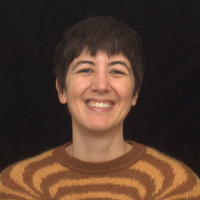 Keeley A. Muscatell, PhD, was selected to receive the Distinguished Scientific Award for Early Career Contribution in the health psychology area. Muscatell is assistant professor in the department of psychology and neuroscience at the University of North Carolina at Chapel Hill. Muscatell was recognized for her contributions to our understanding of the biopsychological origins of socioeconomic disparities in health, the effects of stress on health and well-being, and how the physiological state of the body impacts psychological and behavioral processes. She is investigating the neural, psychological and physiological pathways through which socioeconomic status (SES) influences health; the neural and molecular mechanisms underlying stress-induced inflammatory responses; and the bi-directional links between inflammation and social cognition, affect and behavior.
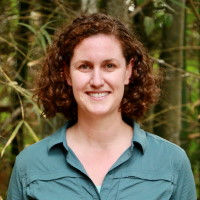 Alexandra G. Rosati, PhD, was selected to receive the Distinguished Scientific Award for Early Career Contribution in the animal learning and behavior, comparative area. Rosati is assistant professor in the department of psychology at the University of Michigan. Rosati was recognized for her contributions to our understanding of the evolutionary origins of the human mind through studies of primate cognition and behavior. She is investigating how cognition evolves by looking both at variation in cognitive abilities between species, as well as ontogenetic change within species.
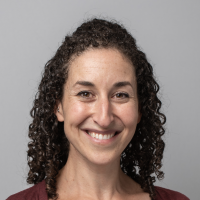 Eva H. Telzer, PhD, was selected to receive the Distinguished Scientific Award for Early Career Contribution in the developmental psychology area. Telzer is associate professor in the department of psychology at the University of North Carolina at Chapel Hill. Telzer was recognized for her contributions to our understanding of how social and cultural processes shape adolescent brain development, with a focus on prosocial and risk-taking behaviors, family and peer relationships, and long-term psychological well-being. Her research has made distinctive contributions that are pushing developmental psychology in new directions.

 Dylan G. Gee, PhD, and Aiden G.C. Wright, PhD, were selected for the Distinguished Scientific Award for Early Career Contribution to Psychology in the psychopathology area. Gee is assistant professor in the department of psychology at Yale University. Wright is associate professor in the department of psychology at the University of Pittsburgh. Gee was recognized for her contributions to our understanding of how key neural circuits mature in typical development and how these processes go awry in atypical development which are critical to the identification and treatment of mental health disorders. Her research bridges clinical, developmental and neuroscience approaches to delineate the biological state of the developing brain to more effectively treat psychological disorders. Wright was recognized for his novel and impactful research which seeks to improve our basic understanding of personality disorders and to identify clinically actionable targets for intervention. He examines the processes and outcomes of personality to clarify what distinguishes adaptive and maladaptive personality functioning.



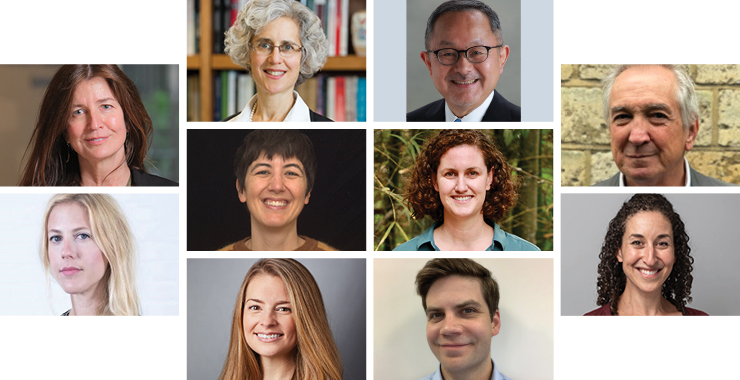
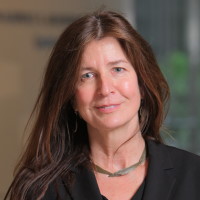 BJ Casey, PhD, is professor of psychology at Yale University. She is also a member of the Justice Collaboratory and the Interdepartmental Neuroscience Program at Yale as well as a visiting investigator at the Rockefeller University. Her research focuses on human neuroimaging and its use in research on typical and atypical development. Her work examines developmental transitions across the life span, especially during adolescence. Her research informs when and how to target treatments to the individual based on age and genetic profile and has implications for juvenile justice and mental health policy reform.
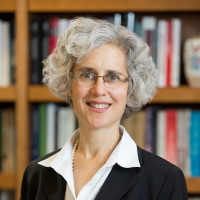 Susan A. Gelman, PhD, is the Heinz Werner Distinguished University professor of psychology at the University of Michigan. Her research focuses on cognitive development, language development and social-cognitive development. She developed the theory of psychological essentialism, synthesizing psychological, philosophical and anthropological theoretical ideas about how human learners believe each category has a distinct, hidden essence that determines its surface characteristics and appearances. Her studies of concepts and language in young children have greatly advanced our knowledge about conceptual development in childhood and about the relation between thought and language in both children and adults.
 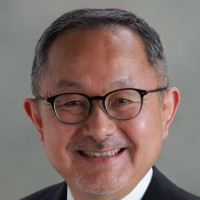 Shinobu Kitayama is the Robert B. Zajonc Collegiate professor of psychology and research professor in the Research Center for Group Dynamics at the University of Michigan. His research centers on cultural psychology focusing on culture and self. His work examines the mutual influences of socio-cultural contexts, such as culture, ethnicity and gender and psychological processes, such as cognition, emotion and motivation. His recent research explores the interaction between culture and the brain in the new area of cultural neuroscience.
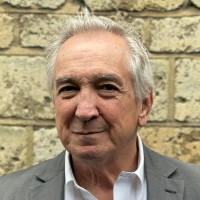 The Committee on Scientific Awards selected Christopher G. Fairburn, PhD, for the Distinguished Scientific Award for the Applications of Psychology. Fairburn is emeritus professor of psychiatry at the University of Oxford and chair of the Advisory Board and Science Council of EMPOWER at Harvard Medical School. His research focuses on the development and evaluation of psychological treatments for eating disorders and anxiety and depression. He is also focused on the global dissemination of effective psychological treatments and the use of digital technology to facilitate this goal.