skip to main content
Six Things

Inside a misinformation offensive

How a respected psychologist ended up getting attacked online for sharing the facts
APA Style leaf logo Cite This Article in APA Style
Abrams, Z. (2022, January 25). Inside a misinformation offensive. https://www.apa.org/news/apa/2022/news-anatomy-misinformation

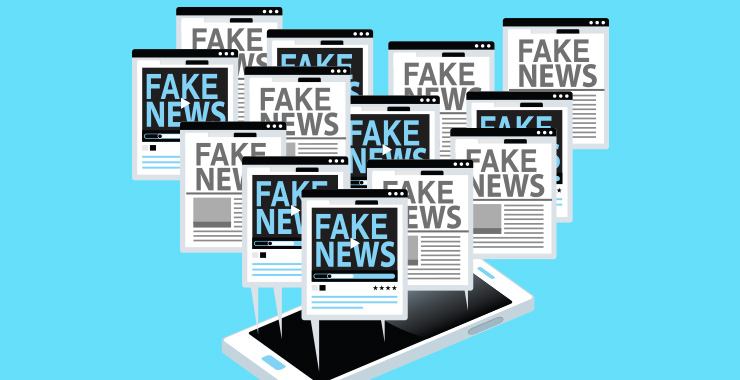
graphic of headlines spelling out fake news

Earlier this month, psychologist Jay Van Bavel, PhD, was the target of a coordinated misinformation attackopens in new window. He received thousands of angry tweets, messages, and emails from conspiracy theorists who believed he was part of a massive coverup of the so-called truth about COVID-19.

Van Bavel, an associate professor of psychology and neural sciences at New York University (NYU) who studies group identity, had merely helped fact check a false claimopens in new window—that millions of Americans have been “hypnotized” into accepting mainstream messages about COVID-19, including the importance of vaccination, through “mass formation psychosis.” The psychological phenomenon was described by Robert Maloneopens in new window, MD, on the Joe Rogan Experience (JRE) podcast on December 31, 2021.

The only problem: “mass formation psychosis” is a bogus theory that lacks evidence—or even recognition by scientists. After Van Bavel debunked the theory in the Associated Press, Malone’s followers began harassing him on Twitter. Soon, another conspiracy theorist, Jack Posobiec—and many of his 1.5 million followers—followed suit.

Malone’s false claims also spurred 270 physicians and academics to write an open letter to Spotifyopens in new window about the harms of hosting the JRE podcast, which reaches an estimated 11 million listeners per episode.


The psychology of the attack

When the Associated Press fact check went live, Van Bavel soon found himself inundated with tweets and direct messages. In a matter of hours, the topic was trending on Twitter. While some users seemed genuinely curious about the psychological literature, most were just trolling.

In addition to insulting messages and posts, people created and shared memes about him and dug up old posts, papers, and talks that they said proved he was part of a larger conspiracy. Many pointed to a paper Van Bavel coauthored—about how behavioral insights can bolster the COVID-19 response—as evidence of wrongdoing (Nature Human Behavioropens in new window, Vol. 4, 2020).

Others sent hateful messages about his family and launched attacks on other platforms, including Facebook and LinkedIn. Some even tracked down and contacted his partner and employer. Engaging in reasoned debate became impossible, so Van Bavel temporarily shut down his Twitter account and deleted all personal content from his Instagram profile.

“In retrospect, I wish I had done that much sooner to mitigate the harassment,” he said.

Tenets of cult psychology can help explain the dynamics of online conspiracy theories, as well as the harassment Van Bavel faced.

“When people are part of a cult and their belief system is challenged or proven false, they’re more likely to cling to that belief system for longer and also to try to convince others that it’s true,” he said.

Cults thrive partly because of social support, according to the classic theories of social psychologist Leon Festinger, PhD. When community members rationalize one another’s beliefs and explain away contradictions, it’s easier to embrace extreme ideas, even in the face of contradictory evidence.

During the attack on Van Bavel, users also shared memes implying that the Associated Press, ABC News, and other outlets discrediting the “mass formation psychosis” claim were part of a larger conspiracy. Cutting followers off from credible sources of information is another tactic straight from the playbook of cults.

Psychological reactance—a motivated response to a perceived threat to personal freedom—can also help describe some of the behavior Van Bavel witnessed.

“There was a surprising level of backlash just from these people seeing a fact check,” he said.

Standing up for science

Van Bavel learned a few things from his experience that can help scholars stay safe if they choose to speak publicly about science. For those active on Twitter, he recommends reviewing the “lists” you’ve been added to, because trolls often curate lists of academics to facilitate harassment. If you’re on any such list, block the person who created it.

“The other thing is if you see people being harassed, or if you get asked to weigh in on these conversations, please step in or recommend another expert who’s comfortable doing so,” he said. It was highly affirming to receive social support from fellow scholars amidst the deluge of insults from trolls, Van Bavel said.

He also received encouragement from NYU after conspiracy theorists emailed the president, provost, and trustees of the university, accusing Van Bavel of unethical behavior and of feeding propaganda to the media. It’s critical for people in power to make both public and private gestures to support scientists in such cases, he said, because online smear campaigns often aim to damage reputations and harm careers. Van Bavel has tenure, but he notes that many people, including adjunct professors and clinicians, are in more precarious employment situations.

“I don’t think we should let things like this scare us from speaking up,” said Gordon Pennycook, PhD, an assistant professor of psychology at the University of Regina in Saskatchewan, Canada, who studies misinformation and was also harassed on Twitter after backing Van Bavel. “It’s unpleasant to be attacked on social media, but if we don’t stand up for science, then the trolls have won.”

Recommended Reading

You may also like