skip to main content

Thousands of psychologists, 54 divisions, nearly 1,000 convention sessions: Inside APA 2026

APA Style leaf logo Cite This Article in APA Style
Straight, S. (2026, August 9). Thousands of psychologists, 54 divisions, nearly 1,000 convention sessions: Inside APA 2026. https://www.apa.org/news/apa/2026/convention-highlights

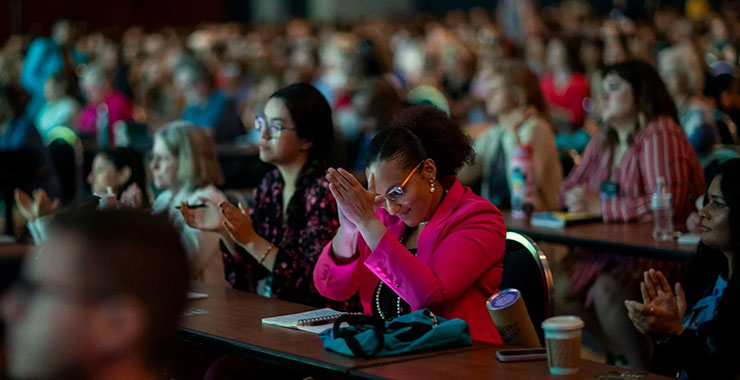
Woman clapping in the audience at APA 2026

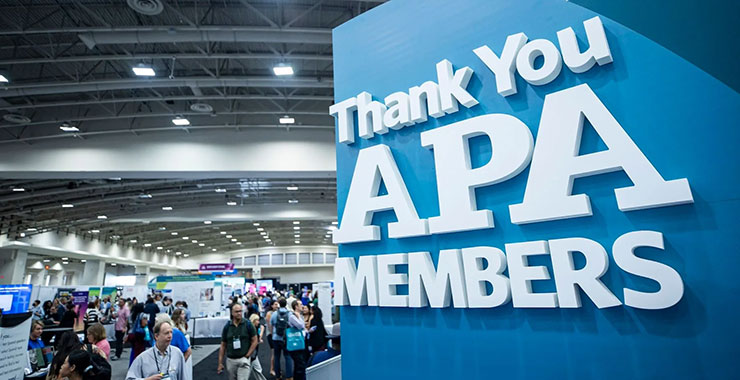
For three days in August, the Walter E. Washington Convention Center in Washington, DC, belonged to psychology. APA 2026—the largest annual gathering of the field—drew thousands of researchers, practitioners, educators, students, policymakers, and applied psychologists from across the United States and around the world.

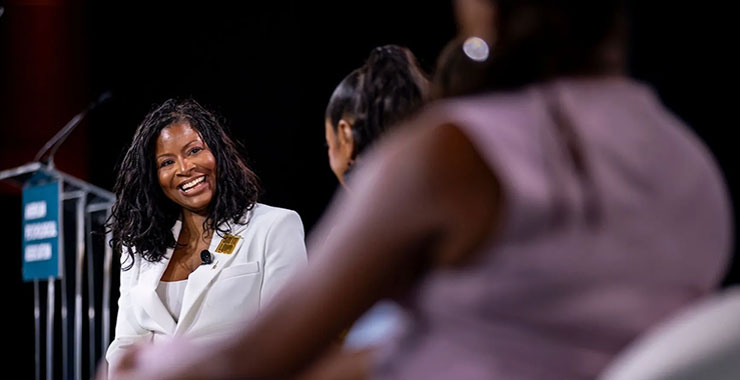
APA President Wendi S. Williams, PhD, opened the convention with a charge rooted in her presidential theme: “Radically well, together.”

“I want you to connect with one another, be reminded of our shared power when we stand together,” she said. “There are as many reasons to give up as there are to fight—for our vision for the field of psychology, for what our ethics require, for what the people need. And you are the reason it keeps moving. Not the institutions. Not the funding. But you.”

Attendees took it seriously. “The opening session was well done and inspiring,” one wrote. “The charge is long overdue.”
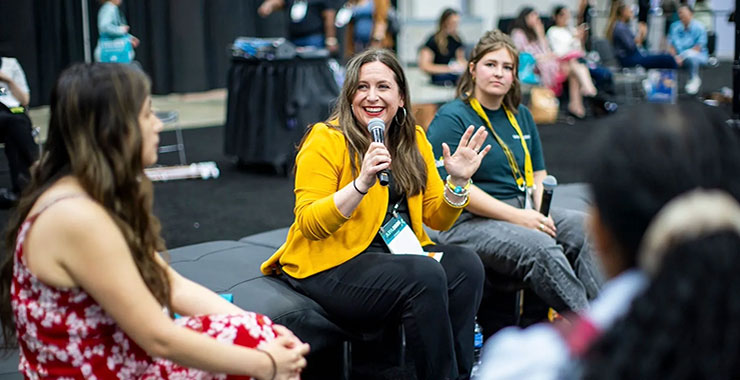
Moderator facilitates panel discussion at APA 2026

The program made the case for psychology’s reach at scale—nearly 1,000 sessions over three days. APA CEO Arthur C. Evans Jr., PhD, welcomed attendees with a sense of the field’s expanding influence. “We’re being invited into rooms we’ve never been in before,” he said.

The headline events traced the human lifespan—from growing up digital, to the challenges of modern adulthood, and to the paradoxes of aging. Science Summits brought researchers and practitioners into conversation on using psychological science to advance law, to communicate findings in ways that drive real change, and to navigate AI’s rapidly evolving role. Keynote sessions took on ethics, intersectionality, and what it means to build technology that puts humans first.

The convention’s center of gravity, as always, was the programming developed by APA’s 54 divisions. Division sessions representing the full spectrum of the discipline filled rooms across all three days, on topics including the loneliness of addiction, reproductive grief, AI chatbots, borderline personality disorder in adolescents, psychedelics, chronic pain, body shame, mixed bipolar states, radical healing, bullying, sports psychology, autism in adulthood, and far more. All of it carried the specificity that comes only from people who have spent careers investigating the questions at hand. “Amazing topics. Incredible speakers,” one attendee wrote. “They spanned multiple issues and represented so many divisions. I wish I could be in multiple places at once.” After a session on the psychological toll of climate change, an attendee wrote that the material was difficult to hear, “but the presenters were incredible in sharing how there can still be light and hope connected to doing psychological work.”

Woman speaks to students attending APA 2026

Throughout the three days, hundreds of researchers displayed posters of their research, taking questions from anyone who stopped—the kind of sustained, specific exchange that moves a finding forward. “I loved how supportive and helpful people were, especially when presenting my poster,” one presenter wrote.

Attendees left Washington with new contacts, new thinking, and inspiration to lead the field through the year ahead. “Being here helps to renew my passion for psychological science,” one wrote. The field gathers next in San Francisco, August 12–14, 2027.

Photo of sign reading,

Related

Related and recent