Kim Mills: This week marks 20 years since the September 11, 2001 terrorist attacks on the World Trade Center and the Pentagon. Nearly 3,000 people died that day. Millions more watched the planes hit the buildings. Many saw the attacks on live TV. And two decades later, those images remained seared in the nation's memory. Researchers call this kind of shared disaster a collective trauma. For decades, they've studied how collective trauma affects individuals’ and communities’ mental and even physical health.
Who is most at risk after a collective trauma event? How long do the effects of such trauma last? And after two decades, are we still dealing with the trauma of 9/11 today? What did we learn in the aftermath of 9/11 that can inform our response to the COVID-19 pandemic, hurricanes, wildfires, and other large-scale disasters?
Welcome to Speaking of Psychology, the flagship podcast of the American Psychological Association that examines the links between psychological science and everyday life. I'm Kim Mills.
Our guest today is Dr. Roxane Cohen Silver, a professor of psychological science, medicine, and public health at the University of California Irvine. She studies how people cope with traumatic life events, including both personal and collective traumas. She was the principal investigator of a multiyear study of the national impact of the September 11th terror attacks on the nation's mental and physical health. She has also studied the short- and long-term effects of disasters such as earthquakes, fires, school shootings, and war. Most recently, she and her colleagues have been studying the COVID-19 pandemic and what she calls the cascading collective traumas of 2020 and 2021. We'll talk about those today as well.
Thank you for joining us, Dr. Silver.
Roxane Cohen Silver: Thank you so much. It's a pleasure to be here.
Mills: As I mentioned a few moments ago, you led several multiyear studies on the effects of 9/11 on Americans' mental and physical health. Can you tell us about that research? What were some of your chief findings, and what did we learn about collective trauma in the aftermath of 9/11?
Silver: Thank you for that question. My colleagues and I began in the days after the September 11th terrorist attacks to study a large representative sample of Americans who were followed for about three years. Those individuals were from across the United States. We had people, of course, who were from the New York area, as well as people in every state of the country.
We started a few days after the 9/11 attacks to ask people about their exposure to the attacks, whether or not they knew anybody who was in the World Trade Center or the Pentagon or on one of the airplanes, whether or not they themselves were in New York City or Washington, D.C., whether they knew anybody who was lost and presumably at that point killed by the attacks. We also asked people the amount of television that they watched in the first few days after the 9/11 attacks.
You may remember, or those who can remember that day, know that in general, most regular programming was suspended, with a very intense media focus on the 9/11 attacks and the attempts to find survivors in the rubble, and also to understand a little bit more about what happened. We followed these individuals in our study. It was about 3,500 individuals. We followed them, as I said, for three years, and we looked at their emotional responses, their ongoing concerns about terrorism.
We also measured some of their physical health complaints, those physical health complaints that developed over the next three years. And in addition, during that period of time that we studied people, we assessed their ongoing, as I said, concerns about terrorism, but their continued exposure to personal traumatic experiences like, did they lose a loved one to cancer? Did they themselves get sick? Did they witness violence?
We explored the impact of people's exposure to 9/11, the impact of exposure to other events in their lives, and how that impacted their psychological state over the next several years.
Mills: How did it impact them? What happened to these people over three years?
Silver: We were surprised to see the potent effect of media exposure on people's psychological and physical health over time. We argued that individuals did not have to be directly exposed to the events of 9/11, that is they did not need to be at the World Trade Center or around the buildings, to have been impacted by the events of 9/11.
Mills: These effects that you saw, they were higher than they might have been? Did you have a control that you were measuring them against?
Silver: Well, what we did was look at individuals who indicated that they watched the attacks live on television. Those who can remember those days know that the second plane hit the World Trade Center and that was broadcasted live. And individuals could also see the buildings fall live on television. We could juxtapose those individuals who said that they had seen the attacks live on television as compared to those who did not.
We found that those who did witness the events of 9/11 live on television were more likely to be exhibiting stress responses, both psychological and physical stress responses, and more likely to develop physical health complaints over the next three years, new onset physical health complaints, so health concerns that had not been present previously. Let me say one very important part of our study. Because it was a longitudinal study, that is we repeatedly studied the same individuals over time, we could explore the development of physical health complaints.
We know where they were physically and psychologically before the attacks. We had data that were collected on those individuals, and we could monitor the new onset of psychological and physical concerns. It is also the case that because we began our study within a few days after the 9/11 attacks, we were not asking people to reconstruct their memory of where they were at that time. We were actually measuring that about five days after the attacks.
We could say, how many hours over the past week have you spent watching media, as opposed to me asking you 20 years later, how many hours do you think you were spending? I will say that of our nationally representative sample of individuals, about 60% reported within a few days after the 9/11 attacks that they did witness some portion of the attacks live on television. It was about 60% witnessed either the second plane hitting the World Trade Center or the buildings fall and about 40% learned about the attacks afterwards.
In our sample, we had about 5% of individuals who were either in New York or Washington, D.C. or Pennsylvania, or had been on the phone with somebody in one of the buildings, or had been in the area and had witnessed the events directly.
Mills: Here we are 20 years later. Do you think that as a country we're still feeling the effects of 9/11 today, or has it receded in our minds by now?
Silver: It's very, very difficult to say, because so many aspects of our society have changed over the last 20 years. During the 9/11 attacks, the main way in which people learned about tragic events was via television. We also of course had radio and print media. But now 20 years later, we learn about events across the world in seconds because of a very different media landscape. The world has changed, has gotten smaller in some ways, because of the easy access to content across the world. Many other things have changed simultaneously.
It's very difficult to link those societal changes to the 9/11 attacks directly. However, those who are old enough to remember prior to 9/11 also remember that one used to be able to go through the airport without any barriers. You could run to your plane 10 minutes before the plane.
Mills: At the last minute, yeah.
Silver: I used to do that quite a bit. I hated to be in the airport more than 10 minutes before my plane. We now stand in long lines without protest prior to going to an airport gate. Those of us who are old enough to remember previously do that now without any protests, because we very much remember the events of 9/11. The entire Department of Homeland Security grew out of 9/11. The concern about terrorism was relatively non-existent in the United States prior to the 9/11 attacks.
There are so many things that have changed over the last several decades, and it's very, very difficult to link it to the events of those days or the events of the few years later. We've also become more polarized in our country politically. The onset of social media has changed the way in which we communicate with one another. All of those things have coincidentally changed during those two decades. I find it difficult to link those directly to 9/11. I think that's really the role of historians. As a psychologist, I'm not a historian.
I can't speak to the historical impact of the events of those days. I certainly know that there are just many differences in our society in the last 20 years.
Mills: In effect, these are reminders that are with us every day, except that what you're saying is that we're not making the associations. It has become normal life to take our shoes off and go through metal detectors and everything else that we have to do today.
Silver: Absolutely. And there's no protest. Similarly, when young people go to concerts, they open up their handbags. Women open up their handbags. Men are used to going through metal detectors. That just didn't happen decades ago. It didn't happen before 9/11. All of those changes were in direct response to a concern for terrorism on our soil.
Mills: Let me ask you a related question. Why is it important to mark anniversaries of tragic events? Do these bring back the trauma, or do they help people process and cope with it, or both?
Silver: That's a very interesting question. One of the things that I think is really clear is inadvertently the media and even interviews like this bring forward again these events. I personally have been very unhappy to see images of the 9/11 attacks, graphic images of the 9/11 attacks portrayed in the media. For many years on the 9/11 anniversary, we would see pictures of the World Trade Center either on fire or people running through the streets and filled with such, or people...
Mills: Jumping out of windows.
Silver: Jumping out of windows, although those images were not shown in the early years. In fact, there were a number of editorial decisions made by the media not to show some of those graphic images in the days and weeks after 9/11. I personally have preferred seeing some beautiful images of blue lights coming up where the World Trade Center had been, beautiful memorials to the loved ones that people lost. Those are very different from the images of the tragedy.
I think it's very difficult for us to avoid remembering the tragedy when there are so many media portrayals of the tragedy that we see over and over again. I think, of course, that for any anniversaries of positive events, like birthdays or weddings, or anniversaries of tragic events, like 9/11 or the loss of a loved one, we, of course, think about the events on those days. I don't think in any way that anybody would advocate that we try to forget.
Of course, we want to memorialize those who we lost, and we want to be vigilant so that the kinds of events that we're talking about don't occur again.
Mills: Let's switch gears and talk about the collective traumas that many people have experienced in the last year, year and a half. You wrote an article earlier this year called “Coping with cascading collective traumas in the United States.” Can you explain that term, cascading collective traumas? How unprecedented is the year we've just had?
Silver: Well, I started to think about the cascade of traumatic events that we as a country were dealing with the morning after I learned of George Floyd's untimely and tragic murder in May, I believe it was, of 2020. I was actually lying in bed thinking about it in the morning how terrible a year it had been. We began, of course, with the recognition of COVID. It was called the novel coronavirus in the early days.
And the widespread quarantines that were initiated across the world, or certainly in the United States, and the economic fallout from that, and the millions of people who were losing their jobs at that time. And I thought about how these events led people to have a lot of time on their hands, more time on their hands than they—for many people, those who were—certainly not the essential workers who were still working very hard to keep our country going. But I realized that people had a lot of time on their hands, both to watch television or engage in social media.
We were sort of primed to hear about the events or the murder of George Floyd in ways that I think many people had been aware of, but not really focused on in the context of this terrible pandemic. Around the same time, certainly in the couple of weeks and months after George Floyd's murder, we had wildfires throughout the Northwest. There were increased numbers of hurricanes that had not been—I believe 2020 was, if not the worst, one of the worst years on record for hurricanes in the United States. All of this just seemed almost too much to bear.
My colleagues, Alison Holman and Dana Garfin, and I wrote a paper, as you said, called “Coping with cascading collective traumas in the United States,” in which we highlighted the important role of both direct exposure to these kinds of experiences, as well as indirect exposure via the media. We argued how important it was for people to monitor their exposure to media about tragedies, and we acknowledged that it was going to be a very difficult year to come out of.
I have been thinking a lot about interviews and talks that I gave in the early days after the pandemic began, and I said at the time that we don't know how long this pandemic is going to last and we don't know how bad it's going to get. And in 2021, sadly, I would still say the same thing. We really don't know how bad it's going to get, and we don't know how long it's going to last. Of course, when I said that back in the spring of 2020, we didn't have vaccines, but now we have vaccines.
Not everybody in the world who would love to get a vaccine has access to it, and many people who have access to vaccines in our country have chosen not to get them. I think that that puts us in a very complicated situation, where we don't know how long it's going to last and we don't know how bad it's going to get.
Mills: Given all the death, doom, and destruction that's been raining down on us, I mean, do we get maxed out at some point? Do we become inured to this much trauma and you just get numb? Or does it just pile and pile and pile up?
Silver: Well, I think that we must recognize that everybody hasn't been impacted by the pandemic in the same way. There are millions and millions of individuals who have lost a loved one. There are millions and millions of individuals who have gotten sick themselves. And there are some who have been fortunate because of their economic circumstances or just luck or perhaps because of vigilance that have been personally untouched by the events, except that they are spending more time at home. Maybe they're gardening.
I mean, the range of exposures and the range of impact of the pandemic has really differed. It's no secret that there are certain groups, in particular Native American groups, Latinx individuals, Black residents, who have been more impacted by the illness and the deaths as a result of COVID than others. We have to recognize it. It hasn't been a one size fits all exposure, and it will not be. There will not be a one size fits all response.
I've been studying tragedy for over 40 years, and the most important message that I learned back when I was working on my dissertation and now 40 years later is that there is not a one size fits all response. There's enormous variability in how people process and respond to events, very much influenced by people's prior life experiences, by their chronic stress or their experiences during the event, and by the amount of support and resources that they have in the aftermath.
All of this is to say, it's a complicated situation and that's why we try to collect data, why we try to do research on this topic. My colleagues and I for many, many years have tried to conduct methodologically rigorous systematic research on these kinds of issues. Of course, it depends on getting others to share their experiences, their emotions and their feelings, and their thoughts and concerns with us, but we have been very fortunate.
I've had tens of thousands of people who have participated in my studies, and I think it helps me recognize that there is no one size fits all response. I certainly don't want to imply that there is in the same way that the events of 2020 have impacted people in different ways.
Mills: There's a field of study that looks at something called post-traumatic growth. In some cases, people can find meaning in tragedy and living through a traumatic time can spark positive development and personal growth. Is that something you've seen in your research on collective trauma?
Silver: I personally see these kinds of positive benefits that people see as a coping strategy. This is the way in which people cope with this terrible adversity and uncertainty. But my colleagues and I are working on a paper right now looking at the positive experiences that have come out of the pandemic. We don't use the term post-traumatic growth. That is something that I think others may use. We see these as benefits that people are able to see perhaps their mental gymnastics that people are engaging in to cope with the tragedy.
Simultaneously, they're acknowledging the tragedy, but they are seeing some positive experiences. Certainly many, many people have enjoyed the opportunity to work from home and not have to sit in traffic. And then there are other individuals who are stuck in a residence with somebody who is abusive or somebody with whom they have a very complicated personal relationship. Maybe they don't have good internet. Maybe they are living in an environment that makes working from home extraordinarily difficult.
While some people may find the positive benefits of not having to sit in traffic, others find that same experience to be quite stressful and quite challenging. I think it's important, again, to recognize that there are different ways to respond. We have found that many people are able to see a somewhat silver or gray lining in the blackness and the bleakness. I do see that as a very positive way to cope with this, because otherwise it really can be overwhelming.
We haven't explored it as much in our data yet, but I've been monitoring what others are reporting in data across the world. We do know that in some communities and, again, the data are still—it's important for us to explore more than one study, but it does look like in some communities, rates of substance use and substance abuse may have increased. There have been some articles suggesting that the plague of loneliness has led to increased depression. We've seen some of that in our own data. I think, again, we'll have to see what the consequences are.
But at the same time that people are experiencing these negative psychological states, many people are trying to hold onto some positive experiences that they've had. I do feel that once we're out of this, I think once we are through this terrible time, I do feel quite—I think it's likely that people will be able to look back on the events of 2020, 2021 and see that they were stronger than they had expected, or that they were able to come through recognizing some skills that they didn't realize that they had.
But again, that is not to say that there will be some who will be unable to find anything positive. I mean, this has really been a terrible year. And for people who have lost loved ones, who were not able to say goodbye, who were unable to have a ritual burial, all of these things are just terrible. I think it's very important that we don't imply that everybody should be seeing something positive about this. Because for some, there is nothing positive about this horrible year. I think we have all suffered losses, both real and symbolic.
The cancellation of weddings or the inability to celebrate one's senior year in high school, or the inability to play sports, I mean, all of these things that happen in 2020 I think are with some people and will likely for those individuals never leave them. I wouldn't expect that it would.
Mills: You published a paper a couple of years ago about near-miss experiences that found people who'd narrowly missed a traumatic event were more likely to experience PTSD and survivor's guilt. Can you talk about that research?
Silver: There was a paper that my colleague Michael Poulin and I wrote about near-misses after 9/11. In our sample of about 3,500, we had more than a hundred individuals who had either nearly missed going to New York or nearly missed getting on an airplane or had a family member that nearly missed the possibility of having been directly impacted by 9/11. I would probably say, we didn't say that they experienced PTSD. We probably indicated that they experienced some stress symptoms that are—
It's important to recognize that there is a clinical definition of PTSD that requires a clinician to make that diagnosis, and also in the current clinical diagnostic criteria requires that people are directly exposed to a tragedy. We are, in fact, looking at the opposite, individuals who just missed experiencing a tragedy. They wouldn't really be eligible to be diagnosed with PTSD, but they were more likely to experience post-traumatic stress symptoms. There have been a few studies on near-misses.
It's a very interesting and understudied topic, and one that I think will perhaps be of interest to researchers in the future as we look back on the pandemic. Of course, we asked people in the I think few months after, I think it was the second wave of data collection after the 9/11 attacks, whether they had experienced a near-miss and to tell us a little bit about that. It is the case that some people experience—maybe they weren't going to get on the exact plane that crashed into the World Trade Center, but they were also going to get on a plane going to New York.
I mean, all of these can lead people to recognize that they benefited by not having gotten on that airplane or by not having gone to the building and others experienced tragedy. And that has been linked to a concept that is called survivor guilt. That people do feel a sense that they were lucky and that others were not so lucky. We also found very similar psychological experiences in the early '90s among gay men who were engaged in the very same activities that led some gay men to get AIDS, and these individuals were spared at random.
My colleagues and I wrote a paper about what—it was actually entitled Spared at random, and it was about individuals who had really somehow by luck or good fortune just didn't contract AIDS, although they could report activities that they had done that had been quite similar. But this is, of course, all before we understood how AIDS was transmitted.
Mills: And they had that same feeling of guilt?
Silver: Yes, yes, yes. A sense of survivor guilt. Actually this concept of survivor guilt was formulated about individuals who survived the Holocaust, and they were individuals who had been in a concentration camp, but nonetheless had managed to get out and live beyond that. These are very interesting from a psychological standpoint phenomenon. Fortunately, we don't have that many opportunities to study these kinds of events. But when we do, they help us understand, again, the range of exposures and the range of responses to tragedy.
Mills: To sum up, do you have any advice for listeners on how to cope when they're feeling stressed or anxious or overwhelmed by the cascading collective traumas of the past year? Is there anything they can do to inoculate themselves against post-traumatic stress or anxiety?
Silver: Well, certainly if individuals feel overwhelmed and unable to cope, I would encourage them and have encouraged people to reach out to clinicians. There are hotlines that are available if people are feeling overwhelmed and feeling that they really need to connect with others. I think there have been new forms of mental health treatments that have moved let's say to telehealth, to communicate with healthcare providers virtually rather than in person.
But I certainly think that if individuals feel overwhelmed, they should reach out to both loved ones and to healthcare professionals, their healthcare professionals, mental health professionals. I also encourage people to the extent to which it's possible to monitor their media intake, to be mindful of the amount of time that they spend immersed in reading bad news. Certainly in 2020, it was all bad news all the time. I think it's extremely important that people recognize how much time they may be spending immersed in this bad news.
Journalists have called this doom scrolling. I had not heard the term until some journalists contacted me to ask me what I thought about it, but it makes sense where somebody could sit at a computer or with a smartphone and just click on link after link after link. And five hours later, they have just been immersed in reading stories about tragedy. I do encourage people to monitor the amount of time that they're spending. I am in no way advocating any kind of censorship, and I am in no way suggesting that people put their head in the sand.
What I'm suggesting is that people monitor the amount of time. Maybe check the news morning, noon, evening, rather than spending a lot of time reading about tragedy. I think that recognizing that, recognizing and being mindful of one's own feelings and the need and recognition that it's appropriate to reach out to loved ones or to health care professionals or mental health professionals, as well as monitoring the amount of time that one is spending immersed in tragic news, I think, are two very important ways in which we can cope with these very difficult times.
Mills: Excellent advice. Thank you for joining us today, Dr. Silver, to reflect on this anniversary.
Silver: Thank you so much for having me. I really appreciate the opportunity.
Mills: You can find previous episodes of Speaking of Psychology at speakingofpsychology.org or on Apple, Spotify, Stitcher, or wherever you get your favorite podcasts. And please leave us a review. If you have comments or ideas for future podcasts, you can email us at speakingofpsychology@apa.org. That's speakingofpsychology, all one word, @apa.org. Speaking of Psychology is produced by Lea Winerman. Our sound editor is Chris Condayan.
Thank you for listening. For the American Psychological Association, I'm Kim Mills.


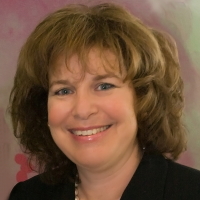 Roxane Cohen Silver, PhD, is a distinguished professor of psychological science, medicine, and public health at the University of California Irvine. She studies the long-term physical, cognitive, emotional, and social effects of traumatic experiences, both personal traumas as well as large community disasters such as terrorist attacks, earthquakes or firestorms, infectious disease outbreaks, school shootings, and war. She also studies resilience factors and how people cope with these traumas. She was the principal investigator of a multi-year longitudinal study of the national impact of the September 11 terrorist attacks on mental and physical health. She has also studied the 2013 Boston Marathon bombing, the Ebola public health crisis, the 2016 Orlando nightclub mass shooting, and Hurricanes Harvey, Irma, and Michael. Most recently, her research team has also undertaken an NSF-funded national longitudinal study of the 2020 novel Coronavirus (COVID-19) pandemic in the United States.