Kaitlin Luna: Hey, everyone, it's Kaitlin Luna, host of Speaking of Psychology. This episode was recorded during APA's technology mind and society conference held in October 2019 in Washington D.C. I was away on maternity leave during that time, so my colleague, Kim Mills, was a guest host. We hope you like this episode.
Kim Mills: Hello, and welcome to Speaking of Psychology, a bi-weekly podcast from the American Psychological Association, that looks at the connections between Psychological Science and everyday life. I'm your host Kim Mills, and I'm coming to you from APA's annual Technology, Mind and Society conference in Washington DC. It's a cross-disciplinary meeting that is examining psychology's role in advancing everything from virtual reality, to artificial intelligence, to the Internet of things. Cameras are playing a greater and greater role in law enforcement, whether we're talking about cameras placed on dashboards and police cruisers, or cameras that officers were as part of the uniforms.
How effective our cameras in police encounters? What do they tell us about police citizen interactions and do cameras ever lie? Our guest today is Dr. Nick Camp, a postdoctoral researcher at Stanford University, where he received his PhD after completing his BA at Columbia University. His primary research focus examines racial disparities in the everyday encounters between police officers and citizens. To understand the causes and consequences of these inequities, he draws on a range of methods, from computational studies of officers body-worn camera footage to experiments in community and lab settings, to analyses of traffic stop data. Dr. Camp, thank you for joining us.
Nick Camp: Thank you for having me.
Mills: Let me start by asking you, how common are cameras in police work today? Is every police force in America using them or considering using them?
Camp: A recent survey shows that almost every police department in the country is either deploy these cameras or is planning to, in the near future. This is a rare reform that both police agencies and the public have been in favor of. It's been a pretty rapid rollout of this technology.
Mills: How are cameras changing police work? On balance, would you say that change is more for the good?
Camp: There's a few different ways and a few different effects that people have looked at with these cameras. The first earliest studies have just looked at, does having these cameras make a difference in Police Community Trust. The results are mixed but on the whole, simply having police officers recording these encounters gives citizens a sense of security that police officers will be held accountable for their actions. Other researchers looked at what we can actually see on these videos and the data is also kind of mixed. In many cases, the footage can be kind of ambiguous. It's hard to tell, but my research looks at the language and what these cameras capture about everyday interactions. I think this is really a new source of data for departments and can really be used to measure police reform pretty good.
Mills: How can the footage be ambiguous? A camera is a camera, takes a picture of what's happening. How could it be open to interpretation?
Camp: That's right. Well, the hope was the camera doesn't lie, and simply putting a camera in every police officer would give us an unbiased view of what's actually happening in these encounters. Unfortunately, the camera is positioned on a police officer about chest level. If you imagine filming a movie with a camera at that level, you don't see a whole lot. The fact that it's filmed from the police officers perspective, research by Robert Turner and others, has shown that this kind of leads people to empathize with the officer. You're really getting literally one point of view in these interactions.
Mills: Has there been thought given to changing where the camera's worn? Like soldiers wear cameras on their helmets now.
Camp: There are a few. The technology is advancing quite rapidly. Some police departments are trying to position cameras in other locations in the uniform, but the fact of the matter is at the end of the day, it's going to be on the police officer. Some of these are just limitations of the footage.
Mills: Your research has used body camera footage to look at racial disparities and how police officers communicate with citizens. What have you found?
Camp: This was a project that started. Originally, we were planning to look at the video from these interactions. Again, since the camera's at chest level, we didn't really see a whole lot of the community members that police officers were talking to. I noticed as I was watching this footage that the words were coming in loud and clear. What we did was, we looked at the words that officers were using in their conversations with black and white drivers that they stop. We found using a range of different methods that police officers communicate more respectfully when they're talking to white drivers than when they're talking to African-Americans.
Mills: Do you know--- Has your research indicated who's more heavily influenced by the body cameras whether it's the police or the civilians?
Camp: That's a great question. One of our current projects is asking police officers and community members to look at the same interaction and see how their judgments about how respectful the officers being or how combative the driver is being, how that might differ across perspectives. That's a really great point and it's something that we're looking into.
Mills: We don't know yet whether civilians are also more respectful. Do they always know that the cop is wearing a camera?
Camp: That differs from agency to agency. Some agencies make a point of having officers mention that they have a camera and they're recording, other agencies the policy is just for the officer to turn on the camera before they make contact with the driver. These are all great questions and I think it's an empirical question is whether announcing the camera puts citizens at ease more than simply having it on.
Mills: What about the individual's right to privacy? Do you have any right to privacy if a police officer is stopping you? Can you say I want you to turn that camera off?
Camp: That's a great question and I think as these cameras and the footage they capture are being deployed I think we're going to have more these kinds of questions as to who can access the footage and what circumstances. As of right now, it's lawful for police officers to make these recordings and to my knowledge, I don't think you can ask that that encounter not be recorded. For example, there's ongoing debates about whether police officers should have access to that body camera footage, if so, can they view it before or after they give a statement about an incident. Can the public view this and really this is a frontier, and this is a place where psychologists can up inform these policies?
Mills: There's no standard procedure at this point for how and where these videos are stored. You're saying that we just don't know yet it's still being shaken out?
Camp: That's right. There's differences in agencies as to how long videos are stored for because as you imagine it's very easy for police departments to accumulate tons and tons of videos what purposes they're being used for. This is really a rapidly developing field.
Mills: What do we learn from say dash cameras that are different from what we might learn from a body camera?
Camp: Dash cameras are interesting because you can see both actors on them. There's some new technologies that pair dash cameras with microphones or with body cameras. You can get different views on the same event. One piece of research that's been really interesting [unintelligible 00:07:58] colleagues have use eye-tracking to look at how people when they view dashboard camera videos where they're actually looking in the scene. Again, people's preexisting beliefs and trust in the police can guide where they're actually watching in these interactions. It's another great opportunity and another rich source of data, but it's also something that we have to remember that individual minds are going to be viewing and interpreting.
Mills: What's happening with body cameras and training and police forces right now, is that something that is discussed and when you're in the police academy you're learning how to use a body cam and when to turn that on when to turn on a dashcam. What's the training like right now?
Camp: First of all, police officers love body cameras. They have the belief that having these interactions recorded in case they get a complaint will protect them. It's in police officers' interest to properly use these cameras and record their interactions. One thing that is kind of on the cutting edge is using these recordings for training purposes and this is something that my team and I are very interested in not just for looking at specific acute instances such as the use of force cases but looking at police officers communication. One of the greatest tools that a police officer has is their words and if we can better train police officers in how to communicate with the public it can prevent many of these interactions from escalating to the use of force.
Mills: It is pretty much acceptable among police officers, you said that they really like them, and you said that the public likes these cameras as well, but I know there's been a lot of controversy in certain cases. I mean a lot of cases that make it into the media, and it turns out that there's some dispute over what really happened, and you talked about the difference in angles. Is it really all that popular, basically?
Camp: The challenge is that many times when we're talking about body camera footage, it's in the context of particular incidents trying to decide who is in the right, who is in the wrong and specifically in very ambiguous incidents. Unfortunately, those ambiguous circumstances are the cases where people's individual biases might shape how they interpret that footage. It's already can be a pretty fuzzy signal.
I think that's one reason why we see a lot of debate over the meaning of particular videos, and what they capture and what they don't capture. At the same time, one of the things I hope to show my research is, there are thousands of interactions between police officers and the public. Many of them are not ambiguous, and particularly the words that officers use. Many are evidently respectful or disrespectful.
What I'm hoping is that, in addition to using these videos as evidence in particular cases, we can use it as a source of data to look at policing as a whole.
Mills: Are you doing, or is anybody doing research into the change in language that may be occurring as a result of using cameras?
Camp: Yes, that's a very tricky question because it always comes down to what's the baseline of the camera?
Mills: Yes, we can't compare [inaudible 00:11:14]
Camp: Not to mention that these cameras are proliferating so rapidly, it's hard to get a control group. That is a challenging question. I don't know if we're past the point where we're going to be able to answer what's the effect of having body cameras, versus what can be learned from the footage that they're capturing.
Mills: What else are you looking at now? Where's your research headed?
Camp: There's a few different directions. One very basic psychological question is, in addition to what's the information captured in these recordings, what can these recordings tell us about how people form or lose their trust in the police? In some research, we've been looking at police officers tone of voice. We filter out the words from these recordings and you're left with something like a Charlie Brown grown-up type of language like bop, bop bop.
Mills: Yes. [laughs]
Camp: We're interested in how one, this tone might differ when police officers are talking to white and black men. Two, how people's preexisting trust in the police shapes what they hear in that Charlie Brown signal. Then third, if you only expose people to police officers interactions with white drivers or black drivers, how did that shape their perception the police department?
What we're finding is first, police officers use a more respectful tone when they're talking to white men. Second, that people's own individual trust in the police shapes how trustworthy they perceive that tone. Then third, that people who are exposed to police officer interactions with black men think that the police department is less trustworthy than those who listened to many interactions with white men.
That's one additional we can use this to expose different people to the same exact interaction. In other research, we're looking at what's the relationship between these acute instances of police violence and how those might color everyday interactions between police officers and communities of color. For me, what's really exciting is that having access to body camera footage really opens up a whole new world of questions.
I think it'll really help us understand how this relationship can be built, and how trust can be formed or rooted in these interactions.
Mills: Are you looking at differences with other demographic groups, for example, women or Latinos or people of ambiguous racial or ethnic backgrounds?
Camp: Absolutely. In our initial study, we looked at just black and white drivers, single month. We did look at gender police officers generally use more respectful language with female drivers. In our next week of research, we're really opening it up to look at a wider range of interactions.
One of the challenges from our approach, since we focus so much on language is when police officers are conversing with people who English is not their native language. That's a challenge we have to deal with, especially since many police officers in the department we study can speak Spanish. I think these are challenges that will advance our understanding.
Initially, we focused on one specific contrast, but hopefully we can learn more about policing across a range of identities.
Mills: What got you interested in this aspect of psychology?
Camp: My path has been a backwards one. I didn't really think that much about race, until I became a psychologist. For me, one of the powerful messages of psychology is, it can show you different ways of seeing and thinking about the world and for someone who, before he took a psychology course, believe that people could just put their identities at the door and be a good student or be a good worker, it really took the research on stereotype threat and a lot of social psychology to just show me that that wasn't the case. I think once I was disabused of that idea, I really became hungry for-- to learn more.
As in terms of when I became interested in policing specifically, a lot of my early work in grad school was looking at face perception and so I spending hours and hours a day morphing faces, running these lab stays with faces and Michael Brown was shot and I thought like, "Why am I doing this research?" I think perception is incredibly important and I think that can tell us a lot, but at the end of the day, what I really found interesting about that work was that it could speak to broader issues of racial inequality. I think that really pushed me to focus on not just these very basic research projects but looking at how race and racial inequality plays out in the real world.
Mills: Well, thank you. This is really very interesting; I'd like to keep tabs on what you're doing because I think it's important work and it's going to help reduce the inequities that we experience in our country. Really appreciate your joining us today, Dr. Camp.
Camp: Thank you for having me.
Mills: Before we go, let me remind listeners that we want to hear from you. You can email your comments and ideas to speakingofpsychology@apa.org and please consider rating us on iTunes. We'd appreciate that as well. Speaking of Psychology, as part of the APA Podcast Network, which includes other informative podcasts such as APA Journals Dialogue about new psychological research and Progress Notes about the practice of psychology, you can find all our podcasts on Apple, Stitcher, Spotify, wherever you get your podcasts and you can also go to our website, SpeakingofPsychology.org and listen to more episodes. I'm Kim Mills with the American Psychological Association.


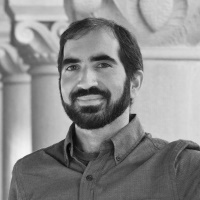 Nick Camp, PhD, is a postdoctoral researcher at Stanford University. Broadly speaking, his research examines the social psychology of racial inequality: how institutions and individuals maintain these disparities and how we can intervene to solve them. These questions are particularly pressing in policing. How does race affect interactions between police officers and the communities they serve? What are the psychological consequences of police practices and how does racial identity shape community members' experiences? How is police-community trust eroded or built during everyday interactions between police and the public? To understand the causes and consequences of these inequities, he draws on a range of methods, from computational studies of officers' body worn camera footage, to experiments in community and lab settings to analysis of traffic stop data.