Kim Mills: As the U.S. population ages, many of us are thinking about how we can keep our brains healthy as we grow older. One recent study estimated that for Americans today, the risk of developing dementia at any time after age 55 is 42%. But psychologists and other researchers who study the brain have found that there are many things that all of us can do to reduce our risk, including exercising, sleeping and eating well, and staying mentally and socially engaged throughout our lives.
Today we’re going to talk to a neuropsychologist about the most important lifestyle factors that affect brain health and about the practical steps anyone can take to reduce their risk of dementia. So what does a healthy brain look like as we age? What kinds of physical activity, mental activity, social involvement, and other factors are most important in maintaining brain health? What is the relationship between depression and brain health? Why are some populations and communities at greater risk of impairment as they age? And what can we do to reduce disparities in brain health?
Welcome to Speaking of Psychology, the flagship podcast of the American Psychological Association that examines the links between psychological science and everyday life. I’m Kim Mills.
My guest today is Dr. Vonetta Dotson, a clinical neuropsychologist and professor of psychology and gerontology at Georgia State University. Her research focuses on brain health in older adults, including the links between depression and brain functioning, exercise interventions to improve brain health and brain health disparities among older adults. She’s also the founder and CEO of the company CerebroFit, which provides services to help people live a brain healthy lifestyle. Dr. Dotson is author of more than 100 academic articles and of the APA book Keep Your Wits About You: The Science of Brain Maintenance as You Age.
Dr. Dotson, thank you for joining me today.
Vonetta Dotson, PhD: Thank you for having me. It’s a pleasure to be here.
Mills: Now, what does it mean to have a healthy brain? What does a healthy brain look like and how does it function as a person ages?
Dotson: A healthy brain is one that continues to retain intact structure, meaning that you’re not having as much volume decline as we might normally see with aging. And also one that functions well in the sense that brain cells are communicating well with each other and are able to support all the things that we do, our movements, our thoughts, our cognitive abilities, our memory. So a healthy brain continues to do those things well.
Mills: People often think of Alzheimer’s disease when they think about the brain and aging. And Alzheimer’s of course is often associated with dementia. Is that the main brain disorder most of us need to worry about as we get older?
Dotson: It’s certainly the most common type of dementia. So dementia is an umbrella term for different types of conditions that cause the brain to deteriorate, affecting our cognitive abilities and our everyday functioning. And the most common cause is Alzheimer’s disease. So that’s certainly the one that people are worried about the most and it’s the one that we’re most likely to experience. However, there are other causes of dementia, like vascular disease can cause a type of dementia, Parkinson’s disease in some cases can progress to dementia. So there are other age-related types of brain health conditions that we should also be trying to look out for. But the good news is that many of the behavioral interventions that help with preventing or reducing the risk for Alzheimer’s disease help with those other conditions as well.
Mills: In my introduction, I mentioned a few of those things that you call out in your book as important for brain maintenance, including physical activity, mental activity, social involvement, nutrition and sleep. And I’d like to talk about these factors, starting with physical activity. Why is physical activity so important for our brains and not just the rest of our bodies?
Dotson: Absolutely. Great question. I love talking about physical activity because it is probably the biggest activity I promote because you really do get the most bang for your buck when you’re physically active. If there’s one thing that you chose to do with your brain, and hopefully you’ll do more than one, but if you did only one, physical activity is it. Movement is truly medicine and not just for the rest of the body as you mentioned, but for the brain. Being physically active is associated with direct changes in the structure and the function of the brain. The physical activity can literally make your brain grow in size. It can lead to the generation of new neurons or brain cells. It can help the different brain parts of the brain communicate in a better way and more efficiently. And so at a very basic level, the brain gets healthier, the neurochemistry also changes.
So it has this powerful impact on all aspects of brain health. And then since the brain itself is better in terms of the structure, the functioning, the chemistry, that then means you have a lower risk for depression and other mental health conditions, you have a lower risk for developing dementia or other age related brain disorders, and you just also do better in life. You’re able to keep your functioning longer, drive longer. That’s always something that comes up with my patients who are saying, don’t take my keys even though my family thinks I’m getting confused. So that functional independence that everyone wants to keep as they get older is more likely to happen if they’re physically active. So I always joke that if there’s a fountain of youth, it is exercise—that is exercise, physical activity in general, not just structured but movement.
Mills: And we can continue to generate new brain cells even as we age.
Dotson: Absolutely. And there was a time when even researchers thought that wasn’t true, and now we realize that actually we were wrong. We were wrong. And that you can see through lots of longitudinal and clinical trial types of studies with exercise interventions that you do see this actual growth in the brain and this generation of new neurons,
Mills: I’m old enough to remember being taught that you couldn’t generate new brain cells. I thought, oh my god, every time I drank another beer, I was losing all these brain cells that would never come back.
Dotson: I’m not saying to go and have a 12 pack every day, they’ll come back. But it is true that we can do things to help the brain regenerate.
Mills: Now, what about mental activity? What kinds of cognitive activities keep our brains sharp? And let me ask you about many of the commercial brain training games and apps out there. Do they do anything?
Dotson: There’s so much to say about both of those parts of your question. So when it comes to mental activity, the key is to do something that is new and engaging and something that really challenges your brain. And so the new aspect of that is really important, meaning you don’t want to just keep doing the same thing over and over again. So things like crossword puzzles and Sudoku are again, what all my patients ask me, should I keep doing Sudoku? And I always say, have you been doing it for a while? And if they say yes, then I say, well then do something else. Because at some point you’re not getting as much benefit from just doing the same thing, you’re not getting the same challenge, but also mix it up.
I always feel like mental engagement is the fun brain healthy activity For most people. It can be going to museums, it can be going to a cultural event or a festival. It can be learning a new language, reading something novel, anything that requires you to really concentrate your attention to figure things out. If you’re reading a mystery novel and trying to put connections together, there’s so much variety that you can do that engages your brain and it allows for a lot of individuality that each person can say, what’s fun for me? But that’s requiring me to do something other than passive. So passively watching TV, it’s not going to be doing much for your brain, but when you’re doing something that requires thinking, problem solving, putting things together, learning something new, that covers a lot.
And that’s what’s most important to your second part of your question that has to do with these brand games. I don’t recommend them, not because they’re harmful, but because there are better ways to get the benefit. So there are some programs that if you are learning how to play a new game or learning how to use a different computer system or something like that, then sure there’s some benefit in learning something new. But those benefits can start to decline pretty quickly if you’re doing the same thing. And so when patients ask me about that, I’ll always say, your money might be better spent joining your local art museum, getting a membership and going to their Friday evening lectures or a different adventure or something like that. That might be a better way of mixing up what you’re doing and not necessarily having more of the repetitive similar sorts of games. So they’re not necessarily harmful, but not necessarily the best way to engage your brain.
Mills: What about social activity? What kinds of social supports matter the most for maintaining brain health?
Dotson: Social supports that are fulfilling is really the most important part of it. So there’s no magic formula for how many people should be in your social network or what type of people it should be. It could be family, it could be friends, it could be people in the community. There’s a lot of variety in that as well. But the important point is that you have a network of people who you find that you can give and exchange support and that you find that fulfilling. So for one person, having a family system that’s very close knit and that you can turn to is wonderful. For other people, that situation might be full of strife and other things that are not making it fulfilling. And so I wouldn’t give necessarily the same advice to both people. So the important part is to be socially connected to the degree that you are wanting it. Some people need to have 10, 15 people that they talk to and interact with every week or every day, even other people are perfectly fine with one or two people that they connect with. If you’re feeling fulfilled and you’re feeling connected, that’s the key. If you’re feeling lonely, if you’re feeling disconnected, it doesn’t matter how many people are around you, then you want to work on getting that connection and closeness. That’s the most important piece.
Mills: Let’s talk for a minute about sleep. As we get older, we sleep less, we seem to need less sleep, and also our sleep becomes fragmented. How damaging is that to the brain? Does it matter like if I’m getting seven or 8 hours of sleep, even though it’s in spurts, is that good enough?
Dotson: So generally speaking, you want to have seven to 8 hours of uninterrupted as much as possible. Restful sleep when you have sleep that’s fragmented. It’s not quite as good as that continuous sleep part of that. It has to do with the different sleep cycles that are important for different aspects of health, including brain health. But having said that, it’s better to get seven or 8 hours of somewhat fragmented sleep than to get 5 hours of straight sleep. So having that time is really important, but as much as possible, trying to have that really restful and continuous sleep is important. Sometimes it’s hard oftentimes, particularly as people get older, they might need to wake up and use the restroom or might have other interruptions. It’s not such a situation that you need to worry and then get back in bed upset that you woke up because then you’re not going to fall asleep. It’s better to just get back comfortable again and get back to it, and then you’re still going to have a lot of benefits from having that time asleep.
Mills: What about napping? Is that good or bad for your brain?
Dotson: That is a great question and one that has a complicated answer. And there’s been a lot of research coming out that has changed my answer to questions like that over the last few years. So most recently, the evidence seems to point in the direction that napping can sometimes be beneficial in making up for getting less than the ideal seven to 8 hours of sleep at night. So that within 24 hours or so, if you’re able to get that amount of time and if napping is how you get there, that you can get a boost from them rather than not napping.
However, the important thing to keep in mind is that if someone who hasn’t been napping much starts to nap a lot, not because they’re choosing to try to catch up on a sleep, but because they’re feeling tired a lot, they need the nap, sometimes that’s a sign that something’s wrong. So there is some indication that frequent napping when it’s a new onset, frequent napping can sometimes be a warning sign that someone might have something going on either in terms of their physical health or even something like impending Alzheimer’s disease. So watch out for feeling the need to constantly, not that might be a problem, but if you’re saying, Hey, last night I only got 5 hours, I have a break in my day. I’m going to take a nap for an hour or two, and you choose to do that, it’s probably a good idea.
Mills: What about diet? Is there any single diet that is better for the brain than others?
Dotson: So there is a pattern of eating that is better for the brain, but not a single diet. And I think that’s really important because what I’ve found is that if you tell someone what we know to be true, a Mediterranean style diet is the dietary pattern that is most associated with good brain health, if someone thinks I have to eat literally a Mediterranean diet that I need to eat what people in the Mediterranean basin are eating, that can sound restrictive.
And I think it’s hard when you’re thinking about trying to make sure that there’s brain health equity, that people from all backgrounds and cultures are able to do the things they need to for their brain. It can be discouraging if someone thinks you’re going to take away their preferred foods. So instead, I always emphasize Mediterranean style diet, not Mediterranean diet, because the style just means there’s certain things that you emphasize in certain things that you minimize. So you emphasize more whole greens and fresh produce and lean meats, you minimize red meat, processed food, saturated fats, et cetera. And so thinking about how you can fit those different keys to a healthy diet into your own preferred meals and foods and cultural traditions allows for more flexibility for people to have a diet that best fits a better brain health. So there’s a lot of variety within that dietary pattern that we call the Mediterranean style diet.
Mills: We’ve just talked about a lot of things that we should all be doing for better brain health, and maybe that’s going to be intimidating to some of our listeners. I mean, we know we should be exercising, eating healthily, getting more sleep, but that’s hard to do for a lot of people. Do you have practical steps people can take to put these suggestions into practice?
Dotson: That’s such an important question because sometimes sealing overwhelmed by the amount of suggestions can be a barrier to people making change. So I always recommend start small and start with one or two goals. So if you hear about multiple brain healthy activities that should be incorporated into your life, you’re not going to tackle all of them at one time. It’s hard to start that much of a life overhaul and it’s hard to keep that going. But if instead you say, okay, what’s one or two achievable goals that I can make? I might make my first goal that I’m going to start using more olive oil and less butter in my cooking. So I’m going to do that for a few weeks, and then I’m also going to start taking 10 to 20-minute walks after dinner with my family because then I’m getting social activity and physical activity combined.
That’s a nice start because you’re doing things that are very measurable and concrete. You have a goal. There might be some times where it doesn’t work out. Maybe you didn’t take that walk that you planned on, but you get back up the next day, plan for it again. And so starting small and having very concrete steps that are achievable helps versus saying, I heard that there’s a recommendation for 150 minutes of moderate intensity exercise each week, so let me figure out how I’m going to do that every week. If you haven’t been active, that’s not going to happen very naturally and it’s probably not physically safe because you haven’t been very active. So start small, 15 minutes, 20 minutes, see where you can fit it in. Breaking it down into manageable chunks is probably the best advice for getting started.
Mills: One of the areas you’ve studied is the relationship between mood disorders such as depression and brain aging. What have you found? How are mood disorders and brain health linked?
Dotson: They’re absolutely linked because mood disorders can, number one, mood disorders are based on the brain being dysfunctional. So the brain is the basis for mental health conditions. So mental health really is part of brain health because ultimately the brain is not operating as it should when there’s a mental health disorder. Having poor brain health, not being physically active, not doing the things that we just talked about can put someone at risk for developing depression or other conditions. And at the same time, conditions like depression can cause further damage and when it comes to brain health, so having untreated depression can start to wear away at the brain in various ways so that you have more loss in the size and the health of the neurons in the brain, the brain cells where you have dysfunctional connections between parts of the brain, those things can also come as a consequence of having depression.
So there’s a bidirectional relationship between brain health and depression and in older adults who already have some vulnerability, because our brain does naturally change as we get older, then it can put an older adult at a higher risk for depressive symptoms. What’s interesting about that though is that we’ve seen from lots of research studies that older adults tend to have a lower prevalence of major depression compared to younger people. But what we see is that there’s a higher prevalence of what we might call sub-threshold depressive symptoms. So symptoms that don’t meet criteria for major depression, but they’re still clinically meaningful, they still impact their cognitive functioning, they still affect their day-to-day functioning, so they’re clinically significant sub-threshold symptoms, and those tend to be more common in older adults potentially because you have this extra risk that comes from the brain having changed with aging.
Mills: At what age is it important to start thinking about maintaining your brain? Is it ever too early or too late to get started?
Dotson: It is never too early. It is never too late. Brain health is a lifelong process. So literally from the moment we’re conceived and what’s happening in the prenatal environment through the rest of our lives, what we’re exposed to, what we experience impacts our brain. It affects how it develops, it develops how it is maintained in young adulthood, middle life, and it affects how the brain ages over time. So there’s never a time when brain health is not relevant. There’s never a time when we don’t get benefits from brain healthy behavior. So I think understanding also that it’s never too late, that there are some people who maybe haven’t been active most of their life, didn’t focus on their diet, haven’t slept well for years, whatever you can do now is going to still give you some benefit regardless of what happened before.
Mills: What role do all of these lifestyle factors versus genetic susceptibility play in developing dementia? So if you have genetic risk factors, how much can lifestyle changes help you?
Dotson: It’s incredibly important when you have genetic risk factors, and in some ways you might say it’s even more important when you have a risk factor, then you want to more to sort of make up for it. And studies show that not only do people with a genetic risk for conditions like Alzheimer’s disease, not only do they benefit from bringing healthy behaviors, sometimes they benefit even more. So for example, there have been some exercise studies that show greater improvements in cognitive functioning or in different brain health metrics in the people who have the APOE4 allele, which is one of the genetic risk factors for Alzheimer’s disease. Sometimes those people actually benefit more from exercise than the people who don’t have it. So it just shows that regardless of our genetic makeup, there are things that we can do to basically move the needle. We can’t ever guarantee what’s going to happen, but in terms of the range of possible outcomes as we get older, we can push things more towards the positive side or more positive side by healthy behaviors regardless of our genetic backgrounds.
Mills: One of your main areas of research is disparities in cognitive aging, the fact that some populations are at far higher risk of dementia than others as they age. Can you talk about those disparities and where they come from?
Dotson: This is really my passion right now, brain health equity and thinking about how we can try to promote that as psychologists, and for some of us as individuals who want to do what we can, it is really important to understand that social determinants that we think about when it comes to other conditions, mental health conditions, other physical conditions are also relevant for brain health—that people who have environmental and social stressors that put them at risk for vascular disease, for cancer, for all the things that we tend to think of can also be more susceptible to brain-based disorders. And that’s including the broad range of mental health conditions, dementias, stroke, you name it. So I think it’s important for us as psychologists to consider that when we are thinking about how we can best help the clients and patients that we see, and I think it’s also important to understand how that happens.
An important piece of this puzzle is that people who are in marginalized communities oftentimes face chronic stressors that are disproportionate to people who are in more advantaged communities. And what we see is that chronic stress has a huge impact on the body, and without going into the long details, we have a chronic stress response that puts us at risk for chronic inflammation, for vascular conditions, for other physiological changes that we know increase the risk for dementia, increase the risk for depression. Lots of conditions end up being tied to these basic biological changes that can be brought about from chronic stress. So doing what we can to promote resilience, to teach stress reduction techniques to, of course, for those of us who have that advocacy and desire in us, we want to change the societal contributions, but also knowing that while we’re trying to make those bigger changes, helping each individual understand the impact of internalizing the chronic stress, internalizing discrimination, that it really can start to lead to a cascade of biological changes that put them at risk. And then finding where are those ways that we can try to intervene and how can we reduce barriers to doing the brain healthy behaviors that we know can help to at least to some degree, counteract the risk factors that are present in their life.
Mills: Are these things that say your primary care provider is supposed to do for you, or do you need a mental health provider or a combination?
Dotson: So honestly, if we were to try to address this. It really should be multiple levels of society that are doing things to try to promote brain health equity, reduce barriers for people who are in communities that are more at risk. So at a very basic level, primary care, that’s where most people, if anything, go to for healthcare. And it would be amazing if it became more sort of standard and primary care to ask about different social determinants that we know are important, asking about where people live, their access to fresh produce and to full grocery stores, asking about how walkable their neighborhoods are. So are they able to do the free exercise of walking outdoors, which is a big important barrier for some people. So my dream world would be that that becomes just standard set of questions that primary care asks. A lot of the things that can be helpful don’t necessarily require seeing a mental health provider.
For a lot of people, we’re not talking about frank outright mental health disorders. It’s just someone having the prodromal just distress and other interference in their life that may lead to one later, but maybe not. So at that point, just empowering people with knowledge about here are things that you can do to try to take some degree of control in a world that’s uncontrollable, seeing what you can do to build your own internal resilience, especially building on a lot of cultural groups that have strong family ties, religious affiliations, other sorts of social supports, and really drawing on that and also capitalizing on those social supports for some of the other healthy behaviors.
For example, I had an amazing opportunity to work with a local Black church in the Atlanta area where they had a whole day that was focused on wellness, and so they had a healthy breakfast together. Then I came and gave a talk on exercise and brain health. Then they all went on a five-mile walk together, and then they came back and then had a picnic. And so they were outdoors getting the benefits from being in nature exercise. It was wonderful. It was such a great event. And so finding ways to promote those sorts of activities can really, I think, inspire and empower people to realize, okay, so there’s a lot of things that are difficult, but I can make these steps to try to have a life that’s going to be healthier overall, including my brain health.
Mills: Are there common myths about the brain or aging that you encounter among the patients you see? And is there anything that you really want to dispel? For the people who are listening to us today?
Dotson: There are lots of them. Unfortunately, we know there’s a lot of misinformation about a lot of things. And when it comes to aging, what I see most often is the really frankly ageist belief that to use an old saying that I can’t stand, you can’t teach an old dog new tricks. People say that and it gets internalized, and people just think, Okay, well, I’m older, so I’m stuck in my ways. I’m not going to be able to change how I do things. I’m not going to be able to learn something new. And that is the opposite of what’s true. You continue to keep that ability to learn new things, to grow, to change, literally change your brain. In addition to just being able to, you can learn to play the piano at age 60 or 70. There’s all these things that people might not have thought.
Is it true that it might take longer? Sure, your brain is changing as you get older, but number one, you can do things to minimize how much the brain changes as you age. By doing these brain healthy behaviors, you slow down the clock to some degree, and then even when the brain does change, you still retain so many abilities. So I think the biggest myth that I always want to dispel is that aging equals inevitable complete decline where you’re not able to learn or do anything new. We can embrace that knowing that yes, something’s changed, but at each stage of life there’s so much that we can do and there’s power that we have to control to within some degree how we’re aging and to continue to thrive and live well.
Mills: I want to talk about memory for a minute. Most of us as we get older, have experienced occasional moments where can’t come up with a word or a name. How can people decide that these are nothing to worry about and when they really are something that they should get checked out by a healthcare provider and who should they visit to find out whether it is something serious?
Dotson: Lots of great questions there. So I think first, understanding that those memory slips are not just due to aging. I have them all the time. Sometimes it’s being a busy professor. All of us can, for various reasons, stress, distraction. Other things have memory slips. Sometimes we have memory problems that are tied to depression or anxiety or something else that’s treatable, and it’s not actually a progressive decline either to aging or due to dementia. So there’s lots of reasons that a person can have memory problems. And so knowing that is already an important point that when you notice that there’s a change in your memory, don’t assume that it’s a sign of something that’s going to be progressive, but don’t ignore it either.
I think if you’re having these everyday memory slips, you can’t remember the name of someone you just met, you lost your keys, which I do at least once a week. So things like that are just everyday memory slips that are no cause of concern or no cause for concern for most people. But when you start to notice that familiar people you’re not thinking of their name anymore, or information that you’ve known for a long time is harder to kind of pull out, that’s when you might say, okay, this is getting to be a bit more than just your everyday memory lapses. That can happen with anyone. And then do get more common as you get older. So when it starts to interfere with your functioning, when it starts to be about things that are well-known information, like I said, like familiar people, that might be more of a sign that it’s time to get checked out. I do also say that if it starts to become distressing, you worried about it, it’s interfering with your thinking, then get checked out because it’s better to put your mind at ease than it is to kind of keep getting yourself more and more anxious.
And then you will start to have more memory problems because you’re anxious and anxiety can start to lead to brain changes. So when in doubt, still get checked out, but definitely understand that some degree of memory lapses happen and don’t necessarily overthink that if that does happen when you do decide that it’s time to get checked out.
So again, most people go first to their primary care doctor. There’s nothing wrong with doing that. Mention in your annual, hopefully, physical that you get or some of the time that you see your primary care, that’s perfectly fine because oftentimes they’re the gateway to getting referrals to other people. Many primary care people, particularly if they’re a geriatrician, someone specializing in aging might do a quick screener to see how you’re doing. There’s pros and cons. Those screeners, they’re not perfect, but they can be a way to see if there’s initially some potential reason for concern and then can be used to then decide if a referral is necessary.
But I would say aside from that, not to be biased because I’m a neuropsychologist, but neuropsychologists have an important role in this because ultimately who you get referred to will probably be a neuropsychologist, and you don’t always have to go through your primary care doctor for that. I get plenty of self-referrals from people who said, I was worried about my memory, and I looked up Atlanta memory testing and I found you and their insurance. If I can take them, then they’re good to go. Or if they want to pay out of pocket, what have you, they don’t have to go through primary care. So you can also seek out a specialist, ideally a neuropsychologist as your first step, even if you don’t go through primary care.
Mills: And I think you said in your book that there really aren’t any at-home tests that are going to be good for this, right?
Dotson: Yes. There’s a lot of efforts trying to develop at-home tests. I’ll be honest, I don’t trust them. I don’t trust them because there’s just too many precise bits of information that we need from someone looking at you, watching you administering the test, seeing how you perform something, not just what you do in the end. So when you do neuropsychological testing, the person is watching how you do what you’re doing because that’s more information and it can help you with some of those nuanced decisions. Not to mention that when you go into an office, you can really minimize distractions, better be less timid to look up an answer or whatever it is. So I think it’s really important to see a specialist and not to rely on those at-home tests.
Mills: And finally, just to wrap up, what’s next for you? What are you working on now? What are the big questions?
Dotson: Oh, so many things. So a big part of what I’m doing, so there’s really two things. One is I go research side and one is out in the community. So from the research side, my lab is really interested in continuing to ask some of these questions about health disparities when it comes to brain health. And a big area of interest for me is the intersection of vascular disease and depression. So when someone has multiple vascular conditions or risk factors, so it could be diabetes, high blood pressure, high cholesterol, those types of medical conditions, when they have that along with depression, it seems to be this double whammy that is really bad for brain health, that when people have, we call it vascular depression, it’s not a DSM official diagnosis, but that’s from the research standpoint, and that’s what we call it because it’s depression that seems to be caused by chronic vascular conditions.
And when you have that combination, what you see is that there’s more difficulties with complex problem solving and inhibition and other what we call executive functions. We see that there is more difficulties with managing day-to-day life, whether that be completing job requirements or again, driving those day-to-day functional skills tend to be more affected. And so I’m fascinated by this idea of vascular depression and understanding how we can treat it in particular because people from minoritized communities are more at risk for vascular depression because there’s that link between chronic stress and vascular disease. So I’m trying to understand what are the interventions, behavioral interventions that can help reduce the risk of developing vascular depression? And are there ways that we can try to reduce health disparities in vascular depression by making sure that everyone has the access they need to those interventions? So that’s really my big passion right now.
I’m also trying to sort of put into action all the suggestions based on science for brave, healthy behaviors in my company, CerebroFit that I mentioned. So we’re really in the community in Atlanta trying to empower people with knowledge, but also the ability to come into the center and have a personal training session go into. We have what I call a Zen room for people to de-stress in a really wonderful, relaxing room where there’s speakers that have bird song and there’s light lighting and just all the things that are comfortable. You can see a nutritionist, you can get a cognitive evaluation all in one place. So I think trying to develop models of integrating those services in one sort of center, I think could be helpful for hopefully expanding that type of approach in other places to help people have better access to brain healthy behavior.
Mills: Dr. Dotson, sounds like you’re doing some great work. I really want to visit your Zen room one of these days.
Dotson: You’re welcome. Anytime.
Mills: You can find previous episodes of Speaking of Psychology on our website at speakingofpsychology.org or on Apple, Spotify, YouTube, or wherever you get your podcasts. And if you like what you’ve heard, please follow us and leave a review. If you have comments or ideas for future podcasts, you can email us at speakingofpsychology@apa.org. Speaking of Psychology is produced by Lea Winerman.
Thank you for listening. For the American Psychological Association, I’m Kim Mills.


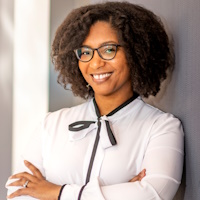 Vonetta Dotson, PhD, is a clinical neuropsychologist and professor of psychology and gerontology at Georgia State University. Her research focuses on brain health in older adults, including the links between depression and brain functioning, exercise interventions to improve brain health, and brain health disparities among older adults. She's also the founder and CEO of the company CerebroFit, which provides services to help people live a brain healthy lifestyle. Dotson is author of more than 100 academic articles and of the APA book Keep Your Wits About You: The Science of Brain Maintenance as You Age.