Kim Mills: Would you like to have a better memory? What about improved eyesight or sharper hearing? The Apple and Google Play App Stores are a testament to people’s desire for self-improvement. The search for brain games turns up hundreds of apps that promise to exercise your mind and sharpen your mental skills. But do any of these games deliver on those promises? The field of brain training has attracted controversy as commercial companies heavily market brain training products that aren’t necessarily backed by science. Still many psychological scientists believe that brain training research does hold promise for developing games that can help people, including older adults who want to keep their memory sharp and athletes who want to improve their performance, for example. What is the state of that research now? Are there games available today that could really give your brain a boost? Welcome to Speaking of Psychology, the flagship podcast of the American Psychological Association that examines the links between psychological science and everyday life. I’m Kim mills.
If you enjoy Speaking of Psychology, you might want to check out some of the sessions at APA’s Virtual 2020 Convention. You can get unlimited access to hundreds of videos about the latest in psychology for just one low price by registering for access to APA’s 2020 Virtual Convention. Start with some of our selected videos featuring psychology’s biggest names discussing hot topics such as COVID-19, racism and stigma, or use our on-demand library to explore any psychological topic. Go to convention.apa.org/podcast. That’s convention.apa.org/podcast. Our guest today is Dr. Aaron Seitz a professor of psychology at the University of California, Riverside and director of the university’s Brain Game Center. He and his colleagues research, test and develop science-based games that aim to improve people’s perception and cognitive abilities, including hearing, vision and memory. Welcome to Speaking of Psychology, Dr. Seitz.
Aaron Seitz, PhD: Happy to be here.
Mills: Well, it’s always good to start with a definition. What exactly is brain training? You’ve likened it to physical exercise. Can you explain that analogy?
Seitz: Yeah, the analogy really goes back to some of the science that has led to improvements in physical training. So as the last century, we learned more about the cardiovascular system and muscle physiology. This led to the ability to train athletes to be stronger, faster, more endurant than previously. The brain training, their analogy is that, well, if we could take what we know about psychology and neuroscience, maybe we could take that knowledge and harness to come up with better ways to train mental fitness. And so that’s what we’re trying to do.
Mills: What’s the state of the research right now, have researchers been able to develop brain training games that have been proven to work?
Seitz: The state of research is really mixed right now. There are a lot of studies that are exciting and show demonstration of brain training working. And there’s other studies that use similar approaches that fail to find the same effects. And so this has led to somewhat of a crisis in the field. We have some groups that are really enthusiastic about the positive effects that they have observed. And there’s other groups that have been frustrated to the extent that they say that none of this is real. And that there are not a lot of large scale studies that really prove that one approach versus another works. But there’s enough evidence that people like me are excited to try to do more research so that we can find better demonstrations of which things do work and which things might not.
Mills: Is the issue funding, is that why there aren’t as many studies as maybe there could be?
Seitz: Funding is part of it in that you need a lot of data to be able to understand what are going to be the outcomes, especially in diverse populations. And that also each group often comes up with their own approach. And so they test their new training study and in their population. And so when you have one group that finds a positive effect and one group that finds a negative effect, it’s often not the case that they’ve been able to use both trainings against each other to see whether there’s two differences or not. If we had funding that was able to support, especially comparison across methods, I think that would be very beneficial to the field.
Mills: I think that when many people hear the term brain training, they focus on cognitive skills like memory, but you also work on games to improve perceptual skills such as hearing and vision. Can you talk about how training works in those areas? What are the differences? What are the similarities?
Seitz: Yeah, so my research background is in a field called perceptual learning, which has looked at what are the circumstances in which you have as a brain plasticity, or behavioral change and perceptual tasks or brain areas that are related to perception. And this field has been really helpful in that we have decades of research showing that certain types of training approaches and vision or hearing can give rise to changes in pretty much any visual or hearing process that one looks at. However, at the same time, what we’ve seen in a lot of these studies is that learning tends to be very specific to the details of training. What’s nice is that there’s actually a better experimental basis and I’d say even theory basis instead as a perceptual learning than we have in training of memory.
But the argument is that the neuro structures and the mechanisms of learning in the brain are fairly similar across different areas of the neocortex, which we think is playing one of the primary roles in either learning a perceptual task or a memory task.
And so what has been one of the main innovations from the UCR Brain Game Center is taking what we know about feels like perceptual learning and trying to apply them to other areas of brain training or cognitive training, such as memory to see whether we can take an example of what leads to specific versus generalizable learning and perception. And does that same thing work for specific versus generalized learning and memory? Or other things that we've done is there’s a lot of work looking at how attentional and reinforcement processes guide visual perceptual learning. Do these guide change in working memory as well? And so these are a lot of the questions that we ask in our research and that it’s still research. So there’s a lot that we need to understand before we’ll have answers.
Mills: Do brain training games show more promise in helping people with deficits like hearing loss, attention deficit, hyperactivity order or dementia, or do they show more promise for people who don't have a deficit, but just want to improve their cognitive or perceptual skills?
Seitz: I wish I could give you a definitive answer to the question. It seems to be the case that people who have impairments are some of the best candidates for brain training, at the same time those are some of the hardest studies to do well. And so that we're riddled with these small-N studies in various patient populations that look encouraging, but aren't necessarily very well-controlled, don't address the individual differences in terms of which candidates learn versus which ones didn't.
And so it looks really exciting, but we don't have as much data as we would want. We have tons of data in college students where college students are about at their peak in terms of perceptual cognitive abilities and so it’s hard to judge whether these effects are robust. I've done work in athletes that I explained, and with athletes, what’s nice is that they're so good at what they're doing. That a tiny improvement in a function they need can lead to a competitive advantage because when it comes down to it, you look at things like skiing, one millisecond or a hundredth of a second might be enough to win versus lose a race. And so that the amount of improvements you need to get that bet might be much easier to obtain than seeing a big change in a college student.
Mills: And does this training persist? I mean, you can do a lot of training in a lab and then send people out into the world. Have you looked at people, say six months later to find out, okay, it worked in the lab, but how’s it doing in real life, six months later.
Seitz: That’s where it’s different across studies. And that you go back to perceptual learning, there’s lots of studies and perceptual learning where people have been brought back six months later, even two years later, and that the learning effects have been retained. That’s really encouraging. It suggests that in certain circumstances this could be really long lasting. When you start looking at some of the working memory training studies, well, some of them show that a month later, a lot of the effects have faded. Others show that there are new positive effects that you could see a month later that didn't exist at the end of the study. And it’s something that I want to understand more about. I really wish once again, that I had the definitive answer of like, this is the time course of the effect, but one of the ideas of how learning could be long-lasting is especially people who have some form of deficit that they're trying to overcome, that if the training gives rise to the ability to do things they couldn't before, and then now doing things they couldn't do before gives rise to additional learning.
Then you might expect that there’ll be at least in some people an accumulation after the study ends, where in other people may be not. And there’s so many of these details that are really encouraging from the perspective of the theoretical ideas of how the training could work, but where the data is insufficient to be able to make strong conclusions.
Mills: So a lot of people do Sudoku or crossword puzzles and think that this is going to make their brains sharper, their memory better, that it’ll stave off the effects of aging or even dementia. Is there any data that prove that this is the case?
Seitz: Not really. I mean, there are some studies suggesting that it can be helpful. And generally with aging, using one’s brain is a good thing to maintain its functionality. And so when you have people who really are inactive, either physically or mentally, those are the people where you see the biggest cognitive declines. At the same time when you see people who do training studies on Sudoku or crossword puzzles, they often don't transfer to other tasks.
And so one of the piece of advice that I often give when I give a talk, talking about the brain training studies and so people say like, "Well, can we just get your apps and then everything will be perfect?" Right now the apps are still research projects. And so the advice that seems to be best is that if you keep on learning, so you move from one task to another task as you mastered it, that seems to be a good approach to stay sharp. And so that, Sudoku and crossword puzzles can be part of that, but once you're really good at Sudoku, doing a lot more Sudoku is probably not going to help you keep sharp.
Mills: That leads me to a question around the gamification part of your work. So how do you translate basic brain training tasks or exercises into games and how important is it to actually turn these things into games, to make them more engaging, like with fancy graphics and sound and score-keeping, do those things help people learn better?
Seitz: Yes and no. One of the things that we learned at the very beginning is that if you just take a task that has some beneficial qualities and you turn it into a game, that game sometimes can make the task harder and then the feedback that you get, like the scores can potentially distract you from what you want to learn. And in fact, one of the experiences I had with a gamified task, where I had a child with ADHD come into the lab, and it was a working memory task where you played it by navigating a spaceship. And the child really liked the fact he could make the ship go fast.
And so he just zoomed a ship around, didn't do our task at all and so here, like it’s a clear example where the game distracts from the learning opportunity because the non-gamified version of that task would not allow that escape. And so the thing which is really important about the game is designing it properly so that the elements fit together to achieve a learning outcome, as opposed to simply having a motivational structure that makes things fun, but that don't necessarily contribute to learning.
Mills: So you want to be entertaining, but not too entertaining.
Seitz: You could be very entertaining as long as you get people to do what you want. So like one idea about the game which I think is really important is that it’s a way to encourage people to engage with a task in the way that you desire. You can basically set up a system review enforcement where their successes are given when they do what you want and their failures are when they do things that you don't want. And so that you basically are channeling them to a stereotyped set of behaviors that are conducive to learning. And so that you can have a really good compelling game that does that, but it’s really hard to achieve. And that it takes a lot of work.
Mills: Right now I understand you're recruiting 30,000 people to take part in an online study to explore whether brain training games can improve people’s memory. Can you talk a little bit about this? What questions are you asking and trying to answer? How does this build studies that have been done in the past?
Seitz: Yes, thanks for the opportunity and that the study, actually one correction, it’s not to test whether memory training works. And in fact, the whole design of it is to ask a slightly different set of questions, because I think one of the reasons why the field has not been successful is it's always asking, does this work, or does this not work? What we're doing is focus with the NIH grant that is funding this is mediators and moderators of working memory training. And so the moderators are, what are all the subject differences that might contribute to one person have a propensity to learn and another person maybe not? And so can we understand both from measures of personality, and use of technology and cognitive baselines who might be good candidates for brain training? And then the mediators are that we have a bunch of different training conditions, all that our working memory trainings that people are assigned to.
And we do have some hypotheses of some potentially being better than others, but at the same time we think that this will break down differently across individuals. And so what we expect is that maybe person A will learn best from training X, but person B might learn best from training Z, and being able to do a study that could look at these differences. Now we might observe that it doesn't work for some people, it does work for others. And then also what working means differs across people. So maybe some people, the benefits are only for other working memory tasks, but that might be good because they were not happy with their working memory prior to the study.
Where other people, maybe the benefits are transferring farther to things like fluid intelligence, which has been where the very interesting outcomes of working memory training. But being able to understand the interaction between the people who are performing the task, the variety of the task, and the set of possible outcomes, now makes it so that we hope to be able to resolve the controversies of the study because instead of does it work or does it not it’s well, different people get different effects from different tasks.
Mills: This sounds like a study that perhaps some of our listeners might want to participate in. Is there a way for people to sign up?
Seitz: Yes. The best way is to go to our webpage. I don't know whether I could share a link to a web portal?
Mills: I think we can put it in the notes with the podcast.
Seitz: Okay, great. I could a link to the web portal and the notes and also we have our article in Scientific American that helps provide some extra information about the study, which also has a link.
Mills: Okay. We’ll include that so people can find that and if they want to take a look. Changing the subject a little bit, brain training games have attracted some controversy over the years and I’m sure that we've got listeners who remember news stories from a few years ago about big companies getting into legal trouble for making deceptive claims about what their products could do. For the average person, when they go to the app store and they see a bunch of applications in the brain games area, is it worth giving them a try? What should people be looking for to decide if it’s a useful game and that they’ll actually get something out of it besides maybe a little bit of entertainment?
Seitz: That’s a great question. And the frustrating thing is that it’s very difficult for consumer to know which things are going to work for them and which ones won't. That partly is the case that a lot of these products are being sold as entertainment products. And so in response to the FTC actions, there’s multiple ways that companies can address that. One way is that they could stop making claims, but still sell something through puffery. So kind of like a Red Bull gives you wings statement that makes you think that it’s going to work without [studies 00:19:20] is going to work. Then you have other studies or companies that have done clinical trials that are good enough for the FTC, but not necessarily convincing to the scientific community. And then you have other companies. There’s a product by Akili Interactive that was approved by the FDA as a treatment for ADHD that has had a great deal of scrutiny.
But the very difficult thing is that it’s unclear which of these things that you find will work in any case. And then it’s almost impossible to know which ones will work for you. And so the best way I think to proceed is if you think about it as, "Well, if something doesn't cost too much money and it could help try it out with skepticism." Do it for a little bit, and if it works and you feel that you're able to better attend to things and better remember things, great. If it doesn't, realize that you didn't know whether it'd work in the first place, you hopefully didn't spend too much money. And that it’s like a lot of other self-help things where if you believe strong claims, then you're going to be really disappointed if they fail. If you realize that this is a place where a lot of good people are trying out techniques that might be promising but are unproven, then you could basically try them out and see how does it work for you?
Mills: What about the games that your center has developed? Are they publicly available? How can people get some of those?
Seitz: Most of them are free downloads on the Apple App Store and also on Google Play. And that they're available for people to try out. And we're doing work to try to make it so that it’s easier to use them. Some of them have really clear instructions, other of them don't because right now they're research tools, but our whole approach is that we're trying to design games that are going to have potentially better outcomes. And then we're trying to make them available so that people could try them out and give us feedback.
Some of our studies, like the one that we described before, that’s when if you enroll, we’ll be able to get all your data and be able to help answer the question. Who are good candidates for working memory training? What are the types of outcomes and trainings that will work best for them? How can we personalize these? And then for other studies, they're earlier stage and we put our apps out there so people can try them out, but we don't know yet how it’s going to work or who it’s going to work for. The webpage is braingamecenter.ucr.eduopens in new window, and you’ll have links there for a lot of the games.
Mills: So that’s easier than telling people to go search on the App Store, places like that. Go to the UC Riverside Brain Game Center.
Seitz: Yeah.
Mills: All right. Well, this has been very interesting. I appreciate your time and I wish you all good luck with your research. I think this is really helpful as somebody who’s trying to hang on to what little memory she still has left. I’ll try two of your games. So thank you.
Seitz: Thank you. It’s a pleasure being here.
Mills: For those of you who want to learn more about Dr. Seitz work, you can also check out the article on the UC Riverside Brain Game Center. That’s in the January issue of APA’s magazine Monitor on Psychology, go to www.apa.org/monitor. And we will include links to some of the other resources that we've been talking about during the podcast today. You can find previous episodes of Speaking of Psychology on our website at www.speakingofpsychology.org or wherever you get your podcasts. If you have comments or ideas for future podcasts, email us at speakingofpsychology@apa.org. Speaking of Psychology is produced by Lea Winerman. Our sound editor is Chris Condayan. Thank you for listening. For the American Psychological Association, I’m Kim Mills.


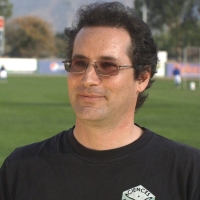 Aaron Seitz, PhD, is a professor of psychology at the University of California, Riverside and director of the UC Riverside Brain Game Center for Mental Fitness and Wellbeing and the UC Riverside Aging Initiative. He uses behavioral, computational and neuroscientific methodologies to study mechanisms of learning and memory. A key aspect of his recent research is applying that knowledge to develop new tools to measure and train perceptual and cognitive processes, with a focus on those that are effective in improving performance in real-world tasks.