Kim Mills: The world is an increasingly urban place. About 80% of Americans live in and around cities, according to the U.S. Census Bureau. And with urban living comes traffic, noise, pollution, and other hassles of daily life that can exact a toll on our mental health. But cities don’t have to wear us down. Psychologists who study urban design and mental health say that by incorporating elements like access to nature, opportunities for exercise, and spaces that encourage community, it’s possible to design urban areas that support our mental health and well-being.
So how does our physical environment affect our mental health? What aspects of city design matter most? Are there cities doing an especially good job of designing for mental health? And if so, what can other cities learn from them? And what about issues of equity and access? How can cities ensure that all residents have access to the kinds of spaces that promote mental health? What can you do in your own community to make a difference?
Welcome to Speaking of Psychology, the flagship podcast of the American Psychological Association that examines the links between psychological science and everyday life. I’m Kim Mills.
My guest today is Dr. Jenny Roe, director of the Center for Design and Health in the School of Architecture at the University of Virginia. She’s an environmental psychologist who studies the intersection of health and well-being with architecture and urban design. Her research interests include creating environments that support mental health, designing cities for healthy aging and healthy child and adolescent development, and studying how nature affects health and well-being. She’s written numerous peer reviewed studies and two books, the most recent of which is Restorative Cities: Urban Design for Mental Health and Wellbeing.
Dr. Roe, thank you for joining me today.
Jenny Roe, PhD: Well, thank you for inviting me. Pleasure to be here.
Mills: As I said, your book is called Restorative Cities. So let’s start by defining that term. What constitutes a “restorative city”?
Roe: Well, restorative cities is a term coined from a rubric of research in psychology that goes under the name of “restorative environment research.” A restorative environment is any environment inside or outdoors that supports your mental health. So that’s where the term restorative cities originated from.
Mills: What is the opposite then? What is an environment that isn’t restorative?
Roe: Well, a pathogenic environment, one that has toxins, one that has poor air quality, one that has a high level of noise, pollution. And a gray area, an area that has no nature. It has nothing to engage our interest or our attention. Homogenous neighborhoods. Neighborhoods that all look the same.
Mills: That sounds quite bleak.
Roe: You can probably picture it, though.
Mills: Yeah, I can, I can. The first chapter of your book is called “The Green City,” and it’s all about access to nature. How does contact with nature affect our mental health and what does nature look like in a city? In an urban area?
Roe: Nature is possibly the most restorative attributes in our environment, either indoors or out. And what’s so extraordinary about nature is it provides four psychological attributes that we know support our mental health. The first is a sense of fascination. That would be a sense of curiosity and wonder and awe, even. The second is a sense of an extent. An extent might be defined as looking at a view from perhaps your window, looking at the mountaintops. I see mountains where I work—I work in Virginia, I see the Blue Ridge Mountains. I don’t know what you see from your office, but looking up and out of your environment fosters this idea of extent and connecting to a whole other world beyond the world you’re in right now. A sense of compatibility.
Nature will provide us with opportunities for refuge perhaps or for opportunities to interact with family and friends. Parks provide opportunities for play, for picnics. So it provides a lot of opportunities in terms of our needs and our goals in life, our social goals particularly. And then the final and possibly the most important attribute nature can provide is a sense of being away, a sense of escape from our everyday stresses.
And what’s really important, and I’d like to stress to your listeners, is that contact with nature doesn’t need to be in a wilderness. Contact with nature in a city can be on a very small scale, it can be a pocket park, it can be a balcony with plants, it can be a view to nature from your window. Direct contact actually getting out and about in a park and moving physically provides a whole host of mental health benefits. But let’s say you are a retired person or you are sick, you can’t move around so easily. Having a view of nature is super important. And you’d be amazed at the number of senior residencies I go into where the window is above the eye level of the person actually living in that room. So there’s fundamentals like that that are really important.
Mills: Your book characterizes many aspects of cities. You talk about green, blue, sensory, neighborly, just to name a few. What are these various types of cities? Why do you classify them as you do, thematically?
Roe: We thought—Layla and I, who’s a psychiatrist who I worked on the book with, we believed it was important to try and have these seven pillars. Not all pillars are possible, but most people can breathe a little bit of nature into an environment, even in a very, very small way, be it, as I said, having balconies and having plants on those balconies. Some are more difficult to create. Neighborly cities require a community to really have access to some community space in which to interact.
During COVID, we saw how important the outdoors became to our social well-being, our physical well-being, our mental health. Our streets, for example, provided the context in which we interacted with our neighbors. So we have seven pillars. They’re a different scale and some are more easy to implement than others, and they all interact with each other. So let’s just give an example of that. So access to nature provides also opportunities for social interaction and communication. And so it contributes to the neighborly city. Access to nature is also—I advocate for—a human right and need. And that again, during COVID what we saw was inequalities, environmental and health inequalities in access to green space in the city.
Mills: Are there any cities that have all of the pillars or most of them? Can you give us some examples of some cities that are really restorative?
Roe: I think it would be hard for any city to meet all of those pillars through the entire population of a city. We’re talking about—millions of people inhabit cities. I think an example I would quote, which is very newsworthy at the moment, is Paris. So the mayor of Paris around about COVID time, 2021, she was reelected on an urban design mandate. And what she said she was going to give Paris was a restorative environment. She didn’t use those words, but that’s what I inferred from what she said. And she about with an urban design manifesto that was about retaining all those pop-up streets and pop-up cycle lanes. And she’s removing transport from within the center of Paris.
And just today there’s been a vote in Paris, I think to increase the amount that SUVs are charged for parking. It’s going to be three times the rate of any other car, because the people in Paris don’t want them in their city center. So there’s a lot of things happening in Paris. The other thing I’d say about Paris is they’ve really seized the idea that children need safe and high-quality environments to walk to school, to—they’re creating play streets in the vicinity of schools. They’re making access to school much more walkable and safer.
Mills: It would seem to me that various cities could have these elements in different parts of them. As you mentioned, cities can be quite large. So I lived for many years in New York City, as an example. There’s Central Park, but there are also parks in Brooklyn. There are parks in the Bronx, there are other places. And of course you’re on an island, so you’re near the water. You can see the water. Is New York restorative in that sense? But it’s very loud. So how do these things work together?
Roe: Well, I’m going to give you an example. In New York, it’s called Paley Park, and it’s just off a main roadway, probably four or five lanes of traffic. It’s right in the heart of a city and it’s flooded with water. So they have a screen of water rushing down one of the facades in this pocket park. You must go there next time you’re in New York. And you set off and you sit there and you hear this extraordinary sound of water tumbling down the surface of the facade and it just reduces all the noise that you might hear from the street. So it’s an example of a microrestorative space off a busy roadway that can just help restore your mental health whilst you want a break from work, whatever you’re doing in the city. So New York I think, has fantastic examples of restorative spaces. What I’d love to do with New York though—this is controversial, possibly—that Central Park is one big gigantic space, and I would love to see New York and Manhattan have an more equal distribution of green space across its area.
Mills: Well, it’s so built up. It’s a little hard. I mean, short of knocking down buildings, I mean they did do the High Line though a number of years ago, which is a beautiful park that I think is very restorative in the sense that you can enjoy it, you can see nature and you can see the buildings, you can look beyond to the water.
Roe: Absolutely. The High Line’s a perfect example of connecting the tissue of a city together through the use of a linear park. It’s a perfect example.
Mills: So you’re in Charlottesville. Is that a restorative city?
Roe: That’s a good question. There are many times when I walk around and drive around Charlottesville and think it’s very, very restorative. There are other times I think I’m in a hellscape of noise and strip malls. So I think Charlottesville has beautiful views out to the mountains. The idea of extent that I was talking about earlier, it has a lot of murals that contributes to the sense of fascination I talked about. But Charlottesville is not a walkable city and it could so easily be a walkable city. We have a downtown that’s pedestrianized, a wonderful example of walkability, but it’s only probably less than a mile long. So I come from the U.K., I came here in 2015 from a very walkable and cyclable city, which is Edinburgh in Scotland. And I thought about getting a bike in Charlottesville and I did not. I was advised not to, but that was my mode of transport in the U.K.
So I think we could be doing better. And my students, I teach healthy cities to graduate students here at UVA and they’re often saying to me, Jenny, the examples you’re giving us are from Europe. I’ve just talked about Paris, I’ve talked about Edinburgh. They say it’s not possible here in the U.S. And I dispute that—I think that cities like New York, Boston, Chicago are leading the way in terms of certainly creating space for walking and cycling. And if you look at Amsterdam in the 1970s, the 1960s, it was flooded with transport. They made an active decision to do something about it just as Paris is doing right now.
Mills: Now you also write in your book about the neighborly city. How does city design influence the way that we interact with other people? How do you design places that will encourage people to be more neighborly?
Roe: I’m going to go back to nature as an example. It’s just one example, but there’s a lot of research emerging now to show that pocket parks allow people to sit and stop and intermingle with one another. There’s evidence to show that we have a higher sense of trust of our neighbors if we have access to pocket parks and green space and street trees. There’s a famous study that was done in a public park in a city which involved dropping a dollar on the pavement and they did two scenarios, one in the park and one on a busy urban street with no green space. And people were much more likely to give the dollar back if they saw it being dropped in the park than they were on the street. So this is the kind of research that we do to show that these values of altruism, trust, place belonging, are really helps and supported by having access to green space. The nature is just one example.
Mills: So how do you do more research into the mental health impacts of cities on people? Do you look at people in cities that say aren’t green or blue or neighborly and compare them with people in cities that have those attributes? And is the research based on self-report or do you use other measurement methods?
Roe: So two good questions. Firstly I’ll take the measures. We do both. We ask people how they feel using self-report, validated scales from psychology. It’s really important to ask people how they feel. But we also try and capture their physiology as they’re moving about through space. So we have smart watches that will capture their heart rate. We have neural headsets that will capture what’s going on in people’s brains as they’re moving through space. We can take those kind of biometric data and correlate it with the self-report data and usually the two tally, not always. But really important to ask people how they feel. And then what was the first question?
Mills: Do you look at people who are in say, green or blue or neighborly cities and compare them to people who are in other nonrestorative places?
Roe: We do exactly that. So epidemiologists would certainly do that. And public health, they would crunch public health data from neighborhoods with access to space to green space for instance, and parks and those that don’t. In my field, we always have this kind of oppositional environment, one that’s very green and one that’s completely gray. So we know that extremes of environment have a very strong difference on mental health outcomes.
Mills: I think you’ve found that certain types of city environments foster prosocial behavior and altruism. But I’m wondering, isn’t it possible that people who are already altruistic and prosocial would go to live in these places?
Roe: Well, that’s an interesting question and a lot of the research I’ve just referred to, particularly the large population health data, the scientists control very carefully for demographics. So they’ll only match like with, so a lot of the work I did in Scotland, for instance, matched neighborhoods on very carefully controlled demographic variables. So people who had similar levels of income, who lived in similar types of housing. And you have to really control for that because of course richer areas have better access to higher quality green space. So most of my work doesn’t look at that population. It looks at people who are poor, who are living in some of the worst environments in our cities.
Mills: You just talked about money. There is a cost involved in making a city restorative, and I’m wondering what happens in some countries where they don’t have the resources. Is it possible in some of the lower socioeconomic countries in the world for them to still have restorative cities?
Roe: I really believe so. I’ve not been to South America, but I’m going shortly, to Mexico City. But I have talked to colleagues in Colombia and they have made remarkable progress with the idea of Cyclovia, closing a public street on a Sunday, allowing people to walk, run, play, cycle without access to cars. They also have some really good examples of this idea of play streets—closing a street, allowing children to play on the street at the weekend or closing a street nearby a school. So I do believe there are some really good case studies in South America. But I think you raise a really good question because a lot of the research is done in what I would call the developed world, the western industrialized nations with money. And we really have very little evidence of the value of restorative city attributes like nature in let’s say low to middle income countries. It’s changing, but it’s changing very slowly.
Mills: A lot of the ideas that you are suggesting need to be addressed on a large scale by governments and city planners. But what if people want to make some changes in their own communities? Are there things that we can do as individuals in our own neighborhood to make it more restorative?
Roe: Indeed, there are, and I do work with community groups on some very small scale insertions, micro insertions, and we’ve demonstrated that these can improve mental health and well-being. So for instance, in West Palm Beach, we did a temporary micro insertion, you can call it all sorts of things—acupuncture for cities or just a pop-up for a city. We screened the noise, it was a pocket space, it was next to a busy road. We put up bamboo and big planters. We provided seating. You don’t have to provide very much to increase people’s sense of subjective mental well-being and indeed their physiological well-being. And the results of that study are published. So I always say to people, if there’s a vacant piece of land in your neighborhood, try and come together. Even if you can’t change that piece of land permanently, do some kind of temporary pop-up and show how it could be used differently. And it doesn’t have to be a big space. It could just be a vacant plot of land on a street corner. And there are of course restrictions on what you can do with space and you have to identify who owns it and get their permission to do a pop-up. But there are some really successful examples in the U.S. of those types of pop-ups.
Mills: You started writing your book before the pandemic hit. Did COVID change the way people were thinking about these issues and how did you change the manuscript once the pandemic set in?
Roe: So the manuscript was almost completed March 2020, and it was due with a publisher I think by the end of May 2020. So we were just right at the beginning of the pandemic, and Layla and I wrote a preface to the book to adjust our thinking in light of COVID. But ultimately what we were trying to do was really press the agenda on mental health. The book was really very timely from that perspective because there have been really good and strong directives in cities to build for, in the U.S. and in Europe, comfortable streets, streets that foster walking and cycling. The chief surgeon of the U.S. has spoken about this and advocated for it, but we really felt that mental health had been left out of that equation. And so the book was really an attempt to leverage a lot of scientific data to really put mental health higher up the agenda. COVID did that for us anyway. We all talk about mental health now. We have all experienced mental health issues because of COVID. And the stigma of mental health I think has declined since COVID because of the difficulties we’ve all experienced.
Mills: In the 1960s and '70s, American urban planners started to create these planned cities. And there are a few near where I live, for example, there’s Columbia, Maryland, and Reston, Virginia. Have you looked at these planned cities and were they successful?
Roe: I know a little bit about Reston. I’ve not been there, but I saw a film about it and I think—I don’t know, I’d have to go and ask the residents. I can’t speak on their behalf and I wouldn’t want to. I think there are certain qualities about Reston that I think would be very appealing as a place to live. It has access to water, it has a lot of green space. It looks very walkable. There seems to have been a driver to make it very diverse and inclusive. I don’t know if that’s true or not. The film I saw was made several years ago. So without really seeing these neighborhoods, I’d be wary of giving my opinion.
Mills: What about the kind of mixed use development that seems to be popping up now so that people can live in a place that is sort of urban, but you’ve got stores and storefronts and places to sit and commune with people. Is that part of what you’re advocating for?
Roe: Absolutely. And we do address that in the book and there’s a ton of evidence, scientific evidence to show that mixed use and actually higher density urban living fosters all sorts of benefits for mental health, social health, physical health. So my neighborhood that I live when I’m not in Charlottesville is in Edinburgh. It’s south side Edinburgh. I have access to everything I need really within a 15-, 20-minute walk. And Scotland is one of the first countries in the world to actually advocate for the 15- and 20-minute city. And it’s doing five or six case studies of cities in Scotland and trying to implement that plan. I know it’s become slightly controversial. I don’t quite know why. I don’t understand what the controversy is about. It seems to be very sensible. If you can drop your child off at a nursery or school within walking distance or a quick bus route from home and then go to your office within that neighborhood, get your food, your provisions, your within that neighborhood, it makes a lot of sense to me. And the country or a city, sorry, that’s doing this very well is Barcelona. And the example we use in the book is a super block, and that’s an idea, a series of blocks in which traffic has been reduced and everything that you need is available in that neighborhood.
Mills: I grew up near the ocean and I lived for almost two decades on a lake that was actually less than 10 miles from downtown DC. And I called looking out on the water every day my lake therapy. In the book you talk about the importance of blue spaces. What is it—what is going on in our brains when we’re near water that is so good for our mental health and well-being?
Roe: Those four attributes I mentioned earlier, fascination, extent, compatibility, and being away. Water provides that in abundance. I think the other thing that makes water so restorative is it’s a dynamic quality. It moves and it changes its patterns, it changes its sound as it flows over different kinds of surfaces. It changes in response to light falling on it and over it. So it changes in response to daylight and season. So it’s much more dynamic. I mean, yes, vegetation and trees are dynamic in that they’re changing seasonally too, but water is super dynamic and it’s one of the most restorative attributes. But access has become limited. A lot of cities have turned their back on the river. The river—you see New York now, it’s facing the river. It’s got parks and access both in Brooklyn and in Manhattan. It’s engaging with the water in a way that perhaps it didn’t in the past. I’ve seen other cities now turning to the waterfronts to increase access. It’s super important. I think one of the issues with water also though, has become safety. A lot of parents have a lot of concerns about access to water for children, but it can be designed sustainably and safely. There are techniques.
Mills: What are you working on now? What are the questions that you’re trying to answer that you haven’t dealt with up until this point in your research?
Roe: So I’m working on a sequel to Restorative Cities, and it’s called Restorative Architecture. And it’s the exact same hypothesis that how we design our interiors and our architecture can really support mental health and urban design. And I’m working in the same way. The way that I work is I look at all the scientific evidence. It takes a very, very long time to synthesize it. It’s thousands of studies and I translate that evidence into very simple principles, both for designers but also for communities and lay people to use for people and policy. And I work with an illustrator to make that scientific data very graphic and easily understandable. And it’s a big project. It’s going to be a very similar style of book, but focusing on interiors rather than urban design.
Mills: Can you give us any clues as to what you’re learning now? And it’s only interiors, not the exterior buildings, but interiors—or both?
Roe: It’s both. I would say it’s the space between buildings and the buildings themselves. And it’s dealing with a whole host of design attributes that we touched upon in restorative cities, but it’s going into a lot more detail. So things like color, pattern, textiles, light, sound, the form of space. So a lot more in terms of architectural design attributes.
Mills: And not to blow your whole story, but are there cities that you’re seeing now that have some of these attributes? I mean, where are you focusing on your research right now?
Roe: So that’s a good question. I just actually spent Friday of last week really doing some deep research into case studies. And I’ve got to say some of them are coming from Europe. I’m going to Helsinki and Stockholm in August to do some research. And there are some wonderful examples there of libraries and public buildings that have extraordinary commitment to quality design. And I know that that exists here in the U.S. but I do find Europe is my kind of bed of exemplars just because I know it much better. But I’d welcome examples from your listeners.
Mills: All right, well this is very interesting. I want to thank you so much for spending time talking to me today.
Roe: Well, thank you for your interest and I really hope it engages your audience.
Mills: I think it will. You can find previous episodes of Speaking of Psychology on our website at www.speakingofpsychology.org or on Apple, Spotify, YouTube, or wherever you get your podcasts. And if you like what you’ve heard, please subscribe and leave us a review. If you have comments or ideas for future podcasts, you can email us at speakingofpsychology@apa.org. Speaking of Psychology is produced by Lea Winerman. Our sound editor is Chris Condayan.
Thank you for listening. For the American Psychological Association, I’m Kim Mills.


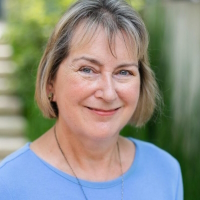 Jenny Roe, PhD, is director of the Center for Design and Health in the School of Architecture at the University of Virginia. An environmental psychologist and former principal of landscape architecture for an international architectural practice, she writes, lectures, and consults for a wide range of academic and public audiences on human-centered design for the built environment. Roe has won numerous awards and research grants exploring a rich variety of architectural and landscape contexts and their psychological impact on people. She divides her time between Charlottesville, Virginia, and Edinburgh, Scotland.