Kaitlin Luna: Welcome to Speaking of Psychology, a biweekly podcast from the American Psychological Association. I'm your host, Kaitlin Luna. The topic for this episode is climate change and just a reminder before we get started, if you have any ideas for us questions or comments, please email me at kluna@apa.org. That's kluna@apa.org.
Polar Vortex is melting glaciers, historic flooding and devastating wildfires. People are now ranking climate change as one of the world's top threats alongside Isis and cyberattacks. That's according to a new Pew Research Center poll. As we grapple with a warming world and increasingly unstable weather, our mental health is at risk. Many scientists predict that stress, anxiety, depression and PTSD will increase as climate change’s physical impacts accelerate. Is there anything we can do to mitigate the mental health risks of climate change? Our guest is Dr. Susan Clayton, a professor of psychology and environmental studies at the College of Wooster. Welcome, Dr. Clayton.
Susan Clayton: Thank you, Kaitlin.
Kaitlin Luna: I want to start off by talking about a book you co-edited called “Psychology and Climate Change. Human Perceptions, Impacts and Responses.” How can psychology contribute to our understanding of climate change?
Susan Clayton: I think that psychology is really important to climate change through both our set of research skills and tools, as well as their focus on an individual level. As psychologists, we really conceptualize and prioritize individual well-being in a very broad way more, I think, than any other discipline, and we also emphasize individual behavior and influences on individual behavior, which is very important, to, you know, to addressing climate change both through policy preferences as well as through affecting individual behavioral choices.
Kaitlin Luna: Do you think there's enough awareness about the mental health risk associated climate change? I mean, we often think of the physical elements. But what about mental health?
Susan Clayton: No, I really think there hasn't been enough attention to this, and you have this sort of trajectory with the discussion of climate change that first everybody thought about basically polar bears and on their little melting ice flows. We have progressed a little bit to start thinking more about, ah, human and acts of climate change. But I don't think the impacts on mental house are something that very many people are aware of.
Kaitlin Luna: And obviously is important people to be, to be aware because, as I mentioned in the intro, stress, anxiety, PTSD are all risks people face in addition to maybe like losing homes and devastating wildfires and flooding and things like that. So, do you think we’re at a point now where awareness is increasing or by doing interviews like this, it will increase or do it, you know, ways to write your books as you do your studies?
Susan Clayton: I think it is. Certainly, there seems to be, you know, more media attention and I certainly hope that there's increasing attention, and partly because we are getting more and more evidence, so we don't have to just speculate. We can start to look at what the research is showing.
Kaitlin Luna: You know, for people who've already been affected by a climate related natural disaster, like wildfires we saw in California in the fall or coastal flooding, what are some of the psychological symptoms people experience after an event like that?
Susan Clayton: There's definitely impacts on your mental health. You know, even though we've only recently started thinking about climate change impacts, there have been natural disasters forever, and they've been studied for some time, so we know that they tend to lead to an increase in things like post- traumatic stress disorder, depression and things we might not be as aware of, like substance abuse.
Kaitlin Luna: And what about something, maybe less, a little less acute but still nonetheless important? Maybe feelings of hopelessness, feelings of loss — do those increase in the wake of a natural disaster as people try to recover?
Susan Clayton: Yes, people often use the term grief to describe the responses of people who have experienced it. There's a sadness associated with what is lost, which may be your home, which, of course, is extremely psychologically important. Your community, your very practical impacts on your economic wellbeing and another impact of these kinds of natural disasters is often an increase on social tensions.
So, research is showing increases in things like domestic violence, too.
Kaitlin Luna: Wow. So, it can really have a ripple effect beyond the initial loss of dealing with loss of a home or, you know, injuries, that kind of thing?
Susan Clayton: Absolutely.
Kaitlin Luna: Yeah. And so, you've been involved in a lot of APA's work about the application of psychology to climate change. We have a task force on the interface between psychology and global climate change. The published report almost ten years ago, back in 2009. And also, APA’s reports and collaboration with EcoAmerica that were published in 2014 and ‘17. So, you've been involved in this space for quite so quite a while and also with your work at the college.
Susan Clayton: Yes.
Kaitlin Luna: Yeah. Can you talk a little bit about what got you interested in environmental studies in psychology?
Susan Clayton: Oh, sure. Well, it's a long story. I'll try to summarize. I'm trained as a social psychologist, and I've always been interested in people's reactions to social issues. You know, group identity, those kinds of things. And I also care about the environment. And I started to notice, just through my informal observations and my readings, that, you know, the natural environment was a really important source of experience for people. And it was one that had both meanings them as individuals and also had sort of social significance. And a lot of parents, for example, are very deliberate about introducing their children to the natural world and telling them how we need to take care of the natural world.
So, I just started to think of the natural environment as a source of psychological influence, and then, as attention to climate change got, you know, increased, I started to think about the impacts of climate change on that sort of psychological as well as social well-being.
Kaitlin Luna: And what about even if you're not experiencing something directly, like a climate related natural disaster? But just watching that constant stream of news coverage about polar ice melting and extreme weather, what does that do to our mental health collectively and for people who are kind of more bystanders in that regard?
Susan Clayton: Yeah, I think that's a great question, because we usually think about the people who are directly influenced by something and what they might be suffering. But when it comes to climate change, even people who aren't experiencing the direct impacts are nevertheless facing this big deal thing that some, like, you know, call an existential challenge. So, even though you might not have been individually affected, you might be experiencing certainly an increase in stress, for example. And the APA has their Stress in America survey and the most recent version found I think about fifty percent of people said that climate change was a significant source of stress for them.
And of course, we have a lot of stress in our lives. But for some people that one additional source of stress might kind of push them to a point where they feel that they can't cope very well.
Kaitlin Luna: Yeah, how do you — I mean, this feels very far away at some point. Some of these things we're seeing on is we look at look, to, to, the arctic. And so, these big changes we're seeing on that front. It's easy I imagine, to feel helpless. I felt that way, too. And you see all that's going on and you wonder what you can do as an individual. So, how do you stay aware of what's happening without getting overwhelmed by what you're seeing?
Susan Clayton: Yeah, I think a really important problem for people is how to stay optimistic. And certainly, optimism is a good thing. And optimism is associated with, you know, being more resilient to negative events. I would say two factors are really important — one is to stay informed and think of things that you can do because not only will you be maybe addressing the problem, you’ll also feel more empowered and you'll have a higher sense of efficacy, and I think that that feeling of helplessness is a real problem. So, when people do identify something they can do that helps avoid that problem.
And the second thing would be to form groups, to form communities with other people because social bonds are so incredibly important to our mental health and also forming these groups make us feel more powerful because, of course, groups can get things accomplished that individuals can't. I feel more hopeful and just share information with each other, so we can actually be more effective.
And I think people can form groups in a variety of different ways depending on how they want to respond to this issue. They can just form communities to kind of inform themselves about the likely impacts of climate change or to talk about their emotional response. Or they can form communities that become, you know, politically active and try to work within the local community or a national level to address issues of climate change.
And again, hopefully that will have an impact. But, from the individual's perspective, it will almost certainly enhance their mental health.
Kaitlin Luna: And what about it is individuals? I mean, talking about a collective and making change. But as an individual, is it something as simple, things you could do, is to help with climate changes to make small behavioral changes, like, you know, using less plastic silverware or consuming less meat? I mean, what are some of those tangible things people can do in their individual lives? And do they have a big impact?
Susan Clayton: They do. I know that people can think of nothing I need. Nothing I could do is an individual will make any difference. But, actually, I think you know, at some level, individuals could make a difference through their collective choices, and if enough individuals make choices, it can have a big impact. It's not all just about what organizations and industry does. So, one of the most important things you could do is an individual is to try and effect public policy by voting, by calling your government representatives and letting them know that you support pro-environmental policy and the same thing is true for affecting industry. You can have an impact on companies through your consumer choices and you can also contact them, and industries are responding to these consumer attitudes, so you can really make a difference there.
But, of course, we also want to do things that feel more concrete at a behavioral level. Some of the most important things are to find ways to reduce your use of fossil fuels. So, if you could afford it, buying a more, energy efficient car or energy efficient appliances or just not using those things as often, so you know, if you can walk or take public transportation, I'm a big fan of clothes lines for drawing my clothes in the summer because I think these clothes smell good. It's a good way of saving energy. And as you point out, our diet is one of the things that have the biggest impact on the planet. So, if you can cut meat out of your diet or if you don't want to do that, maybe just reduce the amount of meat you eat or move away from so much red meat and towards, you know, the other meats and fish that's also going have a big impact on the environment.
Kaitlin Luna: Absolutely. And who is the most vulnerable to the mental health effects of climate change?
Susan Clayton: Well, there's a variety of ways of thinking about vulnerability, so you could be sort of socially vulnerable. You could, of course, be geographically vulnerable. So, people who are located in coastal areas are low lying islands are very vulnerable. You could be financially vulnerable. People who have more financial resource are usually better able to protect themselves, than those who have fewer.
But, I want to highlight in particular the fact that children are more vulnerable. And, of course, they're more vulnerable because they're going to be living with the consequences of what we do now. So, they're going to just experience climate change to a greater extent. But also, the kinds of effects and events they experience when they're young can have a disproportionate impact. You know, new research by or fairly new research by psychologists is looking at the way that experiencing stress and trauma as a child may have permanent impacts on your sort of cognitive processes and emotional self-regulation. For example, as an adult, high levels of pollution, which can be associated with the climate because we have, you know, higher temperatures lead to higher levels of ground level ozone. Higher levels of pollution had effects on our cognitive processes that may again have permanent effects into adulthood. And, of course, children could be physiologically damaged more easily, as at a young age because their body systems aren't all fully developed.
For example, they are not as good as regulating their own temperatures that they might respond more strongly to high levels of heat and so on.
Kaitlin Luna: And talking about children, obviously, the Earth's growing population contributes to environmental problems. That's something that's noted and talked about frequently. And some people are deciding not to have children due to climate change. Or perhaps, maybe only having one child, will be adopting, that kind of thing. What are your thoughts on this?
Susan Clayton: Well, it's interesting because people are very — it's like the third rail topic. People get very defensive about talking about the choice to have children. I just recently, as part of a class exercise had my students distribute a questionnaire that ask people about environmental attitudes and whether they thought family should be encouraged to have no more than two children. My students reported that of course, everybody had positive environmental attitudes, but they were very reluctant to say there should be limits on family size.
I think we do need to acknowledge that, you know, more people means more stress on environmental resources. It's just, you know, it's basic physics. Now, so I think that we — let me back up a second.
You know, there are all kinds of reasons not to have laws about the number of children people have. But, I think what would be a better approach would be to provide more options that allow people to have the number of children they want and not more than they want. So, more federal access to, you know, contraception and also sex education. I think that would go a long way to keeping our population in check.
Kaitlin Luna: Do you think that will increases as time goes on? And it's like you said, children were vulnerable to the effects of climate change. And as we see what is set in motion to happen to the planet, do you think that this could become more of an issue that's talked about in the media?
Susan Clayton: You mean population control?
Kaitlin Luna: Yeah, population control.
Susan Clayton: I would imagine so. I mean, even if you don't think that there are too many people now, you know, when they're whatever, 7.3 billion, when it gets to ten billion, you might then think, oh, now there aren’t too many. So, I do believe at some point it's going to become more of a topic of discussion than it is now.
Kaitlin Luna: And one thing when I was researching this topic, I found really interesting and frightening at the same time was basically how the effects of climate change, even if we were to stop all — stop in your tracks — no more emissions, you know, no more population growth. Everyone becomes a vegetarian and so forth. Even if we were to do all that right now, the effects would still continue in some ways because they've been set in motion from the past. So, in your understanding here as a psychologist and environmental scholar, that's pretty, it's pretty frightening. I guess, too, to know that this is all these changes could still happen. But, we would be mitigating future changes. What are your thoughts on that?
Susan Clayton: I think you're right, and that definitely leads to — contributes to the sense of helplessness that people feel because I feel like, oh, it's already there are already going to be the climate is already changing. There's already going to be more changes, so I can't do anything. I think we need to emphasize more strongly the difference between, you know, one amounts of change and another amount of change.
The Intergovernmental Panel on Climate Change released a report in October that delineated the difference between what if the temperature goes up by 1.5 degrees Celsius versus 2 degrees Celsius and identify a really big gap in impacts of 1.5 versus 2 degrees. So, even though I think we have to acknowledge the climate has already changed, is already changing and will continue to change, there's still a lot of difference we can make in terms of the amount of that change, a difference that is going to make a difference in how we experience it.
Kaitlin Luna: So, there's still time to make changes? You know, it's not, even though we can't prevent everything that's been set in motion, there is still a lot of opportunities to mitigate the effects.
Susan Clayton: Absolutely. And you know, I mentioned the Intergovernmental Panel on Climate Change, which I'm sure some people are familiar with, you know, an international body of people that have produced reports on the evidence for and impacts of climate change. And I'm an author on the next report, they produce reports periodically, and I'll be participating in the next one.
It's a huge and very serious body, and they wouldn't be doing this if they thought there was, it couldn't make any difference. They're really doing this to provide the information that can guide public policy and choices that will affect the kinds of a future we face.
Kaitlin Luna: And I want touch on people who are climate change deniers. Can you talk about the psychology of denial? I'm sure that's a very fascinating topic to get into.
Susan Clayton: It is kind of fascinating, and the sad thing is that there are many, many reasons to be a denier of climate change. And to be honest, at some level we're all deniers, because if we really thought that it was as big an issue as it is, if we really took that to heart, we would be acting differently. And I include myself in that group. You know, I certainly use a lot of — I produce a lot of carbon emissions. It's a very hard thing for us to come to terms because at some level, it's hard for us to believe that we as a species can affect the environment. You know, the whole global environment.
It's hard to believe that there's some groups for whom that's really hard to believe. For example, some colleagues of mine from anthropology and biology studied the Amish community and the Amish can't really accept climate change because they just don't think humans can, you know — God is in charge of the world. Humans can't affect the world and there are other religious communities that might also feel the same way.
So, we had these sort of ideological beliefs that make it difficult for us to acknowledge this is happening. And we want to justify the system we live in as opposed to saying, well, this is not working. We need to, you know, start over. That's very difficult.
Of course, we also — to the extent that climate change is scary, and it is scary. You know, we're trying to protect ourselves by denying it, so to maintain positive emotions. And then, of course, it has to be acknowledged that in the United States, in particular, as well as some other countries, climate change has become really politicized. So, it can be a marker of group identity to say you do or do not believe in climate change, regardless of what you might truly think. So, that I think that that political identity gets in the way of people just addressing the issue as an issue.
Kaitlin Luna: Right. I mean, you know, when people deny climate change, you think there's sort of just do you think it is more motivated by politics? Or you said, like, just people are just, they'll believe that I'm not seeing this in front my face. You know, I'm not seeing, you know, the lake freezes every winter or like this polar vortex. That was a common thing that came up, you know, these deep freeze like, okay, how can the world be warming if it's for having these extreme cold temperatures?
Susan Clayton: That's right. And we, of course, you know, it's easy for us to try and understand something in concrete terms and this very abstract issue of climate change. So, right now it's snowing outside my window. And we did have really cold temperatures last week. So, that's some really concrete evidence that doesn't seem consistent with global warming. It's very hard for us to really wrap our minds around things like well, but on average we have these different movements of, you know, air currents. And do you know, there's these three glaciers seem to be melting a little bit faster than usual? Those are really hard for us to kind of grasp and take seriously.
Kaitlin Luna: Is it possible to change the mind of a climate change denier?
Susan Clayton: I would say yes, and I certainly hope so. But, my first response would be I'm not sure that should be our strategy. And one reason I say that is that you know, people resist having their mind changed. So, it sounds like you're giving in. You know, you're losing in the persuasion battle at some level. So, when you say to somebody, either explicitly or even implicitly, I'm going to bring you over to my way of thinking, you are requiring them to give ground at some level.
So, I would say instead of kind of focusing on, oh, you have to accept climate change, let's focus on the actions. What is it that we want people to do? Do we want them to support higher, you know, fuel efficiency standards? Let's focus on some of the reasons for doing that and not require them to accept climate change first.
There are lots of what have been called co-benefits to addressing climate change, so sort of basically side effects that will have positive impacts on people. And a lot of those might have to do with energy efficiency and saving money. A lot of them have a lot of them have to do with health. As you know, as a species, there would be a lot of benefits for us in, you know, driving less and eating less red meat and walking more and you know, reducing our air pollution so that we weren't exposed to such air quality that leads to respiratory disorders. So, there are a lot of positive reasons to get people to engage in these climate protective behaviors.
Kaitlin Luna: But motivating change is obviously always difficult?
Susan Clayton: Yes, and I didn't want to totally ignore your question about changing the minds of climate change deniers. So, there are some ways to make the message more effective and a couple of things that might specifically relate to their motives for denial or to make sure that they're the messenger. The person who is delivering the climate change message is somebody they trust.
So, somebody who might be seen as a member of their own group, as opposed to an outsider who's trying to force their own position on them. And another is that you can tie it to values that they endure. So, you know their psychological research, looking at how conservatives and liberals on average ten to endorse slightly different sets of values. So, if you're talking to a more conservative group, you might emphasize the values that are more important to them and to a liberal group you emphasize this different sets of values, and I think you could come up with climate change messages that are really targeted towards a particular audience.
Kaitlin Luna: And I want to talk about your other research, which focuses on understanding, promoting healthy relationships between humans and nature. And so, you’ve done a lot of research at zoos. How do zoos, help people feel more connected to nature?
Susan Clayton: Well, you know this is something that I just fell across, and it hadn't occurred to me until I happen to be talking to some people who worked in zoos, so like everybody else, I went to a zoo as a child, and then I took my children to the zoo, but I didn't think of it much other than that.
But, talking to these zoo researchers, I realized that for many people, the zoo is a place to encounter the natural world. And it's one of the few places where they could do that. And zoos can really attract a very broad new range of people. Many zoos will have, you know, free days so that money is not a barrier. Many, many children will go in school groups, so a lot of people go to the zoo and Bob Cialdini once said, “you know, if you're a social psychologist, you should go where the people are.”
So, I thought I will go where the people are. And then their social situations. So, people are not just individuals going looking at animals. There are people going in groups to look at animals and then sort of react to those animals in groups and give each other messages about how do I feel about this animal? And you know, what is our relationship with these animals?
And then, you know, finally, zoos have a mission. They do think of themselves as conservation organizations. So, they are trying to deliver messages to people that encourage them to kind of feel a more supportive relationship with the natural world.
Kaitlin Luna: And overall, did you feel like people who you interviewed, and you studied, do you feel like that did increase their connection to nature by being in a zoo?
Susan Clayton: Yes, some of the research definitely has suggested that. And I often, you know, they're people who are critical of zoos and, you know, for some legitimate reasons, and my response is always I don't have to have a philosophical position on zoos. I'm just studying the reality of zoos.
But also, there's kind of an empirical answer, which is do people who go to zoos care less about animals because they're being objectified and, you know, restrained? Or do they care more about animals? And I have consistently found that people in zoos seem to care more about animals, so empirically the zoos seem to be having that positive effect.
Kaitlin Luna: And what else can people do to feel a greater connection to the environment?
Susan Clayton: Well, I think that we all, we are not necessarily socially encouraged to feel that connection. So, I think we need to be very deliberate about taking time out from our lives to feel connected. I think, for example, when I was, you know, picking a college or picking a graduate school, the idea that I would pick a particular place was almost would be seen as illegitimate. You know, I should go on the basis of the program and the offerings and not on whether I liked the campus.
And I'm not saying people should pick a graduate school based on their campus, but I do think that we can be encouraged to pay a little bit more attention to the actual place in which we find ourselves and then how to incorporate more nature into that place. So, I'm fortunate that I'm on a campus that has lots of trees. They have qualified as a tree campus and really put a lot of effort into making it look attractive. If you're at a place which doesn't have those advantages, maybe there are ways in which it could be tied to nature a little bit better. You know, if you have an outdoor space, maybe there could be more shrubs or more flowers. Because, of course, people really do benefit from those, those moments that they spend in nature.
Kaitlin Luna: Does it also help to bring nature inside the home, like a house plant or, you know, you know, potted flowers, that kind of thing?
Susan Clayton: Yes. And I think one of the questions that is currently being investigated is how much nature do we need? What is the dose response relationship here? We don't know the answer yet, but there's certainly research evidence suggesting that just having potted plants around, sometimes even posters of nature could be helpful. So yeah, do whatever you can.
And the research does show that when you're in nature, you do feel more connected to nature and over time, hopefully that becomes a lasting or at least a semi-permanent sense of yourself.
Kaitlin Luna: And hopefully people become better stewards of the environment through that connection.
Susan Clayton: Absolutely. People who feel more connected to nature do tend to want to take care of it. It feels more personal to them, like they're not being asked to sacrifice for something they don't care about. But, they're being asked to bear being invited to have a more positive relationship with something that's important to them.
Kaitlin Luna: And you also research environmental justice. Can you talk about what that is?
Susan Clayton: Yes, there, I would say a couple of ways of thinking about environmental justice. It's often used very specifically to refer to the idea that we need to make sure that environmental costs and benefits are distributed fairly.
So, there's a long history of environmental injustice in this country and around the world where numbers of minority groups, for example, tend to live closer to toxic waste dumps and polluted areas. They tend to be removed from happy, healthy natural environments, parks and so on.
So, we really need to be mindful of the idea that that's one way in which injustice occurs is by exposing people to these environmental harms and not giving them equal access to the environmental benefits.
And I've also been interested in because justice has been one of my research interests, you know, throughout my career. I'm interested in how people think about justice when it comes to environmental issues. Do they tend to conceptualize it in particular ways, as opposed to the way in which they might think about justice and the workplace, for example?
So, how do they think about justice and how to their perceptions of justice influence the way they respond to environmental issues?
Kaitlin Luna: And do you have any other research that's here you're working on right now?
Susan Clayton: Well right now, I'm focusing primarily on two things. One is I developed a scale a number of years ago – maybe, maybe 15, maybe more to measure what I called environmental identity, which is that sort of lasting perception of oneself as being connected to and interdependent in the natural environment.
And so, that scale has been widely used. And right now, I'm working with a number of people to see if we can validate it cross culturally and with a number of difference samples, because I did develop it primarily with college students.
And then the other thing I'm working on is really trying to explore something we touched on earlier that distress and anxiety people feel when they think about climate change, even though they might not have directly experienced negative impacts.
Kaitlin Luna: Yeah, I'm sure that will be very fascinating — what your findings are.
Susan Clayton: Yeah. There's definitely a big, there's a lot to explore there.
Kaitlin Luna: And the students you teach. What are — what attitudes about the environment do you see with the younger generation?
Susan Clayton: Well, of course, there's a — I think there's a perceived to be a socially correct response, so they know that they're supposed to care about the environment. But, I think most of them actually do, especially, as I say at my campus, where we have this nice environment. People say sometimes they came here because they really like the look of the campus, so very much people are concerned about the environment. I do sense a fair amount of hopelessness. Not quite what I would call despair, but just a pessimism, so that that's a general response. Certainly, there are a lot of students who are taking action and getting energized to respond as well. So, these two things kind of coexist and one message I try to give is that if the potential benefits of getting involved, I think that we all are looking for a source of meaning in our lives and you know it's an opportunity in a way to be faced with this, this very global issue and be able to join with other people and try to do something to address it.
Kaitlin Luna: Well, thank you so much for joining us, Dr. Clayton. It has been a really great conversation.
Susan Clayton: Well, thank you. It's been my pleasure, and I'm happy to know that people are interested in talking about this topic.
Kaitlin Luna: If you've been a long-time listener or are new to our podcast, please consider giving us a rating in iTunes or if you have time, write a review. We'd really appreciate it. Also, we'd like to hear from you directly, as I mentioned at the top of the show. So, if you have any questions, comments or ideas to share, please email me at kluna@apa.org, that's kluna@apa.org. Speaking of Psychology is part of the APA podcast network, which includes other great podcasts such as APA Journals Dialogue about new psychological research and Progress Notes about the practice of psychology. You can find all our podcasts on iTunes, Stitcher or wherever you get your podcasts. You can also go to our website SpeakingofPsychology.org and listen to more episodes. I’m Kaitlin Luna with the American Psychological Association.


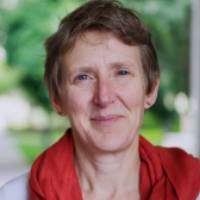 Susan Clayton, PhD, is an APA fellow and professor of psychology and environmental studies and chair of the psychology department at the College of Wooster. Clayton served as a member of APA's