Kim Mills: When you open the newspaper, or turn on the nightly news, or scroll the Internet, is what you are reading and seeing true? How do you know? What is fake news and why does it seem to be everywhere? Americans are worried about fake news. A 2019 poll by the Pew Research Center found that half of Americans said that made up news is a very big problem, 68% said it affects our confidence in government institutions, and 54% said it is having a major impact on our confidence in each other. But what does the research say? Why do people believe fake news? How easily does misinformation spread? And once a person believes a lie, is it possible to convince them of the truth?
Welcome to Speaking of Psychology, the flagship podcast of the American Psychological Association that examines the links between psychological science and everyday life. I'm Kim Mills. Our guest today is Dr. Dolores Albarracin, a professor of psychology and business at the University of Illinois, Urbana-Champaign. She studies attitudes, persuasion, and behavior, and has looked at how people respond to misinformation in areas including politics, vaccines, and other health behaviors. Welcome to Speaking of Psychology Dr. Albarracin.
Dolres Albarracin, PhD: Thank you, Kim. Thanks for having me.
Mills: You published the study that looked at psychologist's research on debunking, that is changing people's minds once they've been presented with misinformation. Once someone believes a piece of misinformation, is it possible to correct that belief? What did you find?
Albarracin: Yes, we did that study, which was published in Psychological Science in 2017. And this was a meta-analysis of the impact of misinformation presented in the news or similar types of print. A lot of this is, of course, experimental work and then was what we were after. So the meta-analysis, which is a collection of all of the evidence on a problem in a quantitative way, involves collecting all the research that had been done on misinformation that's presented to somebody that is later corrected. So what is the impact of first, the misinformation and the second, the correction itself? So we gathered all these experiments. That misinformation was new to participants on new issues. And then we estimated the odds that if you present misinformation, people will actually believe it. And their results show that the alternative quite high, 266 to one.
Albarracin: So, that means that 99.6% of your attempts to misinform will actually be successful. So this is by far the strongest effect ever estimated in my career. So is it to misinform? Yeah, it's extremely easy if you present misinformation, it will take a whole of your mind and it will stick. Can we actually correct that misinformation that we introduced? Yes, but it's not as easy as when we introduced the misinformation the first time. The odds of correcting properly is quite actually six to one. That means that 86% of the time, the correction will succeed. But remember that the success rate of the misinformation is pretty close to 100%. That leaves you with a gap.
Mills: What are some of the strategies for correcting misinformation? I know there some that work better than others.
Albarracin: There are a number of strategies and these actually lead to better results, overall. First you should briefly and clearly describe the misinformation you're correcting. So you're both alluding to the initial piece that was fake and whatever is that you want to introduce this as actual information that you would like people to remember. Then you present the correction briefly, but clearly even sometimes through graphics, that could be quite effective. Explain why the initial misinformation was wrong. This is key. You need to really provide complete explanations for why the new information is right and what was the problem with the initial take. So for that, what you really want is to ensure a good match between the misinformation people received and your correction. The correction has to map to the misinformation. So imagine a contemporary case, like the case of emails that were supposedly found on a computer that was left for repair.
Albarracin: So if you take this claim and you're trying to counter it, and then you say, "Well, there weren't any emails or that was false," simply saying that was false it's not going to cut it. You need to explain how did the computer end up and where, and were there emails and were there other types of emails in there? What exactly was the content and what happened?
Albarracin: So you don't really touch on all the points and simply say, "No, that wasn't really true." It's [inaudible 00:05:43] but you're not going to successfully transform what people had represented to begin. And that's pretty important. So the other point is you need to be using trustworthy sources. This could sometimes be expert sources, but actually trusting the sources is even more important than expertise. So are you having Fauci telling you when you should be hearing about the coronavirus and is he a trustworthy source for you. This and you need to encourage the audience to counter-argue and be active when the information... The more people produce their own counter-arguments both ahead of time and the point in which you introduce the correction, the better your results will be.
Albarracin: So the fact that people can be critical and think deeply around the information is extremely important. There are several very important recommendations and guidelines. For instance, the International Federation of Libraries and Stations has a set of published guidelines that actually appear as a diagram. And they tell you, you should first consider the source, what's the mission, right? What's the possible bias here, need to really go beyond the headline because the headline can be misleading, check the authors, do they exist? Are they credible? So this is all regular practices that you can use to check on the information as it comes in. And so there's a recent document produced by 22 authors led by Steve Lewandowski, and I was part of this and it's, I think a very useful step towards providing guidelines for journalists and professionals to actually correct for misinformation. So they summarize all of these aspects of how the correction can be done.
Mills: That's great for, as you say, journalists, other professionals, but your average person is going to be more likely to maybe look at something like snopes.com to figure out whether something is true or not. Isn't that the case?
Albarracin: Yes. I think that's true in terms of your own fact-checking of information. But in terms of making sure that whatever corrections are issued, we have the best possible instances of those. I think the document could be important in that sense.
Mills: Let's talk a little bit about how little more about how this is playing out in the real world. There was an article in the Washington Post recently about the Biden campaign so-called Malarkey Factory, which is their nickname for the campaigns efforts to counter disinformation online. One thing that I thought was interesting is that the staffers said in the article that a critical part of their job has been figuring out which fake stories to counter and which ignore.
Albarracin: Yes. It's really interesting article and problem. And they seem to be using various efforts to combat this information. In this case, they seem to be engaging primarily the resonance. So they give you that tag for persuadable voters, right? And I think this is a really good strategy in the sense that you're not going to really change the stunt Conservatives in this case, who are pro-Trump no matter what.
Albarracin: And this is the same type of problem that we have in the health domain and especially areas that are so polarized like vaccines, right? You're not going to introduce persuasive messages on social media to try to change the parents who are leading the anti-vax movement, right? You have absolutely no chance of producing changes. Can they change? Yes, they could change maybe if they married a Liberal or really alter their lives, which would take years and that could produce a change. Because you're not going to change them through an actual message or a correction. But you have a really good chance when people who are on the fence, who are certain, who might have seen something, but they are not positive of what it was or where it came from and therefore they are persuadable in that sentence
Mills: Who are trusted sources today, though. I mean, that seems to be a big problem because at one time you might be able to say, "Well, the news media, New York times, the Washington Post, those are trusted sources, but now we have all kinds of policymakers, politicians saying they're fake news. Who do you turn to? And you mentioned Dr. Anthony Fauci as somebody who might be trusted, is it individuals at this point or are there institutions that are trustworthy sources?
Albarracin: Yes. I think that's a really crucial problem and I wish I had answers for you. Unfortunately, the level of cynicism in the population has only gone up over the years, I mean, in the last four years, especially trusting the media has decreased tremendously as a result of all we've seen. So in general, trusted sources can involve a reputable media but if we call the reputable media are now fake news factories or whatever we use to downgrade those trusted sources, and they are no longer possible correction sources for everybody at least.
Mills: But there's still some people who will believe them.
Albarracin: Yes, of course. But you're not reaching necessarily everybody in the same way. And some people are increasingly more isolated from any formal source of information, which then allows for all this other misinformation and disinformation on there to filter itself and potentially have an impact because there is a vacuum of regularly infused correct information.
Albarracin: So in respect to the Biden campaign, I think what's key in addition to is this an audience that's persuadable? Is this misinformation actionable? Or what are the behavioral implications of believing that let's say, Biden is it socialist or for some groups that's quite important, right? So you take on Cuban Americans or Venezuelans, and they see that possibility, and they immediately imagine we're going to have some type of communists for a Dean coming in, that could be quite persuasive. And that will definitely bias and shape how they evolved. In addition, there is actionable misinformation as even more problematic, which is the type that was used in the 2016 campaign that was essentially suppressing the votes, right? So if you see an ad that tells you, "Click here to vote online," well, that is extremely problematic, much more than commenting on Biden falling asleep in a meeting, right? So I would say, yes, the potential to persuade, but also the action ability of the misinformation, and going after whatever is clearly linked to behavior, which is not all of it.
Mills: Something that interests me in particular is conspiracy theories. And I would just wonder why people believe them, even the most outlandish. And just to give one example, I mean, the 2016 "Pizzagate" conspiracy theory, for example, that alleged members of the Democratic party were running a pedophilia ring in the basement of a pizza parlor in Washington, DC. Why is it that some people can believe something that is so outlandish just on its face? Is there something that goes on in our brains?
Albarracin: Yes. I've been fascinated by this. And I began to study that around 2013. And people were saying, "Why are you studying this?" It's really not an issue. Nobody believes in this. But, of course, they want to say the same thing nowadays, right? Because we are seeing more and more far-fetched ideas that you couldn't imagine people wouldn't believe. And they'd learned completely science fiction like in a lot of cases, right? But, yes, people do. A quarter of the population believes that new coronavirus is potentially in bio weapon that escaped, or at least they did believe those kinds of things in the beginning of the pandemic. So the question on why, well, it's quite interesting and it's led to a lot of research. And if you look at what people have said about the origins of this, well, first of all, and can give you a pretty tight scheme to tie all of your beliefs to. It explains a lot of the stress of our lives and our failures, right?
Albarracin: So there is one take that says, essentially that conspiracy beliefs stay calm because people are frustrated and they have been socially excluded. And now they have a great reason, right? Because of my own, my young failure as founder. And there is people, lizards conspiracy out there. And, of course, that power is keeping me in my current situation. However, when you look at all the possible personality variables that might explain these beliefs, they account for a very little. So they don't really contribute that much. And if it were only personality, then you would imagine that we would all come up with our own unique theories, right? For you and be around your neighbors for somebody else, there wouldn't be their boss, it would look much more like pathological cases of paranoia. However, these beliefs are socially shared. So when we look on that, we really need to wonder, where are the stories coming from? Who is feeding the stories to the public? And in our own work, the origin, or at least the correlates of these beliefs, our exposure to the Conservative media in the U.S.
Mills: You also do research on misinformation around vaccines and other health behaviors. And in one recent study you looked at how the amount of misinformation in people's social media environments affect whether they get the flu vaccine. Can you talk a little bit about what you found?
Albarracin: Yes. So in that study there is, of course, information and we suspected that the anti-vax movement and vaccination hesitancy could be links to exposure to misinformation on social media. We weren't the first who actually raise that question. That question has been around for a long time. And the previous work was typically work looking to see people who have vaccine hesitancy are likely to let's say, hang out in anti-vax groups on Facebook. And yes, of course, that is the case, but then you don't know isn't that they all hang together because they have these beliefs or are they actually persuaded because they are in the groups. So what we wanted to do was to come up with research that could answer that question of their temporal or beta better. So we had two types of data. On the one hand, we collected tweets primarily on vaccine hesitancy themes. So we mold, for instance, in big pharma conspiracy and the fact that kids are damaged for the profit of the pharmaceutical industry.
Albarracin: So we hand those tweets and we deal locate in the tweets to the U.S. County in which they were initially produced. In additionally, we had a survey of 3,000 Americans who participated over our time. So we had a full year data on vaccine attitudes and vaccination behavior. So this was done when the flu shot, because that's something we should all be getting all adults. And it was a good case and to actually observe influences on actual behavior. And what we found was that in general, if you live in a County that has that misinformation circulating around on Twitter, later on, you're more likely to disapprove all vaccines and also less likely to get a flu shot. However, if you also have discussions with friends, your physician and real life network, then that effect disappears. Which is important in the sense that it gives you a possible key to disarm the effects of being exposed to negative information of that type.
Mills: Which speaks again, to relying on trusted sources, right?
Albarracin: Right. And social consensus and social proof of some sort.
Mills: What happens in situations where people believe false information, not because it's fake news, but because information changes. For example, at the beginning of the COVID pandemic, reputable authorities advise the general public that they didn't need to wear masks, but that obviously changed. So how can health officials and public officials deal with situations like this?
Albarracin: Yes. I think you're really pointing to a problem that we're not always emphasizing. We're more concerned with the correct information, but in a fairly unstable situations such as a pandemic and for a new disease, and in this case, it's the situation of having to correct here on information which was true. And then time is essentially monthly occurrence, right? In different ways. So the psychological processes are the same. So whether you're correcting false or true information and the time, they're both false right now. So you're going to need to go through the same trouble of explaining why we then believe we needed masks and now we do, what has changed and what was actually correct and the time. So you need to try to control the damage and not allow for your changing perspective to essentially cast out over the entire understanding of the COVID-19 pandemic. So the corrections need to repeat the misinformation, whatever you believed earlier in the same way with the same complete explanations by trustworthy resources that you need in the case of correcting for misinformation.
Albarracin: So this is, of course, also something that we're seeing when they vaccine trials, right? And probably what you need to do is anticipate that this is a new field. We don't know enough. And we're likely to change their point of view as we go. So with that in mind, you can proactively control the potential damage of these changes. So there will be different ways, but one might be to really elaborate on well, at this point, this is what we believe or, and this point there is a alt in the clinical trial, but this is something that happens regularly. And it doesn't mean that if three months from now, the vaccine appears demonstrated to be efficacious, that doesn't mean that this event is not invalidating that other conclusion and we might reach down the line. So I think that's the critical piece here to be anticipating in the future when you are communicating information areas as consequential as public health, and also that aren't in flux.
Mills: Oh, one study that came out this year in the journal science found that fake news itself was actually not as prevalent as we might think. The research has concluded that actual fake news comprised only 0.15% of the average American's news diet. So I'm curious to get your thoughts on this. I mean, how big a problem is fake news, and is it still a problem if the actual percentage of all the fake news within the news universe is really quite low?
Albarracin: I thought it was a great piece that it really challenges that idea that I learned drowning in fake news. And I would tend to agree because their conclusion is that yes, I mean, people are clearly misinformed, right? Even if we're only finding that 0.15% of the news are fake, well, the public is still dramatically misinformed and in a lot of areas, right? If you look at political knowledge, health knowledge, and so on. So when they conclude as that, and then the sources of misinformation are probably not on the fake news posts online, but rather than media, other people, their regular sources which we interact. And I couldn't agree more with this. So first, you have a problem of lack of information and exposure to bias media that's serious and more prevalent problem. This is confirmed by much research, including our own. So if you measure associations between, let's say, conspiracy believes in the area of COVID-19 and social media or regular media Conservative, Liberal mainstream.
Albarracin: So exposure to social media or social media usage is uncorrelated with those believes, but exposure to Fox news is. So I agree in that sense that both the amount, but also the impact, as we know, it is much higher for media than fake news per cent. So that's part. But of course, 0.15% would still have an impact in some cases. When it comes to something like an election, we're talking about very small margins. So even the 0.15, and especially certain types of 0.15, like the case of click to vote online, that could be quite damaging. And I think it makes sense to prepare for that, even if the threat is not as prevalent in terms of its size.
Mills: Do you have advice for a lay person? And most of the people who listen to this podcast, they're not psychologists or journalists, how should they determine whether what they're reading and seeing out there in the world right now is true?
Albarracin: Yeah. So I think there are two aspects and probably paying attention to what you're reading and slowing down as one. But generally, it comes down to certain behavioral skills like for any other behavior. So if you think of changing your diet, right? What do we do to teach people to change what they eat? Well, you tell them how to shop and what choices to make and so on. I tell them, "Don't shop on this 711 down the street or don't shop when you're hungry.
Albarracin: So for media diets, we have the same exact problem. So the first thing to communicate and train people in, is that Facebook and YouTube are the equivalent of McDonald's banning the case of your media diet. So you should not be using either of the social media as the main sources of news. If you see something on Twitter, go and read it on the New York Times page because that's an actual reputable source of information on actual events. So that would be probably the number one aspect, where to consume the news. And then the strategies of check parallel sources, don't stay with just one and slow down. But I think the number one would be don't read news on Facebook, go to a newspaper.
Mills: That's excellent advice. I appreciate you giving it to our listeners. And I want to thank you for joining us today. It's been a pleasure talking with you.
Albarracin: Thank you.
Mills: You can find previous episodes of Speaking Psychology on our website at speakingofpsychology.org or wherever you get your podcasts. If you have comments or ideas for future podcasts, email us at speakingofpsychology@apa.org. That's Speaking of Psychology, all one word @apa.org. Speaking of Psychology is produced by Lea Winerman. Our sound editor is Chris Condayan. Thank you for listening for the American Psychological Association. I'm Kim Mills.


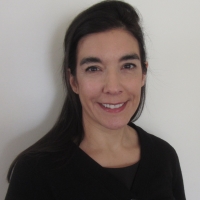 Dolores Albarracin, PhD, is a professor of psychology, business, and medicine at the University of Illinois at Urbana-Champaign, and a renowned scholar in the fields of attitudes, communication, and behavior. Albarracin was born in Argentina, received her PhD in psychology from the University of Illinois at Urbana Champaign in 1997, and was previously a tenured professor at the University of Florida and at the University of Pennsylvania. She has published hundreds of journal articles and book chapters in the leading outlets of the fields of psychology and health and has had an important impact on national health communication policy. Her innovative research is an unusual combination of basic and applied psychology and has been continuously funded by the National Institutes of Health since 1997.