Kim Mills: For many women, being a daughter is not just a family role, it’s a lifelong job. From coordinating family holiday schedules to mediating arguments, a "good daughter" is often expected to act as the glue that binds a family together. Today, we’re going to talk to a researcher who studies what she calls daughtering about the work of being a daughter.
Why is this labor so often invisible to families and to women themselves? How does daughtering affect women’s mental health and identity? How does it change over the lifespan, from childhood to middle age? What role does birth order play? Is eldest daughter syndrome a real thing? And how can daughters and families rethink these roles to make them sustainable and fulfilling for everyone?
Welcome to Speaking of Psychology, the flagship podcast of the American Psychological Association that examines the links between psychological science and everyday life. I’m Kim Mills.
My guest today is Dr. Allison Alford, a clinical associate professor at the Baylor University Hankamer School of Business. She holds a PhD in communication studies with a concentration in interpersonal communication from the University of Texas at Austin. Dr. Alford’s research focuses on women, adult daughtering, work-family balance and invisible labor. She is author of the new book, Good Daughtering: The Work You’ve Always Done, the Credit You’ve Never Gotten, and How to Finally Feel Like Enough.
Dr. Alford, thanks for joining me today.
Allison Alford, PhD: Thanks for having me, Kim. Great to be here.
Mills: Let’s start by talking about the word daughtering. I understand this is a term you coined. What does it mean and why do you think it was needed?
Alford: Well, I should definitely say that the word daughtering itself predates me, but I am the first to use it in this particular way. So I want to make sure to say that because there’s a really great book from the ‘70s, some researchers, I think, in Norway who talk about mothering and daughtering, but in a very different way. And so I started using the word daughtering because I thought it was important that we think about how adult daughters actively show up in families.
And there are so many roles in our social world that we acknowledge we have to take active part in if we want them to go well. If we want to be a good friend, we have to actively work towards being a friend, but we have some active terms for that, making friends, friendship, et cetera. With our partners, our romantic partners, we know it takes work to be a spouse, to be a wife, to be a husband. And particularly, we are aware that mothers and mothering takes a lot of work and a lot of effort. But as I was researching this over 10 years ago and looking for somebody, anybody who talked about the ways that daughters are important or essential for family life, to stay connected, and how women are actively showing up in their families, I couldn’t find anything. And that’s why I felt like daughtering was an important word to bring forward, not just because I’m claiming I discovered something brand new, but because I want to hear from everybody, how do we use it? How is it showing up in your life? And if we had more language like this, what could change in our social world?
Mills: What does the work of daughtering entail? Is it physical, mental, emotional work, all of the above? And in other words, what are the key aspects of daughtering and what are some real life examples of daughtering?
Alford: One of the easiest ways to think about doing daughtering is that task way, instrumental labor. And a lot of people, when you talk about doing daughtering, their first concept goes to how women show up for their parents when their parents are elderly. So they drive them to the doctor or they come check on them or bring them a meal or get their prescriptions for them. So task labor and with elder parents, that’s this obvious connection to understanding daughtering. And it’s a good one, but it is a limited view of what daughtering is because daughters are doing the work of daughtering across their lifespan.
My research focuses on what adult daughters do with independence and agency. So some of the work is task work or doing work. That might be doing the work of setting up a visit, making a phone call, giving a gift, or I’ve had women in my research say, My parents’ house was about to be hit by a tornado. So I went over there and boarded up the windows. Or their washing machine went out and they had to be at work, but I’m a stay at home mom. So I went over there and met the worker. Some of the work of daughtering is tasks. So I call that doing work.
There’s also the feeling work, thinking work, and being work of daughtering. So that would include the emotional, the cognitive and the identity work of daughtering. Emotional work includes soothing over disagreements, preventing or fixing conflict, whether between you and your parent or even between your parent and other people in the family. And thinking work is things like planning, preparing, worrying, and having the space today in your life, even for something that might occur years or decades in the future.
And the last kind of work that I like to talk about, and I think is the least obvious, is the identity work of being a daughter, thinking, who am I representing this family? How do I want to continue the legacy of my mom or my dad or our family name? How do I want to keep traditions going, special meals or places that we go? And how do I represent my parents or my family as a daughter even when nobody else is around and I’m not actually interacting with someone?
So as you can imagine, with doing, being, feeling and thinking, only the doing is visible and the other ones are invisible. And of course, even the doing one can be swept under the rug as unimportant. So a lot of the work of daughtering is hidden or unacknowledged. And that’s sort of the critical piece of where women need a little bit of help and a little bit of permission to do something about that.
Mills: These sound like a lot of expectations and I’m just wondering where they come from. Does it come from an individual family or is it coming from society more broadly?
Alford: Yes, it is. In communication studies, particularly we’re interested in how meaning is made and by communicating, communicating with our friends, our family, or the messages we get through our social system. So learning how to do daughtering and learning what daughters should do or what a good daughter is, is often coming to us from messages very early in our life. Even when we’re a small child, we’re looking at our siblings, we’re looking at our parent and how they’re daughtering their parent or even multiple generations into the grandparents. And so we’re learning by watching our family members. Typically, at least so far, these messages about how to be a good daughter are not explicitly given or trained to children, but rather absorbed or noticed or implicit messages. But we also learn these things through media, watching TV shows when we see this idyllic relationship or we see a toxic relationship between a daughter and a parent and we think, okay, that’s clear that there’s a moral message here of what not to do.
And we learn a lot from our peers and our peers, that’s what I call the daughterhood, but then of course our individual families also determine what we want to do.
Mills: How much agency does an actual daughter have? I’m just wondering because these are a lot of pressures that get put on women, whether that’s explicit or implicit. And I’m just thinking, when does it reach a point where you have to say, I can’t do this. You’re asking too much of me?
Alford: That seems to be a big part of the cultural conversation that we’re having right now, is that women are sitting up and noticing, Wow, a lot is being expected of me. I don’t know why or where this came from or why everybody wants me to do all these things, but my sibling doesn’t have to do that or the daughter has to do that, but the son doesn’t have to do that. And I think that there is more agency as we discover first what the problem is. So for a long time, we’ve been lingering or laboring under this problematic daughtering expectation and the invisibility, the lack of language, the lack of shared communication about our lived experience, and that has left us feeling really alone and impotent to do anything about it. But as we’re starting to talk to each other, as daughters are talking about their experience and saying, I don’t like this, or, Why is this happening in this world that these people are expecting this? More and more, our agency blossoms where we can, if we notice the problem and identify it and describe what the wellbeing or burnout issue is, then we have the opportunity to say, I want to make changes.
And I think that’s the essence of the book that I have coming out or maybe by the time listeners are hearing this, it’s already out, the book called Good Daughtering. The first part of the book is like, Hey, what is daughtering? You are doing a lot. You probably didn’t even notice, but once you start to look at it and list it off and have someone tell you, these are all the things daughters do and you’re doing 75% of them, you realize, Oh my gosh, I am doing daughtering. I am showing up. And so I don’t have to have this reason of constantly feeling not good enough or like I’m not enough of a daughter or need to do more.
And then the second part of the book is an investigation of, Okay, what do I want in my life? What do I like? What does my family actually need versus what I was just presuming they need without asking anyone or presuming I had to do because I’m keeping up with the neighbor or the peer who seems to be doing these things. And the third part of the book is, Okay, I’ve decided what I want and what I kind of would like some shifts I would want. How do I do that? How do I have these conversations with my family, with my siblings, with my partner? How do I set boundaries and how do I enjoy being a daughter and love my family without this specter of constant pain, burnout and sadness, disillusionment that really can persist if we don’t burst through it and talk about it and decide, how do I want to handle this as an agent of change for my life and in my family?
Mills: I want to ask about sibling order and family size. I’ve read media articles about what some people call eldest daughter syndrome. Is this a real thing? Do the eldest, and depending on how many kids are, elder, daughters, tend to take on more daughtering responsibilities than their other siblings?
Alford: Well, it’s such a unique and interesting phenomenon that’s going on with the eldest daughter syndrome. And I am so impressed and love the stories of women who have been talking for the past few years about their experience of daughtering and their families. So the first question is, is eldest daughter syndrome real? Well, if the women say it’s real, I believe it’s real. The second question, is it a predictive diagnostic tool that we might use or put in the DSM-5 or something like that? And as of yet, no. Birth order is not actually predictive of who might do what. And what all that means is to say that I think when an eldest daughter says, I’m experiencing this, this is real in my life. I believe her and I can learn a lot from her lived experience and what she’s saying. That isn’t however what the research shows is universally true.
Typically, what we see with who does the most caregiving, and again, this is research related to more elderhood, illness, things like that. The child who does the most is the geographically closest child, and the second indicator would be the most economically available child, the one who has the finances to help, meaning that they can drive there or travel there or visit there or pay for something. So I validate for women that particularly if you’re in a family where in your childhood there were a lot of children and you were one of the older sisters, it’s very likely you had extra work to do and that impacted who you became in adulthood. If you are part of an immigrant family and the experience of leading as a first generation American or the child who learned English and had to help your parents with that very likely informed your experience in adulthood.
The one thing that I like to separate and just make distinct in the eldest daughter conversation is, are you talking about older sister stuff or are you talking about daughtering, which is a relationship between the adult female child and her parents, so how she relates to her parents. But often how we relate to our parents has to do with managing our siblings and being the family CEO in order to help our parent or to help the whole family.
Mills: What happens in families where there are no daughters? I mean, do sons take up that responsibility in those cases? Is there kind of a counterpart role for sons? And if so, what does that entail? How is it different and how is it the same?
Alford: One of the kind of coolest untapped areas of research that I would encourage anyone listening who’s looking for that little gap in the literature to go for is the topic of son-ing. That’s what I call being a son, doing the son things. And it’s so important to say that as we’re talking about the difficulties of daughtering and the expectations on women, we’re not bashing sons. I have a wonderful husband who does a lot of son-ing as a—there’s two sons in his family, and so there are no daughters. And we have talked a lot about and investigated a lot, what does he do? What do I do as the daughter-in-law to help with his parents and who’s responsible for that? The main difference that I see between daughtering and son-ing at the top, just at the surface level, is that sons are not expected by society or by their parents to do the social support, support provision type care, especially in their 20s, 30s, 40s.
They’re not expected to call up their parent and say, How was your week at work? And should we plan a gathering? I feel like we need to have a barbecue. Sons are not expected to do that or to have an inclination toward that. Are there sons who do it? Yes, there are many wonderful sons, but often when a man does something loving, nurturing, connecting in his family, the whole family goes, Oh, look at him. He is so good at that. So then there’s these kudos on top of it. And women just don’t get that. We have the expectation that we’re supposed to do it or even if her parent isn’t expecting us to, we feel like our society is or we see someone from our friend group doing something and we feel a guilt that no one asks us to feel. And then men don’t typically have that.
They just, when they decide to provide care, they get a lot of kudos for it. But many men are very caring, loving. And I think this area of son-ing and who decides how men decide to show up for care provisions and connecting and emotional labor in their families is a rich, ripe area for inquiry that I don’t know as much about, but would like to know more about, especially as I have a son who is 17 and will be heading into son-ing territory of adulthood soon.
Mills: What about shifting gender roles? I mean, have you looked at that much to see whether there is an effect? I mean, maybe men are expected to do more of these sort of feminine types of actions.
Alford: As we see change across generations, there’s absolutely changes that are coming. That’s more of the work of a sociologist. And so it’s not in my wheelhouse, but I can say anecdotally that we see massive changes in the sharing of social reproductive labor between men and women through generations from baby boomer to Gen X to millennial and moving on to Gen Z. We are agreeing generationally, especially millennials and Gen Z, that maybe it’s not worthwhile to partner with someone unless they intend to share that labor. Well, that would extend into sharing the labor of doing family. I think anecdotally, we can absolutely see those expectations changing.
One of the books that I like that’s a current book that’s out about having conversations with your partner on who does what and how do we do things is called Fair Play by Eve Rodsky. And if it’s something you haven’t talked to your partner about, then this gives you a toolkit to do that. What I would love is to add some cards to the card deck that Eve has, and those cards are parents, in-laws, big extended family gatherings, so that we notice that the work of being a family is not just our little core unit that live all in the same dwelling together, but it’s also our larger family and our community, the third shift labor, which is what we have to do after we take care of our day job and then we take care of our little family that we live with, we still have a responsibility, particularly as women, we feel that, but as citizens and members of a society to do things for the greater good of others.
Mills: And these days, a lot of women live far away from their parents. So how does physical distance affect these family dynamics?
Alford: In a recent study that my research partner and I did, we asked over 300 women in one-on-one interviews how they do daughtering. And one of the things that we asked them to report on is, how far away do you live from your parent? Do you live in the same house? Do you live down the street, city, state, country, across the world? And when we spoke to the women who live across the state or they live across the country, essentially any of the women who felt like they couldn’t get to see their parent in person, they filled in for us that they’re doing the same amount of daughtering. They’re just doing daughtering differently. And that’s really an area that we all need to lean into is this understanding, particularly with technology, that doing daughtering can be sending an Instagram reel or texting a meme. Many daughters who lived across the country talked very specifically about how thoughtful they were about making sure their parent had gifts or gift boxes or plenty of phone calls and a lot of emotional support.
They also leaned in more to the identity formation and talking about who do I want to be as a daughter and how can I be that person’s daughter even when we’re not near each other? One woman told me, I go to work every day and my mom lives across the state. I don’t get to see her, but when I go to work, I know that I’m working for both of us. And then I send her part of my paycheck. And she described that as treating her mom. She wanted to treat her. She wanted to have little perks or gifts that her mom didn’t expect this money, and yet she was regularly sending money. And so I think that we have to see beyond the categories, particularly that daughtering has to do with face-to-face communication and tasks and visits. And then once we do that, we can imagine daughtering in a variety of different ways, and then we start to give credit to others who do different things.
And that’s probably one of the biggest impacts not only have I seen from the early readers of the book saying, Oh my gosh, I noticed so much more daughtering that my sister was doing or that I was doing that I had felt guilty because my sister lives right there. So as a personal story, when I went through this research and learned about it and I was writing the book, my own sister and I had this big conversation where we divided up what kind of daughtering we do. She lives down the street from my parents, so she can just walk down there and knock on their door. She can help take care of their dog if they go out of town for the weekend. I don’t, but I do the emotional phone calls. I do the asking of the big questions. I also do the pushing of the not fun questions where I can call and I can say something unpleasant or that my parent doesn’t want to hear, and then I can just click hang up the phone.
And so we agreed that we’re different kinds of daughters. So we’re not either one of us doing more or less daughtering. We’re doing this very different kind of daughtering. And it really made us so much more of a team together to work for a better family life instead of feeling competitive or lacking or resentful when we compare ourselves with our sibling.
Mills: Who’s older and does that make a difference?
Alford: She’s older. And so maybe I have my little Napoleon complex about being the younger daughter and saying, But me too, I’m doing a lot of daughtering. So I don’t have eldest daughter syndrome, but I do more and better at many parts of daughtering. And my sister does more and better at many other parts of daughtering. And ultimately having my sibling as my partner, instead of constantly wishing they were different or doing something else or thinking, I’m the only one. I’m the only one who’s doing anything. It really does not breed this sort of flourishing or enjoyment in your family if you’re constantly angry at your sibling and you’re constantly burdened by the daughtering. The best way to go forward that I’ve heard from many daughters is figuring out ways to discuss it, share it, and then when needed, limit it, limit what you are doing because you are not responsible for your parents’ sole happiness and purpose in life, or that you have to provide that by being one-on-one, face-to-face, in person with them.
So just some recasting of what daughtering can be and some re-imagining of what you’re already doing well can be a huge shift for women to feel a lot of relief and a lot of camaraderie and solidarity in doing daughtering. And the goal is to get to that part where you like it, where you enjoy it, where you think, My family and being part of a family is a benefit and I want to do the work that I need to do to be in the family because I enjoy the benefits that I get from it as well.
Mills: You published a research article on daughtering during the COVID-19 pandemic. I’m wondering, what did you find? How did the pandemic change women’s experience of daughtering?
Alford: One of the interesting things that came out of that was an idea that women in different phases of life started to see ways that they were daughtering that they had not ever seen before, but the COVID pandemic brought about such a physical divide and forced so many of us to start trying new ways to connect with our parent or to take care of them, or it shined a light on how hard it is to worry about your parent, but have so little control. And many people learned about that feeling at a much younger age than what you might typically start to feel that as a daughter, maybe which would be your 40s or 50s or something. You learned about it when you were 25 and you’re thinking, I’m worried about my parents. They’re not masking, they have a respiratory disease, but they keep going out to talk to all the neighbors.
And so in that study, one of the most interesting things was just realizing that when daughtering and the facets of daughtering and the needs of our parent are made more visible to us, then we can wrap our mind around, what can I do? What can I not do? What am I willing to take under my control that I need to be doing for this parent and what do I have to let go? And so much of being a good daughter has to do with thinking, what am I doing for them, but I also have to protect me. And so I have to balance the way that I use and share my resources. And in COVID-19, resources were extremely strained at work with our little families, with the children that we have, with our partners, with our finances. And so everybody just became a lot more aware that these resources are finite and I must distribute them across the people in my life who I care about very thoughtfully and very carefully.
Mills: Some of what we’ve been talking about makes being a daughter sound like a bit of a burden or a slog. And I’m just wondering if there’s an upside to taking on these roles or is it just the attitude that you have toward the work of a daughter that you’re doing?
Alford: Well, some of what can be first noticed about daughtering is how hard it is and how challenging it is. And often that’s true of so many things in our life. You’re married and you just notice all the time how annoying this person is, right? Or you have kids and you’re thinking, This is just so hard and they’re always wanting to eat every day. And so that’s maybe human nature that we tend to notice what is hard, but it’s also our way of reaching out to people in our community and saying, Are you suffering too? Is this hard for you too? And so it is important to talk about the resources that are necessary to do daughtering and where are those coming from. Where am I as a busy woman with limited resources, funds, time, energy. Where am I pulling from to give to my parent? And do I have that to give?
But I think that the most wonderful part that came out of my research is that almost every daughter that I spoke to said, Yeah, it’s hard, but I want to do it. Or I don’t want to stop doing it. I really love my parent. My parent loves me. I enjoy being in a family. The thing about love and enjoyment and feeling identity in family is that it often taps into what the way I like to think about it is our eudemonic happiness. Eudemonic happiness is, this Martin Seligman talked about in his happiness studies, the kind of happiness that makes us feel good over a lifespan. Am I a good person? Do I like my life? Do I feel like I’ve contributed? When I die, will I feel like I was a good person. I was a good daughter.
But oftentimes the things we have to do for doing daughtering, like avoiding conflict or carrying an emotional load, they don’t contribute to our hedonic happiness. Hedonic happiness is the zing of fun. Let’s go out to the movies. Let’s get some chicken nuggets and popcorn and sit there and watch this movie. And it’s just this little fun time. And many women are not accessing on a regular basis hedonic happiness with their adult parents. And so they’re still happy, but in a eudemonic sense of I’m a good daughter. And so what I have seen is that if we start talking about the daughtering we’re doing, what we want to be doing, what we don’t want to be doing, what we want from our family, what we don’t want from our family, and we adjust it, we share it, then we can start to find more of those moments of hedonic happiness.
And we can note them to ourselves and say out loud, I enjoyed that. So for me, when I go visit my parents at the holiday, I have made a boundary that I spend two nights because any more than two nights and we start losing hedonic happiness and getting into arguments and frustration. And of course I’m sleeping in a different bed and eating different food. And so I made a boundary for myself, but I feel good that I go. I feel good that I show up. I want to show up. And I have started this ritual on the way home that I talked to my husband about what I liked about the stay there. So it’s a balance of going and doing the things, putting some boundaries in on the places where you realize this is no longer neutral or fun. There’s no hedonic happiness coming, so I’ve got to get out of here.
But then when you leave, you don’t ruminate and narrate all the bad things or the most annoying things. You have to narrate what you liked. And many women, we need to have those moments where we narrate what we like. I like that my dad texts me these weather updates when he thinks I’ll be driving in the rain. I like that my mom always remembers to buy me this special perfume for my birthday. What do we like about living in a family? And make sure that we’re narrating that out loud so that we don’t forget that the whole point of this daughtering is we’re doing it because we love these people and we do like being in families with them.
Mills: So what’s next for you in this area? I mean, you’ve published the book. Is there more research that you’re doing into daughtering?
Alford: Absolutely. So we have that big research project that we completed across 24-25, and we have multiple research articles coming out about that this year. Several accepted, several in progress. We’re interested in continuing studies where we can take—everything isn’t just a cross-sectional view, but we can maybe take more of a lifespan view across the populations. Most of our studies have been with American women, so we would love to branch out internationally and look at different populations and different cultures. For me personally, I am really excited to bring this material from the academic kind of shadows where some things they can reach a few of us, but not as many people as this material could help. And what I really want to see is the topic of daughtering, the work of improving our lives and enjoying our families in the hands of as many regular everyday women who might never read a research article as possible.
Mills: Well, Dr. Alford, I want to thank you for joining me today and thanks for shining a light on this area of human existence.
Alford: I really appreciate the time to talk about this. I appreciate your listeners for considering it and thinking, Hey, that sounds like a real thing, because that is what moves the research forward. And I always want to say thank you to reviewer one and reviewer two for helping this work get out there.
Mills: All right. You can find previous episodes of Speaking of Psychology on our website at speakingofpsychology.org or on Apple, Spotify, YouTube, or wherever you get your podcasts. And if you like what you’ve heard, please subscribe and leave a review. If you have comments or ideas for future episodes, you can email us at speakingofpsychology@apa.org. Speaking of Psychology is produced by Lea Winerman.
Thank you for listening. For the American Psychological Association, I’m Kim Mills.


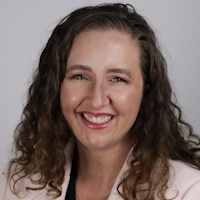 Allison Alford, PhD, is a clinical associate professor at the Baylor University Hankamer School of Business. Her research focuses on women, adult daughtering, work-family balance, and invisible labor. She is the author of Good Daughtering: The Work You’ve Always Done, the Credit You’ve Never Gotten, and How to Finally Feel Like Enough.