Kim Mills: Diversity training in the workplace is generally aimed at fostering cohesion, mutual respect and understanding among people of various backgrounds. The thinking is that diversity training can stop some problematic behaviors, which can sometimes lead to a hostile workplace, an issue, not just for employees, but employers as well. Diversity training is also thought to improve morale, help workers feel more committed to their jobs, help companies recruit and retain a diverse workforce and even increase productivity and creativity. But does it do these things? Does requiring employees, contractors, and vendors to adhere to a set of diversity and inclusion principles change people's inherent biases, assuming they have them, and stop unwanted behaviors? Or can a trigger resentment or other negative outcomes?
Mills: Welcome to Speaking of Psychology, the flagship podcast of the American Psychological Association that examines the links between psychological science and everyday life. I'm Kim Mills. Our guest today is Dr. Calvin Lai, an assistant professor of psychology at Washington University in St. Louis. His research has focused on implicit biases, those automatic or unconscious thoughts that many of us hold. In particular, he studies how these biases can change and whether interventions can reduce their impact on our behavior. He has studied the research into diversity training and has some interesting insights into its effectiveness. Welcome to Speaking of Psychology, Dr. Lai.
Calvin Lai, PhD: Hi, pleasure to be here.
Mills: Well, let's start by talking about what your lab and other psychology labs are studying in the way of interventions to change people's implicit biases. What do those interventions look like and how do they connect to the kind of diversity training that we're seeing in workplaces today?
Lai: That's a great question. So in my discipline of social psychology, there's been a lot of interest in what we can do about implicit biases. And one of the kind of most obvious things that we realized is like, okay, well, if these implicit biases exist, then perhaps we can simply reduce them, make them go away. And the program of research in trying to make implicit biases go away has indicated that it's actually quite difficult to do so. Implicit biases are formed over a lifetime of experience. And so interventions that try to kind of undo them over the course of a couple of minutes or a couple of hours often have a really powerful short term effect in reducing the implicit biases, but then they'll bounce back within several days.
Lai: And so that's where a new set of approaches have come about in terms of thinking about if we can't change the implicit biases themselves, how can we work around them? How can we arm people with the right set of motivations or educate them with the right set of knowledge so that instead of making them go away entirely, we are better equipped to work around the fact that they can impact our behavior? And so where there's been a lot of interest, but not yet that much published research is understanding the power of diversity training in doing away with some of these subtle biases that we might see in the workplace or otherwise.
Mills: In a recent research interview, you looked at hundreds of studies of these implicit bias interventions, and you didn't find much evidence that they could produce long lasting changes in people's biases or their behavior, which you just said. Could you talk more about that review? And what does that mean for diversity training?
Lai: Right. I want to emphasize that what we found in that met analysis is quite distinct from what we might think of as diversity training. And it's easy to confuse the two. So when we are thinking of diversity training, we're often thinking of these kinds of professional development or continuing education sessions that might last anywhere between 30 minutes, an hour to several days that can take the form of either some module you complete on your human resources learning system, to this kind of really intensive in person experience.
Lai: When social psychologists and other researchers have studied how to change implicit bias, which is what we looked at in that met analysis, that was more on interventions that were more therapeutic in nature. Can we give people the right set of experiences or therapeutic experiences that will permanently reduce these implicit biases? And oftentimes we're finding that you can't make implicit biases go away. And to the extent that you can change as implicit biases, those changes might not amount to downstream changes in behavior, which I think is reason to think that instead of trying to target that those biases directly. We ought to be thinking about some of these other strategies.
Mills: And what are these other strategies?
Lai: Right. The other strategies include arming people with the right set of motivations or habits so that if they are in situations where they are vulnerable to bias, they can catch themselves and override their biases. So rather than making devices go away, just arming people with better strategies for regulating them or policy or procedural changes in organizations so that people are less inclined to act on their bias in the first place. Changing, for example, how hiring and promotions happen so that people are less likely to take race or gender into account based on how the decision making structure is set up.
Mills: Let's talk for a moment about police forces, where biases may have played a role in some of the recent high profile shootings of unarmed black people. So most police forces, as I understand that have diversity training today, and yet given the prevalence of these types of shootings, is that an indication that something just isn't working? Is there something else happening in police departments where people who might have issues with bias, who maybe didn't get screened out at some point or they have aggression problems and they're walking around with weapons on their hips, is that some kind of a combination that we can't account for in training?
Lai: Yeah, that's a great question. I think the problems of police use of force, disproportionate use of force, racial inequities and use of force are kind of complex multifaceted problem, that range from issues with problem individuals all the way up to systemic issues related to policies related to accountability and what types of use of force are allowable within a given department. And so the way that I think about it is that given that the cause of these issues in terms of these racial disparities in treatment are so many, it's unlikely that any single policy reform is going to make the problem go away overnight.
Lai: But what we can do as researchers and active minded citizens is to pay attention to well, which of these things have a great track record of curbing or preventing unjustified uses of force or other issues like that? When it comes to diversity training in police departments, the research right now is that there's not that much standardization, and there's just not that many studies have been published on the topic yet. And so it's more of a big question mark than anything about the extent to which they are efficacious at preventing racial disparities.
Mills: Diversity training is being implemented in a lot of different workplaces. You see it in schools and corporations, the government, and some of our listeners may remember when Starbucks closed down its stores for a day to train all his baristas after there was an unfortunate encounter between a manager and some black customers in Philadelphia. Does effective diversity training look different in different places or are there common threads?
Lai: Yes. So I think when we think about what diversity training is, at the end of the day, it's just teaching, it's just education. So the way that you might teach effectively to one audience or the things that you need to teach to a particular audience are going to be totally different depending on the context. The types of issues, whether it's a bias that a bunch of cashiers or waiters or waitresses or service industry folks will need might look very different from folks who are in management or executive positions. They're dealing with very different types of issues related to diversity inclusion and diversity trainings ought to be kind of targeted to where the problems are. There isn't necessarily going to be a one size fits all package that solves all the problems within the span of an hour, a couple hours. And that's led to part of the difficulty in understanding do these things work because diversity training is this big umbrella for all these different efforts to educate about diversity and inclusion.
Mills: That's a great point about the difference between say a line worker and somebody in the C suite. I'm just thinking out loud a little bit here, but people in the C suite might be more skilled in perhaps masking the biases. Is that the case, do you think? Has anybody looked at that?
Lai: I would probably predict that to the extent that there are differences depending on where you are within a corporate hierarchy, those differences would probably be pretty small. Most of the research on the subtle, hidden biases suggests that they are largely a problem for everyone. And while some people may express them to greater or lesser degree, it's not the case that there are certain folks that are immune.
Mills: In a recent blog post, you highlighted that implicit bias is you called it pervasive, but not inevitable. And you found that about 65% of non-black visitors to a website that measures implicit bias show evidence of implicit bias against black people. But about 35% don't and that's kind of a higher percentage of people than I might've thought. Has there been research, looking at the differences between people who show evidence of implicit bias and those who don't? Can we learn anything from that?
Lai: Here's what we do now. We first off, I think that in comparison to say our conscious self-reported prejudices, the ones that we can consciously espouse, implicit biases are much more stable from situation to situation and from day to day. So if you put me in a room with one of my interventions, with a person off the street, I could reduce their implicit biases by 50% in 5 minutes. Now that will probably bounce back within the next 24 hours, but they are, in some ways, our implicit biases are almost like these chameleons that are adapting to whatever social situation we're seeing. And so there are some kind of chronic differences in the levels of implicit bias that people have. But that seems to be a smaller part of the picture of the fact that these implicit biases are in many ways, a reflection of the social environment that we live in. But we do know people who have chronically lower biases do tend to act in a more egalitarian manner, tend to be more supportive of egalitarian political policies and so on.
Mills: There's one concern that's raised by some people that diversity training and diversity issues can backfire by making people feel resentful and attacked. Is that a valid concern?
Lai: It is a valid concern. And some of the latest theoretical models often think about what are the best situations that we want, or the best conditions for diversity training. And you don't want people to get so defensive that they shut down and they become more resistant to diversity and inclusion initiatives than before. But at the same time, you don't want them to feel like they're off the hook. Sometimes a little bit of feelings of guilt can be quite motivating. It means that I've got a problem to solve.
Lai: And so part of the tight line for people who are in the business of diversity education is how do we motivate people to do something about the problem of bias, but at the same time, not put them so far and defensive where they just shut down and act reactively. So one of the common recommendations from this literature on diversity training is that it's often better to make it optional, opt in rather than something that's mandatory, because when it's mandatory, then some of the sticks in the mud will show up to the training and just be stewing in their resentments during the educational session.
Mills: But then those might be the people who need it the most and they're not getting it.
Lai: Yeah. And so that's the tricky part. Is there a type of best practices for getting diversity education that works for everyone, particularly people who need it most? And so, where I think right now is that we don't have standardization. So some educational efforts from say, one company or one organization might be walking that line really well and other ones might not be. And so what I'm hopeful for in terms of the next couple of years of research is, is a set of standard best practices, or how do we get people in the mental state where they are most receptive to learning about bias and then actually doing something about it within the context of these sessions.
Mills: So one of the reasons that I wanted to talk to you was there were recent orders from the Trump administration about revamping the diversity training within the federal government, because some people in the administration claim that it's, I mean they've called it racist. They say it's un-American. Have you looked at these trainings that are being used in the federal government and are there real problems there?
Lai: So again, there's not that much standardization. So it's kind of all over the board in of what people are inclined to do in these trainings. Some of these, again, might be counter productive, but what I do know is at least from speaking to some of my colleagues, is that some of the things that are just simple run of the mill educational sessions about things that you would probably see in your psychology 101 or introduction to social psychology class, those things are also being caught underneath this executive order, banning education about racism and sexism. And so I worry with this executive order that certainly it may be catching some of these trainings that are counter effective, but the language is so broad that it's likely capturing a lot of educational efforts that are at the very least raising awareness about problems related to racism and sexism in everyday life.
Mills: You've been talking about how part of the problem is that there isn't standardization, is it even possible to standardize something like diversity training?
Lai: I think at the very least we can have a set of best practices, but I think this is a common problem. Anytime you look past K-12 education, there's just not that much standardization, oftentimes in continuing education or professional development sessions in general. And I think diversity education is just one more place where this is a problem. My hope though, is that at least that we can establish some standard vocabulary in terms of what are the key educational metrics that we want folks to get out of diversity education. How can we measure them and what are the best practices that are best aligned for those metrics? So kind of create this level of professionalization that we see in other educational domains, but it just hasn't happened yet I think due to, in some ways, the kind of history and origins of where diversity education came from.
Mills: You've been talking about how hard it is, if not impossible to change, people's implicit biases. And that maybe the best thing that we can do is open people's eyes to the fact that they have these biases, but are there any promising lines of research on interventions that could really reduce people's implicit biases over the long term?
Lai: There are, but they are often a much larger ask than what many people would want to do, which doesn't mean it's not the right thing to do. It's just very demanding. So we know that the types of experiences that most reliably reduce implicit biases, the ones that we can intentionally engineer within our own lives is sustained contact with people that are different from us. So one of the classic studies finds that if you were a white college freshmen and you're randomly assigned to a black roommate, rather than a white roommate, your implicit racial biases will go down over the course of your first semester in college.
Lai: So that shows at least while you're having of these sustained everyday contact experiences, your implicit racial biases are changing in response. But oftentimes when we do find evidence like this, it really is day in, day out experience, which for a lot of us is either difficult to do motivationally or very difficult to do because we live in a racially segregated society. And so it's not easy to get contact, especially the type of high quality contact with people of different backgrounds that we need.
Mills: Where do our implicit biases come from?
Lai: What we know is they have two common sources. One is they are in large part reflections of our knowledge and internalization of societal hierarchies at large of who has more power, who has more status, who is more positively regarded within a society. And so this is part of why they may often diverged from our explicit biases. When we are seeing all of these stereotypes reinforcing certain racial hierarchy says that white folks are the ones that are powerful and high status and admired, and black folks are dangerous and criminal and violent, there's an imprint on aspects of our mind that are less conscious or less controlled and more spontaneous, that doesn't necessarily show up as much explicitly.
Lai: So that's one part of it, but we also know that personal experience and our personal affiliations matter a lot. So the largest systematic difference in implicit racial bias we see between groups is that between white folks and black folks, and a large part of why that is because if you are a white person in America, you're more likely to have white family, white friends, white significant others, your own sense of yourself as a white individual. And all of those things feed into a sense of favoritism for one's own group and a motivation to like things that are affiliated with one's own group. You see that black folks also have a set of experiences that encourage favoritism for one's own group as well. And so when you put those two things together, that explains a lot of the variation in implicit racial biases across societies.
Mills: So are we living in a time now where what had been implicit biases are coming to the fore and they're becoming explicit because there's so much dog whistling going on out there, that it's giving people permission to act out what they would normally not?
Lai: So I see, and this is me more speculating because it's not ...
Mills: Maybe it's not a fair question, but I asked it anyway.
Lai: It's a great question. So I'm going to put a little bit of grains of salt here, because this is just my opinion on the matter, but I think that there have been a couple changes over the past four or five years that I think have really changed the nature of how racial bias is expressed in the United States. The first is an increase in the normalization of expressing racism. So Chris Crandall at the University of Kansas has these great studies with depressing results, finding that in the aftermath of Trump's election to presidency in 2016, levels of prejudice did not appreciably change. If anything, people reported less racial prejudice and perhaps that's because they were comparing themselves to the commander in chief. That's what was [inaudible 00:21:38] in mind. But where you were seeing a large change was changes in perceptions of whether expressing prejudice is normal or okay. And what we know from research in social psychology and other fields is that oftentimes our perceptions of what's normal is a larger driver behavior than our actual personal attitudes are.
Lai: So our personal attitudes might have changed the same, but we might feel more free to express our racial bias. On the flip side, though, we also know, particularly with the resurgence of Black Lives Matter over the past couple months, that there's also been a C change explicitly in how Americans think about race relations, such that there's much greater support or endorsement for ideas about the existence of racial inequality and the fact that we must do something about it, or at least the opinion that we must do something about it.
Lai: And so part of what might have changed the culture too, is a sense of gradual change in what counts as blatant racism, compared to say 20 years ago or so. Things that might've seemed okay 20 or 30 years ago, maybe some incidents of blackface to us seem now way beyond the pale. And so I don't want to discount the fact that there's also just been a lot of cultural change in terms of our thresholds of what counts as racism as well. Such that some of these classic scales that indirectly measure our racism, these questionnaires are perceived to be blatant measures of racism from some survey participants nowadays.
Mills: It kind of speaks to the whole, Me Too movement that's happening as well when you talk about things that were acceptable, say 20 years ago that now people are waking up and saying, I can't believe that women endured that kind of treatment.
Lai: Oh yeah.
Mills: So it all seems to be of a piece now.
Lai: Yeah, exactly. I think that these changes are happening so slowly, so gradually, we don't notice it. But then if you think about your mindset five years ago, you're like, wow, a lot has changed. And we can see this in some of our national studies or prejudice as well, where there is a lot of change going on, but it doesn't feel like it on a day to day basis.
Lai: One of the things where we have seen a C change in reductions of both implicit bias and explicit bias is in attitudes toward lesbian and gay individuals. We see a huge reduction in explicit prejudice. And we've also seen a large reduction in implicit prejudice toward gay and lesbian people over the past 15 years. And so we can have our little tiny interventions that are looking at what happens if you give people this five minute media experience and maybe it doesn't move the needle that much, but what the HRC and all these other organizations and all these media exposures are, they're not doing it one time, they're doing it hundreds, thousands of times over years. And probably that very difficult to capture process of thousands of media exposures or thousands of everyday life exposures over years is what's accumulating, aggregating into that large scale reduction in prejudice. But again, we can't capture that in the lab with a dumb experiment.
Mills: Right. And maybe something like Black Lives Matter can have that same impact, but it has to persist for years and years.
Lai: Yeah. And to me, that's one of the things that's really tricky in this research where we're trying to design these field experiments to look at prejudice reduction where we can capture this small representative slice of it, but it's quite different from living it day in and day out, and being in a culture where the sands are shifting in a particular direction and you're getting an ad here, a TV show there, a movie there, a friend mentioning gay or lesbian friends there. Like all those things presumably are adding up, but that's very hard to study in terms of how do we capture this adding up process.
Mills: Right. So where is the research going? What are you looking at next? And what do you think we need to be studying more?
Lai: I mean, I think that the studies on diversity education are coming out now and it feels like there's been kind of a lag where clearly the there's been a lot of public interest in it but not that much of a database or evidence based to know, well, how do you do it? Well, when is it going to work or not? And so what I'm excited for is to see some of this research see the light of day in the next couple of years, so that we know is diversity training something that we ought to do for our personal organization? And if so, how do we do it? Because I think right now, there's a lot of shooting in the dark. Some of which might be working, but some of which might not be
Mills: Well, how does the workplace know if their diversity training is working?
Lai: So I think what I would recommend to it organization right now is to do an analysis of what are the metrics that we care about most here? Is it something like, we just want to make people more aware of the existence of eyes and that's a reasonable educational outcome if you're just doing a short session. Or do we want to shoot a little bit higher? Do we want to change perceptions of what the social climate is like among the employees? Is it to actually change hiring and promotion practices? So I think what I would suggest to organizations, identify the metrics that you care about and then work backwards to think about what are the solutions that are most effective for achieving that metric? And sometimes that might be diversity training that is focused on that topic, and sometimes it might not be.
Mills: Well you've left us with a lot to think about. I think there are still a lot of open questions on this topic, but I appreciate your joining us today. It's been really interesting talking to you.
Lai: Great. Pleasure to speak.
Mills: Great. Thank you. You can find previous episodes of Speaking of Psychology on our website at www.speakingofpsychology.org or wherever you get your podcasts. If you have comments or ideas for future podcasts, you can email us at speakingofpsychology@apa.org. That's speakingofpsychology, all one word at apa.org. Speaking of Psychology is produced by Lee Winerman. Our sound editor as Chris Condayan. Thank you for listening. For the American Psychological Association, I'm Kim mills.


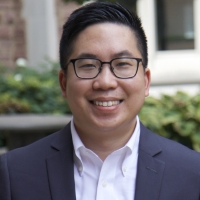 Calvin Lai, PhD, is an assistant professor of psychological and brain sciences at Washington University in St. Louis. He studies how people create, interpret, and maintain social group distinctions. Lai is particularly interested in implicit biases: automatic or unconscious mental processes that create a gap between what people value (e.g., racial equality) and what people do (e.g., racial discrimination). His research focuses on (1) learning how implicit biases change, (2) understanding the consequences of implicit bias for behavior, and (3) developing interventions to reduce the impact of implicit biases on behavior.