Kim Mills: More than one in four American adults is physically inactive, according to a report in January from the Centers for Disease Control and Prevention. That means they don't participate in any leisure time physical activities, such as jogging, walking for exercise or even gardening. And even those among us who spend some moving probably aren't spending enough. Around 60% of U.S. adults don't get the recommended amount of physical activity in their daily lives.
Most people realize that being sedentary is bad for our health. Lack of exercise raises a person's risk of heart disease, diabetes, and many other chronic ailments. But scientists are also increasingly interested in how exercise or the lack of it can affect our cognitive health. So what's the connection between exercise and thinking, cognition? Can movement build memory as well as muscle? Does staying physically fit reduce your risk of dementia? And if so, how? And are some types of exercise better than others? Given what we know about the benefits of physical activity, what's the best way to encourage kids and adults to stay active? And if you've been living a sedentary life, how can you get yourself moving?
Welcome to Speaking of Psychology, the flagship podcast of the American Psychological Association that examines the links between psychological science and everyday life. I'm Kim Mills.
Our guest today is Dr. Jenny Etnier, a professor in the department of kinesiology at the University of North Carolina Greensboro. Dr. Etnier's research focuses on the cognitive benefits of physical activity from childhood through adulthood. She's currently leading a study on the effects of physical activity on middle aged adults at risk for Alzheimer's disease. She's also a lifelong athlete and youth sport coach, and she's written two books for the general public about those topics, Bring your “A” Game, A Young Athlete's Guide to Mental Toughness and Coaching for the Love of the Game, A Practical Guide for Working with Young Athletes. She's a fellow of the American College of Sports Medicine and the National Academy of Kinesiology, and was the president of the North American Society for the Psychology of Sport and Physical Activity.
Thank you for joining us, Dr. Etnier.
Jenny Etnier, PhD: Oh, thank you so much for having me. It's my pleasure. And thanks for that really kind introduction.
Mills: You're welcome. So I mentioned in the introduction that your work focuses on the cognitive effects of physical activity. So let's start with a broad question. What types of cognitive benefits have you looked for and what have you found? And what evidence do we have that physical activity helps our brains as well as our bodies?
Etnier: Yeah, that's a great question. And it's a surprisingly robust body of evidence that really supports the idea that being physically active can benefit your cognition, your ability to perform thinking types of tasks really broadly. Now that being said, there is some evidence that suggests that where we see the biggest effects are on tasks that measure things that are referred to as executive functions. And those are the types of higher order mental processing skills that really allow us to be successful in our everyday living.
So executive function tasks are things like working memory, your ability to hold things in your mind and manipulate those things to answer some sort of a question. Inhibition would be like if the light turns green, you hold on for that second to wait and make sure that the cross traffic isn't coming. And so tasks like that are executive function we know are benefited by exercise. And then in my lab group, we've really focused a lot on memory and looking at episodic memory, which the way we measure it in a lab-based format is simply to ask people to remember a list of words and test their ability to do so.
Mills: So what actually happens in the brain during exercise that benefits cognition?
Etnier: We don't know exactly yet. We do have some hints to things that are happening. So there are these substances in the brain called “neurotrophic factors.” And I sort of think of those as factors that work together to prune synapses and neurons that are not needed for cognitive performance and to also bolster, kind of provide miracle grow, for those synapses and neurons that we do need to perform cognitively.
So what we believe happens, or one way that we think exercise might benefit cognition is because of its impact on these neurotrophic factors, impacting them in a way that then benefits our ability to perform more cognitively. Now, when I said that, Kim, I was sort of thinking about a single session of exercise. There's also a lot of research that looks at repetitive performance of physical activity bouts, so chronic exercise. And when we think about the mechanisms there, now we're thinking about actual changes to brain structure that can then benefit cognitive performance.
Mills: And do we know what structures are changing? Are you still looking at that?
Etnier: No. I mean, the evidence is really growing quickly, but for sure there is evidence that we see changes in hippocampus, which many of your listeners may know is really important for cognitive performance and specifically for memory.
Mills: So you've said that you take a developmental or a life span approach to your work, that you're interested in the benefits of physical activity from childhood through adulthood. Can you talk about that? Are there more benefits or different benefits at some life stages than at others?
Etnier: Yeah, I actually love that we've been able to do that in our research that we've done here at UNCG. We've done research with kids, with young college-aged adults, and then also with middle aged and older adults. And in the work I'm going to tell you about right now, it's been looking at the benefits of a single session of exercise for these various age groups. And we find that there are benefits across the life span.
So we've done—I think it's really fun work from my point of view, but we've gone out to the schools and we've looked at kids in middle school who are doing physical activity as a part of their physical education curriculum. And as soon as they've finished a physical activity bout, we've assessed their memory, and then we've assessed their memory on a day when they haven't done the physical activity bout.
And we find that the physical activity benefits their ability to perform these memory tests that we're using. Well, we see that in our laboratory with young adults, and we've seen that in the laboratory as well with middle-aged and older adults. We do think that we get slightly bigger benefits for the older adults and that we can also see them stronger benefits depending on when the exercise is administered.
So, Kim, if I were to ask you to remember a list of 15 words, and then to tell me back how many you could remember, I could ask you to exercise before I tell you the list, or right after I tell you the list. And what we found is that with older adults, we get benefits even if they exercise after hearing the list. So it's helping, not just with encoding of the words when they're first heard, but for older adults, it may also be helping with the consolidation of that memory, so that 24 hours later, when we ask them to remember the words, they do a better job.
Mills: So how fit do you have to be to see cognitive benefits? Is there a minimum amount of exercise that we need to do? And is there a ceiling? Like you exercise to a certain level, you're not going to see any more benefits if you run marathons than if you run 10Ks.
Etnier: Yeah. That's an interesting question, Kim, and again, I know I keep coming back to this, but I guess it depends on if the question is about a single session of exercise, or if we're thinking about like a commitment to exercise. With single sessions of exercise, most of the research has demonstrated that the effects, the benefits are reliably seen if you exercise between 20 and 30 minutes at moderate intensity, there are some studies where they've looked at like high intensity interval training and also seen cognitive benefits. But most people I think would probably suggest that running a marathon is going to lead to more fatigue and so you may not those cognitive benefits as clearly.
When we're talking about a lifelong commitment to exercise, then we really have evidence that suggests that doing something is enough. So getting off the couch and starting to walk and making that a part of your daily regimen, that can make the difference. Those benefits probably do plateau after a certain point in time, after a certain amount, volume that you're doing. And so the people who are training for marathons are probably not getting additional benefits compared to those who are doing, really just meeting physical activity guidelines.
Mills: What about for people who have been sedentary for a long time and then they start to exercise regularly maybe for the first time in their lives, but they waited until their 40s or their 50s or beyond, will you still see the same level of benefit to their cognition?
Etnier: Yes, I don't know if I can answer that perfectly, Kim, because thinking of that group, you might have some who exercise regularly through their 20s and then stopped for 10 years or five years or whatever. And you may have some who have been sedentary their whole lives. I certainly think there's a benefit to exercising across the lifespan. So I'm a huge advocate of trying to get our kids to be physically active. I'm a huge advocate of keeping our college students physically active. It's really hard to maintain your physical activity when you have major life changes.
So when you go from high school to college, maybe your behavior changes. When you go from college to your first job or when you go from high school to your first job, maybe your behavior changes. I think you were mentioning 40-year-olds and so I think about them and I think, okay, so now they've got school-aged kids. And so their free time is probably focused on their children more than their own physical activity. So let me try to get back to your question now, if somebody has been sedentary for an extended period of time, we have evidence that shows that if they begin to be physically active, they can still experience cognitive benefits.
If they're going to be relatively permanent benefits, then the physical activity has to be engaged in a more enduring way, but you could still get benefits from a single session of exercise on something that you were doing in the very short term, a cognitive task in a very short time.
Mills: Let me change gears a little bit. And we're still talking about the brain of course, in the past few years, there's been a lot of buzz and some controversy around brain training games and the benefits of doing things like crossword puzzles to keep our minds sharp. How do the benefits of physical activity compare with these types of mental exercises?
Etnier: Yes, I mean, there is some evidence that some forms of brain training can benefit cognitive performance. What's typically shown though is that it's pretty limited in scope. And so if you do crossword puzzles, you can probably guess you'll improve at doing crossword puzzles. If you are doing some sort of a stop and go task, you'll improve at doing stop and go tasks. What's nice about physical activity is that the benefits are much broader than that. So by being physically active, as I mentioned right at the beginning, we expect that you're going to see benefits across a variety of cognitive tasks, not just on specific ones that you've practiced.
Mills: Are there particular types of exercise that are more beneficial than others when it comes to cognitive improvement?
Etnier: Most of the research has been done with aerobic activity—walking, maybe jogging even, but there are some studies where they've combined aerobic exercise with strength training. The national guidelines recommends strength training for all of us on a regular basis. And so typically what we'll see is that the results are, the benefits are bigger when somebody does something that's a combination of both aerobic training and strength training.
Let me add one more thing, Kim—I'm sorry, but I was also going to say there's an intriguing new line of research that's thinking about how you can make aerobic exercise or strength training itself, cognitively engaging. So that’s something that I find really fascinating, I haven't had an opportunity to research it myself as yet, but you consider a person who goes walking with a friend or a family member and while they're walking, they're conversing. So they're listening to one another, they're responding in an appropriate way. There are social skills that are involved and challenged compared to somebody who's walking at the same speed on a treadmill with no cognitive engagement.
And to me, I think that's a fascinating direction for future research is to envision how we might combine cognitive engagement with the physical activity that we're doing in a way that might allow you to see bigger benefits. And so an ancillary to that then would be to say, okay, well, what if you're doing dance? What if you're doing some sort of a dance program, now you're having to think about a rhythm and a beat and staying in tune to it and maybe matching your movements to a partner. And so you're getting aerobic exercise, but in this really cognitively engaging way.
Mills: And I mean, to my mind that raises the question of whether you're say walking and list thing to music or walking and listening to a book or a podcast or something that's going to be more engaging that requires you to pay attention. Are you looking at that?
Etnier: I'm not personally, but I think that's an important direction for future research because I think that's really interesting. And the other piece that brings into, Kim, is to think about—I've said several times the longer commitment to physical activity, if you can do it in a chronic way and an enduring way, then you're more likely to get these long term benefits. Well, the only way that we're going to do physical activity in an enduring way is if we enjoy it. So this notion of listening to podcasts or listening to music or walking with a partner, those are all techniques that allow people or encourage people to increase their adherence to their walking plan. So there's that added benefit as well, in addition to potentially being more cognitively engaging and so accruing more cognitive benefits.
Mills: So as I mentioned in the intro another area where you've done a lot of work is on youth sports. And now that spring is here and kids are trying out for a little league or maybe the youth swim team at their community pool, I wanted to go back and talk about that. You wrote an op-ed in the New York Times a couple of years ago called “Your Kid's Coach is Probably Doing it Wrong.” That was a real attention grabber. What did you mean by it? And since about 45 million kids participate in youth sports today, what could their coaches be doing better?
Etnier: I think in the second book that I wrote, Coaching For The Love of The Game, I think I just, I really want to emphasize to coaches who are often volunteer parent coaches, just to remind them of why they're coaching in the first place, why you signed your child up for this sport in the first place. And I think we tend to get distracted as parents, as coaches by all of the emphasis that is put on winning and success and outcome in professional sports and in college sports. And your listeners will all be in tune to this, that there is a concern that youth sport has become a mini college or professional sport venue where parents and kids and coaches start to put too much emphasis on winning and skill development and playing at a higher level.
The reason that kids come out to play for the very first time is because they want to have fun. They want to interact with their peers. They want to learn and improve. Their focus is not on becoming a professional athlete. So my plea to coaches is to just remember that the reason they're there is to have fun, and to structure your practices and the feedback that you give and the encouragement that you give in a way that makes that child fall in love with that sport or at least with physical activity in general so that they will begin to adopt a lifestyle of being physically active.
Mills: You say in one of your books that winning does not matter one bit in youth sports, and I know you talk to coaches and groups of coaches. How does that idea go over with them?
Etnier: That's a good question. It doesn't go over well with anybody. It's just so funny. I was sitting at just a youth baseball game the other day. Not the other day. It's been a few years. But my son was playing, and they were getting crushed by this other team. I was sitting next to a parent, and I just said, “Well, the good thing is that winning and losing really doesn't matter. We're out here to have fun and for them to get better and to enjoy the camaraderie of the game and to improve their skills.” She looked at me with daggers in her eyes like, “You have got to be kidding me. Of course winning matters.” I'm just thinking, “Wow. We're on completely different wavelengths,” because the truth is that the winning doesn't matter.
If you have children who play youth sports, you may have a bunch of medals and ribbons, and your child may have those in their room. But oftentimes they can't even remember what event those came from. So it is tricky, but it is not the winning, per se, that matters. What matters is how we interpret the outcome of events for our children. As adults, it behooves us to interpret them in ways that protect their self-esteem, that focus on effort, that focus on the things you can do to put yourself in a position to be successful, but don't focus on the outcome, per se.
If we can get all of our kids and one another to focus more on effort and by rewarding effort by expressing that's what we care about, and we can get all the kids on our team, if that's what we're talking about, to try their hardest, well, if they try their hardest and I'm giving them good instruction as a coach, they will improve. If they improve, one day, they may be in a position where they win some games. But it's not the winning, per se, that matters. It's the process of teaching children and young athletes what they need to do to put themselves in a position to be successful. That's in sports and in other venues in life as well.
Mills: So what about on the other end of the spectrum? By this, I mean there are teams where every kid gets a trophy just because he or she showed up. Is that a good idea? Is that something we should be doing for kids, or are there other qualities that we should be rewarding the children for?
Etnier: Yeah. You worded that really well, Kim. If what you want to reward and to reinforce is just showing up, then great. You're doing the exact right thing. But if that's not enough, if showing up is just the first step, then you change your rewards in a way that recognizes the behaviors that you want to reinforce, right? So it's straightforward positive reinforcement of activities you want to see and behaviors you want to see.
So if effort is what we care about the most, then we talk to our athletes about effort, and we reward effort both verbally as the coach and then maybe at the end of a season by giving out awards that reflect effort. It may be that it's a positive attitude we want to promote the most, and so maybe have an award for the athlete who had the best positive attitude. I don't think there's any problem with every child getting an award, but I think the award should reflect the positive things that that child athlete did so that we encourage them to continue in that regard.
Mills: Showing up is important. I think it was Woody Allen who told us that 90% of success in life is just showing up, right?
Etnier: Yeah, that's right. Well, and I will say to your listeners who are coaches, if your kids aren't showing up, then you should start self-reflecting. Why aren't they? If sports is meant to be fun, why in the world would they not be coming? Right? So make your practice so fun and so enjoyable that no child is going to miss it. They're going to be there, because that's where they want to be.
Mills: So on this drive to win, to making winning paramount, who's the bigger problem? Is it the coaches or the parents, or is the problem more society?
Etnier: I do think it's a societal problem. Now, there are a lot of groups that are trying to work against this, and so there's a lot of emphasis right now on coach education and giving coaches the skillsets they need so that they can work effectively with their athletes and keep the focus where it should be, on having fun, on developing their skills, on learning how to give effort, learning how to be a good winner and a good loser, learning how to be a good teammate, all of those types of things.
But yeah, I think it's societal, because we see it not just in sport. I remember when my kids were really, really little and we were at the playground just talking to some parents, and the parents started talking about how they were getting their child enrolled in Kindermusik and a Little Tots gymnastics program and a Mommy and Me soccer program. These were with three- and four-year-olds, and it felt competitive. It felt like it was a race to success.
As a parent, you're thinking, “Oh my gosh. Well, if I don't have them in Kindermusik and gymnastics and soccer and all these other things, violin, whatever it might be, then I'm behind, and I'm doing my child a disservice." So I do think that it's not just sports. I think we see it in a lot of venues in society, and I think it's this sense of a pressure to put our children in a place where they can be successful by exposing them to all sorts of activities and then demanding success from them. I should add that. If it's just participation, that's great. But if we start expecting higher and higher levels of success, we put enormous pressure on our children through these achievement-based types of activities.
Mills: So you've coached, and you work with coaches. How do you teach kids how to lose, and how do you teach coaches how to lose?
Etnier: Yeah. I know I've said this more than once, but I think it's really just focusing on process. So if we lose a game or a match or an event and my athletes were trying as hard as they possibly could, which I think most athletes usually do, and they were executing what I taught them to execute, then even if we lost the game, why do I care? Because the winning or losing of the game isn't in our control. Maybe we played a team that's much, much better than us. Maybe we just had some bad luck and couldn't finish on a goal or couldn't hit our shots that day. But if we're doing all the things that put us in a position for those shots to fall in the future, then I should be thrilled, even if we lost.
It's tricky. I agree. I have twin boys, and last year we played on a soccer team where we lost most games and we lost most games by a wide margin. So every time we got in the car, I would talk to my boys, and I would say, “What did you do well today in the game? What did your teammates do well in the game? Where did we have room to improve?" That was it. That's the end of the conversation, because the teams they were playing were dramatically better than them. We could do everything right, and we could still lose the game.
So it's really important to think about the process. What did we do well? Where do we have room to improve? And that's true, whether you win the game or you lose the game because maybe we played a team that's much weaker than us. Why should we be thrilled about a victory if we didn't do the things that we needed to do to be successful, that are going to help us be successful when the competition goes up? So I think just helping coaches and athletes, and parents, to recognize the value of focusing on the process. What are the things we need to do to put us in a position to be successful? And whether we're successful or not is oftentimes completely out of our control.
Mills: And to put you on the spot a little bit, because you're the parent here with the kids who are in sports and you're applying your theories. Are they working? I mean, are your kids still playing sports? Do they still love what they're doing or are they the kids who switch around every few months, they want to try something else?
Etnier: I mean, for my boys, they've stuck with soccer, despite literally being on a team for two to three years that had very limited success. This year, now they've had some success. And so now we have to talk about that, what that means too. So how do we interpret that? Does that mean you're done? Does that mean you don't have to work on your skills anymore? Of course not. And what's been fun to see with them is they just came back from a tournament where they were successful. And as soon as we got in the car, they said, “Well, we need to get back to our own personal skill training so that we can do better in the next competition because here's the things that we didn't do well, even though we were successful." And so I think, yeah, I do think that it's effective.
Mills: So what's the connection then between your research, what you're doing in your lab, and your work in youth sports and coaching. How do these fit together?
Etnier: Yeah. Thanks for asking that. Well, I mean, I think that if you think about people who stay active into adulthood and beyond, there is something about being active that they found rewarding. And I believe that when we have the opportunity to have young athletes come to us in whatever sport it is, it is really, the onus is on us as the coaches and the adults who are working with them to ensure that they have the most positive experience they possibly can. Because whether they choose to stick with soccer or they switch to swimming, or they're playing tennis, it doesn't matter because the goal for me as a kinesiologist is to encourage people across the lifespan to be physically active, because I know the benefits that they'll receive from being physically active. So I think it ties together in a really clear way for my—it probably seems like they're different ends of some crazy continuum, but to me, it makes really good sense because I want to make sure that young athletes have a positive experience so that they are not turned off from sport and physical activity in general.
Mills: And what are you working on now? And what do you think are some of the most interesting questions in your field at the moment?
Etnier: Oh yeah. Well, right now we have this large clinical trial that we're conducting at UNCG, where we're recruiting individuals who are 40 to 65 years of age and have a family history of Alzheimer's disease. So these individuals, because of that family history, have a greater risk of having Alzheimer's disease themselves. And so what we're doing is we're randomly assigning them to either exercise for a year, and it's exactly like what I was talking about, Kim. It's a mix of aerobic exercise, walking, and strength training. Three times a week for a full year. Where the other group, we ask just to maintain their normal lifestyle. And they all came to us as relatively sedentary individuals. So we anticipate that the control participants will remain sedentary for a year. At the end of the year, we give them funds to support them joining their local YMCA and hope that they will start exercising at the end of the clinical trial.
But what's really neat about this is that we anticipate that these individuals are going to see an improvement in their cognitive performance if they're in the exercise group. And that that improvement in cognitive performance is going to be supported by changes in brain structure and function that we'll measure with an MRI. And they'll get benefits at the end of that year and then what we want to do, and what we hope we do, is that we give them the tools that they need to maintain their new physically active lifestyle going forward. So that ultimately, we reduce their risk of Alzheimer's, or at the very least delay the onset of Alzheimer's for them. Hopefully buying them more years of quality of life with their family and loved ones.
Mills: Well, Dr. Etnier, I really appreciate your joining me today. This has been very interesting and hopeful instruction. I feel like I need to go out and take a walk or ride my bike right now.
Etnier: Absolutely. Absolutely. Take somebody with you.
Mills: Good advice. Thank you. You can find previous episodes of Speaking of Psychology on our website at www.speakingofpsychology.org or on Apple, Stitcher, or wherever you get your podcasts. And if you're listening on Apple, please leave us a review. If you have comments or ideas for future podcasts, you can email us at speakingofpsychology@apa.org. Speaking of Psychology is produced by Lee Winerman. Our sound editor is Chris Condayan.
Thank you for listening. For the American Psychological Association, I'm Kim Mills.


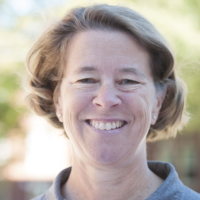 Jennifer (Jenny) Etnier, PhD, is the Julia Taylor Morton distinguished professor and associate chair in the department of kinesiology at the University of North Carolina at Greensboro. She studies exercise and cognitive performance, and is currently principal investigator of a study focused on the effects of physical activity on adults with a family history of Alzheimer’s disease. In addition to her data-based scholarship, Etnier has written two books for youth sport participants and coaches, Bring your “A” Game: A Young Athletes Guide to Mental Toughness, (2009), and Coaching For the Love of the Game: A Practical Guide for Working with Young Athletes, (2020). She is a fellow of the American College of Sports Medicine and the National Academy of Kinesiology, and previously served as president of the North American Society for the Psychology of Sport and Physical Activity.