Kim Mills: Speaking of Psychology is taking a summer break, so we’re rerunning some of our favorite episodes from the past. Back in 2021, I talked to psychologist Joe DeGutis and journalist Sadie Dingfelder, author of a new book about what it’s like to be face blind, about what scientists are learning about prosopagnosia, or faceblindness. We hope you enjoy this episode from the archives. Speaking of Psychology will be back with new episodes in late August. Thank you for listening.
Imagine living in a world where everyone looks vaguely familiar, but you never know for certain exactly who anyone is. Your old classmates, your coworkers, your friends, and even your family members all can appear at first glance to be friendly strangers who seem to know you. That's what life is like for people with prosopagnosia, or face blindness. Historically, the disorder was thought to be rare, but more recent research suggests that it may affect as many as one in fifty people. Last year, Sadie Dingfelder found out she was one of them. Sadie is a former colleague of mine. She used to be an editor at APA's magazine, and I later hired her to be editor of our website. After a lifetime of thinking that there was something just a little bit different about her brain, Sadie took part in a study at Harvard Medical School that finally gave her some clarity about her condition. She wrote about the experience for the Washington Post Magazine. So, what is it like to have prosopagnosia, and what have psychologists and other scientists learned about the causes of face blindness? Can it be treated? If, so how?
Welcome to Speaking of Psychology, the flagship podcast of the American Psychological Association, that examines the links between psychological science and everyday life. I'm Kim Mills.
If you enjoy speaking of psychology, the conversation doesn't have to stop when the podcast is over. Get unlimited access to hundreds of videos about the latest in psychology for just one low price by registering for access to APA's 2020 virtual convention. Start with some of our selected videos, featuring psychology's biggest names discussing such topics as COVID-19, racism, and stigma, or let your curiosity take over and use our on-demand library to explore any topic. Go to convention.apa.org/podcast. That's convention.apa.org/podcastopens in new window.
We actually have two guests today. Joining Sadie and me is Dr. Joseph DeGutis, a neuroscientist and experimental psychologist at Harvard Medical School and the Boston VA. He studies the neuroscience of face blindness and has developed treatment programs to help those with face blindness improve their ability to recognize faces. He runs the study that Sadie participated in and was the person who confirmed her self diagnosis. Welcome to Speaking of Psychology.
Sadie Dingfelder: Thanks.
Joseph DeGutis, PhD: Thanks for having me, yeah.
Mills: Sadie, let's start with the question that I posted in the intro. What is it like to have prosopagnosia? When you look at people, what do you see?
Dingfelder: Yeah. A lot of people think that face blind people maybe just see a blur of faces. That's definitely not true. I have good visual acuity. My problem is I just don't remember faces. The second I'm looking away from them, they're gone from my memory. I was kind of astounded to find out that everyone else has almost photographic visual memory for faces specifically.
Mills: Dr. DeGutis, what does the research tell us about why prosopagnosics can't do this thing that other people do so effortlessly, recognizing and remembering faces? Is the problem memory, perception, or perhaps both?
DeGutis: Yeah. That's a great question. I think that the research shows right now, and our kind of recent results, have found two different maybe sub types. So, one more of a perceptual sub type where you can't tell faces apart that are right in front of you, and then there's also more of this memory component. It's kind of like you were saying in the intro, prosopagnosia can have this vague kind of feeling, but they don't have this rich, robust, kind of once they see somebody, where all this other information about the person comes back to them automatically.
People are remarkably good at faces, and I think that this is one of the things that it could be. From an evolutionary standpoint, it looks like the face maybe exploded in the genetic variation. In some ways, I think we capitalize on this, and we are able to kind of recognize individuals by their faces. In other species, like for instance penguins, they don't have quite a ... You know, people are like, "Well, if I were a penguin, I could recognize penguin faces," but their faces don't-
Mills: They all look the same.
DeGutis: They don't vary as much, so the human face is exploded in variability, and our brains have maybe evolved to capitalize on that. I think with prosopagnosia, there's these very subtle deficits that maybe accumulate, and maybe they're not able to capitalize on all this variability. One of the remarkable things too I just want to say is it's a pretty specific disorder. I think we keep, as scientists, we saw that these people have normal and sometimes above average intellectual abilities and other abilities, so it's like one of these developmental disorders that seems very specific in comparison to other developmental disorders. So, it seems like this vision and visual memory specific disorder.
Mills: What's actually happening in brains like Sadie's when they see peoples' faces? What have you learned from brain imaging studies about where this disorder originates in the brain?
DeGutis: Yeah. I think one of the things that we're finding is that there's kind of these two perceptual processes. I know Sadie's results, so I'm not going to totally go into her results, but basically prosopagnosics have trouble with putting all of the parts of the face together into a complete whole. This is something we do automatically. You can call it holistic processing or gestalt processing, and it's something that is very fast and automatic. The other thing that we're finding is that a lot of the prosopagnosics have particular trouble with being sensitive to the eye region. The eyes hold a lot of information with regard to identity, so that's something that one of the main mechanisms of these kind of perceptual deficits are both maybe a combination of these feature, lack of feature sensitivity, and then a difficulty with putting the face together into a whole. That's on the perceptual side of things.
Then, more on the memory side, it's kind of this type of memory that we call recollection memory. Recollection memory, again it's like taking a face and making all these associations with all this other information. Usually when you see a face, all this extra semantic information, like their name, their job, and when you last saw them, comes flooding back without any effort. Now, when a prosopagnosic, and I think Sadie can say more about this, sees a face, they don't get this flood of information. A lot of times they're met with this vague sense of knowing, and we call that familiarity memory. That was kind of coined back in the 80s as the butcher-on-the-bus phenomena. When you see somebody out of context, let's say your butcher or a barista that you frequent, and you can't place who it is ... Now prosopagnosics, and I'd love to hear more of what Sadie says, this might happen with very familiar people, whereas with people who don't have prosopagnosia, this may just happen with a new acquaintance.
Mills: Does this happen to you, Sadie? Do you have a butcher on the bus?
Dingfelder: Oh yeah. I have a lot of trouble identifying people out of context, but I have a lot of trouble identifying people who are right in their normal context too. I was just on the elevator in my apartment building, and this woman was like, "Oh. Hey Sadie," and I had no idea who she was. We were both wearing masks. I'm like, "I'm sorry. I have no idea who you are." She's like, "Oh. I cat sat for you last week." And I was like, "Oh cool." Yeah. She was in my building, and I did not recognize her, but the masks make it really hard.
Mills: That has to be tough, not only for people like Sadie, but what happens to children at various levels of development? If we're going around wearing masks for the next year or more, Dr. DeGutis, is that going to have any effect on their development, do you think?
DeGutis: You know, I don't think we know, but I think that the face recognition system needs to have a lot of input and a lot of different faces. Actually, they found that some people that grow up in smaller towns may not be as good at face recognition than people who grew up in larger cities that have more exposure. There's some evidence that there may be these critical periods for face recognition where you maybe can differentiate all faces, and this is something related to the other race effect, where you may be able to differentiate all faces of all different ethnicities. Then, after a while, whatever ethnicity you're most exposed to, you get better at that. There may be these critical periods. I think it's an interesting question if this is affected development or if we can kind of rely on neuroplasticity or the ability for the brain to reorganize and recover, but I do think just seeing part of the face may disrupt this holistic processing and kind of putting all the face together, so it could.
Dingfelder: All the kids are on TikTok, right? I wonder if exposure to faces that are flattened on a screen can make up for it?
Mills: I guess we need research. It's really not fair to ask you, Dr. DeGutis, since you're not a developmental psychologist.
DeGutis: Yeah. I think people are still seeing a lot of faces on TV and on the screen. It could be slightly different than interacting with people in a more kind of face-to-face, but actually some of the prosopagnosics have mentioned that faces seem flat to them. I guess I just wanted to ask you, Sadie, is that something that you ... I mean, it's hard to kind of have insight into this, but do you see faces as being flat, or do you see them as being kind of three dimensional?
Dingfelder: I have nothing really to compare it to, because I see everything as flat, because my eyes are not aligned correctly. So, I only use one at a time and do not have binocular vision, which is another thing I discovered as an adult and didn't realize. It was very exciting to figure out why I could never catch a fly ball. It wasn't entirely my fault.
Mills: And is that unusual that this non-stereo vision would be associated with face blindness?
DeGutis: Yeah. People have found that with eye movement issues, like strabismus or amblyopia, that prosopagnosics have a higher incidence. Now, people haven't exactly figured out why, but that is something that we've noticed and other labs have noticed, so maybe using your eyes together to create 3D face is an important aspect of face perception and recognition.
Mills: Some of us, Sadie probably included, learned about face blindness by reading a fascinating essay in 2010 in The New Yorker magazine by the British neurologist, Dr. Oliver Sacks. He described a life in which he avoided other people, and not even recognizing his own face in the mirror. Dr. DeGutis, how common is that type of coping?
DeGutis: I think that we kind of see a couple different variants of coping strategies. One of the things we're looking into is whether prosopagnosics are more introverted or extroverted, and we didn't find anything there, but I think what some prosopagnosics do is they just go out there in the world, and they're nice to everybody. They're just overwhelmingly smiling, and a couple of the prosopagnosics that I studied while I was at the University of California-Berkeley, I just remember seeing them from 100 yards away. They were just beaming a smile and looking around at everybody. It's probably a lot of work to do that, but I think that's one of the strategies. You just kind of half-pretend you know everybody until proven otherwise, but I think maybe some other prosopagnosics feel more anxious about social settings, interactions, and that might not be for everybody. I kind of defer to Sadie, because I know that sometimes you've mentioned that you might use a little bit of that strategy.
Dingfelder: Yeah. I definitely am very friendly to everyone all the time. That's totally a coping mechanism, because anyone could end up being a good friend, so you don't want to miss or hurt someone's feelings. Anyway, this strategy one time caused me to talk to a woman who quickly turned out to be a total stranger on the street, and I tricked her into thinking that she knew me.
DeGutis: That's great.
Dingfelder: We talked for five minutes, and then I'm like, "Okay. I've got to run," and she looked so confused. I kind of felt happy to have inflicted my confusion on someone else. It wasn't very nice, but it wasn't intentional until I realized.
Mills: Now, Sadie. I remember a few years ago I was walking in front of the building for lunch, and you came up the street. I said, "Hey Sadie." You stopped and you said, "Hello," but then you said, "Oh. I was afraid I might run into some people from work if I walked past here." I didn't know, and maybe you didn't even know at that time that you had face blindness, but you covered very well.
Dingfelder: Yeah. That's the thing about developmental disabilities is that you just grow up coming up with lots of clever strategies, and you have no idea that they're strategies. You just assume everyone else is doing the exact same thing. I really thought I was maybe a little bad with faces, but completely on the normal curve. Then, it turns out I am really quite exceptionally bad.
Mills: And proud of it.
DeGutis: I think there is actually, in our testing of people, there's quite a range. Some people will say they're really suffering, that it hurts their employment opportunities, that it really affects their social lives, that it really creates a lot of social anxiety and difficulties, but then there's other people that maybe have figured out ways to compensate. I think making a very specific context, I know we gave a talk at the Google headquarters, and we had a couple prosopagnosics there. They said that they had very specific people they interact with, and they know where everybody sat, so they kind of set up their lives in a way that would help them recognize people. They didn't have these situations where they were thrown into a situation where they had to recognize everybody out of context or on the fly. I think some people, this is just an annoyance, and other people it really can make a big difference in their life and socializing.
Dingfelder: I actually kind of think that it gave me a little bit of a superpower since I've been practicing talking to strangers my entire life. As a reporter, it's very easy to connect with people. I think a lot of even professional reporters get anxiety about talking to strangers, walking up to a stranger and talking to them. I have no problem doing that, because I have been doing that my entire life.
Mills: Can we talk about treatments? I know Sadie, you've had some treatments. Dr. DeGustis, maybe you could explain some of what you have done and how well these treatments work.
DeGutis: I guess the first thing I want to say before the treatment side of it, and this is something that, Sadie, you can talk about, because you've written about, but I think that just raising awareness. I think if people know about this. I mean, this is one of these things where you grow up, and when you grow up you know about how good you are at math, and you know how good you are at sports, and you know how good you are, but in some ways, a lot of people may kind of think they have a problem with face recognition, but it's not something that is as easy. You can say, "Well, maybe I just don't pay attention or I'm kind of lazy. I don't know what it is."
I guess just raising awareness, having people know if they have this thing. I think that has allowed people to either have a better understanding of, "Oh. I can tell somebody I have prosopagnosia, and this is what happens." So, de-stigmatizing when you miss somebody and mis-recognize somebody, or you walk right past them. You'd be like, "Hey. Sometimes I'm going to just walk right past you, and it's not because I'm aloof and I don't care. I just have prosopagnosia." That is a big thing to raise awareness and get the word out. I think it really has given people a lot of relief and insight into their lives. Yeah, maybe Sadie, if you want to talk about that before. We have training programs. I can talk about that, but I just also wanted Sadie to chime in about how powerful that has been.
Dingfelder: Oh yeah. It felt like a central mystery in my life was suddenly cleared up. I used to be worried that I was very self-centered, because I could never remember peoples' names, or if there was something wrong with me at the spiritual level or something. It was really fun just to learn that my fusiform face area is not working very well, and it doesn't reflect poorly on me as a human being.
Mills: Which is a part of the brain that we haven't really talked about, the fusiform face area.
Dingfelder: Yes. Apparently that's where you recognize faces in your brain.
Mills: What are the treatments, and how do they work?
DeGutis: Right now, there's a couple different avenues that people have explored. One is to this kind of computer-based training, and that's focused on either matching faces or getting better at being sensitive to the configuration of features. That's something that there's been maybe four or five studies that have looked at that and showed some benefit. We're also looking into some memory training that targets improving recollection memory, which is trying to take a more effortful approach to taking a face and just adding all this information, trying to actually create a narrative around the face, process the face more deeply, and make more connections to things like how does the face make you feel, how extroverted or introverted is the face?
These are judgments that prosopagnosics can do. They can say, "Oh. Yeah. This face is attractive," or "I think this face is trustworthy." We're trying to actually have the face information and also these other things, like their name and their profession. We process more deeply, making a story about the face, in order to try to get that feeling of recollection, that automatic kind of, "Okay. That's Sadie. I recognize her," and here all this kind of other contextual and semantic information comes back. Another kind of avenue that people have explored is actually oxytocin, which is this neuropeptide that they showed that actually if you squirt a little bit of oxytocin, nasal oxytocin, that prosopagnosics got better at face recognition temporarily, and it looks like maybe the mechanism is by focusing more on the eye region.
I guess the training is still a little bit at its infancy. It's still one of these things where I think what we've proven is that for years and years, people thought face recognition was set in stone, and if you damaged the face recognition system or it never developed properly, that it was ... that was that, but I think what we have shown is that it can be rehabilitated or enhanced. Now, we're still talking about modest improvements. I think one of the things I want to caution against is this is not a cure. It's definitely an experimental treatment that it works for some people, and it doesn't work as well for others.
Mills: Sadie, have you tried the oxytocin?
Dingfelder: No. No one's given me oxytocin, but I would totally try it if someone wants to send some over.
Mills: You've got to go back to Harvard. How sticky is the training? Is it sort of like going to the gym? Do you have to keep doing it all the time?
DeGutis: Yeah. I think also, Sadie you can answer this question, but I think it's something where you do it for a couple of months, and then it usually lasts for two or three months. Then, you kind of go back to the way that you were processing faces before. Sadie, I don't know. What was it like for you when you kind of went through the training?
Dingfelder: It was interesting.
DeGutis: When did it [crosstalk 00:22:52]?
Dingfelder: Yeah. At first, I felt like after the training I was a little bit better, and then in the weeks following I got even better. Then, it's been sort of a long decline since then, though you've retested me, so you can tell me if that's accurate. In terms of it being a modest improvement, I think that I, for instance, recognized a random dude in a coffee shop who lives in my building. I had to ignore him, because I didn't feel like talking to him, and I think it might have been the first time in my life I intentionally ignored someone. It's not necessarily something I want to do all the time, so I didn't do any boosters.
Mills: Dr. DeGutis, let me ask you. You published a study where you looked at whether peoples' self-reports about their face recognition ability matched up with whether they actually had prosopagnosia. What did you find? Do most people with prosopagnosia realize they have it, and should we be testing kids? Is this something that we should be adding to the standard battery of tests that we give to children?
DeGutis: Yeah. I think that this idea that a lot of people are walking around and they have no idea they have prosopagnosia, I think that we're finding that people may think that they're like, "Man, I think I'm below average." I think this idea that you have no idea that you have any face recognition deficits is false, so most of our prosopagnosics that come to the lab or go through the screening ... And a lot of times they say, "Well, I think I'm bad at faces."
But then we're like, "Oh. You're really, really bad."
They're like, "Oh. I didn't realize I was in the .001 percentile of people." I think people do become aware of this, and usually it's around junior high or high school that people first become aware that this is a thing. That's also when these social interactions are really important, and they may have had these kind of salient events in their lives that happened during that time. I think people do have some insight into their face recognition abilities, but I think testing children is a great direction that the field needs to go into.
It has been tough to kind of get at this, because the memory system is developing. Who knows if in a few years if this is something that they're going to grow out of it. I mean, face recognition itself doesn't really peak until your early 30s, but I think there are some challenges with identifying children, but if we could identify children, that would be great. I think some of the suffering and difficulties that prosopagnosics report in middle school and in high school, it would be really wonderful to try to avoid. I mean, middle school and high school is rough for everybody, but I think it's particularly hard for prosopagnosics.
Mills: Is there a genetic component to this? Sadie, you were apparently born with this. Are there others in your family who you think maybe have this?
Dingfelder: Yes. I think my uncle has face blindness. He disagrees, but I remember one time we were at Thanksgiving, and he said to my brother, "Oh. Are you Sadie's roommate or something?" He was like, "No. I'm your one nephew who you've known since I was born." And he was like, "Oh. Anyway ..." My uncle was like, "Oh yeah. Right."
I don't know why anyone would be in denial about it. It's a pretty cool disorder to have. We're in such good company. We've got Oliver Sacks. What's the chimpanzee researcher?
Mills: Oh. Jane Goodall.
DeGutis: Yeah. Jane Goodall.
Dingfelder: Jane Goodall. Yeah.
Mills: Yeah. I was really surprised to read about that. I mean, there she was working with all these chimps that she had to recognize. Sadie, do you recognize your dog? Oh. Oh. Actually, you're a cat person.
Dingfelder: I'm also a bird watcher, so I guess I don't have to recognize individual birds though very often.
Mills: They're all little brown birds.
Dingfelder: Also, the craziest one is Chuck Close, who draws those huge, beautiful portraits. Of course, he's obsessed with faces, because they're such a puzzle. I think it's really cool that he channeled that through his art.
Mills: Overall Sadie, do you think knowing this is what you have has changed your life?
Dingfelder: Yeah. Definitely. I wish I had known as a kid honestly, because I had so much trouble making friends. I just assumed it was because I was weird, which isn't incorrect, but knowing the specifics would have been very helpful, because maybe I could have used pictures. Later in college, before I knew I was face blind, I did make flashcards for myself of everyone who lived in my dorm. It didn't actually help that much though, so I don't know. I think knowing about yourself is always powerful, and it helps you sort of work around your issues, and then I can just tell people too. I tell people I'm face blind all the time. I don't know if they believe me, so sometimes I say, "Google it. It's real."
Mills: Dr. DeGutis, there may be some people listening, thinking, "I have trouble recognizing faces. I wonder if I might have prosopagnosia." Where should they go to find out?
DeGutis: Yes. We just started another study to look at more of these memory problems and also to train memory and focus on memory. That's at faceblind.harvard.edu, and there's also some great resources at faceblind.org. Those would be two good websites to start with, and you can do some self-tests. We can send you some other tests to take and also give you some feedback, so I think this is something. We're trying to get the word out. With the pandemic, we're also making everything online, so I think we can get a lot of really useful information and do some of these training studies online, so that would be a recommendation.
Mills: And are you looking for more subjects for your research?
DeGutis: Yeah. Yup. We're looking for more participants, and we're also happy just to kind of say, "Oh. Here's how I performed. Here's what's kind of happening in my daily life," and we can give you some ... I think one of the useful things that we can provide is we've tested a lot of people with face blindness or prosopagnosia, and we can say, "Oh. You're right in the middle. This is what everybody kind of reports," or we can also say, "Oh. In our history of testing a couple hundred people with face blindness, we've never heard of that," so I think that sometimes is useful to know even if your prosopagnosia, "Am I like a typical prosopagnosia, or am I a little quirky or different?"
I think that's one of the things. I think we've also found that people have enjoyed knowing a little bit more about, "Oh. I report all these experiences," or "My perception is fine, but I just have this memory problem."
Then, we can say, "Oh yeah. That's about 45% of prosopagnosics," so I think it's been really useful for people to know that they're not alone. There's a lot of people like them, and also to see, "Oh yeah. This fits in with a lot of the other things people are experiencing."
Dingfelder: Yeah. It's so fun to get on the prosopagnosia Facebook group, because I feel it's a lot of people who had the same childhood as mine. Someone will write, "Does anyone else only make friends with very distinctive looking people?"
And I was like, "Oh my god. All my friends had blue hair." It's fun to find out you're not alone. It helps with the feeling of isolation, living in a world where everyone kind of looks like a stranger.
Mills: I'm just curious. How did you land on oxytocin as a treatment?
DeGutis: The oxytocin treatment wasn't our lab that kind of spearheaded that. That was Sarah Batea and her colleagues, but oxytocin has kind of been thought as this trust neuropeptide that is about facilitating social bonds and things like that. It may have a slight dark side to it too, where maybe you facilitate in group bonds but not out group bonds, so that's another conversation. I think that oxytocin has thought of ... They've looked on some of these genes that are related to oxytocin, and there's some candidate genes that may be involved in both autism and prosopagnosia, so there's a little bit of a higher incidence of prosopagnosia and people who are on the autism spectrum. I think this idea that oxytocin is this social neuropeptide, it may have to do with forming social bonds or face processing. It's also kind of this idea of trust and maybe engagement with faces, so it's trying to improve attention and engagement with faces was the idea.
Mills: Given that it's situated in a physical part of the brain, has anyone looked at a possible surgical intervention?
DeGutis: I think the surgical, yeah. So, I guess just to quickly go over the ... In the brain, I think the brain with faces, so one of the things about why faces are so studied in neuroscience, and this is back in the 90s by Nancy Kanwisher at MIT and others across in many different labs, they found there's this little region about the size of the tip of your pinky that just really responds to faces more than any other kind of visual input. They call it the fusiform face area. Now, they've also found that there's this one back a little further in the visual processing stream called the occipital face area.
There may be even sub-components of the fusiform face area, but it's these kind of modular ... It's probably one of the only systems in the brain that's organized in a modular way, meaning you kind of have these little nodes that do most of the work. The interesting thing is all of our prosopagnosics have these regions. It's not like there are holes there in their brain where you think a face is. Their brain regions light up to faces. Now, we're finding that their face areas are not as selective, meaning they don't prefer faces over other stimuli and other visual objects as much as someone without prosopagnosia. We even find that their face areas may be a little thicker, which means that early in development your cortex is really thick.
Actually, you think thinner is worse, but sometimes in the brain, thinner and more dense means that you're making more connections, so we kind of find that some of the developmental prosopagnosics have thicker face areas and not as well connected to other brain regions, like your hippocampus, which is involved in memory, and these anterior temporal lobes, which are involved in retrieving somebody's name and how you know them. So, it is. It's this really interesting thing where the developmental prosopagnosics we've studied have all of the structures there. They're just not optimized. They're not as connected. They're not as working as efficiently. They're not as selective. So, I think you brought up a surgical intervention. I think sometimes people have tried to do brain stimulation, non-invasive. They haven't opened up somebody's skull to do something really invasive.
Mills: Yeah. That's pretty radical.
DeGutis: Yeah. It's pretty radical, and there hasn't been much positive results with the non-invasive brain stimulation. One of the things they wanted to do was figure out, "Is the face area really important and necessary for face processing and face recognition?" In this person who had epilepsy, they put electrodes in their face area, and when they stimulated the face area, they reported that as they were looking at somebody's face, it transmogrified, kind of melted, and changed.
So, this is really fascinating, and it made everyone believe, "Oh. This isn't just some kind of epiphenomenon. This little brain region is very much at the hub of what we're doing with faces and face recognition." This epilepsy patient would report that you just changed to somebody else. As soon as they stimulated this brain area, they said, "Oh. You became somebody else." I don't know if they're going to try that treatment for prosopagnosia anytime soon, but it's very fascinating, and it really shows how specialized these brain regions are. Also, in terms of a developmental disorder, this is a very specialized disorder. A lot of developmental disorders, like ADHD or even autism spectrum disorders, lots of the brain region, like many, many brain regions, have been implicated.
With prosopagnosia, it's like we're dealing with these little, small, specific, selective areas. I think that's also, from a neuroscience perspective, why it's been so fascinating to understand. If we can actually improve face recognition, how do these little, small nodes change? Are they making more connections? Are they getting thinner? Are they activating in a more selection manner? This is one of the things that we can use this disorder to help us understand a lot more about what they call neuroplasticity, which is kind of how the brain changes with experience. As you can tell, we're pretty excited about this possibility, but again, we're still scratching the surface. This is still the beginning.
Dingfelder: You know, you don't need brain surgery. All you need is facial recognition glasses, right? The technology already exists. It's being used in peoples' home security systems, but for privacy reason and because everyone thinks it's creepy, they won't put it in glasses. It's my dream. If you could prove that you were face blind or something, you could get these. You'd have magic glasses that would tell you who everyone is, and I think that'd be amazing.
Mills: Okay. That leaves me to the last question I want to throw to you, Sadie, which is if you could cure this, would you do so, or are you so accustomed to living with face blindness that you couldn't imagine living any other way?
Dingfelder: Oh my god. I'd love to cure it. I would really like to see what faces look like to everyone who isn't face blind. I get the feeling that there's actually a qualitative difference. Similarly, I would like to have binocular vision too. I would like to be able to see things in three dimensions. I do think it's been a huge part of my personality growing up, but I'm 40 or something. I'm 41, I guess, and anyway. I feel like I'm fully capitalized on my old brain, my brain, and why not try something new now?
Mills: Well, thank you for joining me today. It's been really interesting. I really enjoyed it. Sadie, it was great to see you again. It's been a while.
Dingfelder: Yeah.
DeGutis: Yeah. Thanks so much.
Mills: All right. You can find previous episodes of Speaking of Psychology on our website at www.speakingofpsychology.org or wherever you get your podcasts. If you have comments or ideas for future podcasts, email us at speakingofpsychology@apa.org. That's speakingofpsychology, all one word, @apa.org. Speaking of Psychology is produced by Lea Winerman. Our sound editor is Chris Condayan. Thank you for listening. From the American Psychological Association, I'm Kim Mills.


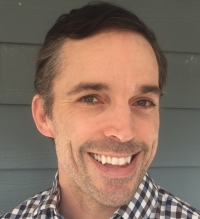 Joe DeGutis, PhD, is a cognitive neuroscientist and assistant professor at Harvard Medical School/Boston VA Hospital. For the last 15 years he has been studying prosopagnosia, the perception and memory deficits underlying this disorder, and possibilities for treatment.
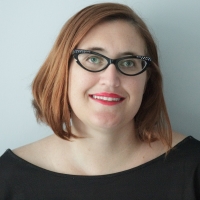 Sadie Dingfelder is a freelance writer in Washington, D.C. She previously was a reporter for the Washington Post Express, and before that, she was the senior science writer for APA’s magazine Monitor on Psychology and an editor in APA’s web department.