Kim Mills: “That's not fair.” Every parent has heard that cry dozens if not hundreds of times. From a very early age, we humans seem wired to notice when other people are getting more than we are and to complain about it loudly when they do. As adults, our sense of fairness and justice becomes broader and more nuanced. We care about equal pay for equal work, for example, or about which countries are right or wrong in global conflicts, even when those issues might not touch our lives directly.
Questions such as these, of fairness, justice, and morality, might seem unique to humans, but research suggests that nonhuman animals notice inequality as well, and that by studying how they react to unfair situations, we can better understand how our human sense of justice evolved.
So how do animals, from crows to chimpanzees, understand fairness? Do they get mad when they're treated unfairly? How can researchers tell? How much do different species differ and how they react to inequality? What about individual animals? And what can we learn from studying these questions about why humans care so much about equality and fairness, and about how we cooperate and compete with one another?
Welcome to Speaking of Psychology, the flagship podcast of the American Psychological Association that examines the links between psychological science and everyday life. I'm Kim Mills.
My guest today is Dr. Sarah Brosnan, a distinguished university professor in the departments of psychology and philosophy and the Neuroscience Institute at Georgia State University, where she also directs the Comparative Economics and Behavioral Sciences Lab. She and her colleagues study decision making, cooperation and fairness in nonhuman primates, such as chimpanzees and monkeys, in order to better understand how these qualities evolved in humans. Her research has been funded by the National Science Foundation and National Institutes of Health, among others. She's published more than 150 scientific papers and book chapters, and has won numerous awards for her mentoring and research. Her TED Talk on why monkeys and humans are wired for fairness has been viewed nearly 1.5 million times.
Thank you for joining me today, Dr. Brosnan.
Sarah Brosnan, PhD: It's a real pleasure to be here. Thanks, Kim.
Mills: Let's start with how you got into this research. You have a funny story about the first time you thought, “Maybe animals care about fairness.” Can you tell us about that moment that first sparked your interest in this research?
Brosnan: Absolutely. I was a first-year grad student and one of the things that I had always been told by my advisor, Frans de Waal, was that you really get the best questions about the animals from watching the animals. So I spent a lot of time outside my first year in grad school watching our groups of capuchin monkeys interact with one another. And one afternoon I was out feeding one of the groups peanuts, and they really like peanuts. And of course what that means is that the more dominant animals come up and try to get all of the peanuts and the more subordinate animals get left out. So what you do is you do this little trick thing where you hold peanuts in both hands and you try to tempt the dominant animal over to one side while you are surreptitiously sneaking peanuts to the more subordinate animals on the other side.
And while I was doing this, the dominant animal in the group, who was male named Ozzie, eventually ran away and came back and tried to give me a piece of monkey chow, which is literally made by Purina. I mean, it looks like Dog Chow. And so, it's not particularly valuable, but he pushed it through the fence at me and I didn't give him a peanut. He ran back inside to the indoor part of their enclosure. They'd just gotten their fruit and vegetable tray, and so he got the peel of a navel orange and he brought that out and did the same thing. And when I didn't give him a peanut, eventually he went back inside and came out with a whole quarter of a navel orange and he brought that to me and he pushed it through the fence and it dropped at my feet.
And I did give him the peanut, but it got me thinking, because I was fairly certain that if I had walked up to Ozzie and offered him a peanut versus a quarter of a navel orange, he would've taken the orange. So why was it that all of a sudden he wanted the peanut? Well, there are lots of possibilities, but one of them is that he wanted the peanut because that's what everybody else was getting. And so, I decided to test that and at the time I was doing a dissertation looking at how primates perceived value. So it was relatively straightforward to add a condition where we looked at how their response to an outcome changed depending on what the monkey next to them was getting.
Mills: So probably your most famous study, which followed that encounter and is about 20 years old now, looked at how monkeys responded when given an inferior treat when compared to their partner. Can you tell me about that study and what you found?
Brosnan: Well, that was in fact the study we did after I saw Ozzie. So we had two monkeys from the same social groups. So all of our monkeys live in social groups with individuals that they grew up with. So they have nice normal social interactions. So we took two monkeys from the same social group. They came inside to their test chamber and they had to do a really simple task. It was trading a token and they got a food reward when they did that. And in this case, one of them traded a token and got something they really liked, which was a grape. Generally speaking, the more expensive it is at the grocery store, the better they like it. And the other one traded and got something that they liked less well, which in this case was a piece of cucumber.
Now, the thing is they normally like cucumbers just fine. So we compared that to a control where both of them were trading and getting a cucumber and they were more than happy to eat those cucumber pieces when both they and their partner were getting a cucumber. And in another control we controlled to see what happened if the grapes were visible but no one was getting them. So that, control was actually particularly mean. We would wave the grapes in front of their faces until they gestured towards it. And then when they gestured we would put the grape down and we would give them the cucumber. But importantly, we did the same thing for both monkeys. So they both ended up getting the cucumber and in both cases they accepted and ate their cucumbers most of the time. Whereas, when their partner got a grape, they were much more likely to refuse their cucumber, which suggests that they aren't as enthusiastic about those cucumbers when their partner is getting something better.
Mills: And the video that goes along with that experiment is pretty funny, where one of the capuchins is throwing the cucumber at the experimenter.
Brosnan: Yeah, that's a female named Lance who actually lives at San Diego Zoo now. In full disclosure, she is the only monkey who can do aimed overhand throwing, but that was a pretty common outcome. They would push the rewards back out, they would knock them out of our hand or they would just turn around and ignore them all together.
Mills: So let's talk more broadly about why this research is important. I mentioned in my introduction that one of the tenets of your work is that studies like these on how animals react to inequality can help us understand human behavior. What can we learn from studying nonhuman animals about why humans care so much about fairness?
Brosnan: Well, a critical question when we're talking about humans is, “What is it about fairness that makes us care? Is it a cultural trait? Is a biological trait?” And I don't mean it's one or the other. Obviously, what we consider fair, what actual factors are fair, is influenced by our culture. But at core is it entirely cultural or is there a biological component? And that makes a difference, because if there is a biological foundation to it, it makes a difference in when you might expect to see responses, how you might handle situations in which individuals respond to inequity.
And of course, it also helps us to understand the situations in which you might expect to see people respond. So for instance, why did a sense of fairness evolve? If it did evolve. What were the selective pressures? What were the contexts in which it evolved? Which would tell you something about when you would expect to see people respond the most strongly to unfair situations. You can't completely get rid of unfairness. They're always going to be situations where at least in the immediate sense, things are not completely equal. So understanding how we evolved this sense of inequity would help us understand how to ameliorate those situations and how to best approach it, so that we can make things the most fair possible for everyone.
Mills: I'd also like to ask you why it's important to study animals to better understand humans? Animal research is seen as controversial by some, but I also understand that the animals you work with are treated humanely and that they're not forced to do anything. Is that correct?
Brosnan: Yeah. Our monkeys only participate voluntarily. So they live in a social group and they are never deprived of anything to encourage them to participate. So they get the same food, the same treats, the same access to the outdoors, the same access to their partners regardless of whether or not they participate in the day's testing. And I think that's really important. It's important ethically, but it's also important for my research. I study social behavior. I want to know what they do naturally. So if we compel them to participate in the studies, then we're not getting natural social behavior. So we want them to participate because they choose to. Our guys live in big outdoor enclosures in social groups. Most of them choose to come in and test most of the time. Some days they don't. So if it's the first really nice day after a lot of rain, they're not coming in. There's just not much we can do about that.
But we never restrict them from outdoor access or from their social partners. They get the same fruits and vegetables and treats regardless of whether they come in. And I get this question too, that does bias our data set? So for instance, one of the questions that we are really interested in, is how relationship quality influences these results. And it's really difficult to test, because we know from our studies, and I've published this, that the individuals who are coming in to test in these didactic studies are the ones who have good relationship quality. They're the ones who are spending time together and grooming one another in their social group. We're not getting the ones who don't spend time together, they won't come in together.
So it's really difficult to test how relationship quality is influencing these behaviors we're interested in like in equity responses and cooperation, because we can't get the ones who don't have good relationship quality. So one of the things that we try to do too, is after we do the more controlled tests at the didactic level, we also do tests at the entire group level, which lack a lot of experimental control. I can't control the number of trials per session. I can't control who comes up, I can't control the order in which they participate. But when you've got something set up for the entire social group, say for an hour, an hour and a half, almost every pair is going to participate sooner or later. So we can start to get some data from these other studies. And of course the frequency with which they participate together tells you a lot.
Mills: Now as humans, we definitely care when we get less than someone else, but we also sometimes feel uncomfortable when we come out on top in a situation where we get more than someone else. Do any nonhuman animals react that way as well?
Brosnan: They do actually. Not nearly as strongly as they do to getting less, but then again, neither do humans according to a lot of the research. So maybe that's not such a surprise. When chimpanzees get a grape and their partner gets a cucumber, they are more likely to refuse that grape if their partner gets a cucumber as compared to when their partner also got a grape. And so, it's statistically significant, but it also is seems to be biologically relevant. There is a difference there I think, just because something significant doesn't necessarily mean that it's a large enough effect to mean anything.
However, it is a much smaller effect than their response when they get less than a partner. But there's some really good data out there suggesting that the same is true with humans. Peter Blake and Katie McAuliffe have a lovely study. It's a cross-cultural study on kids from seven different cultures, and kids from most cultures—all of the cultures they studied—respond negatively when they get less than a partner. And the responses increase across age. It was a cross-sectional study, but the responses became stronger across age. But only kids from a few societies responded when they got more than a partner and they weren't as strong of a magnitude as the ones when they got less.
Mills: Evolutionarily, what might be the benefit to that kind of behavior?
Brosnan: There actually is a benefit, it's just a little bit further removed. So the obvious benefit to responding to inequity when you get less, is that it tells you something about the value of your partner. This was proposed several decades ago by economists and psychologists at roughly the same time. The idea being that if you have a sense of inequity, it allows you to judge the value of your partner. So essentially a sense of fairness or a sense of inequity is a partner choice mechanism. If you're working with someone, a partner choice mechanism in cooperation. So if you're working with someone and they are constantly taking more than their fair share of the rewards after a cooperative interaction, it's time to go find someone new. Just sampling the environment, you're likely to find someone who treats you better than that individual. And if that is the case, then I would actually expect that responses to inequity will be widespread. And so far that's what we've found, most cooperative species seem to show some evidence of inequity.
Advantageous inequity is a bit further removed. But I think also important. The difference is between helping you identify good partners and helping you cultivate and maintain a good partner. So if you and I are working together and let's say by chance, not because I'm being a jerk in this case, I keep getting more than you, if I recognize that you're sooner or later going to get frustrated and go find a new partner and I value our relationship, I should do something about it.
So if I can recognize that the fact that I'm getting more than you is putting our relationship at peril, in peril, then I can do something about that. I can give you some, I can help you out, I can refuse my rewards, I can do something to rectify the inequity. And by paying a short term cost to rectify that inequity, I can maintain the long term benefit of our cooperative relationship. And if I do it right, then we maintain this relationship that has been beneficial in the past and presumably will be so in the future. So for long-lived species that have consistent cooperative interactions over a very long period of time, it makes a lot of sense.
Mills: Now, you study mainly primates, but these questions have been studied in other species as well. What are some of the other animals that researchers have studied and what have they found? Do dogs and cats notice unfairness? Or birds or fish? I understand you've looked at fish. I mean, how can you tell when fish feel that they're being treated unfairly?
Brosnan: Well, the same way that you look at primates, you see whether they take the food. Actually, I'm going to digress for just a second. That's an interesting point. You ask how we know if they feel like they're being treated unfairly. We don't, we know if they respond behaviorally. So one of the interesting points is, we can test right now whether they are responding to inequity by refusing a food reward, which is a very costly response. We don't know if they notice. We don't know if they care. There is a difference there.
One of the things that we and others are hoping to do is use some of the new noninvasive technologies like eye tracking, thermal imaging where you can look at changes in affect, so emotional state, by looking at changes in facial temperature, even short term changes in hormones and so forth to see whether or not they are potentially noticing some of these inequitable outcomes even if they don't refuse the reward.
There is some really good evidence in capuchins that if rewards are too good, they won't refuse them even if they're very unequal. So maybe they do feel inequity and we just don't have any way of telling.
But anyway, back to your previous question about what other species respond. So there's lots of work in dogs and wolves. A lot of it's been done by Friederike Range and her colleagues in Austria. There's also some work by Alexandra Horowitz and several other labs. And not surprisingly, given how cooperative they are, dogs and wolves seem to respond, and there's also some really nice evidence that they are changing their behavior. So not only are they refusing the outcomes, but they're also changing their behavior towards both the experimenter and the other dog, refusing to come up and interact with them as much, avoiding them and so forth.
There's also some work in some of the corvids, so these are crows and ravens and so forth. Ravens also respond to inequity. We did not find it in the fish. We tested cleaner fish. This is actually Katie McAuliffe and Redouan Bshary led this. I was part of the group but they were the ones who led it. They tested cleaner fish who are highly cooperative. And so, you might expect to see it there. They did not respond negatively. But the interesting thing is, cleaner fish are highly interdependent and we don't see it in the interdependent primate species either. So these would be the cooperative breeders like marmosets and tamarins and the bi-parental care species like owl monkeys. Within a breeding pair they don't respond negatively in these tasks. And it may be that if you are already in an interdependent relationship, a little bit of inequity is not enough to make you break up the partnership and go find a new one. So they may be more sensitive to inequity when the partnership is being formed, but not so sensitive to inequity once you're in it, because it's just too costly.
Mills: Well, talking again about humans, there is a lot of individual variation. Some people are far more sensitive to unfairness and injustice than other people are. Do you see that individual variation in nonhuman primates?
Brosnan: We do. And we haven't really been able to explain what is driving it, partially because of sample size issues. Nonhuman primates are hard to study, especially if you need a large intact social group that has been together for a long time. So when we run studies with sample sizes of 16, it's considered huge. But with humans, of course, you want sample sizes in the hundreds. So it's really difficult. We can document individual variability. It's really difficult to statistically demonstrate what's going on. What we can say, is that we tend to see more variability in the apes than we do in the monkeys. Now, that is not a statistical statement, that is a “Sarah thinks this is what's going on” statement, but I'm not necessarily surprised. I think that for the monkeys, this may be my hypothesis, is that this may be more of an evolved response and it's just a response pattern that you see when you get treated unfairly X number of times it's time to react.
Whereas, the chimpanzees may be showing more flexibility of response. So they may be able to better take into account the context and what's going on. What we do know is that there are impacts of dominance. So more dominant individuals are more upset by inequity than more subordinates, which is not surprising, from an evolutionary perspective you'd expect that, because more dominant individuals have more to lose. Because, getting treated inequitably might mean that they're about to get challenged for their rank. From a mechanistic perspective, they're used to getting better outcomes than the subordinates. So they probably are less used to being treated unfairly and therefore more likely to respond when they are.
We don't see a consistent sex difference. Some studies have found that males were more responsive to inequity. Some studies have found that females were. So I don't actually think there's a consistent sex difference.
We do tend to see a personality difference, at least in chimpanzees. For chimpanzees, a very large study found that chimps that were higher on more social personality dimensions, extroversion and sociability—so in other words, they were more likely to spend time with other chimpanzees—were more likely to respond negatively to inequity. Whereas, those that were higher on dimensions that were more human-oriented were actually more likely to respond negatively in that contrast condition I mentioned, where we waved the grape in front of them and then gave them the cucumber, which may suggest that they thought that the human was cheating them and didn't like that. We don't know, but that's a reasonable hypothesis. And I still think there's something going on with relationship quality. But we haven't been able to get at that, because as I alluded to earlier, the test that we ran to look at that, what ended up happening was we only got individuals with good relationships in the first place who were willing to come in and test together. So I don't have an answer.
Mills: But doesn't that happen with human subjects as well? I mean, the people who tend to want to participate in studies are a lot like the apes and monkeys you're testing?
Brosnan: Yep. And most of the human studies are either individuals who they say “bring a friend to the lab” or they're complete strangers. And so, you're not getting that middle ground where you have individuals who know each other but have differing relationship qualities. You can get around that by going in and testing a daycare center or people in a fraternity or sorority or something. But yes, you're absolutely right.
Mills: How do you keep from anthropomorphizing these animals you're working with them? I mean clearly you work with them for long periods of time and you really get to know them and you're talking about their personalities and testing them on the big five, for example.
Brosnan: Yeah, you really don't. I mean, not to be blunt, but you don't. So for instance, our longest lived capuchin lived 55 years. I've been working with literally the same capuchin monkeys for 23 years now—24 years now, it's been 24, and chimps the same amount of time. So you don't, we know them quite well. And what we do is keep in mind that we're going to be anthropomorphic, we're almost not going to have a choice and try to use it appropriately.
So when we do these studies, we try very hard to only talk about the actual experimental data. We run these studies with people—as much as possible, we try to do it where in a way that is nonbiased, if we can, we run it on a computerized platform so that you don't have a human being in there. If you can't, you record it and you do what you can. So for instance, in a trading task, you might have a platform in front of you where you have marked where your hand goes and everything is as marked as possible. And then you have every bit of data double coded by another observer who doesn't know what the hypotheses are and who preferably doesn't care. Someone who, it's not their dissertation, it's not their grant, it's not their whatever. So we call this interobserver reliability, and that helps. It doesn't make it perfect, but it helps.
And we have to remember that we, as I mentioned earlier, we are talking about what the animals do, not what the animals think, feel, what their motivations are. I think that's a really important distinction. One that we actually don't remember enough in humans either. We tend to extrapolate from what the humans did on the study to what their motivations were, because we are humans. And I don't think that's a fair assessment with humans either. But that's a whole ‘nother podcast.
But the other thing is I think anthropomorphism can be very useful. So for instance, back to that initial story about Ozzie, I watched what Ozzie was doing, bringing me oranges for peanuts and thought, “Huh, if we were humans, we would think that might be inequity. How could we test that?” So there's nothing wrong with making an assessment about what you think of an animal is doing, as long as you then use that as the starting point for hypothesis testing with a nice tight experimental test, rather than just going with it and not bothering to test what you see. So it can be extremely useful as that starting point in helping you get some insight into what they're doing, especially after a couple of decades of watching them, I still see things where I didn't notice something before and think, “I wonder what's going on there.”
Mills: Let's talk for a moment about some other research that you have done, your work with the endowment effect, which is something that causes people to consider an item that they've just come to possess as higher in value than the maximum price they would've paid to acquire it just moments before. And this is something I understand you've studied in both humans and chimpanzees. Can you talk about those studies?
Brosnan: Yeah, the endowment effect is a lot of fun. It's something I've done with a number of colleagues, Owen Jones at Vanderbilt being one of the primary ones I've worked with on this. And that definition is a mouthful. But essentially the endowment effect is the idea that once you come to possess something, you suddenly value it more than you did a moment before. And importantly, it's not due to learning new information about it that makes it more valuable. And it's not due to any sort of sentimental attachment. It's not because suddenly it was the thing you had with you on your last hike with your kid before they went off to college or something. It's just because you possess it. And there have been hundreds of studies that have shown that humans do this. You ask them how much they're willing to pay to buy the book, and then a minute later you ask them how much they're willing to sell the book for. And it's more.
And so, there has been a lot of research into why people would do this and lots of hypothesizing. Maybe it's related to loss aversion, but of course that's kind of circular because if it's related to loss aversion then why are people showing the loss aversion in the first place? Perhaps people just want to make a profit, and that is true. But in some of these cases, the amount people won't sell it for is a huge profit. Dan Ariely famously has a study with Duke basketball tickets where people could have made an enormous profit and chose not to. So that, doesn't make a whole lot of sense either. And so, there are lots of explanations that aren't satisfying because they don't explain it in a predictable way. And our hypothesis was that, as has been proposed for a number of other cognitive biases, it probably made sense in the evolutionary past that if you had something, you hung onto it, because you didn't know the value of what you would potentially be trading for.
And you also didn't know if you were actually going to get the other thing. So maybe I hand something to you and then I don't get anything else back. So there should be a bias to hang on to what you've got. There's an expression, a bird in the hand is worth two in the bush, and it's true. And so, we decided that to test that by looking at whether or not other species had an endowment effect. And there's a famous study by Jack Knetsch from years ago where he essentially gave students coffee mugs, had them do a task and then said, “Oh, by the way, if you don't want the coffee mug, you can trade it for a chocolate bar.” Another class got the reverse. And then one class did the task and then was given a choice between the coffee mug and the chocolate bar.
And the class that got the choice was about 50/50. The class that got the coffee mug, 90% of them kept the mug. The class that got the chocolate bar, 90% of them kept the chocolate bar. So it doesn't make any sense. Everybody should be at 50% if the preferences are consistent. So we did that with chimps and then later with gorillas and orangutans, and around the same time some other groups started doing similar sorts of things. So another group did it with some other great apes, and it's been done with capuchins and all of them show strong endowment effects. Once they've got something, they are hanging onto it. And it's not because they won't trade with humans. If you offer them something better, they will happily trade back. And it's not because they aren't just trading for fun, although they don't show endowment effect for toys, only for food.
Mills: Oh, interesting.
Brosnan: So we then decided to test and see whether or not the endowment effect, from an evolutionary perspective, you should only show an endowment effect for something that matters from an evolutionary perspective like food. So we tested tools. So we had a dipping tool that they could use to dip in and get some, it was flavored oatmeal, they like flavored oatmeal, and a sponge tool that they could use to get juice. And we tested for an endowment effect between those two tools when the foods were either available or they could see them but couldn't reach them or they just weren't present at all.
And they only showed that endowment effect for the tools when they could actually use them, even when they could see the foods, but they couldn't reach them, they showed no endowment effect. So it was really sensitive to context, which supports this idea that we evolved this cognitive bias, because when something is useful, you should hang onto it because it's useful right now, it's salient in the moment. Which supports this idea that a lot of these biases evolved because they were useful, and maybe now they look quirky and unreasonable, but there weren't police forces to come and help you if the person on eBay didn't follow through on their end of the deal back several millennia ago. So you needed to be more careful.
Mills: So last question. What are the next big issues you're working on? What are the questions you still want to answer?
Brosnan: One of the things I'm really interested in is how this relates to what we see in their more natural environments. So when we are in the lab, we motivate all of their studies with food, because just like you take undergrads into the lab and get them to do things for money or class credit, it's a nice fungible resource that we can test them with. And that's not how they're probably making their decisions in the wild, because they don't trade much food in the wild. They trade grooming, they trade social support, social support being support against others who are attacking them. Social support is preferred against other groups and so forth. Females are trading allomaternal care. They're helping each other with their offspring. So one of the things that I've been doing is working with Marcela Benitez, whose faculty at Emory, to try and study some of these questions in the wild.
So we've got some grants to do cognitive testing, both in the wild and in the lab to see if we can see, are the monkeys in the wild doing the same things as the monkeys in the lab? And then what might it look like for an actual wild capuchin to be doing this? And we can do that in two ways. First, we can do observational studies in our own social groups, and then we can also do observational studies on these groups in the wild. So it's not necessarily a new question per se, but trying to understand how we complete this arc, to understand what we're seeing in the lab maps onto what we see in natural environments. Which, I think is really an important question for understanding how it relates to humans. And along with that, we're trying to get at some of the underlying mechanisms.
So Marcela and I have started studying hormones. We've now got an eye tracker. There are lots of things you can do noninvasively with the monkeys’ full participation and consent, or assent, they can't give consent, to look at some of the mechanisms to help understand what they're doing. And so, we would like to take a lot of these lines of research. I also study cooperation and try and tie these together and look at how relationship quality and ecology and these individual differences are interplay and deciding these social interactions. We're already seeing big differences. We've got one paper, one of my graduate students is writing up, finding that for a cooperation task, it matters what group you're in. The groups are doing fundamentally different things. We've got five social groups at Georgia State, and they look completely different. We would have entirely different papers depending on which group we'd looked at.
Mills: Wow, that's amazing.
Brosnan: It really is. And because we have so many groups, we can actually see that in a way that it's very difficult to do other places.
Mills: Well, that all sounds really exciting. I look forward to reading more of your work and learning more about what you are learning. So thank you for joining me today, Dr. Brosnan.
Brosnan: Thank you. I really enjoyed it.
Mills: You can find previous episodes of Speaking of Psychology on our website at www.speakingofpsychology.org or on Apple, Stitcher, or wherever you get your podcasts. And if you like what you hear, please leave us a review. If you have comments or ideas for future podcasts, you can email us at speakingofpsychology@apa.org. Speaking of Psychology is produced by Lea Winerman. Our sound editor is Chris Condayan.
Thank you for listening. For the American Psychological Association, I'm Kim Mills.


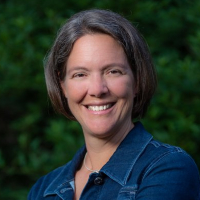 Sarah Brosnan, PhD, is a distinguished university professor in the departments of psychology and philosophy and the Neuroscience Institute at Georgia State University, co-director of the Language Research Center, and director of the Second Century Initiative (2CI) in Primate Social Cognition, Evolution and Behavior Fellows program. She is also a member of the Brains & Behavior program and faculty in the Center for Behavioral Neuroscience. She directs the Comparative Economics and Behavioral Sciences Laboratory (CEBUS Lab) and conducts behavioral and cognitive research with nonhuman primates at both the Language Research Center of Georgia State University and the Michale E. Keeling Center for Comparative Medicine and Research of the UT/MD Anderson Cancer Center.

