Vaile Wright: Hello and welcome to Speaking of Psychology, a podcast from the American Psychological Association. I'm Dr. Vaile Wright, the director of research and special projects at APA and I'm guest hosting this podcast from APA 2019 here in Chicago.
Joining us today is Dr. Angela Lawson. She's the associate professor in the departments of obstetrics and gynecology at Northwestern University here in Chicago. And today we're going to be talking about infertility. About one in eight U.S. women aged 15 to 44 have problems conceiving and women who experience infertility reported as one of the most difficult experiences of their life. So, I'm really excited to have Dr. Lawson here to help us separate fact from fiction; to help us debunk some of the myths that exist about infertility and really open up a dialogue about an uncomfortable and kind of challenging topic. So, thank you welcome, Dr. Lawson.
Angela Lawson: Thank you.
Vaile Wright: And full disclosure for all listeners, Dr. Lawson and I are friends. We went to graduate school together. We were in the same research lab and we've been best friends for about 17 years.
Angela Lawson: Correct.
Vaile Wright: So, we're going to refer to each other by our first names.
Angela Lawson: Yes.
Vaile Wright: As otherwise it gets a little weird. So, in that vein, you know Angela, like I mentioned, we both were in the same research lab. The research lab was really focused on harassment and discrimination in the workplace. We both still do a little bit of that work, but we've gone pretty different ways -- I work for APA. I'm guest hosting a podcast right now and you're working in infertility. So, maybe we could start by you kind of talking about how you got here and, you know, why you're here?
Angela Lawson: Certainly and thank you for having me here today. We did start in the same research lab, but we had a pretty heavy focus on the experiences of trauma in women's daily lives and so it surprised me too to wind up in the department of ob/gyn at Northwestern in a fertility clinic. And really the way that I wound up there is kind of happy accident. It didn't seem happy initially. So, when I finished my fellowship year, it was 2008 and the economy had just crashed and there were no jobs that were available related to trauma and women's experiences of trauma. And so, I was scrambling and I ended up reaching out to various ob/gyn practices, academic medicine practices thinking that at least I'll still be able to work with women and given that unfortunately women have a significant risk of experiencing some type of trauma in their life, maybe I could still do a similar line of work.
And I ended up getting hired in the fertility clinic and very quickly what I realized is how much trauma is involved in fertility and reproduction and reproductive loss. And so, while I initially wasn't sure if it was going to be the best fit for me, I've fallen in love with the field and I can't imagine myself doing anything different.
Vaile Wright: It's really funny how these happy accidents happen that if you just sort of follow where life takes you that sometimes you end up in a place that you didn't think was possible and I think for one thing, I don't think most people associate psychologists with fertility so what does a psychologist do in a fertility clinic?
Angela Lawson: So, there are actually three psychologists in the fertility clinic at Northwestern and it's an academic medicine practice. And so, it's a mix of clinical work and academic work teaching and research. The clinical work that we do, patients who are experiencing infertility as you mentioned, experience a lot of psychological distress and so patients who are going to be pursuing the more complex types of fertility treatment, like invitro fertilization or use of donor egg or donor sperm or gestational carriers, all the women who are going to freeze their eggs or are transgender patients who are going to freeze their eggs actually meet with one of the psychologists before they begin their treatment to try and prepare them to cope to get the support systems in place that they might need to be able to get through treatment from an emotional place that is best for them.
Vaile Wright: Right, and I would think you know often we think of fertility and infertility is just a woman's issue. But, it's really, not right? I mean, we're talking about more than just what women are going through.
Angela Lawson: That's exactly right. So, the diagnosis of infertility it is more common that you have both a male and female factor diagnosis than it to just be a female factor diagnosis and there's a significance…
Vaile Wright: That it's not just the woman that's an owner, but actually that both Individuals and the couple are having problems.
Angela Lawson: Absolutely. It is very rarely one person's fault, so to speak and I hate using that word. But, we have a number of patients that have male factor fertility concerns, that have female factor fertility concerns, but sperm and eggs are equally important and usually when something's not working, it's a product of those sperm and eggs, not the woman and it's her fault and she's done something wrong.
Vaile Wright: You know and I was reading a study recently that talked about who seeks out fertility treatments and it seems to be that it's often white women with higher economic status that really seem to be seeking out these treatments, but they can't possibly be the only ones with fertility issues. So, what are we doing about that? What's your take?
Angela Lawson: So, there's a lot of a lot of reasons why we're seeing that. They're all, you know, unfortunate. So, in Illinois, Illinois is one of the few states that has a fertility mandate meaning that within certain limits your insurer In Illinois, if you have an Illinois based employer is going to provide you in all likelihood with coverage, medical coverage for fertility treatment. But, there's only, I believe, 16 states currently that have that mandated. So, if you don't have that mandate or you don't have the coverage for fertility treatment, you're probably not going to be able to pay for it because fertility treatment can be rather expensive if you're paying out of pocket. So, that's one of the reasons that limits some of the patients that we have.
Vaile Wright: Do you have like a ballpark, like, sort of, what are the costs?
Angela Lawson: So, it depends on the type of treatment but, IVF is the one that most people talk about. If you're paying for IVF out-of-pocket the medical procedures by themselves without medication are going to be around $10,000 per try. And then, the medications on top of that can be as much as $5 to 8,000. So, it's a lot of money to pay out-of-pocket if you don't have the insurance coverage, you're probably not going to be able to do it. We see a lot of couples starting GoFundMe's and in any way that they can get funding to support. This is actually a lot of grants out there for patients who can't afford treatment to be able to apply, but even with that there's just a lot of patients who can't afford it. But, that really doesn't explain all of why patients are fairly similar in terms of socioeconomic background that they come to a clinic, you know, we live in a mandated state and yet we still tend to see primarily higher SES, higher educated white women and their partners coming in for fertility treatment. Why are we not seeing other patients with diverse backgrounds? And there's a lot of history that goes into that too. I think, you know, unfortunately the medical system in ob/gyn and particularly has a fairly dark past, where women who were not white, who did not have money, who did not have the same education underwent treatments that were harmful in many ways and I think there's just a broader mistrust of the medical system in general. I think there is stigma. I don't think I know there's stigma associated with infertility. I think there's less education that goes on to certain patient populations that are if we're not going to talk about it about it then how do you know that you can even get fertility treatment or know that it's an okay thing to do?
Certainly, for our LGBTQ patients, there may be concern that they they'll experience harassment or abuse. There's research that shows in the medical system as many as two percent of LGBTQ patients report being physically harmed by a health care provider. So, fear has got to be a driving factor for why patients aren't coming, as well.
Vaile Wright: Does discrimination play a role too? Have traditionally LGBT individuals wanting to seek out fertility treatments, have they been maybe not even allowed to come into clinics or maybe they've been rejected from clinics or I mean has that been something that happens?
Angela Lawson: That's exactly right. Yeah, so historically, only if you were married would many clinics allow you to come in and do fertility treatments. So, single women, single men, same-sex couples, transgender patients, wouldn't be able to even make it through the clinic stores of whatever clinic that's close to you and that has changed over time. I will say that unfortunately there still are some clinics out there in the U.S that will still discriminate against single women, transgender patients, same-sex couples and so on.
Vaile Wright: So, how do we bring them in? Do you think, I mean, if we know that just by stats that these individuals also have problems conceiving, how do we get the message out to them that there are options and that they're welcome?
Angela Lawson: So, one of the biggest ways that I think about is actually through OBGYNs, which may sound a little different, but that's who women primarily get their education from about their fertility and sometimes OBGYNs don't bring it up, so we need to educate OBGYNs to bring up the topic a bit more, ask someone if they're struggling to conceive.
But also, for us as women to be empowered to ask, I also think it'd be great if you know women are supposed to go annually for a doctor's appointment. Men don't have that same cultural expectation of going to their doctors and I think if we talk to men more about their fertility and had urologists or primary care doctors as well on board and asking men and women regardless of gender identity, regardless of sexual orientation, regardless of whether or not you think they can afford fertility treatment, you bring up the question of are you struggling, how long has it been taking you to try and get pregnant? Tell me tell me what your hopes and dreams are and let's see if we can find a way to fulfill them.
Vaile Wright: Do you think some of the stigma around fertility is because in school we never really talk about it. I remember in school It was focused on how not to get pregnant, right? And so, I don't think we really talked about what it's like when you're trying to conceive, when you want to have a family. And what that looks like depending, you know, on what's going on. Do you think that's part of the issue is that we just like this is pretty strange that we're talking about it right here, isn't it?
Angela Lawson: It is. It is. And I think you're absolutely right. So, we teach people how to not get pregnant. We don't teach them how to get pregnant. And in fact, we do something even more harmful than that, which is that we lie. And we tell people that it's easy to get pregnant and it's actually not. So, starting at age 20, a 20 year-old woman's perfect chances of getting pregnant through sex each month is only 25 percent. That means you have a 75 percent chance of not getting pregnant each month. But all we're told is that it's easy. All we do is see the easy stories the whoops's, and of course noone shares the far more frequent stories of I got away with it, right? I was drunk in the back of a pickup truck and didn't get pregnant. Nobody shares those stories and so all we hear and all we see are that it's easy and then we grow up and we just think well you just have sex then, right, because that's what we're told not to do. So, you just have sex. Noone tells us the time of the month. We're supposed to have sex, but you just have sex and then you'll get pregnant and that's not how it works.
I'm always amazed when anyone gets pregnant through sex anymore. I'm a little, little biased. I know I know I might be, but it really is amazing the lack of education just to all of us in the population, but I would say even specifically for mental health professionals and for psychologists, you know, probably most of the audience listening to this and probably most psychologists and mental health professionals, in general, get no training related to infertility or reproductive loss and how to help their patients who are experiencing these traumatic experiences. I don't know other than the annual SRM conference any conference, including APA, that offers that kind of education. So, if we're not getting it from our parents, if we're not getting it academically, if we're not getting it in our training as psychologists, we're not getting it from OBGYNs, we're just not going to get it and we're going to all be left in the dark about how to build families and maybe, maybe then it becomes too late because we think well, we just you just keep having sex and then eventually it works. It doesn't always work that way.
Vaile Wright: Right. When I think what I also hear a lot about are the things that are to blame. That seems to be one of the favorite topics is when you're online and you're looking at stories around getting pregnant, it's always I hear things like don't do this, don't do that. So, let's break some of these down.
Some of the ones that I've heard about are that are responsible or to blame for infertility — coffee.
Angela Lawson: Sure. no, it's not true. Even when you do IVF, you can have one, you know, not super strong cup of coffee because it's dehydrating. But you can have a cup of coffee a day when you're going through IVF.
Vaile Wright: Okay. Alcohol, drinking too much.
Angela Lawson: So, alcohol is a little different. You can, according to the research have, you know, moderate amounts of alcohol, but if you are drinking to excess it's going to put you at risk of all sorts of problems and potentially fertility could be one but yeah, you can have a glass of wine and still get pregnant.
Vaile Wright: And that's not responsible?
Angela Lawson: Generally not.
Vaile Wright: What about weight gain and weight loss? How does that play into fertility?
Angela Lawson: So, BMI matters. So, your height and weight ratio predicts all sorts of risks that we might have for our health, in general. And so, when we weigh too little as women, we actually can lose our menstrual cycles That means you're not ovulating. If you're not ovulating an egg, you're not going to get pregnant, right? So, weighing too little can weigh into this as well. No pun intended. That was funny. Sorry laughing at myself and then having a higher weight can be problematic. It's not necessarily going to prevent you from getting pregnant, but it increases the difficulty of getting pregnant and staying pregnant. Like, there's an increased risk of miscarriage, early delivery and things like that. It doesn't mean that you can't get pregnant. It's just going to be harder.
Vaile Wright: Gotcha. How about diet and exercise? How does that play into fertility? Like, if I exercise too much, will I not get pregnant?
Angela Lawson: Only if your weight drops so low that you lose your menstrual cycle, but you know women can crossfit and get pregnant, right? Okay, so it's all about balance same thing with diet There's no fertility food or fertility diet that changes any of this. There's a lot on the internet about special foods. One of the popular ones is blending up and eating the fibrous core of pineapples, which I imagine to being pretty nasty, but it also doesn't change pregnancy outcomes. And the interesting thing about pineapple cores is pineapple cores are hypothesized to not only help get you pregnant, but also cause miscarriages. It can't do both and it doesn't do either, but those myths are out there, as well. There's one really big myth though.
Vaile Wright: What's that one?
Angela Lawson: The one that really gets my goat and that is stress and that that is something that I think all of us here really need to understand how this works. So, women are typically blamed for infertility.
Vaile Wright: When a sentence seemed to be the theme right it always for the theme seemed to be around What is the woman doing or not doing that is causing her right and not be able to get pregnant.
Angela Lawson: Right, because you know if fertility is easy, which it's not, but people think it is, then if it's not easy for you, you just must be messing something up. And if you just fix whatever you're messing up, then it'll be easy again, because fertility is easy.
It's a horribly dangerous message. It's, it's the largest driver of the distress that we see among our patients that come in for fertility treatment. The stress does not begin when you walk through a fertility clinic's door. It begins at home when you're trying to get pregnant and it's not working and the reason why that distress begins is Because women tend to blame themselves and everybody else tends to blame them too because this is what we've been doing for generations. We tell women to just relax, which you really have to be careful when you're telling a woman that when she's trying to conceive, but we tell women to just relax because so many of us believe that stress causes infertility or that stress causes miscarriage. And it does not. We have a plethora of research in multiple areas. We have research on depression and anxiety disorders and time to pregnancy and miscarriage. We have research on stress hormones, particularly cortisol and salivary alpha-amylase. We have research on psychotherapy and increasing chances of pregnancy, which by the way if therapy increased chances of pregnancy, we all need to charge a lot more money because we're going, we're about to be rich.
But, none of that research actually shows that stress causes infertility or causes reproductive loss. There are a bunch of really poorly conducted studies out there though that correlate stress levels or cortisol levels and time to conception because we can't conduct a randomized control trial. We can't take a group of women, stress one that strips one of them out and see if she gets pregnant versus the one we don't stress out, she gets pregnant.
But, I think, I think even though we have all this research and we know that there is absolutely no strong link between stress and infertility. I think the problem with all of these things, whether it's diet, exercise, stress or even acupuncture is a big one in the world of fertility. But just so you know, we have 16 randomized control trials. We know that acupuncture does not change pregnancy outcomes. But, there is a common theme among all these things and that is control. Theoretically I can control my stress. So, maybe I can get pregnant. I can certainly control what I eat, so if I do that maybe I can get pregnant. I can control what medical care to a degree I seek and so then I'll get pregnant. We want to believe that we have control over this because if we don't then what that means Is that whether or not we get pregnant and have babies comes down largely to two things that we cannot control — one is our biology and the other is faith for anybody who has belief in a higher power that might have a plan for them.
But, the problem with that is that if it's biology and or faith, that means that fertility can be unfair and It means that really good people who would be really amazing parents are going to struggle and that there's plenty of people out there who you know many of us might think should never have kids, people who might abuse kids and they can blink their eyes and have as many kids as they want and we don't want that to be true. So, instead we kick ourselves when we're down and we say that it's our fault so that we can keep believing that we're in control, but if any of that stuff mattered – stress, diet or access to fancy medical care we would be dead, right? And dead a long time ago, dead, because our little first world experience is nothing compared to women living in third world famine ravaged war-torn countries afraid for their lives every day with zero medical care and they get pregnant and have babies.
So, we've got to stop selling that myth and I have so many of my new patients come in and tell me that their therapists, their psychologists are telling them to just relax because stress is causing their infertility. We've got to do better at educating.
Vaile Wright: Right. And I think part of the absence of the facts and the truth enables others to come in and monopolize to make money off of women's fears about what's causing their infertility, right? So, if I sell you acupuncture, right, as this way of changing your fertility, even though it doesn't have any effect on it, that's a way for others to make money off of your fear. So, I think it's a control thing and it's also a taking advantage. There's a whole industry on a very vulnerable population.
Angela Lawson: I agree. Supplements, I mean you name it, it's out there for what somebody's going to sell you that they say is going to increase your chances of success and it's really preying on men's and women's fear that they don't have control and so that means they might not get a baby, but that's the reality of it.
And so what men and women need are they need strong emotional supports who know the truth, who know the data to help educate them and to help provide the comfort they need in their times of grief to be able to move forward either with continued family building, you know, with their own sperm and eggs or bodies or you know, using third-party reproduction, which is donor eggs, donor sperm, gestational carrier and so on.
Vaile Wright: So, let's break it down. What is the cause of infertility?
Angela Lawson: So, the cause of infertility is typically sperm and eggs and uterine lining. It's what you're born with. It's your biology.
So, we're all born with a unique set of reproductive potentials and then we grow up and we fall in love with whomever we fall in love with and we bring those two sets of reproductive potentials together. And sometimes they work independently and they just don't work together and sometimes there's a little something going on with one or the other of them. But, it's typically a sperm and egg problem and sometimes a uterine lining problem. But you know for years we've only focused on the eggs and the uterine lining. It's actually only been in the last couple of years that in the field researchers have finally looked at sperm and age of men and not surprisingly we're starting to see how important sperm is and the problems associated particularly with older men and their sperm and parenting.
Vaile Wright: So, it sounds like it's in some ways it's also an interaction, right? It's the biology we're born with and how it interacts with age.
Angela Lawson: That's exactly right. So, age is actually the number one predictor -- age of the egg, I should say. How young the egg is that's being used is…
Vaile Wright: So, can my egg be younger than me or older than me?
Angela Lawson: No, I'm sorry. Okay. So, your eggs have your same date of birth. It does not matter how healthy you are, how young you feel and you look young.
Vaile Wright: Thank you.
Angela Lawson: Um but it's our eggs have our same date of birth and you know, I mentioned earlier that our perfect chances of getting pregnant through sex at age 20 started about 25 percent. By age 35, we have a 15 percent chance of getting pregnant each month through sex and by age 40 those chances are in the single digits.
Vaile Wright: So, I'm in the single digits is what you're telling me?
Angela Lawson: I'm in like the zero digits. Yeah, no, it's so 35. There's a noticeable decline in our fertility, but more importantly at 38 it appears that every two years after age 38 there's a 50 percent drop in women's fertility and so by age 42, most of the women that we're seeing in the clinic are really, really struggling and by age 43 and I would say, you know, even at 42 the majority of the pregnancies that we're going to be seeing are likely to need the use of donor eggs because an egg donor is a young woman typically in her early to mid-20s who's willing to share some of those 20 year-old eggs. Remember the age of the egg predicts how this goes and so you can take a 21 year-old's eggs and make an embryo with them and put them in a woman who's, you know, let's say even 55, somebody who's gone through menopause and you have an amazing chance of getting her pregnant and having that baby carried a term because of how young that egg was.
Vaile Wright: Okay, so there is good news then. So, even though your biology and your age have this interaction effect that makes it more challenging, there are still ways to get pregnant.
Angela Lawson: There absolutely are ways to be pregnant. And to have a family true. So, that's exactly what I say. So, I say to everybody nobody's sperm or eggs or bodies ever had to stop them from being a parent. There may be changes in the path to parenthood and there may be some grieving associated with the path to parenthood. So, if you're not able to use your own sperm or eggs or body, you're probably going to grieve that and grieve that in a fairly emotional way. But it doesn't mean that you can't be a parent.
It does mean that there's going to be some additional conversations that you're going to have to think about having, like if you work with a gestational carrier or an egg donor or sperm donor you're going to have to think about particularly with sperm and egg donors, at some point talking to your future children about how they were conceived, which I know is something that's really anxiety provoking for parents. But the research shows that when we are honest with kids, it's sort of this early and often approach of disclosing conception using someone else's DNA. Just like with adoption, kids really do well.
And just like with adoption, the bad stories we see and we're seeing them all the time in social media are kids who've been lied to for their whole lives and then maybe a parent dies and the surviving parent tells them or they learn about it in a will or 23andmeopens in new window and ancestry.comopens in new window, it is so easy nowadays to swab your cheek, send it in and about a month later you get to see all the people to whom you're genetically related and to what degree. And what a surprise and a betrayal it might be if you learn you're not Genetically related to who you think you're supposed to be genetically related to.
And so again as mental health professionals that is something that we are absolutely going to see more and more -- kids who are learning at older ages because their parents didn't tell them, they kept it a secret and then we've got to be able to provide effective counseling to those patients or clients about coping, communication strategies, etc.
Vaile Wright: Well, so I would think that this would also be part of your job then in the clinic is if you mentioned earlier that this, that stress doesn't cause infertility but having problems conceiving is stressful.
Angela Lawson: That's exactly right.
Vaile Wright: So, your role is to help people manage that stress. I think you talked a little bit about building supports and emotional supports and then I would think also having discussions about what are the resources to help you navigate these conversations, because I imagine it's not even just conversations with your the children that you have but probably your families too because I think our families have very maybe traditional ideas about what it looks like to make a family.
Angela Lawson: That's exactly right and you know, there's also a lot of religious beliefs for various religious institutions that make patients concerned about whether or not they're doing the right thing and if their parents hold those same religious affiliations, how am I going to share that to my parents? How am I going to get the support that I might need if they have different beliefs than I might have?
What I would say is and it makes me laugh to think about this, but you know, there's a lot of really cute children's picture books about building your family, about building your family through donor-egg, about building your family through donor sperm, about building your family through adoption, IVF, whatever it might be.
And we explain things to children in ways that anyone could understand. So, when my patients talk about not being sure how to educate their parents about all of this, I Say to them why don't you send some of the parents, the future grandparents some of these kids' books? Because they can learn in the same way that you're going to start talking to your five-year-old about when they ask you where did I come from?
Right, and then everybody can get on the same page with how to understand that. There's also a lot of resources online. So, resolve.org is the national fertility association. Yeah, r-e-s-o-l-v-e.org, it's a great place to get education about support groups that are close to you throughout the US, about the financial grants that are available, about the research on fertility. It's just a great resource for education and so you can redirect friends and family members or just yourself as a patient can go and look at that information, as well.
And there are also a lot of us, not a ton, but there's a lot of us who have been trained, mental health professionals in the US and around the world with this subspecialty in reproductive medicine and so looking for someone who actually has the appropriate specialty…
Vaile Wright: Yeah, yeah, I think that's a really important message. Where do you find them though?
Angela Lawson: So, the largest group is called the MHPG. It's the mental health professional group of the American Society for Reproductive Medicine. You can actually go online to the ASRM.org website and it'll have this sort of find a member link. You could also just reach out to your local fertility clinic and even if you're not a patient there and say hey, you know, I'm really having a hard time coping with trying to build my family. Who do you work with? Because most fertility clinics actually don't have psychology embedded in them, even though I think they should. That's a whole other podcast. But, call them up and they'll they will have mental health professionals with whom they have a relationship and you can get redirected there, as well.
Vaile Wright: So, I would think that things have changed a lot in the last 20-25 years in terms of how we think about reproduction, how we think about fertility. Probably success rates of IVF have probably increased. Where do you see things going? What does the future look like when we're thinking about fertility and infertility and, you know, how we create families?
Angela Lawson: So, I can tell you what I hope it looks like and also what I think some of the emerging technologies might be. So, what I hope is that someday we have a federal mandate for coverage for fertility treatment so that every patient, every individual who is struggling to build their family can get the support they need to be able to have kids.
And I also want to say that you don't have to have children. Being child free is a perfectly lovely choice. But, for those who do want children to have that financial support through insurance, I think would be amazing.
In terms of what it's likely to look like from a medical perspective, there's some really interesting and ethically complex research that's going on. I mean, everything that we do is ethically complex in the world of reproduction. But you know, some of the emerging technologies that will have those complexities — one is CRISPR. So, the big, you know, articles that came out about the use of CRISPR outside of what seems to be appropriate research protocols and caution and in the way that it was used, but CRISPR has the potential to help us in the future alter embryos of fertilized eggs -- alter embryos to reduce the risk of certain diseases.
Now we can already reduce the risk of certain diseases with genetic testing of embryos. But this is a slightly different way of doing that. So, that's one I do think CRISPRS is probably going to become a bigger technology.
The other one that is I think really cool especially for our LGBT patients is a new technology that's also getting some press. It's not available for any of us to use. Let me just put that out there is that they are doing some research to take our own Individual stem cells and be able to turn them into sperm and egg, sperm and eggs. So, that means I could make sperm as a woman. You could make sperm, as well that individuals assigned male at birth could make eggs and so for example with our same-sex couples who end up usually needing to use a sperm donor or an egg donor, instead if they could each make sperm or eggs then they could both be genetically related to their children if they want it to be.
Vaile Wright: It sounds pretty futuristic.
Angela Lawson: It does. It does. But, I think it holds a lot of promise for family building and also for women who you know go through cancer treatment and weren't able to freeze their eggs before chemotherapy destroyed their fertility that you know maybe it holds even the possibility of being able to help women who've run out of eggs to be able to make new eggs and build their families if they want to.
Vaile Wright: What sounds like there's a lot on the horizon. A lot has happened. I think my takeaways are probably thinking about how we need to have more dialogue around this. We need more education and resources. We need to stop blaming women.
Angela Lawson: Please, let's stop blaming women. Don't blame any either, but let's just stop blaming women.
Vaile Wright: Let's not blame anyone, but that there are a lot of opportunities and hope, I think, for creating families into multiple different ways and/or thinking about, you know, what life might look like and you as the psychologist can be there to help.
Angela Lawson: Yeah. I love what I do I'm tough. I love what you do — thank you.
Vaile Wright: Thank you. So, I want to thank Dr. Lawson for being here today and joining us and really opening up this dialogue and sharing your expertise. If you liked what you heard today, and you want to send us an email, you can email us at
speakingofpsychology@apa.org. If you'd like to hear more of our podcast episodes, you can find them on iTunes or Stitcher or really anywhere that you find your podcasts. They're also available on our website
SpeakingofPsychology.org. I'm Dr. Vaile Wright. It's been a pleasure to be your guest host today. I really appreciate everybody listening and take care.


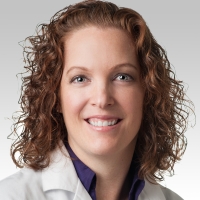 In a special bonus episode filmed at APA 2019, the annual meeting of the association, APA director of research and special projects Vaile Wright, PhD, talks with Angela Lawson, PhD, associate professor of clinical obstetrics and gynecology and psychiatry at Northwestern University’s Feinberg School of Medicine, about a variety of fertility issues, including in vitro fertilization, causes of infertility and how women can overcome the guilt associated with infertility.

