Kim Mills: Have you ever raced through a compelling novel in a day, then found yourself sad because you’re not ready to say goodbye to the characters? Or maybe you’ve set aside a full weekend to binge-watch the new season of your favorite TV show?
We humans spend a lot of time in fictional worlds, and researchers have long wondered why. What draws us to the make-believe of a novel, a TV show or a movie? What makes a fictional world so fascinating that it can spawn a movie series, a theme park, or fan conventions? Are there some types of stories or characters who are especially likely to gather devoted fans? And how does reading or watching fiction affect us? Does reading a novel give us any insight into the minds and emotions of real people? And can it change how we see the world?
Welcome to Speaking of Psychology, the flagship podcast of the American Psychological Association that examines the links between psychological science and everyday life. I’m Kim Mills.
My guest today is an expert on both studying and writing fiction. Dr. Jennifer Lynn Barnes is a novelist and psychologist who published her first novel at age 19. She’s the author of more than 20 critically acclaimed young adult novels, including The New York Times bestselling series The Inheritance Games, which has sold more than 4 million copies. For many years, Dr. Barnes balanced her writing career with her work as a research psychologist. She holds a PhD in psychology from Yale University and was a professor at the University of Oklahoma for nearly a decade. Her research focused on the psychology of fiction, including what makes people love stories and how fiction affects our social cognition. Dr. Barnes recently left academia to write full time.
Dr. Barnes, thank you for joining me today.
Jennifer Lynn Barnes, PhD: Oh, I’m so thrilled to be here. I love talking psychology, especially now that I’m not doing psychology on a daily basis. I will take any excuse to get to talk about it.
Mills: Well then let’s start with your background. As I said, for many years you balanced a dual career as a novelist and a psychology professor. What drew you to both of those things? How did you manage to do both for as long as you did?
Barnes: I think what drew me to both of them is really very similar. I’m interested in people, I’m interested in relationships and how our minds work and how we become who we are, the effect of development on who we are. And I think that’s a lot of why people get into writing oftentimes, is because you get to dive so deep into the heads of fictional characters. And a lot of us when we write, we’re understanding how all of this is working. You get to create those relationships. You get to dive so deep into another person’s head in a way you never get to do in reality. So I think I was drawn to the aspects of characters’ minds from the time I was a child—in reading books, I would get lost in books and television shows and very involved in fictional worlds. And then one day I discovered, hey, the best thing in the world is if every time something’s happening in a story and you’re like, gee, I hope this happens next—if you’re the writer, that’s exactly what can happen next.
And then the flip side of that is in psychology, I was drawn to understand the human mind and groups and relationships and development. So I think it was actually the same just underlying interest in people and how we work that drew me to both.
In terms of balancing the two worlds. I had an advantage in that I didn’t know what it was like to be an adult who didn’t do both of those things. So I started trying to write novels when I was still in high school. The novel I wrote when I was 19, which is the first book I sold, was actually the seventh book I wrote. It takes a while to actually get good enough at writing books to sell one. And meanwhile, I was starting my freshman year in college, I was taking psychology classes and so I went through undergrad, I got involved in research labs, and I just fell in love with the pure science of psychology—asking questions and getting to actually determine answers, there’s a question I don’t know the answer to, I can design something, I can figure out an answer, maybe I’ll be surprised, have new theories. Just like the sheer process of it all I absolutely loved.
And so then I wrote my first five books while I was still in undergrad doing all of the psychology and cognitive science stuff. Then I graduated and I knew I wanted to keep doing research. So I did a master’s and then a PhD and then eventually became a professor. And the University of Oklahoma created this wonderful unique position for me where they actually split me. So I was half in the psychology department and that’s where my research lab was, but they also let me teach writing courses over in the professional writing department. So I actually had a full dual appointment in two different departments. I earned tenure in both departments.
And then my lab studied the psychology of fiction. So it was like all these different things, teaching fiction, writing fiction, studying the science of it, it all just worked together really, really well. And there was a lot of synergy between the different things.
Mills: So what is it about fiction and stories that we find so compelling? I mean, most people don’t write fiction, but almost all of us consume it, whether it’s books or TV or movies. Why do we spend all this time and money to get so emotionally invested in things that are not real?
Barnes: That is the question that has fascinated me for so long, because I always thought as a writer, if you can answer that question, if you can know why are we as a species so driven to fictional stories, then you can use whatever that theory is to predict exactly what kinds of stories people should like. And so what I did for a long time is—this is actually a hotly debated issue in evolutionary psychology. In some domains of social psychology, there are even some domains of literary criticism that are into it. Media psychology, sociology, there’s all these different theories out there. Even philosophers have asked this question of why are we so into fiction and why can it affect us?
And so what I did for years is I just read up on all of these different theories about fiction. So the answer is there are a lot of different competing theories on this. There’s no one definitive answer. But what I did as a writer is I went through each theory and I was like, Well, if I can’t tell you which theory for sure is true, why don’t I just list out some of the predictions every theory makes about what we’d like in stories and then see what happens if I put all of those things in one book. So for example, some of the theories that I’ve found as a writer that when I hit the notes in those theories, they tend to resonate with readers. They tend to sell more copies and all of that.
So one big one is what I’d call gossip theory. So one of my old advisors, Paul Bloom, suggested this in his book How Pleasure Works, and he thinks that a liking for fictional stories co-opts sort of an evolutionarily hardwired liking for gossip, and fiction is just gossip about people who happen to be make-believe. And even though we know they’re make-believe, maybe deep down we don’t really feel like they are or maybe our brains—if you think about something like television, if you see someone in front of you once a week or for 20 hours at a time, you’re seeing their faces, you’re watching them going through their day-to-day lives, all of this stuff about them, even though they’re not real, you might feel like they’re real. And so that would just suggest that fiction is just tapping the gossip button essentially over and over again. So what predictions does this make about the kinds of stories we might like? That’s something I like to do when I’m coming up with book ideas. I’ll say, does it pass the gossip test? So is it the stuff of gossip?
For The Inheritance Games I actually used this. I was coming up with book ideas specifically tailored to gossip theory. And the prompt I was using is “what could happen to an ordinary teenage girl that would get the entire world talking about her overnight?” So not just the people at her high school, not just her town. I wanted front page news. Everyone in the whole world is gossiping about you at once. And it took me days to find something that was actually good that could happen to you. A lot of the things I came up with, I write mystery thrillers, so I’m like, Oh, I came up with some dark stuff, but I wanted something kind of light and fluffy and fun. And I’m like, what a good thing could happen to you? And I came up with a few things, but the one that really stuck is a famous billionaire dies and he leaves you all his money and no one has any idea why, because you didn’t even know the guy.
I’m like, that passes the gossip test. Because everyone would be like, why did this billionaire just leave 42 billion to this random 17-year-old from Connecticut? I was like, that passes the gossip test in a big way. So that’s what told me like, Oh, that would be a great book to write because it passes the gossip test.
And then in the writing of the books, I look through a lot of other theories. So for example, there are theories that we’re drawn to fiction because we are drawn to the minds of others. So very much the reasons that I started writing fiction might also have a role to play in why we like fiction. So we’re driven as a species to get inside the heads of others. We’re always mentalizing. You can’t even watch—most of us—like an animation with rectangles and circles without attributing mental states to them. We sort of overattribute mental states. We’re a mentally obsessed species. But fiction is one of the only domains that you actually can get inside someone else’s head. We feel like we know what’s going on in other people’s heads all the time, but we can’t ever actually be in someone else’s head except for fiction.
And so there are researchers out there who think fiction makes us better at understanding people. So people like David Kidd and colleagues in the English literary criticism domain, Lisa Zunshine, who really deal with this idea of fiction and theory of mind and how it appeals to our desire to get inside other people’s heads, but also might actually make it better with us. So that predicts that we would love books that one are all about mental states, emotions, second order theory of mind. So I actually have a little list from the developmental literature of all the different milestones. So I’m like, okay, the books have to include secrets and lies, and purposeful deception, knowledge and ignorance, hidden emotions. So I go through all these different elements and really make sure that the books are hitting on all cylinders For theory of mind.
I actually did a whole book series that I did that, much like The Inheritance Games was inspired by gossip theory, when my prior series was called The Naturals. And it’s basically a teenage Criminal Minds, about an FBI think tank that uses teenagers to profile serial killers. And they mostly are supposed to be working cold cases, they’re teenagers. But there I made it so that each of the Naturals was like one in a billion, very, very top percentile at some aspect of theory of mind. So there’s an emotion reader, there’s a deception detector, there are a couple profilers, and then as you read the books, it’s actually teaching the psychological science of doing all of those things.
My thought was if we really are interested in fiction because it teaches us to get inside the minds of others, a book that’s explicitly about learning how to get inside the minds of others should be appealing to audiences.
And then a third theory I work with a lot was one put forth by Steven Pinker in his book How the Mind Works, where he kind of looks at all this debate about ‘Is fiction an evolutionary adaptation? Is it a byproduct of something else?’ And he says that one of his theories, or at least his early theory of fiction was that fiction is essentially cheesecake. We don’t wander around saying, Oh my gosh, it’s such a mystery. Why do humans like cheesecake? Well, we like cheesecake because we evolved to like sugar and fat and clever human chefs were like, What if we put a ton of sugar and a ton of fat in the exact same thing and then it becomes cheesecake? And he thinks fiction at least partially operates in much the same way.
So why do we like fiction? Well, we’re hardwired to find a bunch of different things pleasurable and clever authors take all of those pleasures and they cram their books full of them so that there’s just sort of these pleasure buttons that fiction is pushing over and over and over and over again. You think about something like television, and most television shows are filled with beautiful people and beautiful places.
And so a few years ago when I was on maternity leave with my second child, I made my sort of project that I did while I was rocking a baby and feeding a baby, I was looking up what do I think some of these really compelling possibly hardwired pleasures are? And I just made a list of them. So what are pleasures that are early arising in development that you see that perhaps have a neurological basis that’s been studied? And so I just did this deep dive in the literature looking for different things and came up with a list of, okay, if pleasure theory is right, what buttons can I push?
And so there are things, like beauty is one, wealth with a preference for high levels of wealth, power is a big one. So more power, more dominance competition where at least where you might be hardwired to pay very close attention to competitions between others. I put on there “safe danger.” So again, something if not pleasurable, at least we’re wired to pay attention to these dangerous things. It’s safe because it’s fictional. So you think about something like a fictional horror movie, you’re not actually going to get hurt. And there’s all of this philosophy and psychology on that, certain kinds of touch and warmth and physical sensations. So I had this sort of list of these things and I’m like, Okay, I’m going to try and cram as much of all of this into a book as I possibly can.
And that book was also The Inheritance Games. You’ll notice it’s basically called wealth competition. I even wanted the title to hit the buttons that I thought might matter. And then making sure that I’ll actually do an inventory of each chapter I write and be like, what pleasures are in this chapter?
And so those are just three of the theories that I’ve done a lot with. There are four more that are kind of in the play when I’m trying to go through different things. I actually wrote up a giant workbook for myself that’s about 27 pages long that I go through. And when I’m revising a book I go through and I see how I’m rating on all these different things that these theories predict.
Mills: That’s an amazing level of analysis that you’ve gone through over the years. How has it changed the way that you write? If you go back and you look at the novels that you wrote when you were much younger before you had gone through all of this, did you sort of instinctively include some of these things? I think a lot of novelists, they’re not really consciously saying, I need to have these five elements of the way that you work.
Barnes: I’m friends with many, many, many writers. And one thing we’ve noticed over time is that often your first book or your first published book is just steeped in a lot of this stuff, especially the pleasure type stuff, the gossipy stuff. A lot of it ends up there if you’ve read enough books and watched enough movies, you sort of develop this innate sense for the things you like in stories. But at least anecdotally, this kind of odd thing happens to writers if they’re career writers and you’re publishing book after book after book. And what seems to have happened to so many people I know and so many people I’ve talked to at writing conferences is that as time goes on and your level of craft develops a lot, so you’ve revised a ton of books, you’re thinking more about story structure and arcs and all of this other stuff.
So as you’re developing more as a writer, a lot of writers end up editing a lot of these things that we would naturally include out. So a lot of writers will start worrying about—is this cliché? Is this overdone? And what they end up doing, especially after you’ve published books and readers read them and you hear all these things like, I hate love triangles, or That character is too good at everything, she’s such a Mary Sue. And so writers internalize these messages and they’re like, so I’m not going to do a love triangle and I’m not going to make my character beautiful, or I’m not going to do this and that, and I don’t want, are these tropes overused? Maybe I shouldn’t use them. And so what I often do is I go to writing conferences and I give talks on these theories and what they would predict and basically say, you have to stop censoring yourself and editing these things out.
So even as your level of craft is elevated, you need to get in touch with the part of yourself that wrote those early books. So stop editing out the things that you love in books because oftentimes that’s exactly what resonates with an audience.
Mills: So I want to ask you a little bit about the research that you did when you were a working psychologist. I mean once a psychologist, always a psychologist. But when you were doing that as part of your job, you studied very young kids and you found that when they were given a choice, they would prefer real stories to those that are made up. But then at some point that preference shifts. Can you talk a little bit about that work?
Barnes: Sure. So this is actually my dissertation work while I was doing my PhD and I would go around to elementary schools, daycares, preschools, bring kids into the lab. And I was interested in this idea is there’s sort of this lay conception of children as being much more steeped in the imaginary than adults are, right? You see all of this pretend play at this age. I have a 3-year-old and every morning I have to ask him what animal he is because he’s never a little boy. When he wakes up in the morning this morning, he was a baby mouse. And so he just says, squeak, squeak. And I’m like, Oh, we’re a mouse today. So this is what people think about with kids. They think about pretend play. And my middle one’s really into superheroes and he is—this morning it was okay, who would’ve went in a fight between this superhero and this superhero?
And this is literally when we sit down at dinner every night, that’s what he wants to talk about. He has a new pairing. So we think of kids as being so much more prone to the imaginary than adults. And so what I was interested in seeing is whether that was actually born out. So one sort of school of thought was that maybe the young kids would really make-believe stories and then as we get older, maybe nonfiction gains traction. But what we found, surprisingly to a lot of people, I think, was actually the reverse. So we had two different conditions. One either labeled stories—is this is a real story, it really happened, or this is a make-believe story, it’s make-believe? And we controlled across participants what the description of the story is. So it’s like this is a real story about a boy who goes to the park. It really happened. This is a make-believe story about a boy who plays with the ball. Which one would they like?
We also had a fantasy condition where it would be like, this is a story about a boy who plays hide and seek, and this is a boy who eats cookies in outer space, versus some people would get cookies versus hide and seek in outer space. And what we saw across conditions is that there was actually an increase in attraction to the fictional and fantasy ones over time. So the younger children were more reality biased than older children, who were more reality biased than adults, typically. So for example, on the real versus make-believe stories where they’re all realistic, but were just saying, did this really happen or not? Four and 5-year-olds actually statistically significantly preferred the stories that they thought had really happened, which is super interesting as someone who works in children’s literature to see, because they were like, Oh, they really were more interested in a story that actually happened than one that someone had made up.
The more shocking one for us was the fantasy one. So this is a story about someone who eats cookies, and this is a story about someone who plays hide and seek in outer space. The adults, when we gave them the equivalent, were whopping in favor of, if you just have a mundane everyday thing versus a magical thing, they were whopping in favor of the magical thing because the realistic stories were really mundane. It was like—this is a boy who goes to school versus is it school or is it magic school? So adults had a pro-fantasy preference when the realistic option was really mundane. The children, it’s not that they preferred the mundane option, but they were just totally a chance. And I remember doing this study, putting the two books out, they didn’t ever actually read the books, we just give them those descriptions. There were no illustrations on the cover. It was just the title you point and you’re like, this is the book about hide and seeking outer space and this is a book about eating cookies versus this is another kid would get cookies in outer space versus hide and seek.
And they were completely at chance. It did not matter. Some of the stories I was like, surely they’ll go for the fantasy one because as an adult, the realistic ones sounded so boring to me, but the youngest kids were just completely a chance. Sometimes they’d pick the fantasy one, sometimes they’d pick the realistic one. By the time you got to older kids, so more in that 6 to 8 range, they were starting to show the pro-fantasy preference. And then in adults it was very strong.
Mills: Another area where you did some research was around fandom and fan communities. Can you talk about that? What is fandom and what makes some books attract such devoted groups?
Barnes: I’m fascinated by the psychology of fandom. I like to think of it. And not surprisingly, I have a whole section in my 27-page workbook devoted to inspiring fandom too. So once I became a professor, fandom was something I was interested in and I ended up pulling a lot from domains other than psychology. So there’s a lot of sociology work on fandom. So fandoms sort of as communities and looking at what’s going on in those different things, there’s a lot of studies on specific fandoms, so like the Star Wars fandom, the Supernatural fandom, Star Trek, just looking at those different things. And a lot of it’s just explaining to people there are these communities of people who identify as a fan of something. So it’s actually not just you really like that thing, it’s that you, part of your identity is that you like that thing and you are involved in a group or collective of people who like that thing.
So those are kind of, at least in my opinion, two of the really key elements for it to be fandom, it has to involve other people for it to be fandom. So even if you’re not ever meeting someone else, maybe you’re there reading fan fiction, which is stories that someone else has written about the characters. Maybe you’re going on a message board, maybe you’re buying merch someone else did. Maybe you’re going somewhere and you see all these stories out there, lovely stories of people who’ve made lifetime friendships through fandom, through connecting to something they love. So there are several things that fascinated me about the psychology of fandom.
One of the first things I wanted to do was figure out what are some of the psychological prerequisites for being very kind of fannish? Because there are some people who get really involved in this. There are some people who don’t, but probably would have if they’d known it existed. And there are other people who just fundamentally are like, why would anyone do this? I get this a lot when I talk about fandom to psychologists. They’re like, that’s a thing? I’m like, yes, it’s very much a thing. And I remember I used to teach this class at OU called the Cognitive Science of Fiction in the honors college, and we would do different readings every week from a variety of different domains about this. And when we talked about parasocial relationships, so those one-sided relationships we form with fictional characters and we were talking about daydreaming. I year to year always did this poll and I would say, raise your hand if you ever daydream about fictional characters. And every year exactly half of the hands in the class would go up.
And then I’d say, okay, raise your hand if you have never daydreamed about fictional characters. And the other half of the hands would go up. And the thing that was always so interesting to me is that people who do this do it so frequently and so automatically that they cannot imagine what it would be like to inhabit a head where this didn’t happen. And people who don’t do this were like, why would you ever do that? What does it even look like? They were like, I don’t understand. And so it was this thing where for both sides of the equation, it was totally eye opening for them that some of the people had that and some didn’t. So I started thinking of fandom, not just about the actual collective that’s out there actually doing these things. I started to think about it in terms of psychological tendencies and the way we interact with stories and how there might be individual differences in some of these propensities.
And so I started getting really interested in like, okay, so what are sort of the things underpinning, psychologically underpinning both fandom but also fan adjacent things? So a certain percentage of people will actually go out there and write fan fiction. So they’ll write a story about meeting their favorite character or about what should have happened at a given moment. But a larger percentage than that will daydream about that in their own head. And for many, many people, there was a lot of work where people would interview fan fiction writers and a lot of fan fiction writers come into fanfiction through daydreams. So they have been daydreaming these stories about I get sucked into the universe and then I become so-and-so’s honorary little brother. And that’s often what people’s first stories look like is they’re just externalizing what they’ve been daydreaming. And so my thought was that for any activity you see where people are actually involved in fandom and out there officially doing it and connecting with each other, there’s probably a broader population who’s doing sort of the fandom adjacent thing.
So maybe they’re not doing cosplay, but maybe they really do want that Wonder Woman shirt that kind of looks like Wonder Woman, and maybe they’re not on a message board going through all these theories, but maybe they’re talking to a friend about it and really like it when a friend or a spouse or someone is watching the same show, so you can figure out what’s going to happen next. And so what I started thinking about is, so what are some of the underlying properties that might vary from person to person?
One I came up with was just up emotional investment in fictional characters. So people, and it’s a chicken and an egg question, but people who tend to get really involved in the stories end up very invested in the emotional characters. So is the investment, does that come first and then that drives your involvement in the stories? Or is it the more involved in the story you’re the more investment you get. But it does seem like there’s a prerequisite for—not all of fandom activities, there is a subset that focuses on world and recreating models and building the exact drones of Star Wars or something—but a huge percentage of it seems to be driven by attachment to the characters, by those parasocial relationships with the characters. But another one I was really interested in, at least in so far as you get the fiction, was the idea of—resistance to a authorial authority is what I called it. So it’s like the idea that if you consume media and you’re like, Well, I guess that happened. I didn’t want that to happen, but that happened. Oh, Well, that’s the reality now. That looks very different than someone who’s like, what? That shouldn’t have happened.
We see it often with people who are self-proclaimed shippers, which is derived from a relationship. So they ship two characters together, so they want these two characters together and not these two. So they’ll actually tell you, Hey, author, you got this wrong. You’re wrong about who she wanted to be with. She actually wants to be with this guy. You have to go back in. I get emails all the time that tell me I had a love triangle and they tell me she picked the wrong guy, you need to go fix this. Or once I remember I killed a major character in book three of one of my trilogies way back in the day, and I got this email from a reader who was like, you actually must undo this because this did not happen. I refuse to accept it. And a lot of fan fiction is, the source material either isn’t giving you enough of what you like, so you get glimpses of the friendship between these two characters, but you want a story that’s all about that thing. Or it’s—this thing happened and I didn’t like it, so I’m going to go write a story where something else happened.
So you can also view this resistance as sort of a tendency to play with the source text, to be like, okay, I talk about co-authoring it along with the author. So there’s always a degree that happens. No two people ever read the same book. And there’s some stuff in the psychology of reading, especially in the educational literature that focuses on this and how we put stuff into the books we read, you read it through your own experiences, you fill in gaps, all of these kinds of different things. And so I was really interested in, Well, what are the things that fans are doing? So you give them a gap, they start filling it. If you’re not sure what’s happening, you’re going to theorize about what’s happening next. Something you don’t like what happens, you’re going to do this. And so I started making lists of, Well, I want to give readers plenty of opportunities in the book to do this.
So it’s having the big decisions where they wish something different had happened. It’s baiting gaps and sometimes it’s really simple stuff. So in The Inheritance Games, the risk-taking dangerous competition guy has this giant scar down his torso and you just don’t know how he got it for multiple books. And that’s a gap that you actually leave there for the audience to fill. Why? Well, then the fans can go out and talk about how do you think Jameson got that scar? This is how I think he got that scar. I have a friend who wrote a book once and they were always referring to “that thing that happened in Peru.” And you’re like, What happened in Peru? And they’d respond with random things. We all agreed that monkey was perfectly trained at the time. I always think about that. It’s my friend Ally Carter wrote a book and you’re like, What happened in Peru with the monkey and the this and the that?
So it’s baiting that. It’s where you cut a chapter, are you cutting it? And then sometimes I remember, and I think it was book three of The Inheritance Games, there was this moment where the two brothers go off and Avery, the main character, goes home and the brothers are kind of both in a weird emotional spot and everything. And a few hours later they come home and they’re like caked in mud and one of them is bleeding. And just in the entire series, you never find out what happened in those hours because that is something I’m leaving for the readers to kind of find out there.
I’m also really interested in, I’ll look at specific fan activities. So something like cosplay where they will actually create versions of the costumes and dress up as the characters. And you can lose hours to looking at cosplay because there are absolute artists who do incredible, incredible cosplays. So one of the items on my little workbook is like, does the book pass the cosplay test? The low level of it is the Halloween test. So can a 13-year-old dress up as someone from this book for Halloween? How would they do that? What does it look like? So you think of something like Harry Potter for instance, and it’s actually really easy to dress up as Harry Potter even if you don’t have the official gear. So even back before they had all the tie-in stuff, you drew a lightning shaped scar on your forehead and you wore a black cloak and you carried a stick and wore glasses and you were Harry Potter. So anyone could throw together a costume and be Harry Potter and recognizably Harry Potter very easily. So that’s a question I ask myself. Is this a book—who could they dress up as? How could they dress up as that person?
I’m like, if someone wanted to throw a theme party based on the book, I have a test. I call the theme party test. I’m like, Okay, has the book given them a format for the invitation? So I have a book coming out at the end of July called The Grandest Game, which is a new series set in the universe of The Inheritance Games where it’s all these people coming to win like $30 million or something very big by solving all these puzzles and riddles and games. And I’m like, Well, to pass the theme party tests, ideally there’d be a really elaborate invitation. You get to play the game. So there are these Willy Wonka-style golden tickets. And I’m like, Well, if you want to throw a Grandest Game party, here’s your ticket. And the question is, what’s the drink that’s in the theme party test? Or what’s the food or what do people dress as? There’s a masquerade ball so people can dress up as the characters I go through, go through and look at a variety of these different things in terms of the activities, in terms of what I think is going on with the psychology.
And then I’ve also done a related amount of work that was sort of more inductive work that I did for myself on, I’d look at, Okay, what are the 20 TV shows that have the most fan fiction written for them? And can I extract sort of qualitatively what those shows have in common? And so people think of fandom as being a very sci-fi and fantasy-driven thing, but the 20 shows were actually, there was no difference between sci-fi and fantasy and realistic shows. So that didn’t come out statistically significant. But what did come out as statistically significant was the predominance of procedural shows.
So medical procedurals, police procedurals or sci-fi and fantasy that had a procedural element. So you think of something like Star Trek or Supernatural. So those are sci-fi and fantasy. They also have a very strong procedural setup. I think Once Upon a Time was on there, Grey’s Anatomy. And so then I asked myself, Well, why do I think procedurals are so good at this? And I think part of the reason is that the procedural elements, so the case of the week essentially takes up enough space in the narrative. So monster hunting in Supernatural, the surgeries in Grey’s Anatomy, those things take up enough space that you kind of rationale some of the really juicy character moments a little more. And a lot of what people do is they’re like, Oh, I want more of that. I once heard that I worked for a while on a project with one of the guys who was one of the big guys behind Criminal Minds, and he used to kind of call those cookies. Where it’s the moment where they really want to see these two characters together, but it’s not a show where you get to see them together all the time.
And so I have a list of about 10 properties that seem to be fandom enabling. They’re things like the stories tend to be temporally expansive and expand usually into the past, sometimes into the future, in significant ways. They’re emotionally expansive, meaning you’re going to have really funny parts and really sad parts. And so it’s fluff, it’s angst, it’s all of these different things at once. So it’ll be like Buffy the Vampire Slayer. There’s some episodes that were just really funny episodes, and then you have an episode where Buffy discovers her mom’s body that’s just like an exploration of grief and devastating. So the things that tend to provoke fandom tend to have the whole spectrum. They’re not just funny if they’re sitcoms, they’re sitcoms that actually do have their sad episodes a little bit more. They tend to have a ton, ton of love stories in them, both romantic love stories but also platonic love stories like a brotherly love story or a friendship love story. I was thinking Grey’s Anatomy, they’re always talking about, That’s my person. Like Christina and Meredith had this friendship and they were persons, they were each other’s person. And so it’s the things that to be fandom provoking have all of these love stories of all kinds to give you all these relationships to get invested with.
So that’s stuff that—I left academia before I could go into a lab and test all of this in a kind of official way, but I had the theories and I had the predictions. And so I’m able to much informally and non-scientifically test them in my writing where I’m like, okay, what if I do all of this stuff? Both this stuff about how do you appeal to a broad audience because you’re doing—how the brain is really focused on stories and what kind of stories we like.
And so Inheritance Games was really the first book I ever wrote where I synthesized all of that and tried to do all of that on both the fandom side of the equation and the broadly appealing side of the equation. It was just really, really deliberate about saying, what happens if I do all of this in one book? And it was my 21st book. So of course it’s not just, this is the only thing in the book. It has the structure, it has the character arcs, it has the plot, it has all the craft I’ve developed over more than 20 books, but it also has all of this stuff added in on top. And what happened is, as far as experiments go, it was beyond my wildest dreams of what an experiment would look like. Again, I had published 20 previous books and I kind of had an idea of what it looked like when I published a book. I had never hit a bestseller list. I had never really had a huge fandom. I was kind of what they call in publishing a mid-list author. So I was able to have a career. I was publishing one or two books almost every year from the time I was very young until now.
But then I put all of the science in this book and I wrote The Inheritance Games and suddenly it did hit the bestseller list. And as a series it spent more than 80 weeks on the series list up there, Hunger Games and Harry Potter and Wimpy Kid and Percy Jackson. And just even being on a list with all of those series, I was like, what is happening there? But I really do, there’s a lot of, in any publishing thing, there’s a lot of luck involved and timing and you have to have a brilliant publishing team who’s making the right packaging decisions. So there are of course many other variables at play, but in terms of what I did differently, this book, it really did boil down to the science of it.
Mills: Well, it’s just amazing how you’ve really applied as a psychologist to becoming the writer you are today and it’s very, very impressive. So I just want to ask one question, which is, you’ve left academia, but what do you think are the most interesting questions out there for psychologists who are still looking at the psychology of fiction?
Barnes: That is a great question, and I have a huge list somewhere of the things—it hits me on a daily basis where I’m like, oh, I wonder. And back when I had my lab, anytime I suddenly started wondering about some of that, I could just go in a lab and I could develop the study and I could test it, and then oftentimes I was wrong about what I thought would be true and I’d discover something else. I think there is a big gap. So the area I’ve been playing in theoretically and testing in my writing in terms of what people like in stories, I think that’s actually compared to some other areas understudied currently. So again, I have all these theories. I put it in my writing. I really only ever did one study that actually tested empirically a lot of these theories. I did a study on book titles and whether or not the words were buzzwords created by one of the theories of why we like fiction versus whether they were a control word.
And we did find in that study that the titles that were based on, I think four or five different theories about why we liked fiction, all of those theories were generating titles that people were more interested in reading the book. Then we actually used words that had already appeared on The New York Times list. So words that should have been compelling. But they outperformed all of those. But that was the one study we did on that, and I think it would be a really fascinating area for people to look into because it really does seem to be an area where it’s not like there’s just one theory that explains it all. It really does seem, at least from that first experiment we did, it wasn’t like only one theory predicted good words. We tested multiple different theories. So we tested the gossip theory, the pleasure theory, theory of mind theory.
We did one on morality and all of those different domains were actually outperforming controls. So it seems like it might be an area where big picture of why we like stories may lend some support to a bunch of different theories kind of all operating at the same time, which could then also be very interesting in terms of those theories themselves. So is there a synthesis of a lot of these theories where it’s not just, is it this or is it this, but maybe it’s some combination of those things. And maybe the reason that we like stories so much is that it’s this synthesis of a lot of different things coming together to kind of make this perfect storm.
And then I would also say the psychology of fandom, again, where you’re actually testing. Before I left, one of my graduate students was doing a study on cosplay where you’d actually come in and you dress up as either a hero or a villain, and then we were testing a bunch of things, but embedded in those are moral things to see does your moral perspective change if you’re wearing a Voldemort costume instead of a Harry Potter costume?
I had a student when I left who was looking at daydreaming about fictional characters, which some of those studies have. There’s some fascinating stuff that’s been done out there on that. But pushing it further, and there are, when I was last in academia, we were starting to see work, a lot of it was coming from graduate students as we saw. I was seeing a lot of stuff that was a master’s thesis or an upcoming PhD student who was looking at actually testing some of these things about the psychology of fandom. I think oftentimes it’s people who are either involved in fandom themselves or at least know the ins and outs of it really well, and they were coming up with some really fascinating stuff. So I think in the years to come, I’m really interested in sort of seeing that generation of students taking off to really see sort of this field that was really, in some ways, at its beginning, really start to flourish once these people who were driving it, who were so young and early in their careers advance a little more.
Mills: Well, Dr. Barnes, I want to thank you for joining me today. This has been a lot of fun and learned a lot about writing fiction, and now it’s time for me to go work on my book.
Barnes: Well, thank you so much for having me. Like I said, I love talking about psychology, so this was an absolute blast.
Mills: You can find previous episodes of Speaking of Psychology on our website at www.speakingofpsychology.org or on Apple, Spotify, YouTube, or wherever you get podcasts. Then if you like what you’ve heard, please subscribe and leave us a review. If you have comments or ideas for future podcasts, you can email us at speakingofpsychology@apa.org. Speaking of Psychology is produced by Lea Winerman.
Thank you for listening. For the American Psychological Association, I’m Kim Mills.


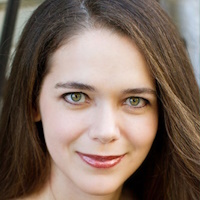 Jennifer Lynn Barnes, PhD, is a novelist and psychologist. She’s the author of more than 20 critically acclaimed young adult novels, including The New York Times bestselling series The Inheritance Games. She also holds a PhD in psychology from Yale University and spent nearly a decade as a professor of psychology and writing at the University of Oklahoma, where her research focused on the psychology of fiction.


